Saint Oliver Plunkett
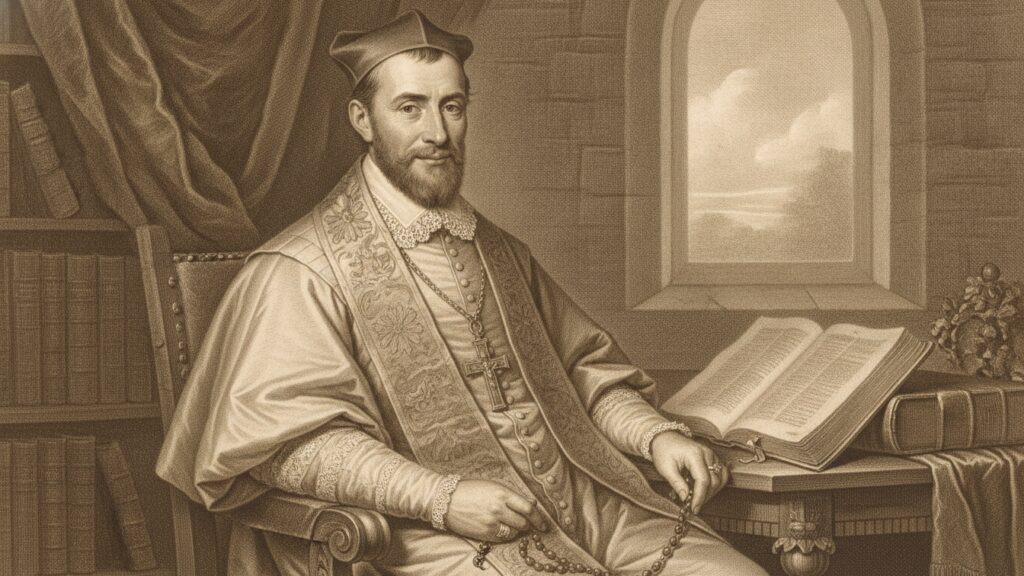
Oliver Plunkett was born on 1 All Saints’ Day in 1625 at Loughcrew, Oldcastle, in County Meath. He was a member of the influential Plunkett clan and was of Irish Norman ancestry, which connected him to many members of the ancient nobility of Ireland. His father, John, served as the Baron of Loughcrew, overseeing an estate that included a tower house, a corn mill, and an adjoining church. His mother, Thomasina, hailed from the well-connected family of the Earls of Roscommon. Through these parental ties and the Dillon family, Oliver maintained close bonds with senior aristocratic branches of the Plunkett family, including the Plunketts of Dunsany and the Earl of Fingal at Killeen Castle.
Dateline
Early Life
Oliver Plunkett was born on 1 All Saints’ Day in 1625 at Loughcrew, Oldcastle, in County Meath. He was a member of the influential Plunkett clan and was of Irish Norman ancestry, which connected him to many members of the ancient nobility of Ireland. His father, John, served as the Baron of Loughcrew, overseeing an estate that included a tower house, a corn mill, and an adjoining church. His mother, Thomasina, hailed from the well-connected family of the Earls of Roscommon. Through these parental ties and the Dillon family, Oliver maintained close bonds with senior aristocratic branches of the Plunkett family, including the Plunketts of Dunsany and the Earl of Fingal at Killeen Castle. He was also linked by birth to the Baron of Louth, a prominent nobleman within the archdiocese of Armagh.
Plunkett’s immediate family included three sisters—Katherine, Anne, and Mary—and an elder brother named Edward. His early education took place at the Abbey of Saint Mary’s in Dublin, where he was overseen by his elder cousin, Patrick. At the age of twenty-two, he travelled to the Irish College in Rome to pursue his studies for the priesthood. While he was in Rome, the political landscape of Ireland shifted dramatically due to the Cromwellian conquests. Because the Plunkett family remained steadfast in their Catholic faith, they were consequently dispossessed of their estate at Loughcrew during this period.
Ecclesiastical Career
The instability of the Cromwellian Commonwealth period and the turbulence of the Civil War prevented Plunkett from returning to his homeland for many years. He eventually returned to Ireland in 1670, upon his appointment as the Archbishop of Armagh. This return coincided with a period under Charles II where a modest degree of religious toleration had returned to the country. Taking advantage of this relative stability, Plunkett sought to improve education and interfaith relations. He established the first integrated Catholic-Protestant school in Ireland, located in Drogheda and operated under the supervision of the Jesuits.
Political Turmoil
The relative peace of the 1670s ended with the emergence of the Popish Plot. By 1678, the repercussions of this conspiracy theory reached Ireland, forcing Plunkett into hiding to escape outbreaks of anti-Catholic violence. His situation deteriorated further when Titus Oates, the primary instigator of the plot, declared to the Privy Council that the Archbishop was raising funds to facilitate an invasion of Ireland by French Catholic troops. This accusation placed a substantial price on Plunkett’s head, leading to his eventual capture and arrest on charges of treason.
Trial Process
The subsequent legal proceedings were characterized by significant irregularities. During the initial trial, the prosecution was so flawed that the Duke of Ormonde described the witnesses as silly drunken vagabonds whom no schoolboy would trust to rob an orchard. Despite the weakness of the evidence, the English Privy Council remained determined to secure a guilty verdict. Consequently, Plunkett was transported to London to stand trial once more. The proceedings were so riddled with flaws that Justice Pembroke, the presiding judge, advised Plunkett not to testify in his own defence.
Final Days
Oliver Plunkett became the last victim of the Oates Plot. He was executed in 1681. Following his death, he was later recognised for his martyrdom. He was formally canonised as a saint by the Catholic Church in 1975. His legacy is preserved in various shrines across Europe and Ireland, including sites at Tyburn, Rome, and his birthplace at Loughcrew.
Source References
Hover over a number to see the source. Select it to open the source.