Saint Moling
Saint Moling, also known in Irish tradition as Mo Ling and sometimes identified with the name Dairchilla, belongs to the early medieval world of Irish monastic saints. The historical record for his life is limited and much of what survives comes from later hagiography rather than from contemporary seventh-century documentation. For that reason, the safest way to describe him is as a saint remembered in tradition as an abbot and bishop associated with south-eastern Ireland, especially the monastery of Tech Moling, later St Mullins, on the River Barrow. Later biographical tradition places his birth in County Wexford, but the exact date of his birth is not securely known.
Dateline
Saint Moling, also known in Irish tradition as Mo Ling and sometimes identified with the name Dairchilla, belongs to the early medieval world of Irish monastic saints. The historical record for his life is limited and much of what survives comes from later hagiography rather than from contemporary seventh-century documentation. For that reason, the safest way to describe him is as a saint remembered in tradition as an abbot and bishop associated with south-eastern Ireland, especially the monastery of Tech Moling, later St Mullins, on the River Barrow.
Early Origins
Later biographical tradition places his birth in County Wexford, but the exact date of his birth is not securely known. Modern readers should treat any precise chronology with caution, because the surviving evidence is mediated through medieval legend and early modern copies. The tradition that he became bishop of Ferns in 632 is recorded in later biographical notice, yet it should be understood as a retrospective ecclesiastical memory rather than a fully documented contemporary appointment. What can be said with confidence is that his cult became important enough for later writers to preserve a substantial saintly narrative about him.
Monastic Foundation
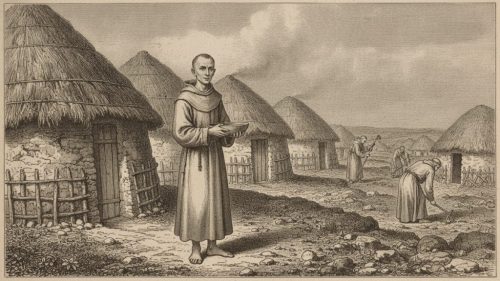
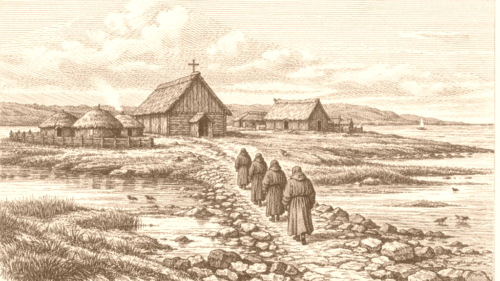
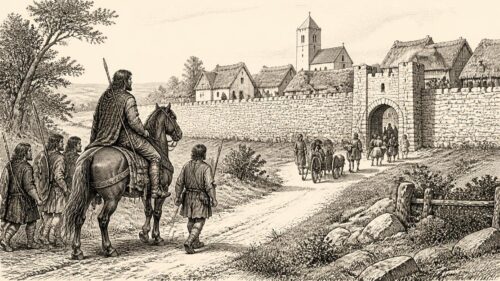
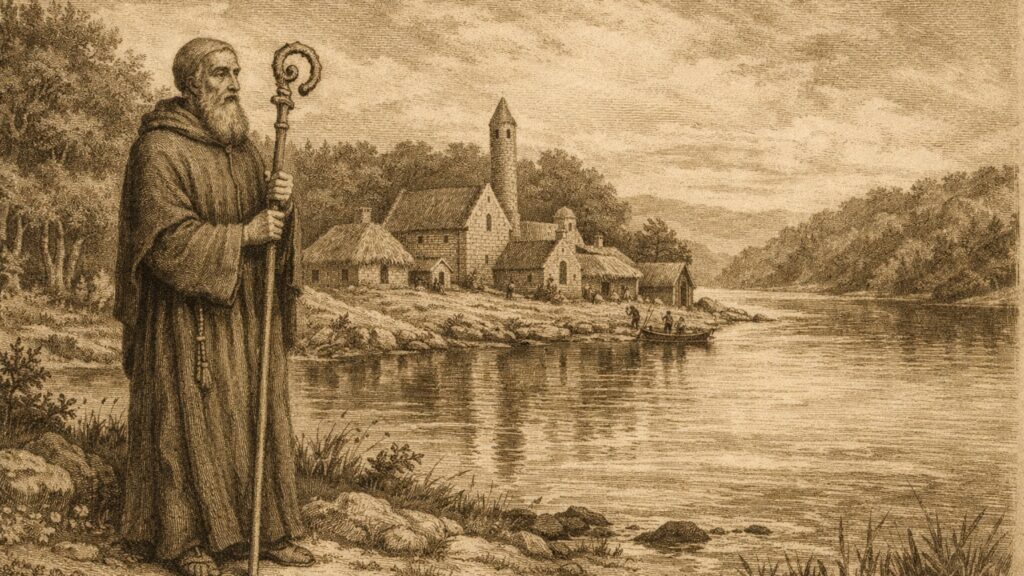
Moling is especially associated with the foundation of Tech Moling, the monastery that became known in English as St Mullins. The place-name itself preserves his memory, indicating a strong local cult and enduring institutional association. According to later tradition, he founded the monastery on the banks of the Barrow and served there as abbot. The site’s location fits the pattern of early Irish monastic establishments that combined religious life, learning, and local influence. His connection with the monastery is one of the clearest and most enduring elements in the surviving tradition, even if the precise details of the foundation story are difficult to verify from contemporary evidence.
Ferns Traditions
Another strand of the tradition associates Moling with Ferns, where he is said to have succeeded in the episcopal office. Irish ecclesiastical history in this period often blurs the distinction between abbot and bishop, and later writers sometimes used these titles flexibly. The surviving biographical note itself warns, by implication, that older writers frequently confused abbots and bishops. It is therefore best to say that Moling was remembered as a churchman of high standing in the Ferns orbit, rather than to assume that every later title reflects a precisely defined administrative role in modern terms.
Legendary Deeds
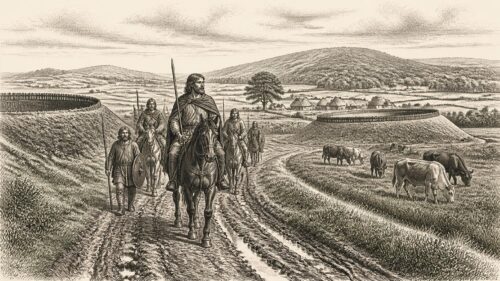
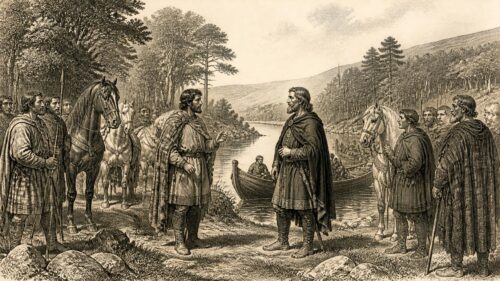
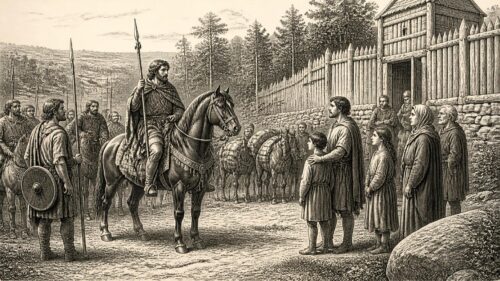
The medieval life preserved in manuscript tradition presents Moling as a saint of miracle and moral authority. One of the best-known traditional episodes links him with the remission of the Boroma tribute in 693, when he is said to have persuaded the High King Fínnachta Fledach to abandon the levy. This is a famous piece of Irish saintly lore, but it should be read as a literary and political tradition, not as a verbatim record of a single documented event. Such stories show how saints were remembered as negotiators between Church and kingship, and as protectors of their communities through sanctity, wisdom, and diplomatic skill.
Death Memory
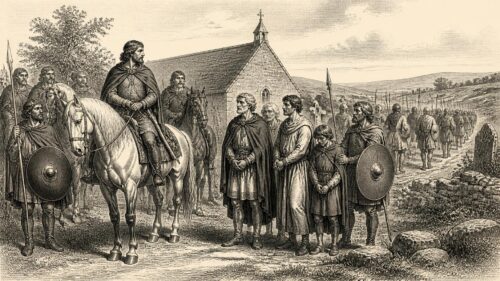
Moling is traditionally said to have died around 697, though the exact year is uncertain. His burial is placed at Tech Moling, reinforcing the monastery’s role as the centre of his memory and cult. The feast day commonly given for him is 17 June. As with the rest of his biography, this date belongs to the sphere of ecclesiastical tradition rather than secure contemporary record, but it has remained important in later commemorations.
Textual Survival
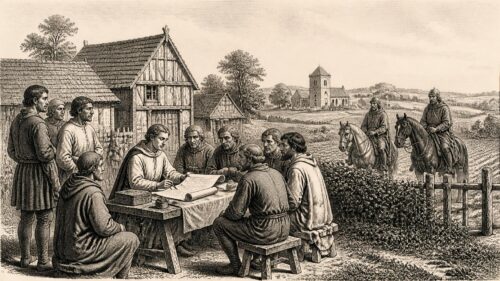
The main medieval life of Saint Moling survives in later manuscript copies, notably in the Liber Flavus Fergusiorum and in a Brussels manuscript copied by Michael O’Clery from a now-lost source called the Book of Timulling. The survival of the text in these copies shows that his reputation continued to matter well beyond the early Middle Ages. The CELT edition notes that the legend is preserved in these manuscript witnesses and that there is also a fragmentary witness corresponding to part of the narrative. This textual history matters because it reminds us that what we know of Moling comes through layers of transmission, copying, and interpretation.
Historical Legacy
In historical memory, Saint Moling stands at the meeting point of monastery, locality, and hagiography. He is remembered as a founder, a bishop, and a saintly negotiator in a politically charged age. Yet the reliable evidence for his life is limited, and many of the details attached to him belong to later medieval tradition. Even so, the persistence of his cult, the survival of his name in St Mullins, and the transmission of his life story across manuscripts all show that he was a significant figure in the religious landscape of early Irish Christianity. A careful biography must therefore balance reverence for the tradition with clear recognition of uncertainty.
Source References
Hover over a number to see the source. Select it to open the source.