Start Exploring
Choose a route into Ireland’s past: follow the newest additions, find a particular year or subject, or browse every available period.

WELCOME TO EMERALD ARCHIVES
Welcome to Emerald Archives, where Ireland’s fascinating past comes to life. Explore remarkable people, historic places, pivotal events and forgotten traditions through our growing collection of articles, updated day by day.
Enjoy exclusive documentaries and podcasts, available to all visitors, and discover our collection of free e-books.
Have a question about Irish history? Enter it in the Deep Research box above. Within a few moments, we’ll prepare a detailed, illustrated article supported by historical sources and citations. Your question helps shape our collection, and your article becomes a permanent part of Emerald Archives for everyone to explore, enjoy and share.
Day By Day
Welcome to Emerald Archives, where Ireland’s past awaits discovery. Our homepage brings you the latest additions to our growing collection, from remarkable people and historic places to pivotal events and forgotten traditions. Browse our newest discoveries and follow the archive’s progress day by day.
Deep Research
When you ask, we listen and respond. Enter a question about any aspect of Irish history in our search box (above) to initiate Deep Research. Give us a few moments, and we’ll prepare a detailed, illustrated article with sources and citations to answer your question. Your article becomes a permanent part of Emerald Archives.
Cuilen Battle — Associated Death
Archived: 17 November 2026
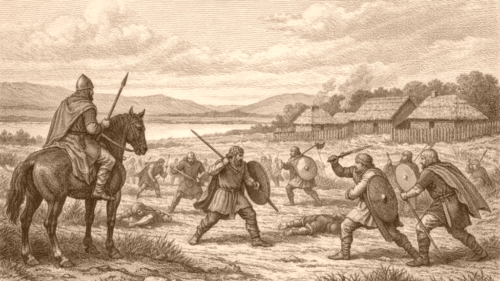
The annals securely place one battle in 551 CE: Cuilen, where the Corcu Óche of Munster were defeated, and one associated death, Fothad son of Conall. Multiple annalistic compilations preserve the same year entry, while the surrounding material remains sparse and does not support adding further events.
Isabella Clare
Archived: 17 November 2026
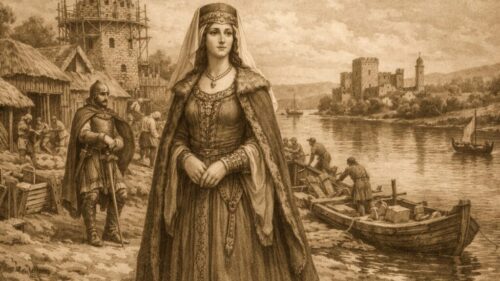
Early Life Wikidata gives her birth year as 1172 and her death year as 1220, and it lists Ireland as her place of birth. It names her father as Richard de Clare, 2nd Earl of Pembroke, and her mother as Aoife MacMurrough. Marriage In August 1189, she married William Marshal, 1st Earl of Pembroke. The same source identifies several of their children, including Isabel Marshal and William Marshal, 2nd Earl of Pembroke. New Ross Later accounts linked Isabella with New Ross on the River Barrow.
Donnchad mac Briain
Archived: 17 November 2026
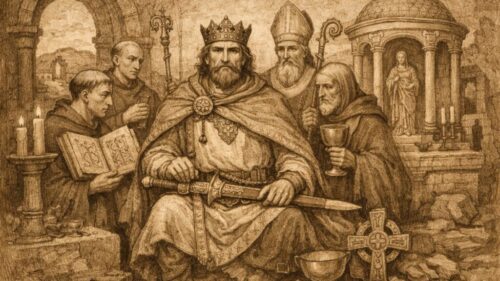
Donnchad mac Briain is named in the title of the Cambridge Core article “S. Stefano al Monte Celio, Donnchad mac Briain and papal legates in Ireland, 1064–1203.” The supplied evidence supports that article title and journal context, but it does not by itself supply a fuller biography. The bibliography below is limited to the supplied URLs and titles used in the evidence set. It preserves the identifiable published works and reference pages that mention Donnchad mac Briain, while avoiding unsupported additions. These supplied sources are the only basis used here for the article’s bibliography.
Áed Sláine
Archived: 17 November 2026
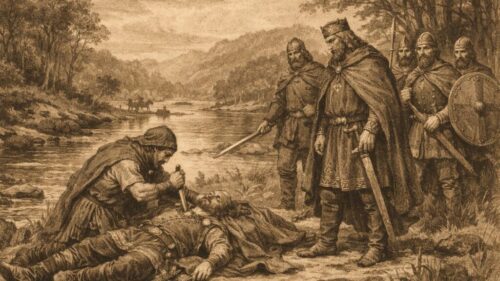
Áed Sláine is named in regnal material among the rulers of Ireland, alongside Colmán Rímid. In the annals, his slaying is recorded at Loch Semdile at the hands of Conall mac Suibne. In the regnal material preserved in the chronicles, Áed Sláine is counted among the kings of Ireland. The same tradition places him alongside Colmán Rímid, and in one chronicle poem the pair are named together among rulers of the island. The chronicle evidence records his death in the same year as the deaths of Aed Rón and Aed Buide. One annal records the slaying of Áed Sláine by Conall mac Suibne at Brú Locha Semdile.
Niall Garbh
Archived: 17 November 2026
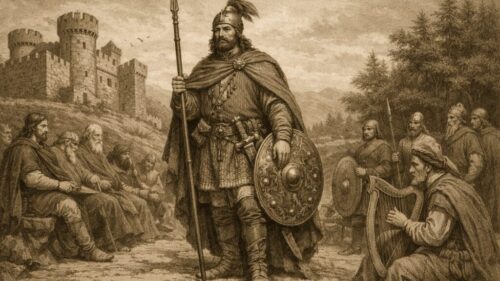
Niall Garbh O'Donnell was born in County Donegal and belonged to the O'Donnell line of Tyrconnell. He opposed the election of Red Hugh O'Donnell as chief, and a later account described him as the grandson of the elder brother of Sir Hugh O'Donnell. That same account said he believed he had been deprived of his birthright when the chieftainship passed to his cousin. According to a later historical account, Niall Garbh took Lifford and Donegal from Red Hugh O'Donnell, and he was himself inaugurated at Kilmacrenan. A Cambridge study of the rebellion involving Sir Cahir O'Doherty shows that historians have long discussed the authorities' charge of Niall Garbh's complicity in that rising.
Cathal Crobhdearg Ua Conchobair
Archived: 17 November 2026
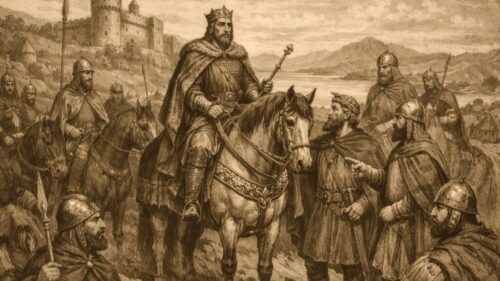
Cathal Crobhdearg Ua Conchobair is named in the Irish annals as king of Connachta. The surviving notices place him in military and political conflict in the later twelfth and early thirteenth centuries. In 1195, Cathal Crobderg, king of Connachta, came to Mumu and demolished many castles. The annal also says that the castles were renovated again, and that people expected him to destroy the foreigners on that expedition, though he did not return as planned. In 1201, the Annals of Ulster record the expulsion of Cathal Croibhderg Ua Conchobuir and say that Cathal Carrach was made king in his place.
Domnall Mór
Archived: 17 November 2026
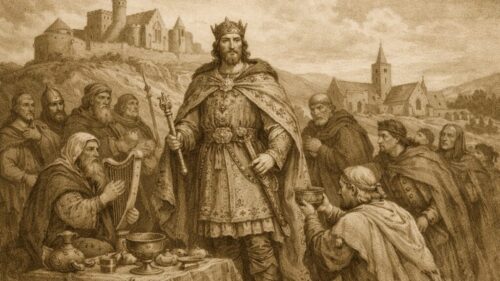
Domnall Mór Ua Briain was King of Thomond in Ireland from 1168 to 1194. He was also a claimant to the title King of Munster, and he was styled King of Limerick. These forms of kingship place him within the ruling O’Brien dynasty in the later twelfth century. The available biography names his wife as Orlacan Ní Murchada. It also gives him three sons and one daughter: Muirchertach Dall, Conchobar Ruad, Donnchadh Cairbreach, and Mór Ní Briain. The same family list identifies him as the father of these children and places him among the ruling figures of Thomond in the period recorded by the surviving notices.
Rory O’Donnell, Earl of Tyrconnell
Archived: 17 November 2026
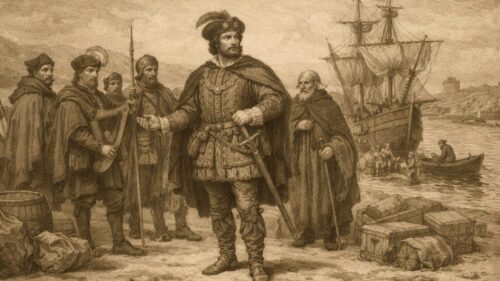
Rory O'Donnell was born in 1575 as the second son of Sir Hugh MacManus O'Donnell and Ineenduv MacDonnell of Cantire. He belonged to the O'Donnell clan of Tyrconnell and was the younger brother of Hugh Roe O'Donnell. He accompanied Hugh Roe to Kinsale in 1601. After Hugh Roe fled to Spain, Rory became acting chief. He led the clan back to Connaught, joined O'Connor Sligo, and maintained guerrilla warfare until December 1602. In that month, he submitted to Mountjoy at Athlone. Rory later surrendered to the Crown and was knighted in Dublin on 29 September 1603, when he was created Earl of Tyrconnel.
Aoife MacMurrough
Archived: 17 November 2026
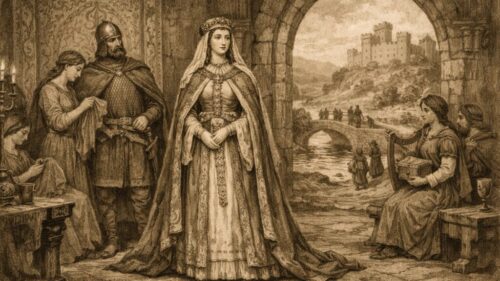
Aoife MacMurrough is identified in modern reference works as an Irish noblewoman and Irish royalty. The same sources also record her under several alternative names, including Eva MacMurrough, Eva of Leinster, Red Eva, and Countess of Pembroke. Those variants show that her name circulated in more than one form across later genealogical and biographical writing. She is described as the daughter of Diarmait Mac Murchada, King of Leinster, and Mor O'Toole. One biographical record classifies her as Irish royalty, and another gives her alternate names as Aoife MacMurrough, Eva MacMurrough, and Eva of Leinster.
Florence MacCarthy
Archived: 17 November 2026
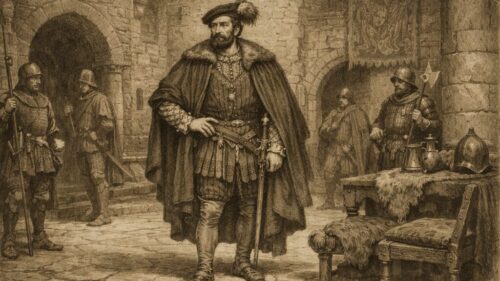
Florence MacCarthy Reagh was born in the early 1560s, probably at Kilbrittain Castle. His father was Sir Donagh MacCarthy Reagh, lord of Carbery, and his mother was a Geraldine and aunt of the last earl of Desmond. After his father died in 1576, Florence was made a ward of Sir William Drury. During the Desmond rebellion of 1579 to 1583, he served with the forces of Elizabeth I, and afterwards she rewarded him with gifts and an annual pension. In London, Florence MacCarthy adopted the customs of an English courtier, but he remained loyal to Catholicism and developed a taste for Spanish culture.
Phelim O’Neill
Archived: 17 November 2026
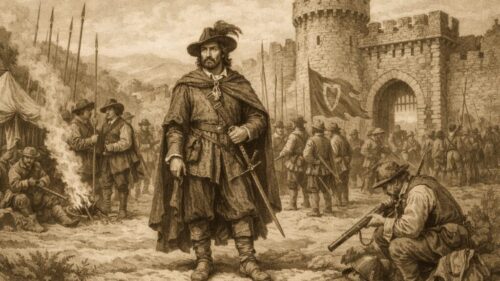
On 22 October 1641, Sir Phelim O'Neill surprised Charlemont, and Sir Con Magenis took the Newry and other places. Contemporary accounts place these actions against the wider alarm among Roman Catholics in Ulster after reports that a Puritan army might be sent into Ireland under General Leslie. In that climate, a convocation of leading gentlemen in the province discussed their safety and sought support from Irish officers abroad. O'Neill was then chosen commander in chief, described as the most considerable person of his name in Ulster. As commander, O'Neill moved from local seizure to wider campaigning.
Ailbe Deaths
Archived: 17 November 2026
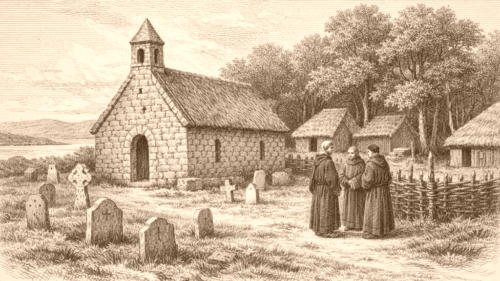
The annals for 541 CE preserve a small set of notices, above all the death of Ailbe and, in some witnesses, the death of Comgall. One source also records a great mortality in that year. The surviving entries are brief and uneven, so the safest account stays close to the wording of each annal and avoids supplying events that are not explicitly dated.
Silken Thomas
Archived: 17 November 2026
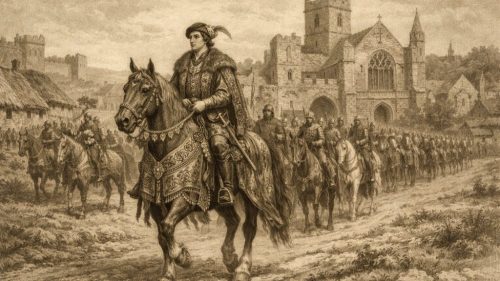
Silken Thomas was the sobriquet later attached to Lord Thomas Fitzgerald, who appears in the record as a central figure in the Kildare rebellion of the 1530s. He was then in his twenty-first year. In February 1534, before his father left Ireland for England, he was appointed vice-deputy. The appointment placed him in a position of authority during a period when the Fitzgerald affinity was under severe pressure, and it made his response to events in Dublin especially consequential. In early June, rumours spread in Ireland that his father had been executed in the Tower and that threats had been made against him and his uncles.
Deputy Government
Archived: 17 November 2026
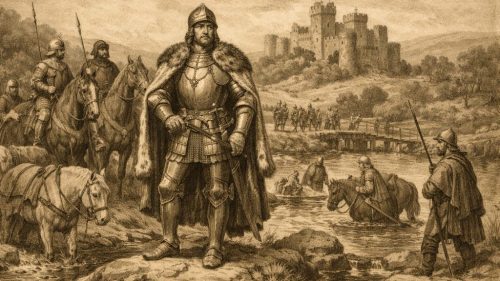
Gerald FitzGerald inherited the earldom of Kildare in 1477 and entered public life at a moment when the struggle for authority in Ireland depended heavily on great noble houses. He was appointed Lord Deputy in that same year, but his first appointment did not last. Lord Grey of Codnor replaced him on the view that an Englishman would be better fitted to the office. That change of government provoked resistance among the Lords of the Pale, who set up a breakaway parliament in protest. Edward IV then restored FitzGerald to the deputyship, and he resumed office under conditions that showed how closely the administration of Ireland was bound up with the power of his family.
Tortu Battles
Archived: 17 November 2026
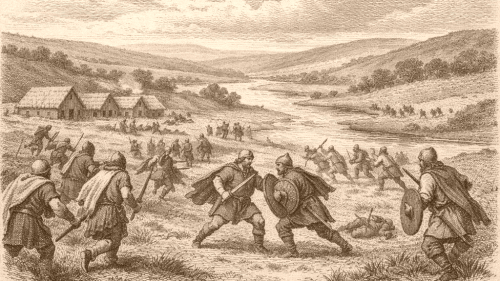
The annalistic record associated with 542 presents two securely dated battle notices in some compilations, while other compilations place the same notices under different annal headings. The Annals of Ulster and the Annals of Tigernach both record the battle of Tortu and the battle of Slicech or Sligo in the same chronological cluster, though their identifier systems and printed headings differ. Chronicon Scotorum and the Annals of Inisfallen also preserve related entries, but with different heading arrangements. The notices are brief and do not by themselves supply broader context beyond the named deaths and victors.
Archived: 17th November 2026
Ireland’s Own
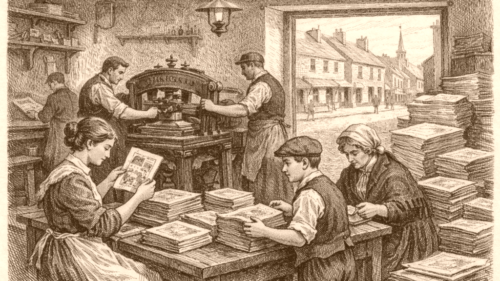
Ireland’s Own began in Wexford in 1902 and has remained in print without interruption. Early descriptions identify its first issue, its low price, and its opening contents, while later accounts explain how the magazine kept a similar mix of stories, features, puzzles, and family material. The available evidence also shows how the magazine presented itself as Irish in tone, how it continued to adjust through colour printing and an online edition, and how it reached readers at home and abroad. Its endurance is visible in both editorial continuity and recurring habits of readership.
James FitzMaurice
Archived: 17 November 2026
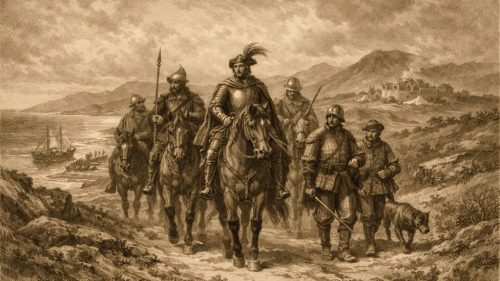
James FitzMaurice FitzGerald was an Irish rebel leader in the sixteenth century whose career became closely tied to the Desmond rebellions and to efforts to secure foreign support against Elizabeth I’s authority in Ireland. Following a failed rebellion in 1565, he submitted to Elizabeth I’s authority and was pardoned. He also lost all his holdings to the English and was removed from the stewardship of the Earl of Desmond’s territories. After that submission, he did not disappear from the political scene. The record states that he lost his holdings and was deprived of his role in the Desmond territories, but later events show that he remained active in the struggle against English power in Munster.
Connacht Conflict — Royal Death
Archived: 17 November 2026
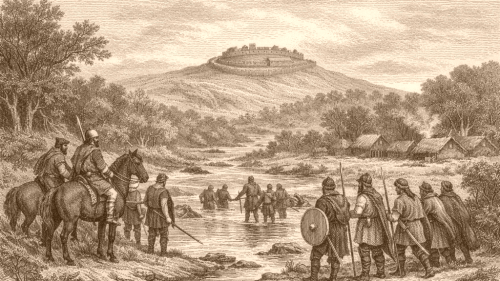
The annals preserve a small but distinct body of material for 543 CE. Some notices are year headings, while others record battles, a royal death, and a plague notice under nearby or conflicting chronological frames. Annals of Ulster, Annals of Tigernach, Chronicon Scotorum, and the Annals of the Four Masters do not always place the same event under the same annal year. This article keeps the notices separate, identifies the printed year heading where present, and limits itself to directly attested entries. The result is a cautious survey of what the sources actually place in, or near, 543 CE.
O’Sullivan Beare
Archived: 17 November 2026
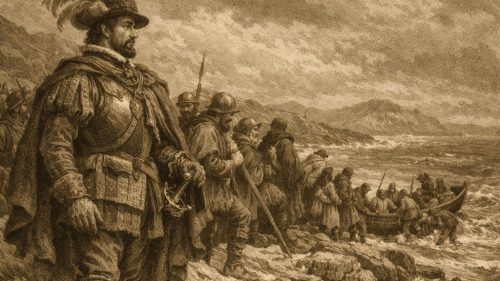
Donal Cam O'Sullivan Beare, known in Irish as Domhnall Cam Ó Súileabháin Bhéara, was an Irish nobleman and soldier who was born in 1560 and died on 16 July 1618 in Madrid. He was the last independent Chief of the Name of Clan O'Sullivan, and he was also described as the last O'Sullivan Beare. In the southwest of Ireland he held the lordship of the Beara Peninsula during a period when the English Crown was seeking to extend its rule across the island. O'Sullivan Beare was born in 1560. His father was killed in 1563, but he was considered too young to inherit the chiefship at that stage.
Diarmait Begins
Archived: 17 November 2026
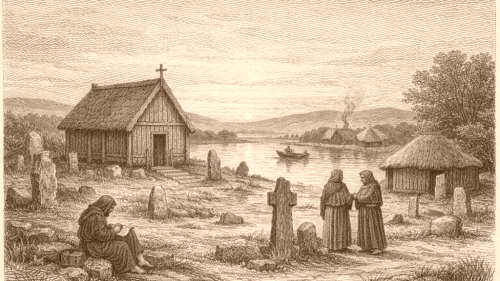
The annals place several notices under 544, but they do not give a single uniform record. The Annals of Ulster assign printed AD 544 to a first mortality called bléfed, the death of Mo-Bí Clárainech, Diarmait son of Fergus Cerrbél’s beginning of rule, and an alternative notice that Gregory was born. The Annals of the Four Masters place under 544 the death of Mobhi Claraineach and the battle of Cuil Conaire. Chronicon Scotorum places under A.D.544 the death of Tuathal Maelgarbh, the accession of Diarmait Mac Cerbhaill, and the death of Ciaran. Other annals preserve overlapping or displaced notices nearby.
Grace O’Malley
Archived: 17 November 2026
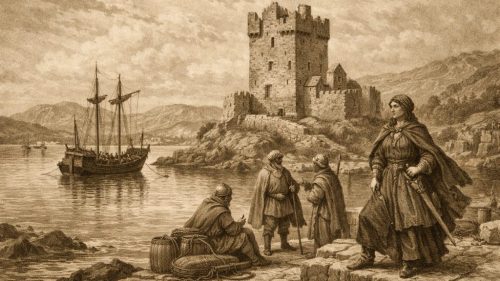
Grace O'Malley, also called Gráinne Ní Mháille and Granuaile in the source material, is identified with Rockfleet Castle in County Mayo. The castle is described as a four-storey tower house, rising from bedrock at the mouth of a small river where it flows into a sheltered inlet on Clew Bay's northeastern edge. It was built as a stronghold of the Burke clan, descendants of the Anglo-Norman de Burgos, and its plain exterior is said to conceal a carefully arranged interior with spiral staircases, a garderobe that empties into the sea below, and a principal chamber on the top floor with a fireplace and a hoisting door for supplies.
Cahir O’Doherty
Archived: 17 November 2026
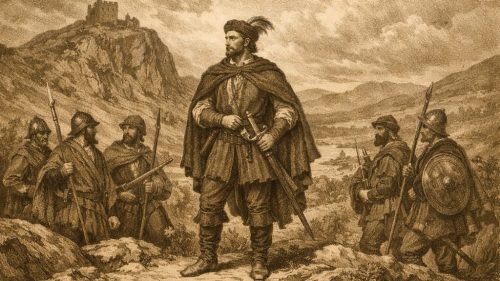
Cahir O'Doherty is identified in the record as an Irish chieftain and as Lord of Inishowen. The same source gives his life dates as 1587 to 1608. It also states that he was knighted for his bravery in the Battle of Augher. These details place him among the Irish figures whose status in Ulster was shaped by both local authority and royal recognition. The available evidence records that he was received in London by Queen Elizabeth I. It says that his territorial rights were confirmed at that time. After his return to Ireland, he was made Justice of the Peace and alderman of the new city of Derry.
Ciaran Mortality
Archived: 17 November 2026
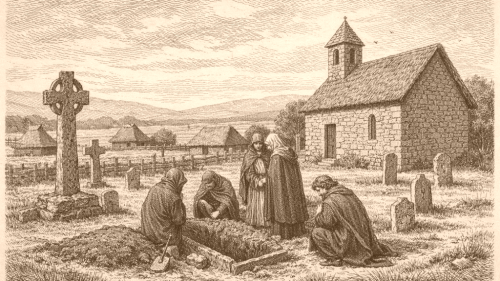
The notices grouped under 548 record several deaths and a mortality in closely related but not identical forms. The Annals of Ulster place Ciarán’s repose, Tigernach’s repose, and a great mortality under the printed heading AD 548, while also naming several associated dead. The Annals of the Four Masters give the Age of Christ, 548, and list Ciarán, Tigernach, Mac Tail, Colum, Sinchell, Odhran, Finnen, and Colam. The Annals of Inisfallen compress the year to Ciarán, Mael, and a date cross-reference. This article compares the year’s notices without reconciling them, and avoids adding events not stated in the texts.
