A Fragile Peace1016 CE
In 1016, two years after Clontarf, Máel Sechnaill mac Domnaill reasserted authority by taking Ulaid hostages, while Donnchad mac Briain raided Shannon islands, seized boats and consolidated Munster. Northern conflict between Ulaid and Dál Araide killed several rulers, and Osraige’s king slew Leinster and Uí Drona leaders at Leithglenn. Other regional dynastic deaths revealed fragmented power. Ecclesiastical life remained influential despite fires at Clonmacnoise, Clonfert, Kells and Downpatrick; church officers and the chief poet Mac Liag died. Raiding, hostage-taking and an autumn storm burdened communities. Annalistic peace meant relative stability after Clontarf, not an end to violence or political rivalry.
Dateline
The Ireland of 1016 was still living in the shadow of the Battle of Clontarf. Brian Bórama had been dead for two years, his Munster coalition had lost some of its most forceful leaders, and Máel Sechnaill mac Domnaill of Mide had resumed the wider kingship he had held before Brian’s rise. Yet the year was not simply a quiet aftermath. The annals show an island of negotiated submissions, punitive expeditions, local killings, monastic fires, learned deaths and one terrifying autumn storm. A later annal even sums up the year with the striking phrase “peace in Ireland”, but that peace was relative: it meant no single island-wide catastrophe, not the absence of violence.
Power After Clontarf
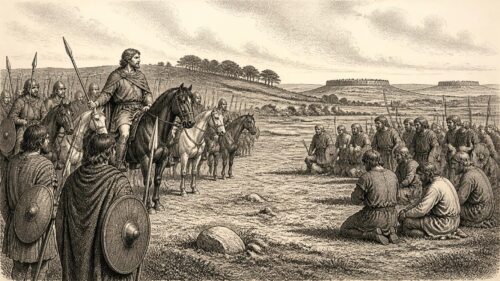
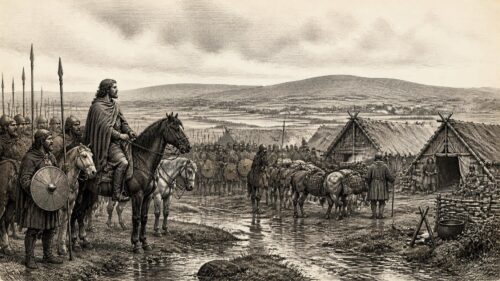
The main political fact of 1016 was the continuing reassertion of Máel Sechnaill’s authority. Chronicon Scotorum places in this year an expedition by Máel Sechnaill into Ulaid, where he took hostages. In eleventh-century Irish politics hostages were not symbolic ornaments; they were living guarantees of submission, alliance or good behaviour. Such an expedition suggests that the king of Mide was not merely claiming an old title after Brian’s death, but actively repairing a network of obedience across the northern half of Ireland.
The Ulaid, ruling in the north-east, were not passive subjects. Their neighbours and internal rivals mattered greatly, and the year also saw a battle between the Ulaid and the Dál Araide. The Dál Araide were defeated, yet the casualties named by the annals show how costly the encounter was on both sides. Domnall ua Loingsig, king of Dál Araide, fell; so too did Niall son of Dub Tuinne, described in Chronicon Scotorum as overking of Ulaid, and Conchobar ua Domnaill, king of Uí Tuirtre. This was not an anonymous skirmish. It removed leading figures from several northern power groups and helps explain why outside intervention by Máel Sechnaill could be effective or necessary.
Donnchad And The Shannon
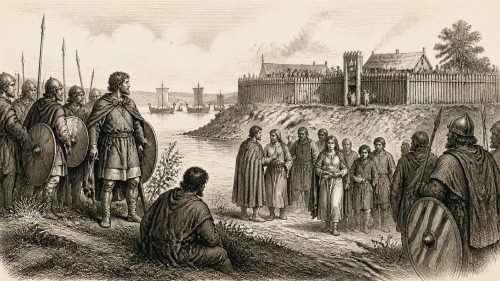
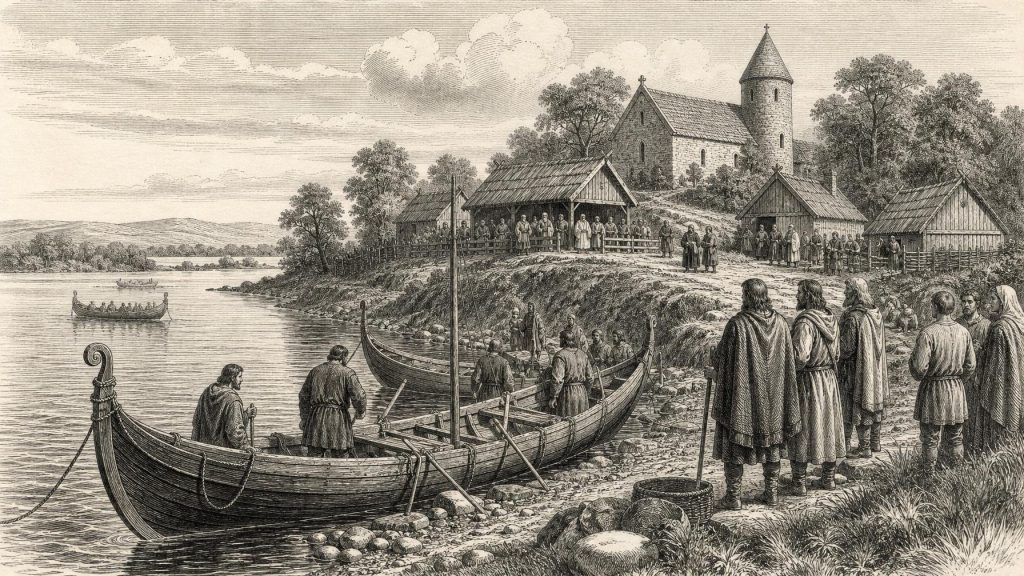
Munster was meanwhile under Donnchad mac Briain, Brian’s son. The Annals of Inisfallen, with their Munster perspective, give one of the year’s most revealing entries: a great hosting by “Brian’s son” to Loch Rí, or Lough Ree, on the Shannon. The force plundered Inis Clothrann and Inis Bó Finne, carried off the boats of Máel Sechnaill and Leth Cuinn, and took the hostages of Munster from Cnámhchaill westwards. Chronicon Scotorum records the same Munster plundering of the islands, though more tersely.
This was a carefully placed act of power. Lough Ree lay on the Shannon, the great north–south artery that connected inland territories, ecclesiastical settlements and political frontiers. Boats mattered because lordship on the Shannon required movement as much as landholding. By taking vessels associated with Máel Sechnaill and Leth Cuinn, Donnchad challenged the practical reach of northern authority. By taking hostages in western Munster, he also tightened his grip over his own province. The expedition should not be exaggerated into a conquest of Ireland, but it shows that Brian’s heir was energetic, ambitious and alert to the strategic value of river and lake.
The targets, Inis Clothrann and Inis Bó Finne, were not great walled towns in the later medieval sense. Island settlements could include churches, residences, stores and boats, and they were vulnerable to sudden attack. Plundering such places meant more than stealing portable goods. It disrupted communications, prestige and the protection expected from local rulers.
Leinster, Osraige And Local Violence
Elsewhere, the annals record the hard edge of regional politics. Donncuan son of Dúnlang, king of Leinster, and Tadc ua Riain, king of Uí Drona, were killed at Leithglenn by Donnchad son of Gilla Pátraic of Osraige. The Annals of Loch Cé and Chronicon Scotorum agree on the broad fact of the killing; the Four Masters, in a chronologically awkward entry corresponding to this period, add the morally charged detail that friendship and oaths had been made earlier in the day. Whether or not that embellishment preserves exact circumstances, the entry reflects a familiar annalistic concern: treachery among rulers was remembered as a political and moral offence.
Osraige, lying between Munster and Leinster, was a kingdom whose rulers often profited from the weakness of larger neighbours. In 1016 it appears not as a borderland to be passed through, but as an active political force. Another entry in the Annals of Inisfallen says that Baethán son of Dúnlang was killed by the king of Osraige in Lethglenn. The recurrence of Leithglenn in these notices hints at a zone of confrontation where Leinster dynastic politics and Osraige ambition overlapped.
Several other named deaths belong to the same pattern of fractured authority. Mac Raith son of Muiredach, king of Ciarraige Luachra in the south-west, died. Gilla Coluim ua Agda, king of Tethbae in the midlands, was killed at Druim Raithi. In Ára, Ua Lochlainn, a royal heir of Corcu Modruad, was killed at Port Ciaráin by the Conmaicne. Muiredach son of Cadla, king of Conmaicne Mara, also died. The annalists do not always explain motives, but the cumulative impression is clear: Ireland’s political order depended on many small and middle-ranking dynasties, and 1016 brought sharp changes among them.
Churches, Learning And Memory
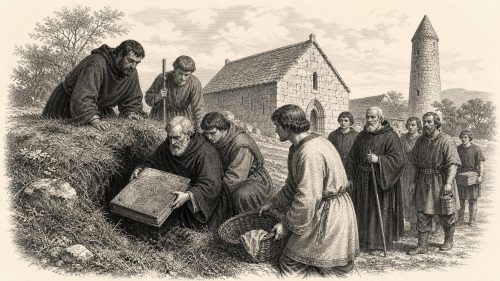
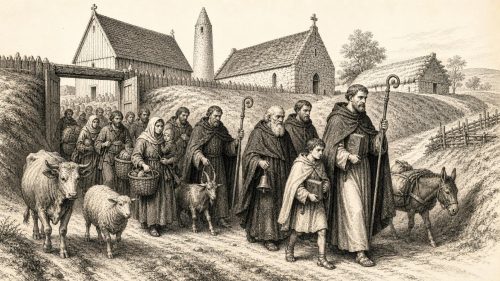
The ecclesiastical record for 1016 is especially rich. The Annals of Ulster note the deaths of Flannacán son of Conaing, an office-holder of Armagh, and Muirgius, superior of the guest-house or hospitality establishment called Lis Oeiged. They also record the deaths of Eithne daughter of Ua Suairt, successor of Brigit, and Diarmait ua Maíl Telcha, successor of Comgall. These titles point to the prestige of Kildare, associated with Brigit, and Bangor, associated with Comgall, as well as to the complex offices within great churches. The “successor” of a saint was not merely a devotional figure: such people could hold property, manage dependants and represent a saint’s familia in politics.
The Annals of Inisfallen add the repose of Cormac son of Dúnlang, successor of Barre, linking the year to Cork’s ecclesiastical tradition. Taken together, the notices remind us that Irish Christianity in 1016 was organised around powerful churches, saintly founders, hereditary interests and learned offices. Monasteries were places of prayer, but also of law, memory, teaching, hospitality and economic management.
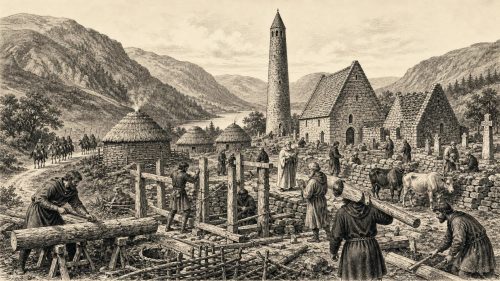
That world suffered material damage in 1016. Chronicon Scotorum states that Clonmacnoise, Clonfert Brénainn and Kells were burned. The Annals of Loch Cé record the burning of Clonfert and Kells, and also say that Dún Lethglaise, or Downpatrick, was entirely burned. The sources do not always identify a culprit or cause, so it is safest to treat these as firmly dated disasters rather than ascribe them to a particular army unless the annal says so. Fire in an ecclesiastical settlement could destroy wooden buildings, stores, books, tools and dwellings; it could also interrupt the routines of pupils, clerics, craftsmen and tenants who lived around the sacred core.
The Death Of Mac Liag
The year’s most resonant cultural death was that of Mac Liag, identified by Chronicon Scotorum as Muirchertach and by the Annals of Ulster as chief ollamh of Ireland. He was closely associated with the learned poetic world that celebrated kings and preserved reputations. Later tradition connects him with Brian Bórama, and even if individual attributions must be handled cautiously, his death in 1016 marks the passing of a figure from the generation that had witnessed Brian’s ascent and the reshaping of Irish high-kingship.
An ollamh was not simply a court entertainer. The highest poets were trained professionals whose work joined genealogy, praise, satire, law, memory and political argument. They helped rulers present themselves as legitimate, generous and victorious. In a society where public reputation mattered deeply, the death of a chief poet could be noted beside the deaths of kings and abbots because learning itself was a form of power.
Everyday Life And The Weather
The annals rarely describe ordinary households directly, yet 1016 allows glimpses of the pressures placed on them. Raiding produced captives, cattle losses and broken local security. Hostage-taking involved elite families, but it also signalled new obligations for whole communities. Monastic fires affected not only clerics but the lay workers, guests, students and dependants attached to church settlements. Boats seized on Lough Ree mattered to fishing, ferrying, raiding and communication.
The economy behind these entries was still overwhelmingly rural. Cattle, crops, woodland, river traffic and tribute sustained kings and churches alike. Viking-founded towns such as Dublin and Waterford remained important centres of craft, trade and silver exchange in this period, but the 1016 annals are dominated by inland politics and ecclesiastical places rather than by urban commerce. That silence should not be mistaken for irrelevance; it simply shows what the annalists chose to record for this year.
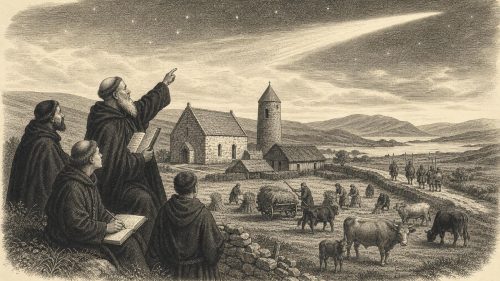
One entry is vividly environmental. The Annals of Inisfallen report a great soughing wind in the autumn, so violent that it broke woods and houses and nearly caused people to die of terror. Medieval annalists often recorded unusual weather because it threatened crops, buildings and livestock, and because it could be read as a sign of divine warning. For the people who endured it, the storm was also immediate and physical: roofs, trees and walls failed, and communities already unsettled by war faced another kind of insecurity.
What Kind Of Peace?
The brief statement “peace in Ireland” in the Annals of Loch Cé is therefore best read with care. It may reflect the absence of a great general war comparable to Clontarf, or a momentary balance between Máel Sechnaill’s restored supremacy and Donnchad mac Briain’s Munster ambitions. It does not erase the killings at Leithglenn, the battle in the north, the plundering of Shannon islands or the burning of major churches.
In 1016 Ireland was not leaderless, but authority was layered and contested. Máel Sechnaill could take hostages from Ulaid; Donnchad could strike into the Shannon lake-world; Osraige could intervene violently in Leinster; churches could lose buildings yet retain enough institutional strength for their deaths and offices to be carefully recorded. The year’s importance lies in this mixture of recovery and strain. After the shock of 1014, no single ruler remade the island in 1016, but many rulers, clerics and learned men shaped the fragile settlement that followed.
Primary Sources
- The Annals of Ulster
- Part 587 of The Annals of Ulster
- Annals of Inisfallen
- Annals of Inisfallen (Irish Text)
- Chronicon Scotorum
- Chronicon Scotorum (Irish Text)
- Part 1 of Annals of Loch Cé
- Part 12 of Annals of the Four Masters
- Annals of Tigernach
- Cogadh Gaedhel re Gallaibh: The War of the Gaedhil with the Gaill
- Donnchad | Dictionary of Irish Biography
- Mac Liacc, Muirchertach | Dictionary of Irish Biography
- Brian Bórama (Bóruma, Boru) | Dictionary of Irish Biography
- Donnchad | Dictionary of Irish Biography
- Viking | National Museum of Ireland
- 950-1450: Vikings, Normans and Medieval Mints | National Museum of Ireland
- Clonmacnoise Monastic Site | Heritage Ireland
- 2996 – Excavations.ie
- The Economy of Early Medieval Ireland
- Early Medieval Ireland: Archaeological Excavations 1930-2009 – Text for Royal Irish Academy
- Kildare: Irish Historic Towns Atlas Text
- Kells: Irish Historic Towns Atlas Text
- County Kildare Urban Archaeology Survey
- Dublin City Urban Archaeology Survey