The Conscription Pledge1918 CE
In 1918, Britain’s attempt to impose conscription on Ireland, amid the failure of the Irish Convention, united constitutional nationalists, Sinn Féin, labour, Catholic clergy and local communities. Pledges, a national strike and women’s activism helped make enforcement politically hazardous, while arrests under the alleged German Plot enhanced Sinn Féin’s standing. Simultaneously, influenza caused 10,651 recorded deaths, straining households and institutions. After the Armistice, an expanded electorate voted in December. Sinn Féin won 73 of 105 seats, displacing the Irish Parliamentary Party, although unionism remained strong in the north-east. The year reshaped nationalist politics and foreshadowed Ireland’s subsequent revolutionary political conflict.
Dateline
In 1918, Ireland’s public life was transformed by a threat that was never carried into effect: compulsory service in the British Army. The proposal arrived during the final and most desperate phase of the First World War, but it united forces which had spent years in sharp disagreement. Constitutional nationalists, Sinn Féin, organised labour, Catholic bishops and many local communities resisted it together. The campaign gave practical expression to a claim that Ireland possessed a separate national will. By December, that claim had helped to overturn the older parliamentary nationalism associated with Home Rule.
The year was also shadowed by influenza. As political meetings, strikes, arrests and an election altered the public sphere, illness entered homes, barracks, prisons, hospitals and workhouses. The pandemic’s deadliest Irish wave came in the autumn, while the country was preparing for its most consequential election in a generation. Thus 1918 joined constitutional crisis, popular mobilisation, public health emergency and the end of a world war in one exceptionally compressed year.
A Failed Constitutional Settlement
The Irish Convention, convened in 1917 under the chairmanship of Sir Horace Plunkett, ended its deliberations in April 1918. It had attempted to find an agreed form of Irish self-government within the United Kingdom. Its report showed that some delegates, including Southern Unionists and a majority of Irish Parliamentary Party representatives, had moved towards compromise. Yet the essential difficulties remained unresolved: Ulster Unionist opposition to an all-Ireland settlement, the future of customs and finance, and the extent of Irish autonomy. Sinn Féin and the Irish Labour movement had not participated in the Convention, limiting its authority from the outset.
The failure mattered because David Lloyd George’s government paired a new Irish political initiative with a proposal to extend conscription to Ireland. On 16 April, Parliament passed the Military Service Act. For British ministers, facing the German spring offensive on the Western Front, manpower was an urgent military question. In Ireland, however, compulsion was received not simply as a wartime measure but as a coercive assertion of Westminster’s power over a country that had not consented to it. The coupling of Home Rule and conscription convinced many nationalists that promised constitutional reform could not be trusted.
A National Coalition Against Conscription
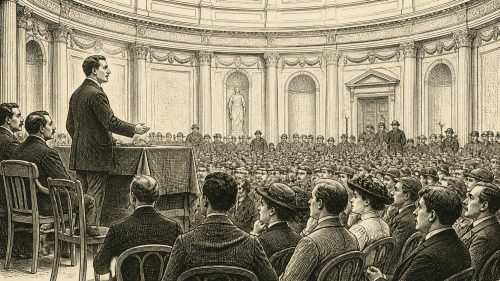
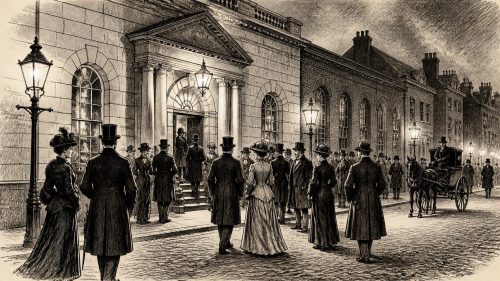
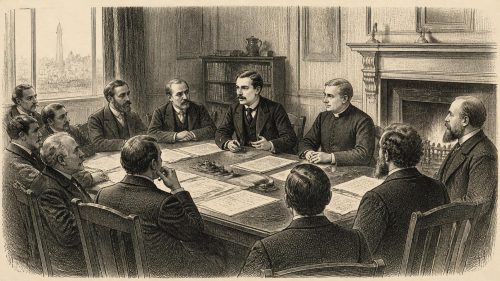
On 18 April, leading figures met at Dublin’s Mansion House at the invitation of the Lord Mayor, Laurence O’Neill. The gathering brought John Dillon and Joseph Devlin of the Irish Parliamentary Party into the same room as Éamon de Valera and Arthur Griffith of Sinn Féin, alongside labour representatives including Thomas Johnson and William O’Brien. Their declaration rejected the right of the British government to impose compulsory military service upon Ireland. It was an unusual and important display of unity between parties that differed profoundly over the future constitutional relationship with Britain.
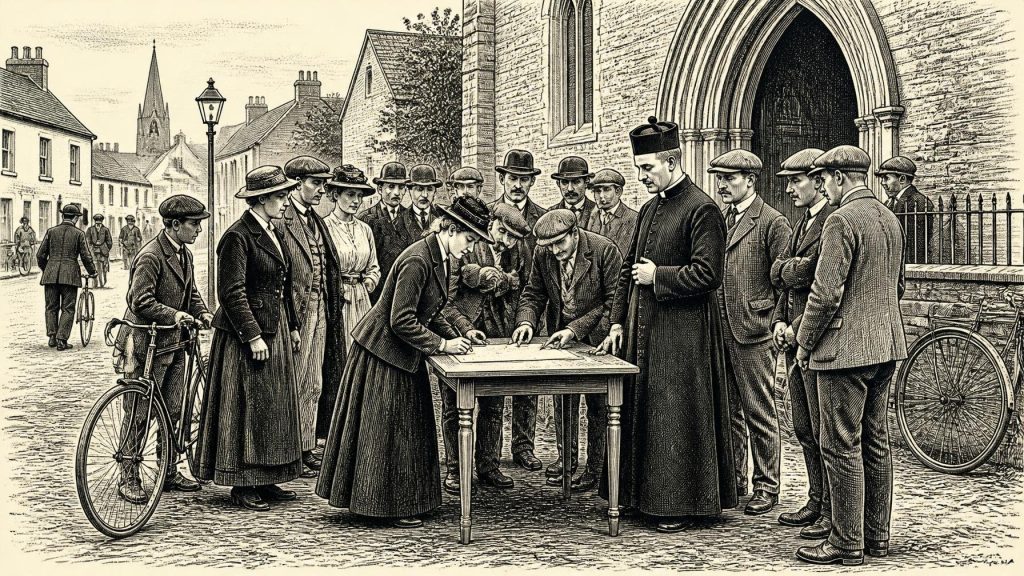
The Catholic hierarchy gave the campaign immense reach. The bishops condemned compulsory service as oppressive and instructed clergy to organise a pledge against it. On Sunday 21 April, men and women signed the anti-conscription pledge in parishes across much of nationalist Ireland. Churches became places not only of worship but of political organisation, where religion, local authority and national protest converged. The language of resistance was carefully framed: opponents presented their stand as a defence of conscience, liberty and Ireland’s right to determine its own affairs.
Labour demonstrated the campaign’s capacity to interrupt ordinary economic life. A special convention of the Irish Trade Union Congress and Labour Party endorsed a one-day stoppage, held on Tuesday 23 April. Work ceased widely in Dublin and many other towns: transport, factories, shops and docks were affected, while Mass meetings and religious observance marked the day in many places. Participation was far less complete in strongly unionist districts, especially in north-east Ulster. That limitation was significant. The strike showed extensive nationalist mobilisation, but it did not erase Ireland’s deep political and communal division.
Women were highly visible in the movement. Cumann na mBan organised Lá na mBan on 9 June, encouraging women to pledge that they would not take the jobs of men conscripted into the army. This was both an anti-war action and a statement about women’s public citizenship. Women had long done essential organisational work in nationalist and labour campaigns; in 1918 they acted publicly as signatories, canvassers, speakers, organisers and voters-in-waiting.
Arrests and the ‘German Plot’
Rather than restoring authority, the government’s response strengthened Sinn Féin. On 17 and 18 May, British authorities arrested dozens of prominent republicans, including de Valera, Griffith, Countess Markievicz, Maud Gonne MacBride and Kathleen Clarke. The arrests were justified by official allegations of a treasonable connection between Sinn Féin and Germany, usually remembered as the ‘German Plot’. The allegation was politically explosive, but those detained were interned rather than brought to a public trial that might have tested the evidence.
The immediate effect was to remove prominent leaders from Ireland. The larger political effect was the opposite of that intended. Imprisonment made candidates and organisers appear as victims of a government that had threatened conscription and then suppressed its opponents. Arthur Griffith, detained in Gloucester prison, was elected for East Cavan in a June by-election. The episode further damaged the Irish Parliamentary Party, whose leaders had stood in the anti-conscription alliance but could not match Sinn Féin’s growing reputation for defiance and sacrifice.
Conscription was never enforced in Ireland. Military circumstances changed after the German offensive faltered, while the scale of opposition made implementation hazardous. This outcome was claimed by many participants as a victory of collective action: the pledge, the Church-backed campaign, the labour stoppage and the threat of wider non-cooperation had demonstrated the practical difficulty of governing without consent.
Influenza in Homes and Institutions
While the conscription crisis dominated headlines, influenza spread through Ireland in several waves. The first became evident during the summer of 1918; the autumn wave was far more lethal. It arrived in a society already strained by wartime shortages, disrupted work and the absence of medical personnel serving with the forces. Families faced sickness amid overcrowded housing, poverty and uneven access to doctors or nursing. Hospitals, workhouses and voluntary agencies bore pressures that could not be captured fully in political speeches or election posters.
The official figures reveal the scale of the catastrophe without exhausting its human meaning. Sir William John Thompson, Registrar-General for Ireland, later recorded 10,651 deaths attributed to influenza during 1918, out of 78,695 registered deaths from all causes. Pneumonia deaths also rose sharply, and many influenza cases were complicated by pneumonia. Death was therefore felt not only among the elderly but, unusually, among younger adults and working-age people. Local experience varied, but no region was entirely insulated by the island’s political boundaries or rural character.
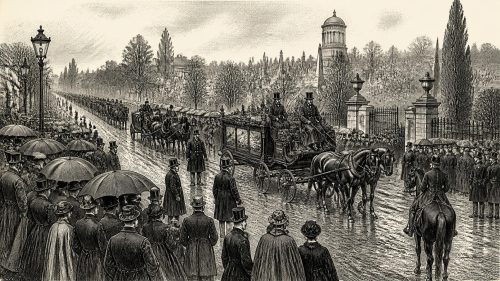
The epidemic also intersected with politics. Influenza afflicted prisoners held after the May arrests, and the death on 9 December of Richard Coleman, a Sinn Féin prisoner from Swords who had been interned in Usk prison in Wales, became a potent issue shortly before polling day. In Dublin, Dr Kathleen Lynn was briefly arrested on 31 October but released on condition that she assist during the emergency; she worked to provide care for influenza patients at Charlemont Street. Such episodes show how the public health crisis could temporarily compel the state to rely upon people it otherwise treated as political opponents.
Armistice and a New Electorate
The Armistice of 11 November ended fighting between the Allies and Germany, but it did not settle Ireland’s political future. The end of the war instead intensified arguments about national self-determination, a principle associated in public debate with President Woodrow Wilson’s vision of the peace settlement. Sinn Féin argued that a people asked to sacrifice in the name of democracy should be entitled to determine its own status. Unionists, meanwhile, continued to insist on maintaining the Union and retained strong electoral ground in much of Ulster.
The general election of 14 December was held under a transformed franchise. The Representation of the People Act had enfranchised most adult men aged over 21 and some women aged 30 or over who met property or household qualifications; women could also stand as parliamentary candidates. The enlargement of the electorate did not create universal adult suffrage, but it brought many women and working-class men into a Westminster election for the first time. Campaigning took place amid influenza, bereavement and the after-effects of war, conditions that shaped turnout and local organisation in ways difficult to measure precisely.
The December Verdict
The Irish result was decisive, though it was not a simple island-wide plebiscite. Of 105 seats, Sinn Féin won 73, with 25 of those uncontested. The Irish Parliamentary Party, long the principal voice of constitutional nationalism at Westminster, won six. Unionists and Labour Unionists won the remaining seats, their strength concentrated particularly in Belfast and the north-east, though unionist representation also persisted in Dublin and elsewhere. Labour did not contest the election, having decided that a three-cornered nationalist contest might divide the anti-unionist vote.
Sinn Féin’s victory reflected several connected developments: resentment at the handling of the 1916 Rising, the collapse of confidence in the Convention, the conscription crisis, organisational growth in towns and parishes, and an election platform that treated Ireland as entitled to independent representation at the coming peace conference. It should not be read as evidence that every Irish voter held an identical view. The electoral map still displayed powerful unionist and constitutional-nationalist minorities, and many seats were not contested. Nevertheless, the old parliamentary order had been broken.
Countess Markievicz’s election for Dublin St Patrick’s carried a significance beyond her constituency. She became the first woman elected to the House of Commons. Like the other Sinn Féin MPs, she would not take her Westminster seat, in accordance with the party’s abstentionist policy. Her success represented both the altered franchise and the central role women had played in Ireland’s political movements, even as the number of women candidates remained very small.
By the close of 1918, Ireland had not yet achieved a constitutional settlement, nor had it entered the full-scale conflict that would follow. But the year had changed the terms on which politics would be conducted. A proposed draft had generated an unprecedented alliance; a pandemic had exposed social vulnerability; and an election had transferred nationalist authority from the Home Rule party to Sinn Féin. The consequences would shape the opening of 1919 and the course of Irish history thereafter.
Primary Sources
- Military Service (No. 2) Act 1918
- Representation of the People Act, 1918
- The Representation of the People Act 1918
- The Irish Convention 1917–1918
- Ireland Closes Down Due to General Strike Against Conscription
- Opposing Conscription
- The ‘German Plot’
- A Sheep in Wolf’s Clothing No Match for the Wise Serpent
- Ireland 1900–1925: Crisis, War and Revolution – A Resource for A-Level Students
- Griffith, Arthur Joseph
- Markievicz, Constance Georgine
- Clarke, Kathleen (Caitlín Bean Uí Chléirigh)
- ‘Woman’s Natural Sphere Is in the Home’: Women in Ireland, from the Rising to the Republic
- The Irish General Election of 1918
- Election 1918 – What You Need to Know About How Ireland Voted
- Prelude to Partition or a Republic? The 1918 Election in Ireland
- Conflict
- Mortality from Influenza in Ireland
- Greatest Killer of the Twentieth Century: The Great Flu of 1918–19
- Revisiting the Demography of the 1918 Influenza Pandemic in Ireland
- The 1918/19 Influenza Pandemic and COVID-19 in Ireland and the UK
- Decade of Centenaries
- Aftermath of Election 1918 – An Irish Revolutionary Government