Derc Ferna Under Siege930 CE
Dateline
The surviving record for 930 is unusually revealing not because it describes one island-wide war, but because several annals catch armed Scandinavian groups operating at three inland waters: Loch Bethrach in Osraige, Lough Neagh in the north, and the routes connected with the Shannon and Limerick. The sharpest event was the assault on Derc Ferna in Osraige. The Annals of Ulster say that Gofraid, grandson of Ímar, came with the foreigners of Dublin and ‘razed’ the place, an act presented as extraordinary even by the standards of earlier devastation. Chronicon Scotorum calls it a siege and capture, adding a grave, but uncorroborated, figure of one thousand deaths. The Annals of Inisfallen, written from a Munster perspective, associate the attack with a naval encampment of the foreigners of Limerick at Loch Bethrach.
The agreement is important; it establishes a major attack in or directly affecting Osraige during this calendar year. Yet the differences matter too. Medieval annals were compiled and copied in different centres, with dating systems that do not always align exactly, and their terse notices rarely explain alliances or command structures. Derc Ferna itself is not securely located. It should not confidently be equated with any modern site. What can responsibly be said is that a prominent stronghold or defended place in Osraige was taken and devastated, in a campaign that brought the military power of Scandinavian fleets into the inland political landscape of south-east Ireland.
Osraige’s Waterways at War
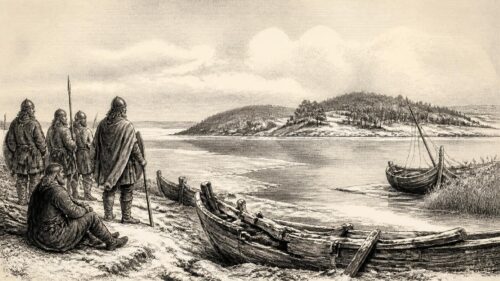
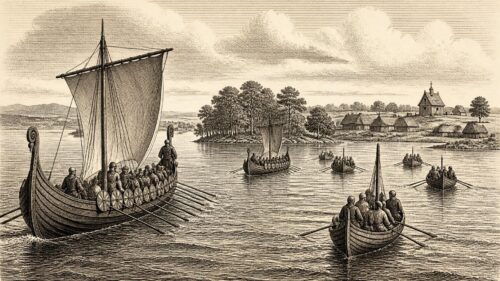
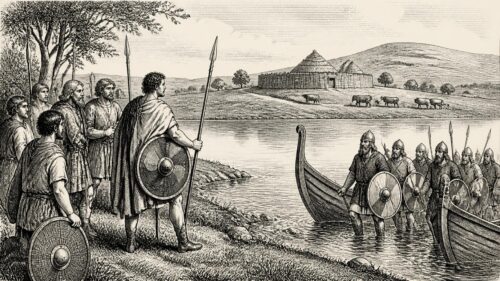
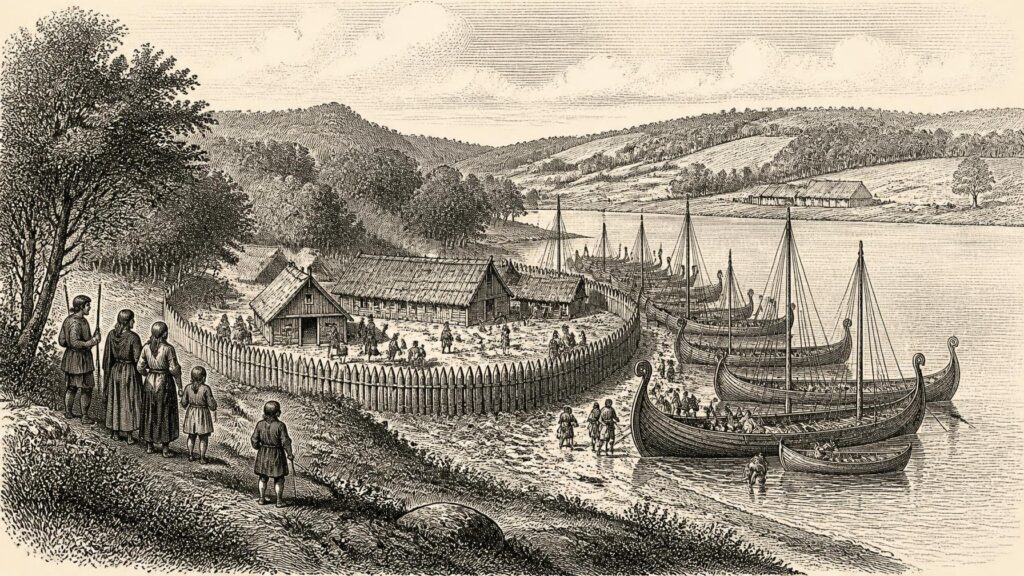
Osraige occupied a strategic position between Munster and Leinster, centred broadly on the valleys and uplands later associated with Kilkenny and neighbouring districts. Its rulers had long had to negotiate the ambitions of stronger provincial neighbours. In 930, water made the kingdom particularly vulnerable. Loch Bethrach has not been securely identified, but the annalists’ phrasing leaves no doubt that the foreigners had ships or a fleet-based camp there. A lake was not merely a place to anchor. It could provide a protected operating base, a route through difficult country, a storehouse for supplies and captives, and a point from which armed parties could strike surrounding settlements.
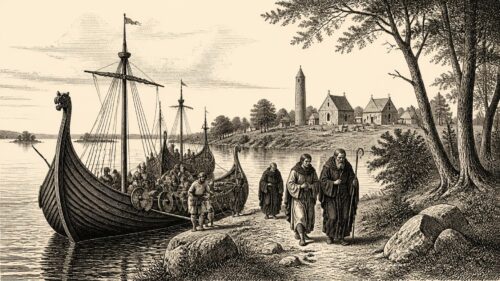
The Irish word often used for a Scandinavian fortified fleet-base is longphort. It need not conjure a permanent town of streets and markets. Such places could vary greatly: defended shore camps, seasonal bases, ship stations, or settlements that became more durable. The evidence for Loch Bethrach is too slight to reconstruct its buildings, duration or exact position. Still, the Annals of Inisfallen explicitly call the Limerick force’s installation a naval encampment. That makes 930 a clear example of ships being used as instruments of regional power well away from the open coast.
The same notice connects this encampment with the ravaging of Derc Ferna. The Annals of Ulster instead name Gofraid of Dublin as the attacker, while Chronicon Scotorum records both the siege and the contemporaneous movement of the Limerick foreigners into Mag Raigne. These are not necessarily irreconcilable accounts. Dublin and Limerick leaders could be competitors, allies of convenience, or forces whose operations happened to overlap. But the sources do not say that Gofraid commanded the Limerick fleet, nor do they supply terms of agreement between them. The responsible conclusion is narrower: Osraige faced pressure from Scandinavian maritime forces connected with both Dublin and Limerick, and Derc Ferna suffered a major assault.
The Meaning of a Siege
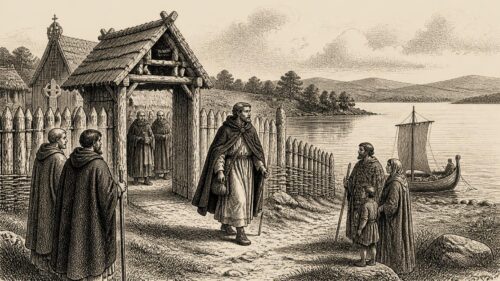
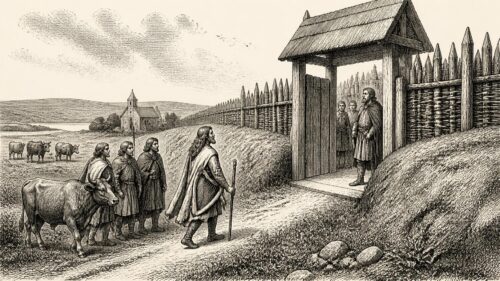
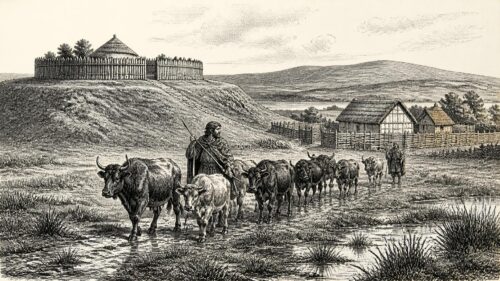
‘Siege’ should not be treated as a description of stone castles and artillery. Ireland in 930 was a landscape of royal residences, ringforts, ecclesiastical enclosures, island settlements and defended natural positions. A siege could mean surrounding an enclosure, blocking access to water or food, storming gates or palisades, burning buildings, and forcing surrender. The annalistic language of taking and razing Derc Ferna indicates more than a passing cattle raid. It suggests that the attackers overcame a place significant enough to be remembered by name.
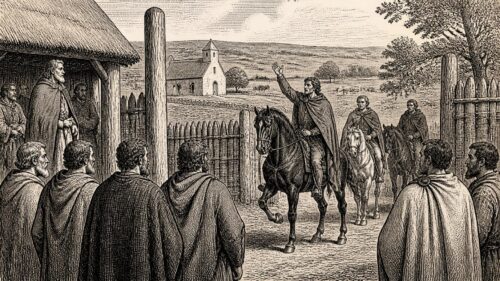
The human cost is harder to measure. The thousand deaths reported in Chronicon Scotorum may preserve a tradition of exceptional slaughter, but medieval casualty totals often had rhetorical as well as numerical force. It is safer to say that the attack caused severe loss of life and disruption. The destruction of a central place could entail the killing or capture of defenders and inhabitants, the loss of stored food and livestock, and the seizure of valuables. It also struck at authority. A king’s ability to protect dependants, churches and routes of communication was fundamental to his standing. The taking of Derc Ferna therefore affected not only the locality but the political credibility of Osraige’s ruling elite.
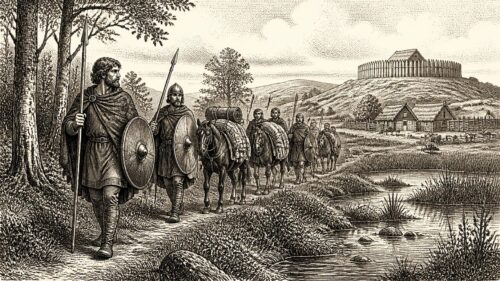
For ordinary people, the immediate experience was likely defined by flight, concealment and uncertainty. Most early medieval households lived in a strongly rural economy of cattle, grain, dairying and local exchange. A fast-moving fleet could bring armed men suddenly to a lakeshore district, but its effects lasted after the ships departed: fields untended, animals driven off, buildings destroyed, kin missing, and obligations to rulers or churches made harder to fulfil. The annals name kings, abbots and raiders; they leave these wider consequences implicit.
Dublin, Limerick and Inland Reach
Gofraid, grandson of Ímar, ruled the Scandinavian kingdom of Dublin during these years. Dublin was not simply a raiders’ camp. By the tenth century it was an established Irish Sea port with connections to Britain, western Scotland and the wider Scandinavian world. Its ruler could mobilise ships, fighting men and the proceeds of trade and tribute. The attack on Derc Ferna shows that this urban and maritime strength could be projected into Irish kingdoms beyond Dublin’s immediate hinterland.
Limerick’s Scandinavian community likewise had a distinctive regional reach. Its base on the Shannon gave it access to western and midland waterways, while movements eastwards could put pressure on Munster, Osraige and Leinster. The 930 entry should not be used to claim that Loch Bethrach was a settled Limerick colony: the evidence does not warrant that. It does show Limerick-associated foreigners establishing a naval position in Osraige. This was a mobile, connected world, in which rivers, lakes, portages and coastal passages could matter as much as roads.
Commerce and violence were intertwined rather than opposite activities. Ships capable of carrying raiders and plunder also carried people, metal, textiles, animal products and other goods. Ireland’s Scandinavian settlements developed as places of craft, exchange and political negotiation, but their wealth rested partly on coercive capacity. The 930 campaign reveals the harsher edge of that system. Control of a lake or river route could open opportunities for trade in one season and enable a destructive expedition in another.
Ruib Mena on Lough Neagh
At the opposite end of the island, the Annals of Ulster record foreigners on Lough Neagh, with their naval camp at Ruib Mena. Chronicon Scotorum identifies the leader as Torolb, a name generally understood as Scandinavian. The entry is concise, but it is valuable because it records a specific inland base. Ruib Mena is commonly connected with the point where the River Main meets Lough Neagh in modern County Antrim, although the precise archaeological footprint of a tenth-century camp has not been demonstrated.
The notice illustrates the strategic logic of Lough Neagh. The lake lay amid the competing territories of northern dynasties and Ulaid, and its tributaries created routes into surrounding districts. A fleet stationed there could threaten communities around the shore without undertaking a hazardous sea voyage for each raid. Nor should a camp be imagined as isolated from Irish politics. Scandinavian groups depended on local knowledge, provisions, alliances and rivalries; Irish rulers could alternatively resist, accommodate or exploit them. The sparse annal does not disclose which relationships applied at Ruib Mena in 930, but it records a presence that northern rulers could not ignore.
Churches, Learning and Memory
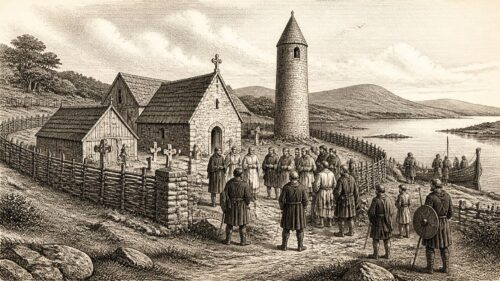
The year’s entries also preserve a quieter register of loss. The Annals of the Four Masters, whose chronology must be used cautiously for this period, place the deaths of several abbots under 930, including leaders associated with Lann Léire, Tech Moling, Clonard, Inis Caindech, Drumcliff and Fobhar. Such notices reflect the density of ecclesiastical institutions in Irish society. Monasteries and churches were centres of worship, burial, hospitality, landholding, education and manuscript culture; their heads were significant public figures as well as clerics.
The same compilation records the death of Aengus son of Aengus, styled chief poet of Ireland. Other annals place his death differently, so it cannot be treated as a firmly dated event of 930. Its appearance near this year nevertheless reminds us of an institution central to the age. Poets were not merely entertainers. Learned professionals preserved genealogies, praise, satire, legal memory and political reputation. In a society where authority was continually asserted through ancestry and public acclaim, their work was part of power itself.
A Year of Connected Frontiers
There is no sound basis for calling 930 a decisive turning point in Irish history. Donnchad Donn remained the leading Uí Néill king, but the year’s securely dated notices do not record a new national settlement imposed by him. Rather, they show the limits of any simple picture of a unified Ireland under a single ruler. Osraige, Dublin, Limerick, Lough Neagh and the ecclesiastical centres of several provinces all belonged to a political world of overlapping lordships.
Derc Ferna’s destruction is the year’s most consequential recorded event. Alongside the fleet-base at Loch Bethrach and Torolb’s camp at Ruib Mena, it demonstrates how inland waters linked local communities to the military and commercial networks of the Irish Sea. In 930, Ireland’s lakes were not remote margins. They were frontiers, highways and temporary strongholds: places where regional kingship, religious communities and Scandinavian sea-power met with devastating results.
Primary Sources
- The Annals of Ulster — Year U930
- Chronicon Scotorum — Annal CS930
- Annals of Inisfallen — Annal AI930
- Annals of Inisfallen — Irish text, Annal I930
- Annals of the Four Masters — Annal M930
- The Annals of Ulster
- Chronicon Scotorum
- Annals of Inisfallen
- Annals of the Four Masters
- The Annals of Tigernach
- Donnchad Donn | Dictionary of Irish Biography
- Amlaíb (Óláfr Godfridsson) | Dictionary of Irish Biography
- Ímar (Ívaar) | Dictionary of Irish Biography
- The Vikings in Ulaid
- Vikings’ Settlements in Ireland Before 1014
- Early Medieval Ireland: Archaeological Excavations, 1930–2009
- The Archaeology of Livestock and Cereal Production in Early Medieval Ireland, AD 400–1100
- Final Report of the Woodstown Working Group
- The Longphort Phenomenon in Early Christian and Viking Ireland
- Limerick: New Discoveries in an Old City
- The Scandinavian Impact—A Geographical Evaluation
- Ireland in the Viking Age
- Glendalough, County Wicklow — National Monuments Service
- Carlingford Castle, County Louth — National Monuments Service