

Shannon Kindred
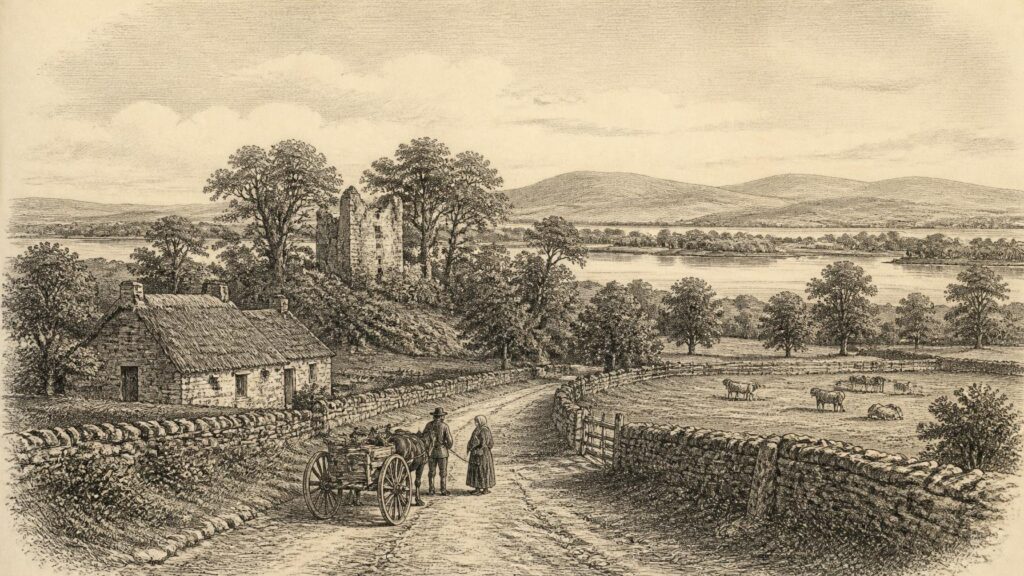
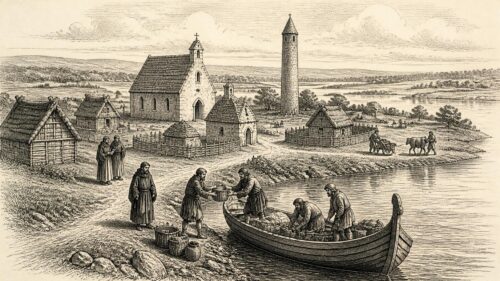
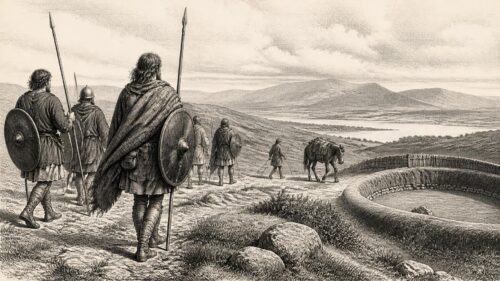
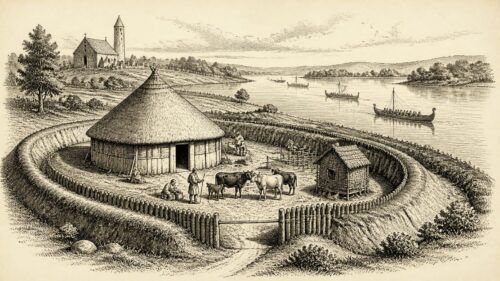
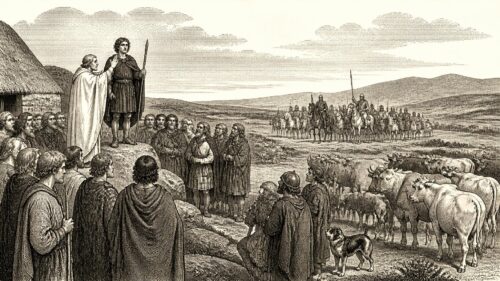
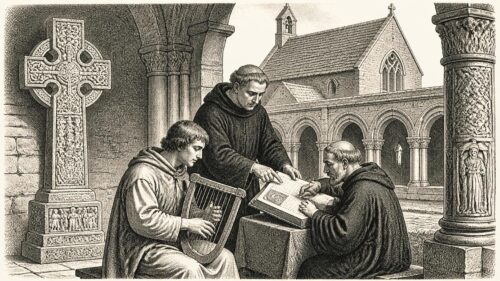
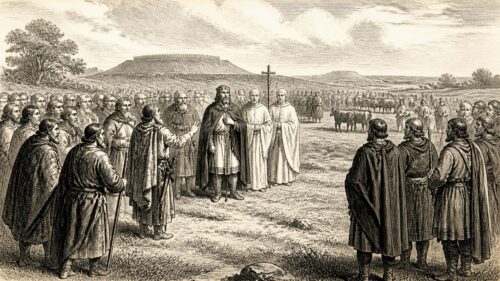
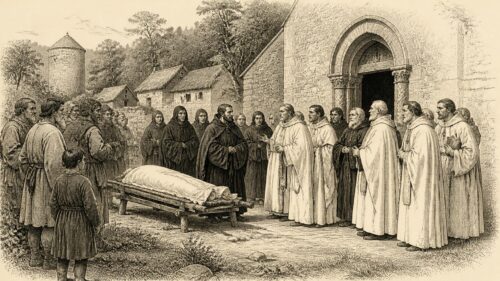
AI generated historical illustration, not a contemporary photograph.
At a Glance
Beirne is an Irish name whose history is most securely located not in a romantic, timeless “clan” past, but in the changing landscape of Connacht: around the Shannon, between Elphin and Jamestown, in records written variously in Irish, Latin and English, and in families whose spelling altered as power, language and administration altered around them. The modern surname Beirne is particularly associated with County Roscommon and parts of Leitrim. Its proximity in sound and spelling to Byrne has frequently caused confusion, yet the two names cannot simply be treated as interchangeable. The familiar Leinster surname Byrne generally derives from Ó Broin; Beirne and O’Beirne are associated with Ó Birn or Ó Beirn, a Connacht name with its own documented regional history. That distinction is important, not because surnames are immutable badges of descent, but because place, record and usage point to different historical settings.
The history of Beirne is also a useful warning against easy certainty. Medieval Irish genealogy, nineteenth-century family history and present-day surname lore can offer impressive narratives of ancient descent. Some may preserve genuine local memory; some reflect learned reconstruction; others are plainly conventional. A responsible account must distinguish between evidence that names identifiable people or places, later interpretations of that evidence, and folklore that cannot be independently proved. The available material does support a substantial Irish history. It does not support the claim that every modern Beirne descends in a straight male line from one named medieval chief, still less from a prehistoric founder.
Name Forms
The name appears in several forms: Ó Birn, Ó Beirn, O’Beirne, Beirne, Birne, Byrne and, occasionally, more remote-looking anglicisations. Such variety should not surprise. Irish names passed through manuscripts written by learned Irish scribes, English administrative records, parish registers, estate papers and civil registration. Each setting had its own conventions. A name spoken in Irish might be written phonetically in English; an apostrophe might appear or disappear; the final vowel might change; and a family could use different forms in different documents.
The prefix Ó originally indicated descendant status. In medieval Ireland it need not be read in the modern bureaucratic sense of a permanent, uniformly applied surname. Hereditary surnames emerged over a long period, while kinship names, personal names and political identities continued to overlap. The Oxford Dictionary of Family Names in Ireland identifies Beirne as deriving from Ó Beirn, ‘descendant of Beirn’. It gives two plausible linguistic routes for the personal name: an Irish rendering of the Old Scandinavian Bjǫrn, usually understood as ‘bear’, or a development connected with the earlier Irish name Bran. These are hypotheses grounded in historical linguistics, not a licence to assign a Viking ancestor to every bearer of the surname.
The uncertainty matters. A Norse-derived personal name could have entered Irish-speaking society through contact, trade, settlement, intermarriage or cultural borrowing. It does not prove a continuous Scandinavian paternal line. Nor does resemblance to Bran settle the matter in the opposite direction. Medieval naming was mobile. Names crossed linguistic and political boundaries, particularly in Ireland’s coastal towns and regional lordships. The most careful conclusion is that Ó Beirn was formed from a personal name whose ultimate source remains debated.
Patrick Woulfe’s influential Irish Names and Surnames, published in 1923, favoured the Bjǫrn explanation and listed Beirne among the later spellings. Woulfe’s work remains valuable as a learned early twentieth-century compilation, particularly for its attention to Irish forms and regional distributions. It should nevertheless be read critically. Its claims about ancient founders and tribal descent belong to a genre shaped by the scholarship and assumptions of its own time. Modern surname dictionaries are more cautious about what an etymology can demonstrate.
Regional Difference
The distinction between Beirne and Byrne is one of the firmest points in the story. Byrne is among Ireland’s most widespread surnames and is closely identified with the Ó Broin of Leinster, especially Wicklow and Dublin. Beirne, by contrast, has a marked Connacht concentration. The names sometimes converged in English spelling, and individual records can make a precise identification difficult. A person entered as Byrne in a Roscommon record may belong to a Beirne family; a person called O’Byrne may instead belong to the Wicklow tradition; and a record alone may not resolve the question.
That difficulty was already recognised by older Irish scholars. Woulfe described two Connacht groups using Ó Birn forms: one in the Síol Muireadaigh region of Roscommon and another in Uí Fhiachrach, in the Mayo area north of Ballinrobe. He also noted early modern instances in Lecale, County Down, but explicitly admitted uncertainty whether they represented Ó Birn or Ó Broin. This is a valuable methodological example. Similar spelling is evidence of possibility, not proof of identity.
In the nineteenth century, changing social pressures could make the distinctions still less tidy. Some families restored an O’ prefix; others abandoned it. Some adopted the form Burns or Byrne in English-speaking contexts. Local pronunciation influenced clerks, priests and schoolmasters. A family historian who searches only one modern spelling will therefore miss relevant records. Conversely, one who treats every Byrne, Burns, Birne and Beirne as one kin group risks constructing an imaginary pedigree from unrelated households.
The surname’s modern geography supplies an important corrective. The Oxford surname dictionary identifies Roscommon as Beirne’s principal Irish location in the mid nineteenth-century valuation period. The pattern is consistent with the name’s older association with north-eastern Roscommon and with later census material. Geography cannot prove descent, but recurrent concentration over centuries is strong evidence of a surname’s historical home.
Shannon Territory
The central landscape in the Beirne story is Tír Briúin na Sionna, often rendered in English as Tir Briuin of the Shannon. It lay in north-eastern County Roscommon, in the district between Elphin and Jamestown, near the river and the routes that linked Roscommon, Leitrim and the wider Connacht interior. The designation is easily misunderstood. Tír means territory or country; Briúin relates to a wider dynastic and territorial vocabulary in Connacht. It should not be casually translated as the private estate of a single modern family.
Yet later historical writing strongly connects the O’Beirnes with this district. Woulfe stated that the Roscommon branch became prominent as stewards to the O’Connors, rose to chieftainship in Tír Briúin in the thirteenth century, and remained in that position for more than three centuries. The University of Galway’s Landed Estates database similarly describes the O’Beirnes as a Gaelic family of north-eastern Roscommon which lost much of its land in the seventeenth century. These sources support the broad historical association. The detailed chronology of succession between local families, however, should be treated as an interpretation derived from annals, later genealogical tradition and regional scholarship, rather than as a simple continuous title deed.
Medieval Irish lordship was neither a modern state nor a system of individual freehold property. Authority rested on kinship, military followings, alliances, ecclesiastical patronage, cattle wealth, tribute and control of territory. A chief could be powerful without holding land in the later legal sense, while a subordinate family might exercise real local influence as stewards, military leaders, clerics or learned professionals. To say that an O’Beirne was chief of Tír Briúin is to describe a position within a Gaelic political order, not necessarily ownership of every field within a neatly surveyed boundary.
The region itself stood within a wider Connacht world long shaped by rival branches of the O’Connor dynasty, by MacDermotts, O’Kellys, O’Hanlys and other families, and by the recurring pressure of Anglo-Norman intervention. The Shannon was not merely a boundary. It was a corridor of movement, trade, warfare and ecclesiastical connection. Local families could gain influence through service to greater dynasties, then defend their own standing amid shifting alliances.
Medieval Records
The earliest securely cited bearers of the name are medieval rather than legendary. The Oxford Dictionary of Family Names in Britain and Ireland lists Aedh Ua Birn in the Annals of Ulster for 1273, Gilla-Crist Ua Birn in 1274, and Muircertach Ua Birn, son of Imhur Ua Birn, in 1300. These entries are significant because they show the name in recognisable hereditary form during the later thirteenth and early fourteenth centuries. They do not establish that the surname began in 1273; records survive unevenly, and the name may have been in use earlier.
Nor should a few named men be inflated into a complete family tree. Annals usually recorded people because of death, violence, ecclesiastical office, political standing or some event thought worthy of notice. The vast majority of people who carried the name left no individual trace in surviving chronicles. An annalistic entry documents a person and a form of the name; it does not document every relationship later attached to that person in a pedigree.
Still, the evidence is enough to put the name firmly inside medieval Irish history. It also anchors the spelling issue. Ó Birn was not invented by nineteenth-century antiquarians seeking a Gaelic original for Beirne. It is found in the learned written culture of medieval Ireland. The relation between the annalistic form and later forms such as O’Beirne or Beirne is historically plausible, but the route was not mechanically uniform. Scribes, translators and clerks made choices; families too made choices, especially as Irish gave way to English in public administration.
The medieval association with the O’Connors is best understood in this setting. Connacht kingship was contested and plural. Service to a royal house could mean stewardship, military obligation, management of revenues, diplomacy or participation in local political coalitions. Older accounts call the O’Beirnes stewards to the O’Connors. This may preserve a meaningful tradition of office and dependence, but ‘steward’ should not be imagined as a modern salaried estate manager. It belongs to a world where status and service were intertwined with kinship and lordship.
Historical Claims
Later narratives frequently state that the O’Beirnes displaced the O’Monaghans as chiefs of Tír Briúin around the middle of the thirteenth century. The formulation appears in Woulfe and has been repeated in regional histories. It is reasonable to report it as a long-standing historical interpretation. It is less reasonable to present it as an event whose exact date, causes and participants are all beyond question. Medieval political change was often gradual: a family’s local authority might grow through marriage, patronage, warfare, the decline of rivals, or the selective survival of documentation.
Older genealogical accounts sometimes present much more ambitious claims. A nineteenth-century history of Irish families traced the O’Beirnes to remote royal and Milesian ancestry. Such accounts are part of the cultural history of Irish genealogy, and they tell us something about how families and antiquarians understood status. They are not, however, evidence in the modern historical sense. Medieval Irish genealogies can preserve real political relationships, but they were also instruments of legitimacy. A descent from an ancient king could support authority in the present, whether or not every generation could be demonstrated independently.
Folklore has a similar value and limitation. Local memory of a family castle, a chieftain’s boundary or an ancestral migration can preserve landscape knowledge that formal archives omit. But memory can also telescope centuries, attach a famous name to a ruin, or transform association into descent. The historical task is not to dismiss such traditions contemptuously. It is to state clearly when they are traditions, compare them with maps and records, and avoid converting them into fact merely because they are repeated.
The O’Beirne connection with Dangan in Roscommon is better documented in the early modern and modern record than many of the more remote genealogical claims. The Landed Estates database identifies Dangan as an original O’Beirne stronghold and traces branches at Jamestown, Dangan and Drumsna into the eighteenth and nineteenth centuries. Even here, ‘stronghold’ should not imply that one unbroken household occupied a site from the Middle Ages to the present. It indicates a durable regional association which later landed records make visible.
Tudor Pressures
The sixteenth century changed the conditions under which Gaelic families held authority. Tudor government sought to extend English law, taxation, military control and administrative oversight throughout Ireland. In Connacht, as elsewhere, local rulers and leading families had to negotiate a political world increasingly mediated by Crown officials, sheriffs, compositions, pardons and written grants. The surviving English records are not neutral observations. They represent the priorities of a conquering administration, and their spellings of Irish names are often inconsistent.
The Fiants, administrative records concerning grants, pardons and other acts issued under the Tudor sovereigns, preserve several forms relevant to the surname. The Oxford dictionary notes Hugh O’Byrn in a Fiant of Edward VI from 1550; John Glas O’Berne, described as a galloglass, in 1563; Tege Oge O’Byrne, called chief, in 1566; Brian O’Berne in 1571; and Donogh Boy O Beirn of Porterin, County Roscommon, in 1590. Some of these people may have belonged to distinct name groups, especially where records place them far from Roscommon. The entries are most useful as proof of spelling diversity and administrative contact, not as proof that all were one family.
Woulfe also reported a 1570 reference to Teig Byrne, alias O Byrne, as ‘the chiefest of Tirowyne’. The phrase is suggestive because Tirowyne is understood as Tír Briúin. Yet its very wording illustrates the difficulty of English transcription. A Gaelic territory and a Gaelic surname have passed through the ear and pen of officials working in another language. Such records remain indispensable, but they must be read with attention to the systems that produced them.
By the later sixteenth century, it was increasingly necessary for Gaelic families to make themselves legible to the Crown. A pardon could acknowledge a local leader while subordinating him to royal authority. A land grant could convert or redefine prior claims. Military service could bring temporary advantage, but also bind a family to external campaigns and administrative scrutiny. The history of Beirne in this period is therefore not a simple tale of resistance or surrender. It is a history of adaptation under unequal power.
Seventeenth Upheaval
The seventeenth century brought deeper disruption. Wars, plantation schemes, confiscations and new forms of land tenure reordered ownership in Connacht. The University of Galway’s Landed Estates database states plainly that the O’Beirnes of north-eastern Roscommon lost most of their lands in the seventeenth century. That broad finding fits the experience of numerous Gaelic landholding families, though the consequences varied by branch, religion, political alignment, marriage and ability to retain or recover property.
It would be misleading to say that confiscation made every Beirne landless, or that every later Beirne household descended from dispossessed gentry. A surname contains people of different ranks: tenants, craftsmen, labourers, clerics, soldiers, merchants and landholders. The survival of a name in a locality does not itself reveal social status. But the loss of leading-family estates had wider effects. It altered local patronage, the distribution of leases, access to education, patterns of marriage and the institutions through which memory was preserved.
The term ‘Gaelic family’ is itself useful only if handled carefully. It refers here to a family whose name, political associations and historical traditions belonged to the Irish-speaking order that predated and coexisted with expanding English rule. It does not denote racial purity, cultural isolation or a fixed social class. Connacht had long been connected to other parts of Ireland and beyond. Its people participated in trade, church networks, military service and migration. The Beirne story belongs to that connected world.
After the upheavals, a family might survive through smaller holdings, professional work, marriages into other local families or service abroad. The retained O’Beirne presence around Dangan and Jamestown demonstrates that political defeat did not mean disappearance. At the same time, possession of a remnant estate should not be mistaken for restoration of the older territorial order. The legal and social basis of landholding had changed decisively.
Estate Survival
The later history of the O’Beirne landed branches is unusually helpful because it can be followed through documentary sources rather than legend alone. The University of Galway’s Landed Estates project records descendants of Teige O’Beirne in the Drumsna area during the early eighteenth century. It identifies Hugh and Patrick O’Beirne as branches associated with Jamestown and Dangan in the early nineteenth century, and describes Patrick as a son of Colonel Andrew O’Beirne, regarded as chief of the clan in the late eighteenth century.
Such language requires a distinction. ‘Chief of the clan’ in a late eighteenth-century family history may describe a recognised senior representative within kin tradition. It does not mean that the British state recognised an independent Gaelic lordship. The old territorial polity had gone. The title survived, where it survived at all, as a matter of lineage, local prestige and cultural memory. That does not make it meaningless; it makes its meaning different.
The database records that Andrew O’Beirne lost most of his property after the rebellion of 1798 and that four of his sons emigrated, while Patrick remained at Dangan. It also notes O’Beirne holdings in Leitrim, Roscommon and Sligo, land offered for sale in the nineteenth century, and nearly 500 acres vested in the Congested Districts Board in 1912. These details place the family within major Irish processes: post-rebellion insecurity, nineteenth-century land sales, emigration, estate fragmentation and state-backed land reform.
They also show why a surname history must not end with the medieval period. The people who carried Beirne in modern Ireland inherited not only a name but the consequences of altered landholding, demographic crisis, migration and new state systems. A family that retained a demesne was not typical of every bearer of the surname. Yet its papers, leases and recorded property can illuminate the regional setting in which many less documented families lived.
Popular Spelling
As English became the predominant language of official record, Beirne became increasingly visible without the O’ prefix. This change was not necessarily a repudiation of Irish identity. It could be a practical adjustment to the language of school, law, market and church register. In some contexts, dropping the prefix made a name easier for officials to write. In others, restoring it could express antiquarian interest, family aspiration or nationalist cultural revival.
Spellings were not only imposed from above. Families used them strategically and inconsistently. One sibling might appear as Beirne in civil registration, O’Beirne in a marriage notice and Byrne in an emigrant record. Clerks copied what they heard, but informants also supplied names in a particular form. The same individual may be found under multiple spellings without having changed identity. A surname researcher must therefore build a case from place, relatives, occupation, age and witnesses, not from spelling alone.
There is a further complication. The English-language form Byrne can represent more than one Irish original. A Roscommon Byrne may indeed be an anglicised Ó Beirn; a Wicklow Byrne may be Ó Broin; other cases require local investigation. This is why national surname maps are useful but insufficient. They reveal concentrations, not individual origins. Parish, townland and family networks remain essential.
The record of names also reflects unequal literacy. A household head who could sign a form might regularise a preferred spelling; a person who made a mark could have a name entered entirely by the registrar. Neither circumstance proves greater or lesser attachment to the surname. It merely explains why the written archive sometimes appears more stable for one family than for another.
Nineteenth Century
The nineteenth century transformed the lives of ordinary Beirnes as it transformed Ireland more generally. Population growth, dependence on small holdings, rural poverty, changing agricultural markets, the Great Famine, mass emigration and the long campaign for tenant-right reshaped Roscommon and Leitrim. A surname’s survival through these decades should not be read as evidence of continuity without hardship. Families endured through adaptation, dispersal and, often, loss.
Genealogical records become richer in this period, but they are not complete. The National Archives of Ireland provides access to the Tithe Applotment Books, later valuation material, wills, census survivals and other series. Each source was created for a purpose other than preserving family history. Tithe records concern liability; valuation records concern property and occupation; wills favour those with assets; civil registration reflects legal procedures. Their silences are as important as their contents.
For a Beirne household, the best research method is consequently cumulative. A townland located in a baptismal entry can be compared with a valuation occupier, a marriage witness, a census household and a death registration. Repeated neighbours often matter as much as the surname. In a region where Beirne was common, identifying the correct Patrick, Mary or John requires attention to associates and places rather than confidence born of a familiar name.
Emigration complicated the picture further. Some branches left for Britain, North America, Australia and elsewhere; others moved internally to towns or to employment in Britain. Abroad, Beirne might be retained, simplified, altered to Byrne, or resumed with an O’ prefix. Migration records often reduce people to a name, age and destination, but the Irish sources can reconnect them to a household and townland. No general history can identify every diaspora branch, and no overseas Beirne should be assumed to descend from the Roscommon landed family simply because of the surname.
Census Evidence
The 1901 and 1911 censuses are among the most valuable surviving sources for the surname in Ireland. The National Archives explains that they are the only complete surviving Irish censuses open to the public for the whole island before the release of the 1926 census. They record households rather than abstract family trees: names, ages, occupations, marital condition, birthplace, religion, literacy and, in 1911, additional information including years married and children born to married women.
For Beirne research, the census provides two kinds of evidence. First, it shows the name embedded in ordinary social life: farmers, labourers, domestic servants, shopkeepers, schoolchildren, clergy and others. Second, it confirms regional concentration. Searchable returns reveal numerous Beirne households in Roscommon and adjoining counties, alongside occurrences in Dublin, industrial towns and other places to which migration carried Connacht people. It should not be used as a direct measure of medieval territory, but it gives a remarkably detailed picture of the name at the beginning of the twentieth century.
Researchers should remember that census data are snapshots. A person absent on census night might be in service, at sea, in hospital or working elsewhere. Ages may be approximate. A birthplace could be reported broadly. Names are subject to transcription error. The National Archives itself advises the use of wildcard searches and alternative spellings. These cautions are especially relevant to Beirne, where the distinction from Byrne is historically important but practically blurred.
The 1911 forms can also reveal language. Some Beirne households in Connacht lived in districts where Irish remained significant, while English dominated official life. A census declaration of Irish-speaking ability records a response to a particular question at a particular date; it does not disclose the full language history of a household. Nevertheless, it reminds us that the surname’s English spelling existed alongside continuing Irish cultural practice.
Document Methods
A historically sound Beirne genealogy begins with what is known and works backwards. Start with civil certificates, parish registers, census returns and graves, then test each proposed connection against location and chronology. A claim that a great-grandfather belonged to the O’Beirnes of Dangan must be supported by a chain of records, not merely by surname resemblance or possession of a printed coat of arms.
Particular care is necessary with online family trees. They can preserve photographs, oral history and transcriptions unavailable elsewhere, but they often copy one another’s errors. A tree without images, citations or clear source references is a lead, not evidence. The same standard applies to commercially marketed family crests. Heraldic arms, where genuinely granted or recorded, belong to an individual armiger and descend according to specific rules; they do not automatically belong to all people sharing a surname.
DNA testing can assist with recent family questions, especially when documentary evidence is thin, but it cannot by itself prove descent from a medieval chief or identify an ancient ethnic origin. A Trinity College Dublin study of Irish ancestry and surname history included Beirne among a small sample of surnames considered to have possible Norse associations. The study is useful in showing how genetic research can test population-level questions. Its limited sample does not authorise sweeping claims about every living Beirne.
Historical documentation and genetic evidence answer different questions. Documents can place a named person in a particular household; DNA can suggest degrees of biological relatedness among tested people. Neither can eliminate the complexity created by adoption, informal fatherhood, name change, migration and incomplete records. The strongest family history uses both, but lets neither exceed its evidential limits.
Cultural Memory
The attraction of a surname history is understandable. A name seems to offer a path through time, joining a person in the present to a landscape and a set of ancestors. In the case of Beirne, that path genuinely leads to an Irish historical landscape: north-eastern Roscommon, the Shannon corridor, Connacht lordship, English administrative pressure, changing land tenure and emigration. It is a rich inheritance without needing to be embellished into certainty at every point.
Memory has often centred on the O’Beirne association with Dangan and Tír Briúin na Sionna. Ruins, family stories and the reappearance of the O’ prefix can make the past tangible. Such memory deserves respect, especially when it has helped preserve local interest in places overlooked by national narratives. But historical honesty asks that memory be labelled correctly. A tradition of descent is not the same as a documented descent; a local identification of a castle is not automatically proof of continuous occupation; a name in an annal is not proof of a complete pedigree.
There is also a democratic dimension to this caution. If history is reduced to a single eminent lineage, most bearers of the surname vanish. The Beirne history worth recovering includes tenants and emigrants, women whose maiden names disappear after marriage, children in census households, clergy and teachers, soldiers and labourers, as well as the better-recorded landed branches. Archives are uneven, but they need not dictate that only the affluent or titled have a past.
Irish Continuities
Beirne endures because people carried it through successive transformations. The medieval Ó Birn forms recorded in learned annals, the early modern O’Berne and O’Byrne forms rendered by officials, the nineteenth-century Beirne households of Roscommon and Leitrim, and the diaspora surname found abroad belong to related but not identical historical worlds. Continuity lies not in an unchanging social order, but in a name repeatedly adapted to new circumstances.
The documentary record supports several conclusions with confidence. Beirne is an Irish surname with a strong Connacht, especially Roscommon, association. Its Irish antecedent is Ó Beirn or Ó Birn. Medieval sources record bearers of that form. Later evidence associates O’Beirne branches with Tír Briúin na Sionna, Dangan, Jamestown and Drumsna. Seventeenth-century dispossession, nineteenth-century estate change and emigration shaped the name’s later history. The spelling cannot safely be collapsed into Byrne without local evidence.
Other propositions must remain qualified. The exact origin of the personal name Beirn is unresolved between Norse and Irish linguistic possibilities. The chronology and mechanics of the family’s medieval rise are reconstructed rather than completely documented. Claims of descent from remote royal ancestors belong primarily to genealogy and tradition, not demonstrable history. The relationship of every modern Beirne household to the historically prominent O’Beirnes cannot be presumed.
That balance is not a deficiency. It is what makes the history credible. Beirne is not merely a word on a passport or a decorative badge of ancestry. It is evidence of how Irish names moved between languages, territories and social worlds. Its story runs beside the Shannon, through the manuscripts of medieval chroniclers and the files of Tudor officials, across estates and census forms, and outward with emigrants. In that layered, recoverable history lies its real distinction.
The article’s careful separation of surname evidence from assumed descent is especially compelling. Beirne’s Roscommon concentration, medieval Ó Birn entries and association with Tír Briúin na Sionna establish a regional history, yet spelling shifts and administrative records prevent a clan narrative. This creates a tension: a surname can preserve connections to place, language and change without proving a single bloodline. Comparisons with Byrne show how easily phonetic resemblance can obscure distinct local pasts. How might parish, estate, migration and DNA evidence, used cautiously alongside annals, deepen our understanding of how Beirne communities maintained or reshaped their Connacht identity across centuries?