Saint Brigid of Kildare
Saint Brigid of Kildare remains one of the most enduring and venerated figures in Irish spirituality. Often regarded as a pillar of Irish faith alongside Saint Patrick, she is celebrated as the foundress of the monastery at Kildare. While her popular image is steeped in hagiography and folklore, the historical Brigid is reconstructed through a series of early Latin and Old Irish texts, most notably the Vita Prima and the Vita II by Cogitosus. These documents portray her not only as a pious woman but as a powerful leader who navigated the complex social and religious landscape of early medieval Ireland.
Dateline
Saint Brigid of Kildare remains one of the most enduring and venerated figures in Irish spirituality. Often regarded as a pillar of Irish faith alongside Saint Patrick, she is celebrated as the foundress of the monastery at Kildare. While her popular image is steeped in hagiography and folklore, the historical Brigid is reconstructed through a series of early Latin and Old Irish texts, most notably the Vita Prima and the Vita II by Cogitosus. These documents portray her not only as a pious woman but as a powerful leader who navigated the complex social and religious landscape of early medieval Ireland.
Early Life
The specific details of Brigid’s origins are often shrouded in the stylistic conventions of saintly biography. Some traditions suggest she was a member of the Fothairt, while other narratives emphasise a druidic upbringing, highlighting her as a gifted child destined for greatness. There is significant academic discussion regarding the intersection of her identity with a pre-Christian deity of the same name. This connection is most evident in her feast day, 1 February, which coincides with Imbolc, the traditional Gaelic festival marking the beginning of spring. This overlap has led some historians to suggest that Brigid may have been a pagan priestess who converted her community to Christianity, though such theories remain largely unproven.
Monastic Foundation
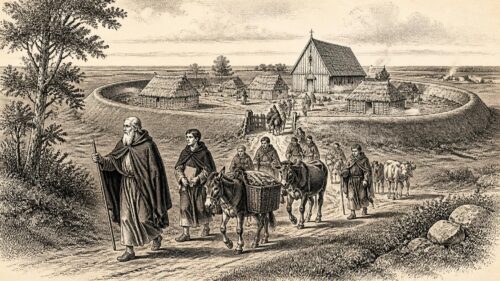
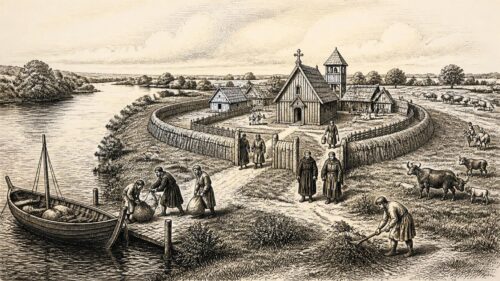
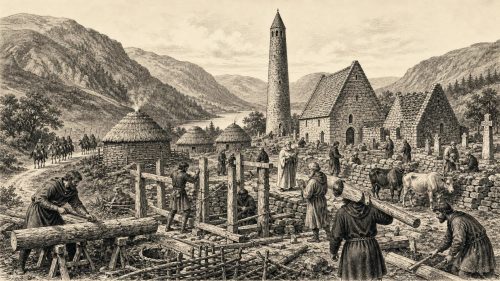
Brigid is primarily remembered for establishing a religious community in Kildare. According to the Annals of Kildare, the monastery was founded in the late 5th century, with some records suggesting the specific date of 484. As Abbess of Kildare, she presided over a centre of learning and spirituality that attracted both men and women. Her leadership was exceptional for the period; she operated with a degree of authority that allowed her to manage vast resources and influence ecclesiastical politics. The site at Kildare became a focal point of the Irish church, eventually developing a complex administrative structure involving both abbots and abbesses.
Sainthood Attributes
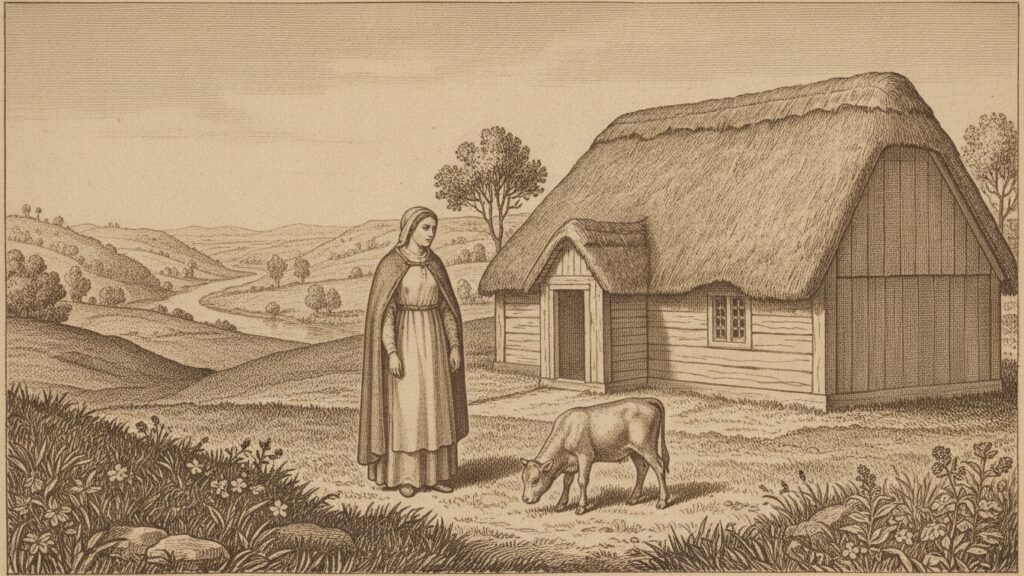
The iconography associated with Saint Brigid reflects her role as a protector of the poor and a friend to nature. She is frequently depicted with symbols such as the calf, the lamp, and the church, which signify her charitable works and her foundation at Kildare. Folk traditions further enhance her legacy, with some accounts referring to her as the “Mary of the Gaels” or the foster-mother of Jesus. Her legacy is also tied to the performance of miracles involving abundance, specifically those related to food production, cattle, and milk, which served to portray her as a source of bounty for her community.
Historical Legacy
Brigid’s influence extended far beyond the borders of Ireland. Through the practice of peregrinatio—the tradition of Irish monks travelling as missionaries to the Continent—her cult spread throughout Europe. Manuscripts of her life, such as the Vita Prima, have been found in Southern Germany and France, indicating that her veneration was widespread in the early medieval period. Despite the later tendency to subordinate her role to that of Saint Patrick in certain texts, the sheer volume of early manuscripts and the enduring nature of her feast day testify to her status as one of the most powerful and beloved figures in the history of the early Irish church. Her lifespan remains uncertain. The local chronology lists traditional death dates of 524, 526 and 528, together with a claimed age of seventy; these are inherited traditions rather than a securely documented lifespan.