Editorial — Echoes of Irish Heritage: From Ancient Foundations to Modern Voices
Welcome to the Emerald Archives Gazette for Thursday, 26 November 2026. Today, we explore a rich tapestry of Irish history, culture, and politics, weaving together threads from ancient ecclesiastical sites to the lives of celebrated literary figures and contemporary political representatives. This edition highlights the enduring connections between Ireland’s past and present, showcasing how heritage informs identity and public life across the island. We begin with the political landscape of Northern Ireland, where Carál Ní Chuilín stands as a prominent Sinn Féin representative for North Belfast. Ní Chuilín’s career spans from her co-option to Belfast City Council in 2003 to her election to the Assembly in 2007.
Dateline
Echoes of Irish Heritage: From Ancient Foundations to Modern Voices
Welcome to the Emerald Archives Gazette for Thursday, 26 November 2026. Today, we explore a rich tapestry of Irish history, culture, and politics, weaving together threads from ancient ecclesiastical sites to the lives of celebrated literary figures and contemporary political representatives. This edition highlights the enduring connections between Ireland’s past and present, showcasing how heritage informs identity and public life across the island.
We begin with the political landscape of Northern Ireland, where Carál Ní Chuilín stands as a prominent Sinn Féin representative for North Belfast. Ní Chuilín’s career spans from her co-option to Belfast City Council in 2003 to her election to the Assembly in 2007. Her background as an ex-prisoner and coordinator of Tar Anall, a support centre for ex-prisoners and their families, underscores her commitment to community and social justice. As Minister in the Department of Culture, Arts and Leisure, she championed the Líofa campaign promoting the Irish language and oversaw significant sporting infrastructure projects. Her advocacy on housing and leisure inequalities continues to shape local policy in North Belfast. This profile, detailed at limerickarchives.com, exemplifies the ongoing relevance of cultural identity and social equity in contemporary politics.
In parallel, Regina Doherty represents Fine Gael with a career that reflects a different but equally vital strand of Irish political life. From her early days in the IT sector to her election to Meath County Council in 2009 and subsequently to the Dáil in 2011, Doherty has held key roles including Government Chief Whip and Minister for Employment Affairs and Social Protection. Now serving as Deputy Leader of Seanad Éireann, her trajectory embodies the evolution of governance and public service in the Republic of Ireland. Her story, chronicled at limerickarchives.com, complements the narrative of political dedication and community engagement found in Ní Chuilín’s journey.
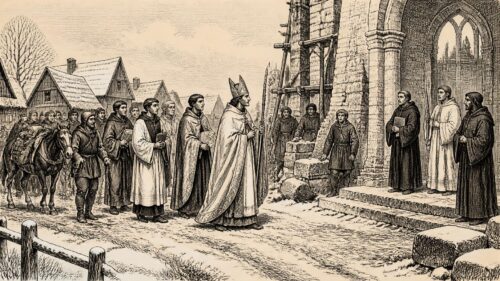
Turning to the deeper past, the Annals of Ulster and Inisfallen offer a glimpse into the early Christian era with their records from AD 441 noting the approval of Saint Patrick in the Catholic faith. Although the precise details of this approval remain obscure, these ancient chronicles preserve the foundational moments of Ireland’s religious heritage. The entry is succinct, lacking specifics about the granting authority or ceremony, yet it cements Patrick’s enduring spiritual significance. This historical note, accessible at limerickarchives.com, connects us to the origins of Ireland’s Christian identity, a theme echoed in the medieval ecclesiastical sites of County Antrim.
Indeed, the settlements of Aghagallon and Aghalee in County Antrim reveal layers of religious and social history stretching from ancient times through the medieval period and into the modern age. Aghagallon, known as Achadh Gallan, is linked to standing stones and a hilltop enclosure likely repurposed as a Christian site, suggesting continuity of worship and settlement. The local tradition associating the site with a saint named Colman, while not definitively established, enriches its spiritual narrative. Similarly, Aghalee, or Achadh Lí, has documented references dating back to the twelfth and thirteenth centuries, with its medieval church ruins indicating its role within a network of ecclesiastical settlements connected to Bangor Abbey and later the Diocese of Dromore. These histories, detailed respectively at limerickarchives.com and limerickarchives.com, illustrate how religious and administrative changes shaped rural Ulster’s landscape and community life over centuries.
Ahoghill, also in County Antrim, further exemplifies this ancient heritage. The parish and village, known as Achadh Eochaille, boast an ecclesiastical foundation reputedly dating to the late sixth century, attributed to Colmanell, a relative of the famed Saint Columba. The site’s layered ruins and churchyard reflect successive rebuildings and the parish’s significance within the diocese of Connor. Ahoghill’s historical prominence and its connection to neighboring parishes underscore the complex ecclesiastical geography of medieval Ireland. This heritage, preserved in local museum trails and scholarly records, is explored in depth at limerickarchives.com, reminding us of the enduring presence of faith and community through the ages.
Our journey through Ireland’s cultural legacy continues with a celebration of its literary giants. Elizabeth Bowen, born in Dublin in 1899 and later associated with Bowen’s Court in County Cork, crafted novels and stories that captured the nuances of Anglo-Irish life. Her works, including The House in Paris and The Death of the Heart, alongside her wartime service for the British Ministry of Information, reflect a life bridging personal and political histories. Bowen’s final novel, Eva Trout, published in 1968, and her CBE award in 1948 mark her as a significant figure in twentieth-century literature. Her biography at limerickarchives.com offers insight into her artistic and historical milieu.
Oscar Wilde’s flamboyant literary career, beginning with his Newdigate Prize-winning poem Ravenna at Oxford, led to celebrated plays like The Importance of Being Earnest and his only novel, The Picture of Dorian Gray. His later years, marked by imprisonment due to his sexuality, produced poignant works such as De Profundis and The Ballad of Reading Gaol. Wilde’s life story, detailed at limerickarchives.com, embodies the tensions of Victorian society and the enduring power of wit and tragedy in Irish letters.
James Joyce, born in Dublin in 1882, revolutionised modern literature with works like A Portrait of the Artist as a Young Man and Ulysses. His early education, personal losses, and eventual expatriation to Paris shaped his innovative narrative style and exploration of Irish identity. Joyce’s relationship with Nora Barnacle and his teaching stints in Europe further colour his biography. His story, covered at limerickarchives.com, highlights the global reach of Irish literary modernism.
William Butler Yeats, born in 1865 in Dublin, was instrumental in the Irish Literary Revival and the founding of the Abbey Theatre. His poetry and plays, infused with Irish mythology and symbolism, earned him the Nobel Prize in Literature in 1923. Yeats’s lifelong engagement with occult studies and his wife Georgie’s automatic writing influenced his later works, including A Vision. His death in 1939 and burial in County Sligo close a chapter on one of Ireland’s most celebrated cultural figures. His legacy is explored at limerickarchives.com.
Seamus Heaney, born in 1939 in County Derry, emerged from a rural farming background to become one of Ireland’s foremost poets. His academic career, including positions at Harvard and Oxford, paralleled his prolific output of poetry collections such as Death of a Naturalist and North. Heaney’s marriage to Marie Devlin and his movement between Northern Ireland and the Republic reflect the complex cultural landscape he navigated. His biography and works are detailed at limerickarchives.com, underscoring his role in contemporary Irish literature.
Turning to the eighteenth century, Oliver Goldsmith’s life and works represent a foundational moment in Irish literary history. Born in County Westmeath around 1730, Goldsmith’s education at Trinity College Dublin and travels across Europe informed his diverse oeuvre, including The Vicar of Wakefield and She Stoops to Conquer. His friendships with luminaries like Samuel Johnson situate him within the broader Enlightenment context. His legacy, encompassing essays, poetry, novels, and plays, is chronicled at limerickarchives.com.
Maria Edgeworth, born in Oxfordshire but raised at Edgeworthstown, County Longford, made significant contributions to Irish fiction and education. Her works, such as Castle Rackrent and Ennui, explored Irish society with nuance and gained international recognition. Edgeworth’s role in managing her family estate and educating her siblings reflects the intersection of literature and social responsibility. Her life and writings are detailed at limerickarchives.com, highlighting her influence on Anglo-Irish literature.
As we reflect on these figures and places, a clear theme emerges: the enduring interplay between Ireland’s ancient heritage and its evolving cultural and political identity. From the early Christian foundations recorded in the annals and preserved in Ulster’s sacred sites, through the literary achievements that have shaped national consciousness, to the contemporary political leaders advocating for language, culture, and social justice, Ireland’s story is one of continuity and change.
Thank you for joining us in this exploration of Irish heritage and identity. We invite you to delve deeper into these stories through the links provided and to appreciate the rich mosaic that is Ireland’s past and present. Until next time, may your days be filled with discovery and reflection.