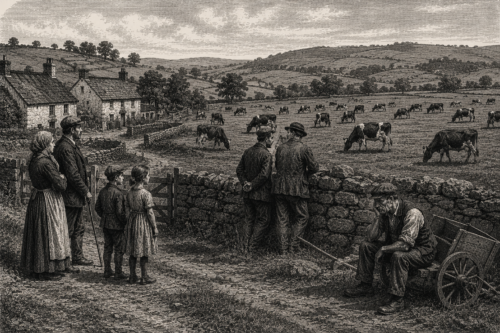
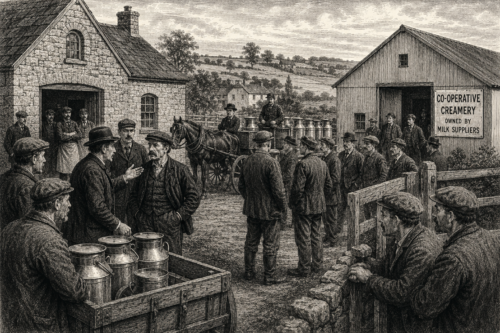
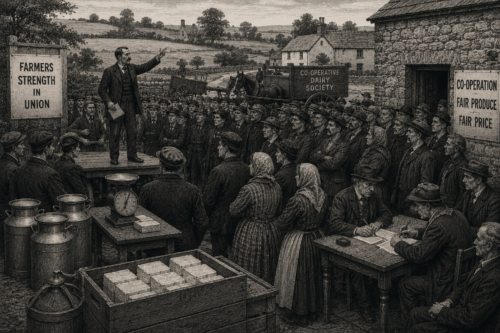
Harvest Journeys
Limerick Archives — Monday, 1 January 1900
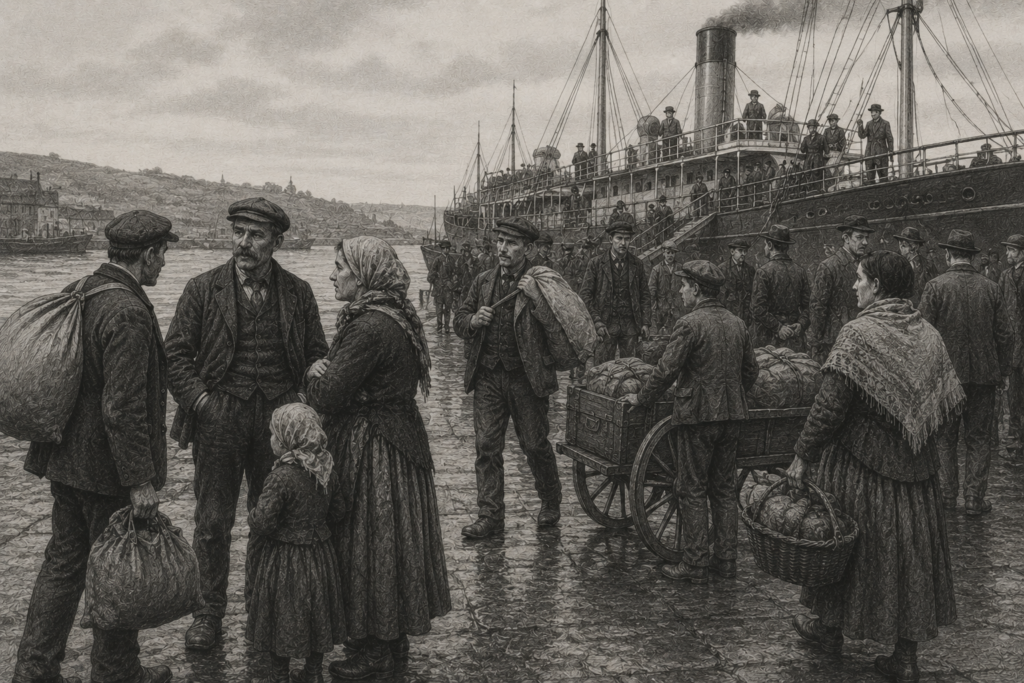
LIMERICK, Monday — Seasonal migration remains essential to many small farming and labouring households across western Ireland and the poorer districts of Munster. Each year, men and women leave holdings incapable of supporting a family and travel towards districts offering temporary employment during sowing, haymaking or harvest. Others cross the Irish Sea to work on farms in Britain before returning home with wages needed to pay rent, settle shop debts, purchase seed and maintain relatives through the winter. What appears to be an individual search for work has become an established part of rural survival.
The movement is strongest where farms are small, fragmented or situated upon poor land. A household may possess a cabin, several scattered plots, a cow and a potato crop, yet still lack enough income to meet its annual expenses. Seasonal earnings provide the money that subsistence farming cannot produce. Migrants frequently travel in groups formed through family and neighbourhood connections, relying upon experienced workers to identify employers, arrange transport and bargain over wages. Their absence removes valuable labour from the home, leaving wives, children and elderly relatives responsible for animals, turf, crops and household management.
County Limerick occupies an important position within this pattern. Its more productive agricultural districts attract temporary workers at busy periods, while labourers from poorer parts of Munster may also travel eastwards or overseas in search of higher earnings. At fairs, railway stations and market towns, the seasonal movement of workers can be observed in the bundles, tools and hurried farewells accompanying departure. The expanding railway system has made longer journeys easier, but the cost of travel reduces already modest wages. Workers may face uncertain hiring, crowded accommodation, long days and little protection if illness or injury prevents them from completing the season.
The money carried home often determines whether a family can remain upon its holding. It may prevent arrears, replace a dead animal, repair a leaking roof or allow food to be purchased before the next crop is ready. Shopkeepers in rural towns commonly extend credit in expectation of harvest wages or remittances. Yet dependence upon migration also reveals the weakness of the local economy. Families are separated for weeks or months, children may leave school to replace absent adults, and young workers become familiar with opportunities beyond Ireland. A journey intended as temporary employment can therefore become the first stage of permanent emigration.
Agrarian reformers argue that seasonal migration will continue while families remain crowded upon holdings from which no adequate living can be obtained. The Congested Districts Board has attempted to enlarge farms, reorganise estates and encourage fishing or cottage industries, but its operations reach only part of the population in need. For thousands of households, the annual departure remains unavoidable. Their labour enriches distant farms while the wages return to sustain Irish homes. Seasonal migration is therefore not merely a feature of the agricultural calendar; it is evidence of a rural system requiring families to leave their own land in order to survive upon it.
- Congested Districts Board for Ireland, Report for the Year Ending 31 March 1900, Parliamentary Papers. Consult the sections concerning congested holdings, migratory labour, agricultural improvement and rural employment. Exact command-paper number, page and appendix should be confirmed before formal citation.
- Census of Ireland, 1901, General Report, occupation tables and county returns concerning agricultural labourers, small farmers and population movement. Exact volume, table and page should be confirmed before formal citation.
- House of Commons Debates, “Irish Congested Districts Board,” 14 March 1902, vol. 105. The debate describes households living upon holdings from which no adequate livelihood could be obtained and discusses the Board’s efforts to move families onto better land.
- Limerick Chronicle, 1900, reports concerning harvest employment, agricultural wages, railway travel, labourers and rural conditions in County Limerick. Exact issue, page and column should be confirmed before formal citation.
- British Parliamentary Papers, Agricultural Statistics of Ireland for 1900, including county information on holdings, crops, livestock and agricultural employment. Exact command-paper number, table and page should be confirmed before formal citation.