
Archived: 19 October 2026
Abstract
In 1513, Ireland experienced interconnected struggles over lordship, succession and regional power. Gearóid Mór FitzGerald’s death weakened his extensive political system, although his son Gerald succeeded as earl and deputy governor. In Tír Eógain, Art Óg O’Neill secured inauguration with local and Kildare support amid contested succession. Aodh Dubh O’Donnell besieged Sligo, influenced control of Dunluce and visited James IV of Scotland before Flodden ended Scottish royal intervention. Raiding, burning and maritime violence affected coastal and rural communities. Meanwhile, Franciscan scholarship, ecclesiastical deaths and aristocratic patronage demonstrated enduring religious, learned and charitable networks across a politically fragmented yet connected Ireland.
Read Article

Archived: 19 October 2026
Abstract
Ireland in 1503 was shaped by overlapping lordships, kin groups, towns and church jurisdictions rather than a national government. The death of Seán Mag Uidhir, lord of Fermanagh, at Enniskillen on 26 March provides the year’s most precisely dated event. Annalistic accounts also record Kildare’s northern campaign, conflict among O’Neill and O’Donnell rulers, warfare in Connacht and important deaths elsewhere. Castles, marriages, fosterage, military followings and control of routes underpinned political authority. The evidence reveals a landscape of regional bargaining and rivalry, where changing leadership could disturb alliances and alter relations between Gaelic rulers and the English crown’s limited administration.
Read Article

Archived: 20 October 2026
Abstract
In 1453, Irish annals record regional struggles rather than a national crisis. At Ardglass, a Dublin fleet pursuing Welsh raiders who had seized the archbishop defeated Henry Mac Néill Buidhe’s Clandeboye force, aided by the Savages; leading Ulster men died and Henry was captured. In Oriel, Hugh Roe MacMahon died and was succeeded by Felim MacMahon, while Donnchadh MacCarthy Reagh’s death brought Diarmaid an Dúna to power in Carbery. Killings, deaths and disputed lordships in Connacht, Bréifne and Tirerrill revealed political dependence on kin, followers, castles and church patronage. The record depicts maritime, localised and interconnected late-medieval society in Ireland.
Read Article
Archived: 20 October 2026
Abstract
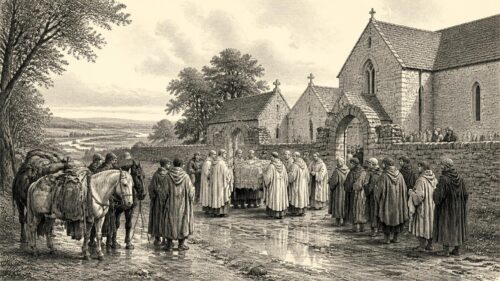
In 1437, Ireland’s annals recorded regional transitions rather than a national event. Seoan Mac Peorais, Archbishop of Tuam, died, opening a contested ecclesiastical vacancy resolved neither quickly nor simply. Gormlaith Ó Duibgeannáin, wife of Brian Mac Aodhagáin, died as an anchorite at Loch Key, linking learned kinship and religious life. Ulster notices named three deaths, while a cautiously dated peace between Niall Garbh Ó Domhnaill and his brother Neachtan reflected strained northern lordship. Farming, trade and uneven royal authority shaped everyday life. News of James I of Scotland’s assassination demonstrated Ireland’s continuing Irish Sea connections across a politically fragmented island.
Read Article
Archived: 24 October 2026
Abstract
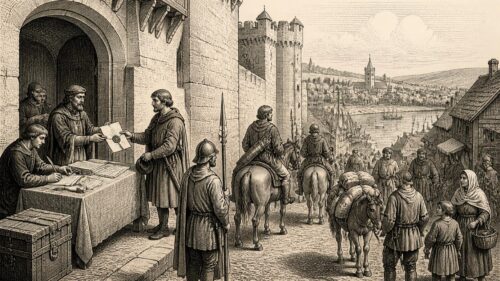
In 1323, Ireland’s importance lay in its connections with wider Plantagenet politics rather than a single decisive event. A Scottish truce cancelled planned paid military service by leading Anglo-Irish magnates, leaving local rivalries intact. Roger Mortimer’s escape from the Tower raised fears for his Irish estates and supporters, prompting Chancellor Roger Outlaw’s warning mission to Edward II. The king appointed John Darcy justiciar in November, although John de Bermingham remained in office until Darcy’s arrival in 1324. Legislation addressed official abuses, requisitioning, trade, fees and pardons. Meanwhile, Cistercian authorities condemned national exclusion in Irish monasteries, revealing ethnic and institutional tensions.
Read Article
Archived: 24 October 2026
Abstract
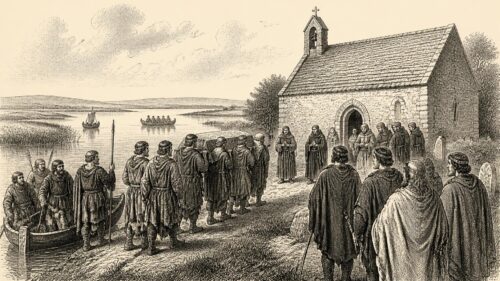
In 1306, Ireland experienced contested succession, warfare and political instability rather than decisive national change. Toirdelbach Ó Briain, king of Thomond, died and was buried at his foundation for friars on Inis Mac nInill, while his son Donnchad succeeded amid opposition. Connacht suffered prolonged conflict between Ó Conchobair rivals, involving raids, cattle seizure, arson and killings. Betrayals and lordship struggles affected Fermanagh, Meath, Leinster and Desmond, where prominent captives and rivals were killed. Annals also record clerical deaths, church damage, maritime trade and fortification. Robert Bruce’s Scottish accession had Irish significance, although no invasion followed. Sources require caution over chronology.
Read Article
Archived: 24 October 2026
Abstract
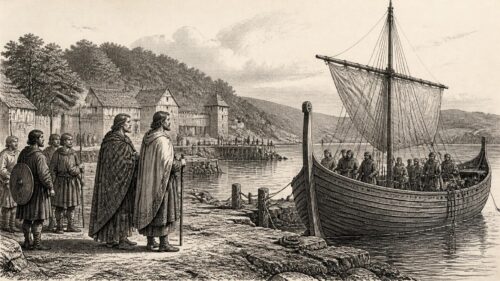
In 1282, Muirchertach Mac Murchada, king of Leinster, and his brother Art were murdered at Arklow on 21 July while travelling under safe conduct to meet Roger Bigod in England. Evidence links the killing to justiciar Stephen de Fulbourn’s frontier policy, exposing the insecurity of agreements between Gaelic rulers and royal government. Their deaths temporarily weakened Leinster unrest but did not end contested lordship. Annals also record Taichlech Ó Dubhda’s killing, Lasarfina Ó Conchobair’s death, chieftaincies changing hands, and prolonged winter snow. These events reveal Gaelic, Anglo-Irish and royal worlds, while annalistic dating cautions against assigning uncertain conflicts to 1282.
Read Article
Archived: 26 September 2026
Abstract
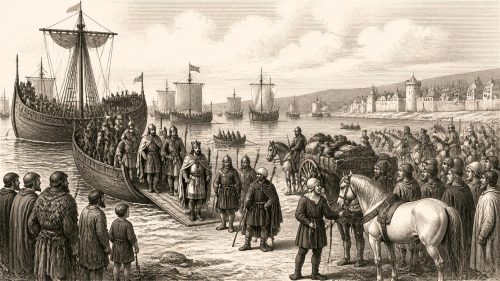
In 1210 King John launched a 63-day expedition to Ireland, asserting authority over Anglo-Norman magnates and seeking alliances with Gaelic rulers. Landing at Waterford, he received Donnchadh Ua Briain and Cathal Crobhdearg Ua Conchobair, then advanced through Dublin, Meath and Ulster. Walter and Hugh de Lacy were dispossessed; Carrickfergus fell to royal forces, while Man suffered punitive attack. John expanded administration, installed John de Grey, promoted castles and a bridge at Athlone, and supported royal coinage. Yet hostage-taking damaged relations with Connacht, Gaelic submissions remained conditional, and regional conflicts continued. The campaign strengthened royal control but left divided politics unresolved.
Read Article

Archived: 26 September 2026
Abstract
Ireland in 1080 comprised competing overkingships, powerful churches and Hiberno-Norse towns rather than a unified state. Tairdelbach Ua Briain of Munster demonstrated negotiated supremacy through a hosting in Leinster and Mide, taking Máel Sechnaill to Limerick, while his son Diarmait raided Wales. Donn Sléibe Ua hEochada regained Ulaid and sought hire in Munster, illustrating mobile paid alliances. Warfare killed rulers around Sliab Fuait, Clogher and Uí Fhailge, where raiders were defeated near church land. Ua Cinn Fhaelad of Déisi undertook pilgrimage to Jerusalem; Cellach of Armagh was born. Annals reveal rural production, maritime exchange, ecclesiastical influence and uneven regional perspectives.
Read Article
Archived: 26 September 2026
Abstract
In 1075, Tairdelbach Ua Briain, king of Munster, led a broad coalition northwards seeking hostages from Airgíalla and Ulaid, but his heir Muirchertach was defeated at Ard Monann near Ardee, exposing limits to Ua Briain power. Nevertheless, Tairdelbach secured Dublin after Gofraid's exile and Domnall's brief reign, installing Muirchertach in the commercially and strategically vital Hiberno-Norse city. Annals also record deaths among northern rulers and churchmen, fires at Louth and Clonard, and Dublin's ecclesiastical links with Canterbury. Rural farming, woodland resources and urban craft and trade underpinned political and religious institutions; an abundant mast crop highlighted the economy sustaining them.
Read Article
Archived: 26 September 2026
Abstract
In 1046, Ireland remained politically fragmented, with regional rulers relying on alliances, military strength and lesser kings’ submission. Art Uallach Ua Ruairc, king of Connacht, was killed by Cenél Conaill, enabling Áed in Gaí Bernaig Ua Conchobair’s succession. Northern, midland and Munster elites also suffered killings, exposing conflict beneath provincial overkingship. Dublin’s inhabitants expelled Ímar mac Arailt and restored Echmarcach mac Ragnaill, linking Irish politics to the Irish Sea world. Ecclesiastical life continued through clerical successions, pilgrimage and Ardfert’s lightning damage. Annals preserve elite events, while farming, trade, churches and local communities sustained everyday life amid raids, obligations and insecurity.
Read Article
Archived: 8 October 2026
Abstract
In 980, amid succession following Domnall ua Néill’s death, Máel Sechnaill mac Domnaill of Clann Cholmáin defeated Dublin and Isles forces at Tara. The victory, although not an expulsion of Norse power or unification of Ireland, enhanced his claim to wider supremacy. With Eochaid of Ulaid, he besieged Dublin for three days, securing hostages, tribute, release from Dublin’s exactions, and freedom for some Irish people held in bondage. Ragnall, Dublin’s heir, died in battle, while Amlaíb Cuarán retired penitently to Iona. Dublin’s commerce endured, but its political influence declined. Church deaths and regional killings exposed Ireland’s continuing fragmented, unstable kingship.
Read Article
Archived: 27 October 2026
Abstract
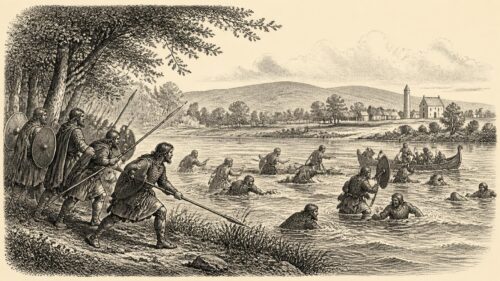
In 947, Ruaidrí ua Canannáin of Cenél Conaill defeated Congalach of Brega and Dublin's Amlaíb Cuarán at Sláine near the Boyne, killing or drowning many Dublin warriors. The encounter formed part of competing claims to Tara, not a national war, and highlighted Dublin's role in Irish politics. Elsewhere, Osraige routed Leinster, killing King Braen and other leaders, while northern nobles also died in obscure conflict. Cenél nÉogain made a notable silver gift to Armagh, affirming political and religious ties. Annals recorded ecclesiastical deaths, a travelling preacher, and marvels, revealing intertwined warfare, patronage, Christianity, and Irish Sea connections during the year.
Read Article
Archived: 27 October 2026
Abstract
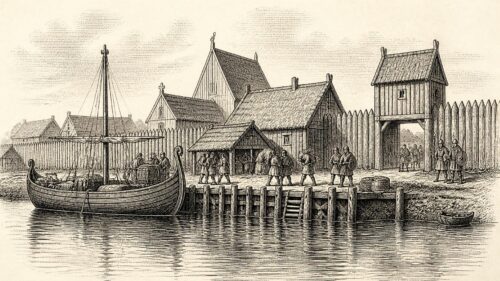
In 934, Gofraid, grandson of Ímar and Hiberno-Scandinavian king of Dublin, died painfully from illness, ending a rule connected with Dublin, York and the Irish Sea. The annals offer no details of his disease or succession, but his son Amlaíb succeeded him, inheriting a strategic trading and military centre. Elsewhere, Dubgilla son of Robacán, chief of Uí Chormaic, was killed in unexplained circumstances. Limerick’s foreigners raided deeply into Connacht, reaching Mag Luirg and Badhgna. Ireland remained politically fragmented: Dublin and Limerick pursued separate interests, while Irish dynasties, regional rulers and church institutions managed competing power, violence and succession across society.
Read Article
Archived: 27 October 2026
Abstract
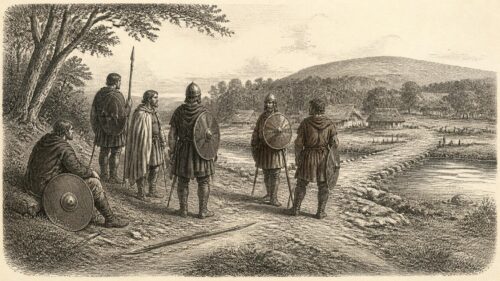
In 927, the Annals of Inisfallen record a Munster and Limerick Scandinavian victory over Waterford’s foreigners at Cell Mo-Chellóc, probably Kilmallock, demonstrating shifting alliances among Irish kingdoms and Viking settlements. They also note the death of Máel Brigte, abbot of Armagh and Iona, whose dual leadership united ecclesiastical federations. Other annals, chronologically offset, describe Dublin’s instability under Gofraid, Sitriuc’s death, and a bloodless confrontation at Tailtiu, reflecting contested Uí Néill authority. Later sources report churchmen, pilgrimage and raids, but their dating is uncertain. Together, the evidence depicts interconnected warfare, religious prestige, travel and political rivalry across Ireland and Irish Sea.
Read Article
Archived: 27 October 2026
Abstract
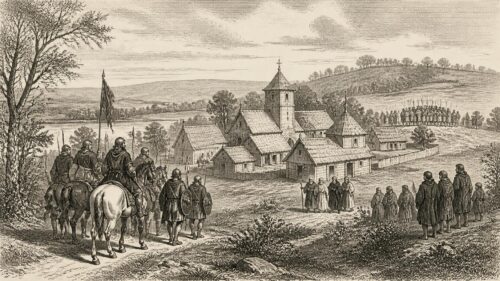
In 921, amid uncertain annalistic dating, Ragnall grandson of Ímar died and Gofraid assumed control of Dublin, reshaping Irish Sea politics alongside Sitriuc’s succession in York. Donnchad Donn strengthened his precarious position through the deceitful killing of his brother Domnall, while another heir died. Scandinavian fleets operated in the north-west, but Fergal’s forces destroyed one vessel. On 10 November Gofraid raided Armagh’s hinterland, sparing its principal religious community yet inflicting serious disruption; Muirchertach later defeated part of his force. Ecclesiastical leaders died, one source recorded plague, and warfare threatened rural livelihoods across politically fragmented Ireland and its interconnected maritime world.
Read Article
Archived: 27 October 2026
Abstract
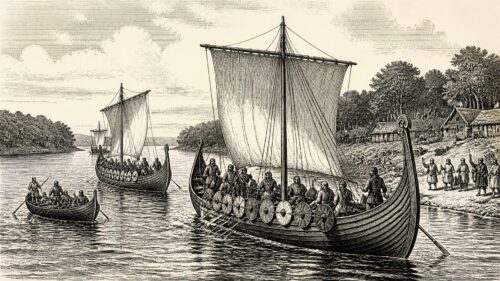
In 918, Ragnall ua Ímair, king of the dark foreigners, left Waterford Harbour with jarls Oitir and Gragabai, joining an Irish-Sea campaign that culminated in the inconclusive battle of Corbridge on the Tyne. Their force showed the Uí Ímair dynasty’s links between Ireland and Britain. In Ireland, Niall Glúndub of Tara continued warfare with Dublin’s Sitriuc Cáech, while Máel Mithig of Brega unsuccessfully sought Scandinavian assistance. Annals also recorded deaths of church leaders, scholar Dainél and Kildare’s abbess Muirenn. Evidence reveals political instability, maritime connections and ecclesiastical continuity, but records no harvest, famine or everyday events. Annalistic dating remains uncertain.
Read Article
Archived: 27 October 2026
Abstract
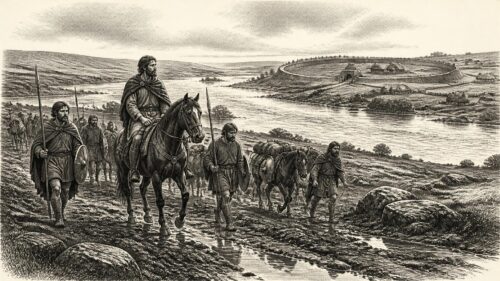
In the annalistic year conventionally called 913, Niall son of Áed, king of Ailech, campaigned in north Connacht, routing the Uí Amalgada and men of Umall, killing or capturing many. Elsewhere, Donnchad and Máel Mithig defeated forces from southern Brega and Leinster, while Congalach of Conaille Muirthemne was killed by his brother after attacking a church household. Vikings defeated a new Ulaid fleet off England, with Irish losses. Churchman Máel Brigte travelled to Munster to ransom a Welsh pilgrim. Death notices recorded clerics, nobles and a chief poet. Annals called the year dark and rainy, reflecting an interconnected, fractured island.
Read Article
Archived: 28 October 2026
Abstract
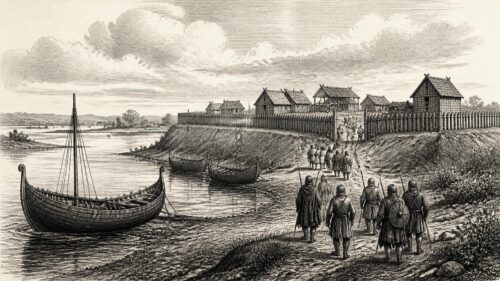
In 902, forces led by Cerball of Leinster and Máel Finnia of Brega expelled Dublin’s Scandinavian rulers from Áth Cliath, ending the city’s phase as a fortified naval and commercial base. Annals describe abandoned ships and wounded fugitives, but do not permit reconstruction of battle details or prove every Scandinavian inhabitant left Ireland. Archaeology indicates a diverse settlement of warriors, traders, craftspeople and families, while residual occupation complicates claims of complete abandonment. Elsewhere, Finnguine of Cashel was killed, enabling Cormac’s accession, and ecclesiastical leadership changed at Lathrach Briúin. The expulsion transformed regional power without ending Scandinavian influence or Dublin’s restoration.
Read Article
Archived: 28 October 2026
Abstract
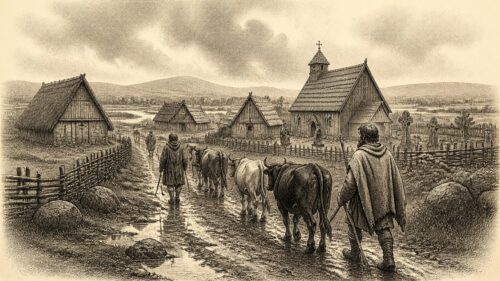
In 900, Irish annals recorded environmental strain, political deaths, ecclesiastical life and raiding across a fragmented island. A rainy year and scarcity among cattle, with related references to bread shortage, exposed dependence on pastoral and arable production, though they do not prove famine. Tadc son of Conchobor, overking of the three Connachta, died after penitential renunciation associated with Ciarán’s Dun Cow; Mac Étig of Dál Araidi also died. Scandinavian raiders plundered Kildare, a wealthy sacred centre. Deaths of prominent churchmen and an Alban king further reveal Irish Sea connections, while Clonmacnoise’s prestige linked lordship, learning and religious authority in Ireland.
Read Article
Archived: 28 October 2026
Abstract
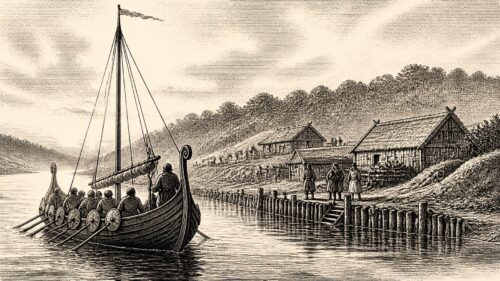
In 894, Irish annals record significant political and ecclesiastical developments. An unnamed son of Ímar returned to Ireland after dissension among Scandinavians at Dublin, although neither his aims nor success is known. Diarmait son of Cerball assumed kingship of Osraige, restoring dynastic rule in a strategic region between Munster and Leinster. Deaths of ecclesiastical stewards and abbots, including officers of Patrick’s community, Clonmacnoise and Lismore, underline monastic institutions’ temporal authority. Later annals preserve traditions concerning fairs, warfare and church profanation, but their chronology is uncertain. The evidence depicts fragmented Ireland shaped by regional rivalries, church power and Irish Sea mobility.
Read Article
Archived: 28 October 2026
Abstract
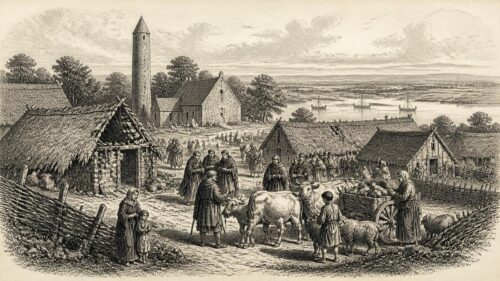
In 886, Irish annals record political violence, raiding and destruction across several regions. In Ulaid, Éiremón son of Áed, one of two kings, was killed by Eolóir, probably a Scandinavian-connected leader; Fiachna son of Ainfíth subsequently died at the hands of his own associates. At Kildare, heathen raiders plundered the church settlement, taking 280 people, including vice-abbot Suibne, and its wealth to ships. The captives included the ecclesiastical community, not only clergy. Dún Tidill in Ara was also destroyed. These fragmentary records reveal divided kingship, maritime networks, ecclesiastical vulnerability and the limits of annalistic evidence amid farming, worship and learning.
Read Article
Archived: 28 October 2026
Abstract
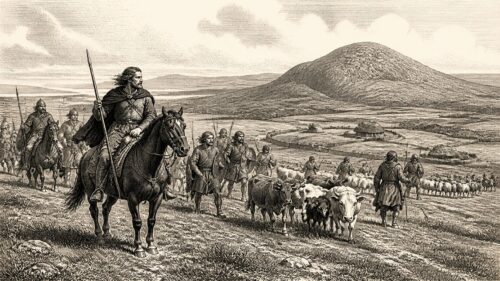
In 875, Muiredach son of Bran led Leinster’s army on a rapid destructive raid to Sliab Monduirn in the Armagh region, demonstrating provincial rivalry without proving a specific target. Annals also record deaths of prominent churchmen at Clonmacnoise, Kildare, Ferns, Tallaght, Lusk and Glendalough, whose offices combined religious leadership, learning, property and political connections. Across the Irish Sea, Picts suffered heavily against the Dubgaill, while Oistín, son of Dublin-associated Viking ruler Amlaíb, was killed. These fragmentary notices reveal interconnected warfare, ecclesiastical succession and maritime Scandinavian power, rather than a unified Ireland or detailed national narrative. The evidence cautions against invention.
Read Article
Archived: 28 October 2026
Abstract
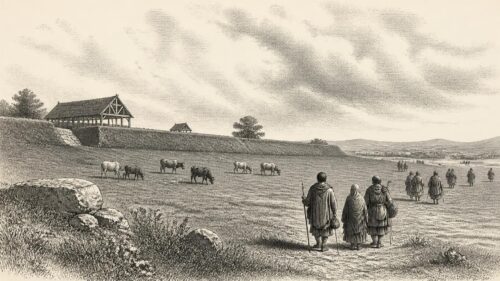
In 873, amid uncertain annalistic dating, Ireland experienced political change across local kingdoms and the Irish Sea world. Ímar, pre-eminent Norse ruler associated with Dublin, died, weakening but not ending Scandinavian influence; his dynasty remained important. Irish kings Dúnchad of Cashel and Cerball of Osraige raided Connacht, while Dublin forces plundered Munster. Lethlabar of Dál nAraide died, reshaping succession and rivalry in Ulaid. Several lesser rulers and church leaders also died. Most notably, Tailtiu’s great assembly failed to convene without adequate cause, apparently exposing Áed Findliath’s weakened royal authority. These events reveal resilient communities, enduring institutions, and fragmented, competitive power.
Read Article
Archived: 28 October 2026
Abstract
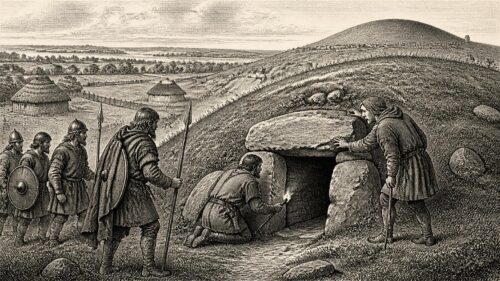
In 863, Scandinavian rulers Amlaíb, Ímar and Auisle, allied with Lorcán of Mide, plundered Flann son of Conaing’s Brega lands and searched named souterrains at Cnogba, Dubad and elsewhere. The unprecedented searches exposed underground refuges as stores or shelters within the contested Boyne landscape. The year also saw Norsemen kill Muirecán of Nás, reshaping Leinster politics, while Muiredach, prior of Armagh and king of the Airthir, died in dynastic violence. Later Fragmentary Annals report Cerball of Osraige defeating foreigners and recovering booty. Together, these notices portray shifting Irish-Scandinavian alliances, politically entangled churches, and insecurity reaching concealed spaces broadly across Ireland.
Read Article
Archived: 29 October 2026
Abstract
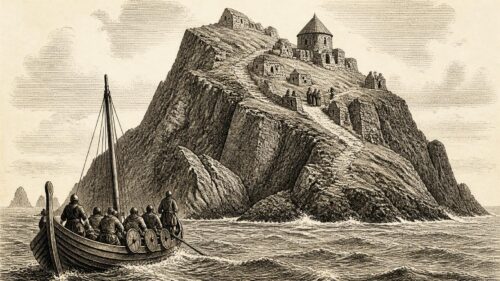
In 824 Scandinavian raiders attacked two Irish religious communities, Bangor in Ulaid and Sceilig off Kerry. At Bangor, they plundered the monastery, destroyed an oratory and violently disturbed the shrine and relics of its founder, Comgall, damaging a centre of dynastic and ecclesiastical prestige. At remote Sceilig, Étgal was captured and died of hunger and thirst, providing a rare named victim. Annalistic dating confirms both incidents despite manuscript chronological complications. The raids demonstrate mobile maritime danger across northern Irish Sea and Atlantic routes, not a unified campaign or permanent settlement. They marked early Viking-age insecurity; permanent Scandinavian bases came later.
Read Article
Archived: 30 October 2026
Abstract
In 796, the Annals of Inisfallen briefly recorded heathens in Ireland, indicating the presence of non-Christian outsiders amid early Viking activity, but providing no evidence for a raid, landing site, settlement or permanent colony. Nearby annals record attacks on islands and churches, though chronology and corroboration remain uncertain. The same year saw the deaths of Colla son of Fergus, king of Connacht and rival to the rising Muirgius, and Máel Coba, king of Ciarraige Luachra. These events reveal politically fragmented, rural Ireland, where powerful churches and coastal communities faced emerging maritime threats without abandoning established dynastic, economic and religious life.
Read Article
Archived: 2 November 2026
Abstract
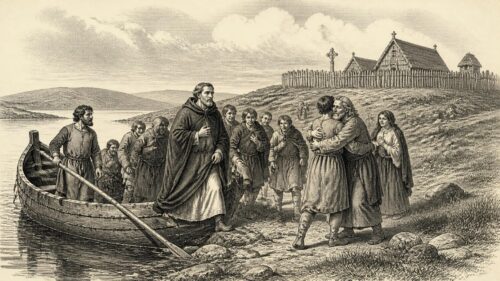
In the annalistic sequence for 687, Adomnán, abbot of Iona, returned sixty former captives to Ireland, probably people seized during King Ecgfrith of Northumbria’s raid of 684. Although the precise date and negotiations remain uncertain, Adomnán’s links with King Aldfrith and Northumbrian ecclesiastical networks likely enabled their release. The episode illustrates Irish Sea connections linking warfare, diplomacy and learning; Adomnán’s scholarly exchanges with Aldfrith may have occurred during related visits. The annals also record the deaths of abbots at Glendalough and Cork, and of a bishop attached to an uncertain monastery, alongside the unexplained killing of Feradach son of Congal.
Read Article
Archived: 2 November 2026
Abstract
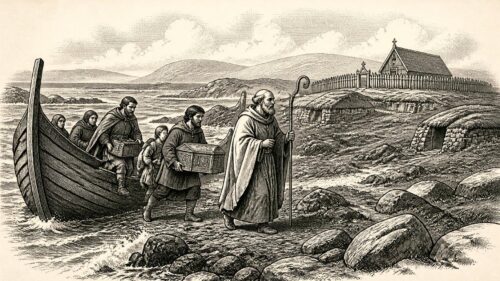
In 668 CE, the surviving Irish record brings together a northern battle, a western monastic foundation and evidence of continuing movement across the Irish Sea. These are not events with securely known days or seasons. They are annalistic notices, preserved in texts copied long after the seventh century and subject to differing chronological systems. The year is nevertheless conventionally associated with the battle of Fertas between the Ulaid and the Cruithin, and with Bishop Colmán’s journey to Inis Bó Finne, where he founded a church. The Annals of Ulster place both under their entry U668, although that manuscript’s calendrical heading
Read Article
Archived: 6 October 2026
Abstract
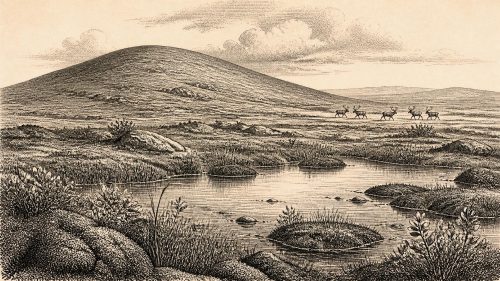
30,215 BCE is a modern chronological label, not a recoverable Irish event. During Late Pleistocene Marine Isotope Stage 3, Ireland experienced unstable varied climates as the British–Irish Ice Sheet advanced and retreated. At Derryvree, County Fermanagh, freshwater sediments between till layers preserve cold-adapted mosses and plants, indicating tundra wetlands before renewed glaciation. Cave remains at Castlepook show mammoth, reindeer and fauna reached Ireland; a possibly cut-marked reindeer bone suggests, but cannot prove, brief human activity. Low sea levels altered routes without ensuring access. No evidence supports settled communities, politics or culture. The record documents changing ice, water, vegetation and habitats.
Read Article


