Now Sharing: Articles: 212 Images: 666 Total Items Archived: 878

Article Archives

Article Archives

212 articles found

Jack O’Brien

On 3 February 1900, John Patrick “Jack” O’Brien was born in Ballyporeen, County Tipperary, an event that would eventually leave its mark on Ireland’s tourism sector. Though his arrival passed quietly at the time, O’Brien would become known in later decades as a visionary promoter of Irish tourism, helping to shape the country’s reputation as a destination for visitors from Britain, Europe, and America.
Telephone Expansion

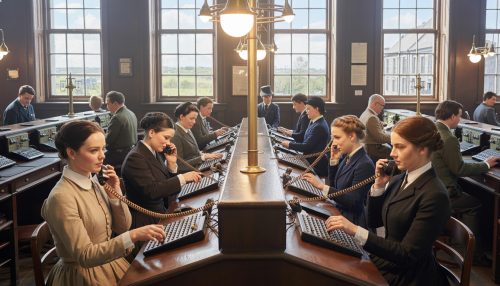
On 1 February 1900, the subject of extending telephone communication through southern Ireland was formally discussed in the British Parliament, a development that sparked considerable interest in Limerick. For the city’s business community and civic leaders, the expansion of the telephone network represented a vital opportunity to modernise communications and strengthen commercial ties with Dublin, Cork, and the wider region. Reports of the parliamentary debate were covered in Limerick newspapers, reflecting the anticipation among local merchants and officials who recognised the transformative potential of improved telephonic links.

Education Funding

On 1 February 1900, the administration and financing of intermediate education in Ireland were formally questioned in the British Parliament, a subject that drew immediate attention in Limerick’s educational circles. The city, home to several prominent intermediate schools and a tradition of academic achievement, relied heavily on the continuity and adequacy of state support for its institutions. Reports of the parliamentary debate were discussed by Limerick school managers, teachers, and parents, who were acutely aware that national policy decisions would shape local opportunities for students seeking advancement beyond primary level.

Road Contracts

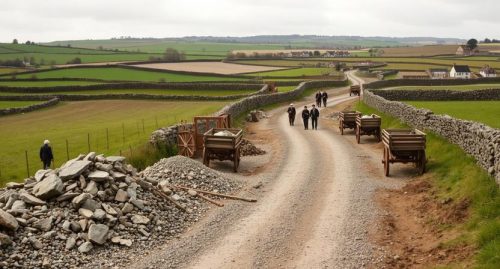
On 8 February 1900, the issue of Irish rural-road contracts and access to suitable road-building materials was questioned in Parliament, a matter with far-reaching implications for communities across Ireland. Reliable rural roads were vital for economic development, agricultural transport, and social connection, and any shortcomings in their construction or maintenance directly impacted daily life and prosperity.

Pery Foundations

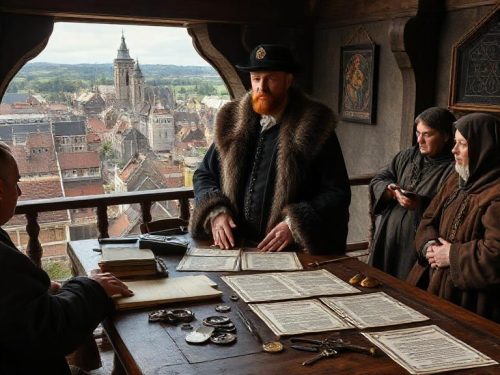
The Pery family’s rise in Limerick began not with the Georgian streets that later carried its name, but with land accumulated during the Tudor dissolution of Ireland’s religious houses. William Pery, who died in Limerick around 1635, appears to have been the first member of the family to settle permanently in Ireland. The more consequential ancestor, however, was Edmond Sexten, mayor of Limerick in 1535. Through political skill, royal service and his relationship with the English court, Sexten obtained property that would remain within his descendants’ inheritance and eventually shape the physical expansion of Limerick city.

Press Demands

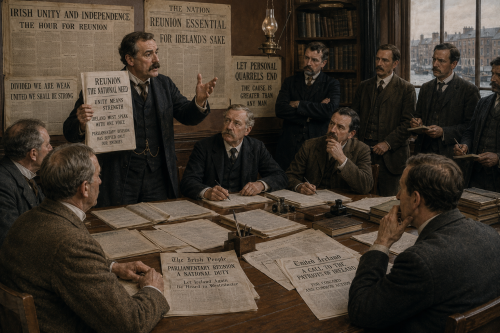
Nationalist newspapers increasingly presented reunion as essential if Ireland was to recover influence at Westminster after almost a decade of parliamentary division. Since the split over Charles Stewart Parnell’s leadership in 1890, rival Parnellite, anti-Parnellite and Healyite groups had competed for authority, funds and constituencies while claiming allegiance to the same national cause. Editorials and political reports warned that British governments could disregard Irish demands when nationalist MPs lacked common leadership and discipline. Reunion was consequently framed not simply as reconciliation between prominent personalities, but as the practical means by which Ireland might again act as a recognisable parliamentary force.

Railway Progress

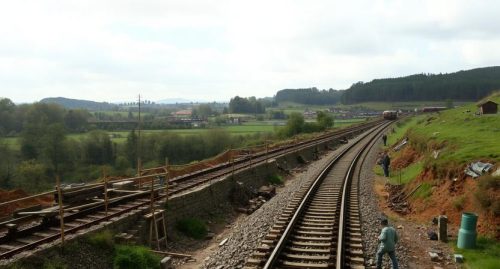
On 9 February 1900, the proposed Bray and Enniskerry Railway advanced through its parliamentary proceedings, bringing the prospect of a new transport link between the seaside town of Bray and the picturesque village of Enniskerry in County Wicklow a step closer to reality. The Bill sought approval for the construction of the line, which would traverse challenging countryside and provide both locals and tourists with improved access to the scenic Wicklow landscape.

Takeover Opposed

Limerick Corporation unanimously authorised formal opposition to the proposed sale of the Waterford, Limerick and Western Railway to the Great Southern and Western Railway. At a special meeting reported on 5 January 1900, William L. Stokes, JP, moved that the Corporation’s solicitor be empowered to resist the scheme and take every necessary step on the city’s behalf. Councillor O’Brien seconded the motion. Several interested citizens attended beyond the council barrier, reflecting the strength of public concern surrounding the renewed amalgamation bill. The resolution was carried unanimously and received applause from those observing the proceedings.

Pauper Removals

On 6 February 1900, the removal of impoverished people from Britain to Ireland under poor-relief regulations was challenged in Parliament, an issue that drew immediate attention in Limerick, where the arrival of such individuals often placed strain on local resources. Limerick’s workhouses and charitable institutions were already struggling to care for the city’s vulnerable population, and any increase in arrivals from Britain raised concerns among civic leaders, ratepayers, and relief administrators.

Tenant Redress

The introduction of the Evicted Tenants (Ireland) Bill in the British Parliament on 2 February 1900 was a development watched closely in Limerick, where the legacy of the land question continued to shape local memory and rural life. Disputes over land ownership and tenant rights had profoundly affected many Limerick families during the preceding decades, with evictions leaving lasting scars on the community. Reports of the bill’s introduction were widely circulated in local newspapers, prompting renewed debate among civic leaders, tenant advocates, and landowners about the future of those still excluded from their former homes.