
Archived: 24 September 2026
Abstract
Around 30,742 BCE, Ireland’s evidence is environmental rather than historical. Derryvree, County Fermanagh, dated broadly to 36,900–31,700 cal BP, preserves freshwater silts and organic deposits between glacial tills, demonstrating local wetland conditions between ice advances. Plants, mosses and insects indicate a treeless, cold periglacial mosaic of pools, sedges and sparse vegetation. Crag Cave records wider climatic instability during MIS 3. Castlepook Cave fauna show cold-adapted mammals occupied Ireland during this period, though collections span long intervals. A possibly cut-marked reindeer bone suggests unresolved human activity. Later glaciation buried or destroyed much evidence, leaving no record of settlement, politics or monuments.
Read Article
Archived: 24 September 2026
Abstract
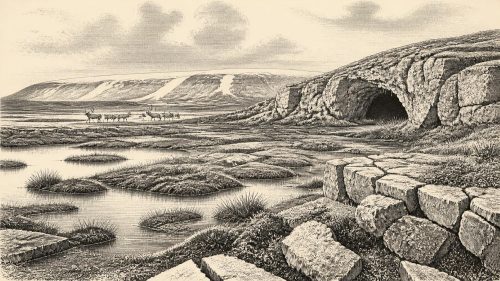
Thirty thousand seven hundred and forty-three BCE is not a recoverable Irish calendar year, but a modern label for a Late Pleistocene cold phase. Ireland was a treeless, unstable periglacial landscape, with tundra wetlands, sparse vegetation and fluctuating ice before the Last Glacial Maximum. Derryvree sediments in Fermanagh demonstrate freshwater habitats between glacial episodes. Castlepook Cave, Cork, preserves a mixed fauna including mammoth, reindeer, giant deer, hyena, wolf, bear, Arctic fox and lemmings. A cut-marked reindeer femur may indicate Upper Palaeolithic butchery, yet cannot prove settlement, occupation, travel routes, society or politics. Evidence supports intermittent ecological complexity, not precise events.
Read Article
Archived: 24 September 2026
Abstract
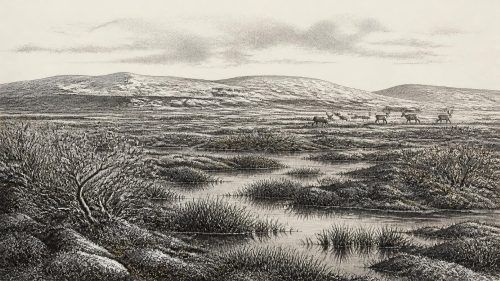
Thirty thousand seven hundred and forty-four BCE is a notional filing point within Marine Isotope Stage 3, not a dated event. Derryvree, County Fermanagh, preserves freshwater organic sediments between glacial tills, radiocarbon-dated broadly to 36,900–31,700 calibrated years BP. Its pollen, plants, insects and bogbean seed indicate cold, open, treeless wetland with pools, sedges, mosses and Arctic-alpine vegetation. Castlepook Cave, County Cork, records a time-averaged pre-Last Glacial Maximum fauna including mammoth, giant deer, reindeer, bear and hyaena. Ireland’s ice, coastlines and habitats fluctuated greatly. Human presence remains unproven for this period, despite a possible cut-marked bone; later glaciation destroyed much evidence.
Read Article

Archived: 24 September 2026
Abstract
Thirty thousand seven hundred and forty-five BCE is a modern label rather than a recoverable Irish historical year. Derryvree, near Maguiresbridge, preserves freshwater sediments between glacial tills, indicating a local ice-free MIS 3 interval with tundra-like vegetation, wetlands, insects and seasonal pools. Its radiocarbon evidence is broad and cannot date individual events. Castlepook Cave’s mixed faunal remains, including mammoth, reindeer, giant deer and hyaena, show intermittent ecological links with north-western Europe, but not coexisting populations at one time. No secure evidence establishes human settlement, camps or crossings. Ireland’s record therefore documents life in temporary habitats amid fluctuating climate and ice.
Read Article

Archived: 24 September 2026
Abstract
Approximately 30,746 BCE, Ireland is known only through broad Late Pleistocene evidence, not year-specific records. Derryvree, County Fermanagh, preserves organic silts between glacial tills, dated broadly to 36,900–31,700 calibrated years BP, indicating an ice-free, open tundra wetland with mosses, sedges, pools and severe seasonal conditions. Castlepook Cave, County Cork, contains pre-Last Glacial Maximum remains of reindeer, mammoth, giant deer, predators and other cold-adapted fauna, though not necessarily contemporaneous. A possibly tool-marked reindeer bone suggests brief human activity around 33,000 years ago, but no settlement or social record exists. Later ice expansion substantially reshaped Ireland, largely obscuring earlier landscapes from view.
Read Article

Archived: 24 September 2026
Abstract
Around 30,747 BCE, Ireland experienced unstable Late Pleistocene conditions rather than a recoverable historical year. At Derryvree, County Fermanagh, freshwater sediments between glacial tills show a cold, ice-free interval with tundra vegetation, wetlands and northern insects before later ice advance. Cave remains at Castlepook, County Cork, demonstrate wider MIS 3 fauna including mammoth, reindeer, giant deer, predators and smaller cold-adapted animals, though deposits mix different periods. A marked reindeer bone may suggest brief human activity, but cannot establish settlement. Ireland’s changing ice, sea and land connections supported intermittent ecological connectivity. Evidence reveals climatic volatility, animal movement and substantial archaeological uncertainty.
Read Article

Archived: 24 September 2026
Abstract
Approximately 30,748 BCE falls within a broad, uncertain later MIS 3 chronology, not a datable Irish year. Derryvree, near Maguiresbridge, preserves freshwater silts and plants beneath and between tills, showing that Fermanagh experienced an ice-free wetland interval before glaciation. Dwarf willow, sedges, bogbean and other fossils indicate treeless, periglacial terrain with pools, mosses and sparse vegetation. Cave finds show intermittent presence of cold-adapted mammals, including reindeer, mammoth and giant deer, although remains derive from differing periods. A marked Castlepook reindeer bone may evidence human butchery, but cannot prove settlement. Ireland was undergoing uneven ice-sheet expansion, while human history remains unrecoverable.
Read Article

Archived: 24 September 2026
Abstract
Around 30,749 BCE, Ireland lay within the unstable climatic conditions of Marine Isotope Stage 3, supporting cold-adapted fauna but lacking a securely documented human population. Castlepook Cave, County Cork, preserves mixed remains of mammoth, reindeer, giant deer, hyaena and other animals, accumulated over long periods and subject to disturbance. A marked reindeer femur may bear a stone-tool cut, potentially indicating Upper Palaeolithic butchery and Ireland’s earliest human activity. However, no associated tools, hearths, settlements or human remains confirm this interpretation. Later glaciation destroyed much evidence. The bone remains important but provisional, suggesting a possible brief visit rather than permanent occupation.
Read Article
Archived: 24 September 2026
Abstract
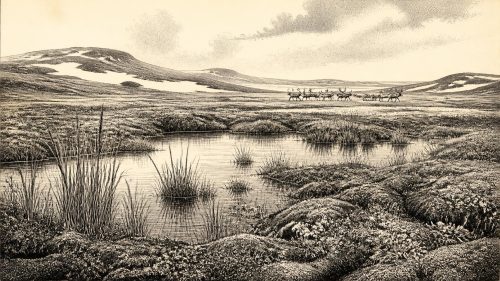
Around 30,750 BCE, Ireland lay within the volatile Late Pleistocene, although no evidence permits reconstruction of a single year. At Derryvree near Maguiresbridge, Fermanagh, freshwater silts between two tills record a treeless tundra wetland formed during an interval between glacier advances, with cold-adapted plants and seasonal waterlogged habitats. Castlepook Cave, Cork, preserves a time-mixed fauna including mammoth, reindeer, giant deer, bears, wolves, foxes and hyenas, demonstrating varied cold-stage ecosystems. A possibly cut-marked reindeer bone may indicate transient Upper Palaeolithic visitors, but settlement remains unproven. Changing ice, sea levels and later glaciation obscured Ireland’s earlier landscapes and evidence from this era.
Read Article

Archived: 24 September 2026
Abstract
Around 30,751 BCE, Ireland was a changing Late Pleistocene landscape as the British–Irish Ice Sheet began major expansion. Radiocarbon-dated red-deer remains from Waterford demonstrate that large herbivores occupied suitable habitats before the Last Glacial Maximum, though this does not prove human presence. Castlepook Cave’s mammoth-steppe fauna, including mammoth, reindeer and hyena, reveals intermittent cold, open-country ecosystems, but revised dates prevent assigning all species to this period. A possibly cut-marked reindeer bone suggests human contact but cannot establish settlement. Sparse evidence instead records climatic transformation, animal populations, and uncertainty at Ireland’s archaeological frontier. Later glaciation destroyed much earlier evidence across island.
Read Article
