Archived: 29 October 2026
Abstract
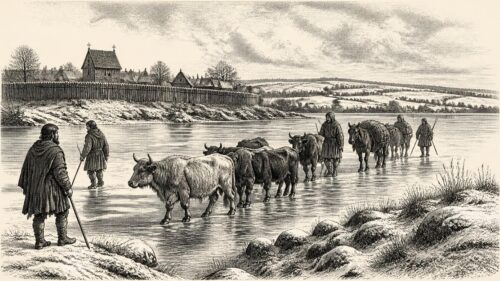
Annals conventionally dated to 821 depict severe winter conditions, when ice enabled livestock and laden traffic to cross waters, reshaping movement across Ireland. Political rivalry centred on Brega: Murchad of Cenél nÉogain gained secret submissions after reaching Ard Brecáin, while Conchobar of Mide later campaigned there, inflicting heavy losses and compelling Uí Chernaig submission. Other killings involved Ard Ciannachta. In Connacht, Uí Briúin suffered defeat at Tarbga; in Bréifne, Cenél Feidlimthe killed King Máel Dúin. Local groups also defeated the Delbna. Deaths of leaders at Birr and Achad Bó underline monasteries' political, economic and scholarly importance amid fragmented, competing lordships.
Read Article
Archived: 29 October 2026
Abstract
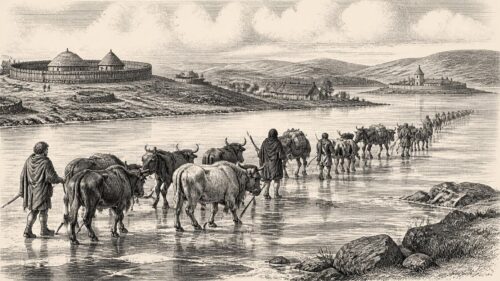
In 822, Irish annals recorded an exceptional frost that froze seas, lakes and rivers, enabling herds, horses and laden traffic to cross waterways. Political conflict centred on Brega, where Murchad of Cenél nEógain gained secret submissions before Conchobor of Clann Cholmáin reasserted control through devastation and coercion. Warfare also killed rulers and nobles in Connacht, Bréifne, Ard Ciannachta and the midlands. Ecclesiastical leaders died at Birr, Achad Bó Cainnig and Lugbad, illustrating churches’ roles. Chronicon Scotorum reports raids on Daiminis and Corcach. These notices portray a Ireland shaped by environmental change, dynastic rivalry, local warfare, religious institutions and seaborne vulnerability.
Read Article
Archived: 29 October 2026
Abstract
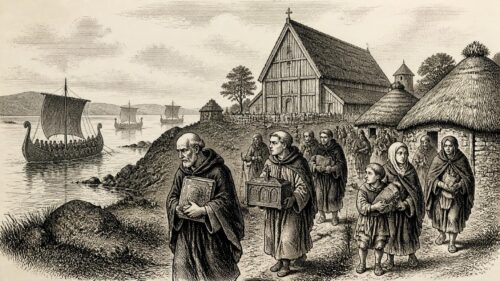
In 823, the Irish annals record Viking raiders attacking Bangor, breaking Comgall’s shrine, plundering its oratory and killing churchmen, though the monastery survived. Feidlimid of Munster and Armagh’s bishop asserted Patrick’s law in Munster, while Feidlimid also burned Galinne and suffered defeat at Mag Aí against Cathal of Uí Maine. Conflict around Clonmacnoise involved resignations, deaths, the killing of a tanist-abbot and compensation in churches. In the north, Niall son of Áed displaced Murchad as ruler of Ailech. Other deaths, including Tethba’s king and lightning fire at Armagh, underline Ireland’s interconnected yet contested ecclesiastical and political landscape across the island.
Read Article
Archived: 29 October 2026
Abstract
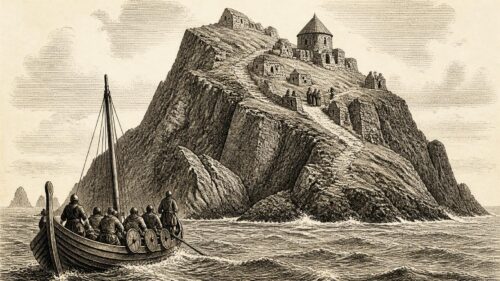
In 824 Scandinavian raiders attacked two Irish religious communities, Bangor in Ulaid and Sceilig off Kerry. At Bangor, they plundered the monastery, destroyed an oratory and violently disturbed the shrine and relics of its founder, Comgall, damaging a centre of dynastic and ecclesiastical prestige. At remote Sceilig, Étgal was captured and died of hunger and thirst, providing a rare named victim. Annalistic dating confirms both incidents despite manuscript chronological complications. The raids demonstrate mobile maritime danger across northern Irish Sea and Atlantic routes, not a unified campaign or permanent settlement. They marked early Viking-age insecurity; permanent Scandinavian bases came later.
Read Article
Archived: 29 October 2026
Abstract
Conventionally dated 825, though annalistic chronologies vary, this cluster of Irish events records pestilence, famine and bread scarcity affecting vulnerable people across Ireland. Raiders plundered Downpatrick, Movilla and Inis Daimle, but Ulaid defeated them at Mag Inis; elsewhere raiders routed Osraige. Blathmac son of Flann was killed on Iona, later commemorated as a martyr. Numerous prominent clerics and several kings died, highlighting fragile religious and political networks. Armagh’s bishop Artrí extended Patrick’s law over Connacht, asserting ecclesiastical authority. The notices do not describe a unified national crisis but reveal overlapping hardship, violence, leadership losses and competing regional authority within Ireland.
Read Article
Archived: 29 October 2026
Abstract
In 826, as conventionally dated despite annalistic discrepancy, Feidlimid mac Crimthainn, king of Munster, led an army into the midlands and burned Delbna Bethra, threatening Mide and estates linked to Clonmacnoise. His campaign challenged Conchobar mac Donnchada’s authority at Tara amid rivalry later followed by negotiations at Birr. Deaths of kings in Brega and Mide, and the deceitful killing and wounding of rulers in Tethba, exposed fractured local lordship. Ecclesiastical leaders died at Armagh, Clonard and Clonfert. A plague warning caused widespread fear, while Daire’s law was renewed in Connacht. No securely dated Viking raid is recorded in principal annals.
Read Article
Archived: 29 October 2026
Abstract
In 827, Irish annals recorded conflict, church politics, Viking raids and royal diplomacy across a divided island. Niall Caille of Cenél nÉogain defeated forces of Ulaid and Airgialla at Leth Cam near Armagh, strengthening his influence and supporting Éogan Mainistrech’s ecclesiastical position. Church leaders also died at Tallaght, Fir Rois and Cell Achaid. Viking raiders burned Lusk, ravaged eastern districts and defeated a Leinster encampment, killing Conall of the Fortuatha. Violence disrupted fairs at Tailtiu and Colmán. Finally, Munster’s Feidlimid and Tara’s Conchobor held a royal conference at Birr, acknowledging competing powers amid instability within Ireland’s political and religious life.
Read Article
Archived: 29 October 2026
Abstract
In 828, as calibrated in the Annals of Ulster rather than the displaced Viking material assigned to 827, Ireland’s record combines deaths, violence and religious travel. Muiredach of Leinster and several lesser kings died, alongside leading churchmen and an ecclesiastical steward, illustrating layered political and institutional authority. Conaing was treacherously killed, while Mide defeated Connacht in an otherwise unexplained battle. Diarmait, abbot of Iona, carried Colum Cille’s relics to Scotland, demonstrating maritime links within the Columban world, although no motive is recorded. The sparse evidence depicts a fragmented yet connected society shaped by rulership, warfare, churches, economy and sea routes.
Read Article
Archived: 29 October 2026
Abstract
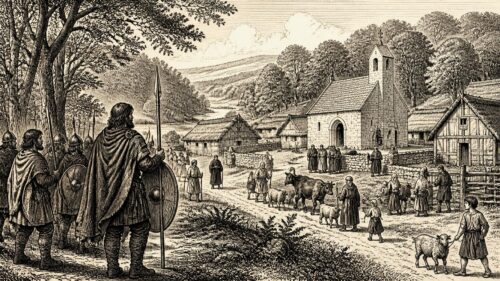
In 829, as dated by the Annals of Ulster despite its U830 heading, Feidlimid mac Crimthainn, king of Munster, projected power into the midlands and Connacht. He burned Foire, probably Fore in Westmeath, and inflicted a major defeat on the southern Uí Briúin, though details remain unknown. Munstermen also killed Folloman, brother of Conchobor mac Donnchada, king of Tara, intensifying their rivalry. Deaths of abbots, bishops and local kings underline the interdependence of ecclesiastical institutions, dynasties and regional politics. No Viking attack is recorded that year; Irish warfare itself threatened settlements and churches. The year showed expansionist pressure, without resolution.
Read Article
Archived: 29 October 2026
Abstract
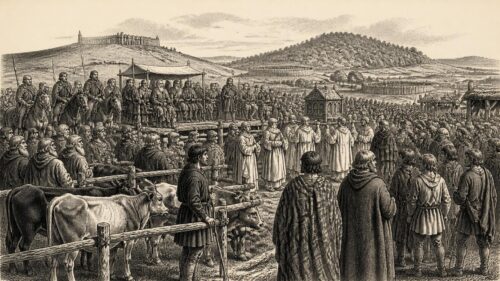
In 830, Ireland’s fragmented political and ecclesiastical powers collided at Tailtiu, where a dispute over Mac Cuilinn’s shrine and Patrick’s relics caused many deaths during the major assembly. Diarmait, abbot of Iona, returned with Columban sacred objects, illustrating ecclesiastical connections across the North Channel. Scandinavian raiders captured Conaille’s king and brother, and defeated Armagh’s community at Aignig. Armagh also suffered royal coercion from Conchobor of Tara. Feidlimid of Cashel campaigned into Meath, provoking Conchobor’s counter-raid. Death notices for Kildare, Movilla and Armagh leaders, alongside Óengus’s Martyrology, reveal enduring religious learning amid instability. The annalistic chronology itself remains uncertain and reconstructed.
Read Article
