Foire and Southern Uí Briúin829 CE
In 829, as dated by the Annals of Ulster despite its U830 heading, Feidlimid mac Crimthainn, king of Munster, projected power into the midlands and Connacht. He burned Foire, probably Fore in Westmeath, and inflicted a major defeat on the southern Uí Briúin, though details remain unknown. Munstermen also killed Folloman, brother of Conchobor mac Donnchada, king of Tara, intensifying their rivalry. Deaths of abbots, bishops and local kings underline the interdependence of ecclesiastical institutions, dynasties and regional politics. No Viking attack is recorded that year; Irish warfare itself threatened settlements and churches. The year showed expansionist pressure, without resolution.
Dateline
For 829 CE, the Irish annals offer a small but exceptionally revealing cluster of notices. The principal contemporary sequence, the Annals of Ulster, explicitly places its entries under AD 829, although its internal heading is “U830”. That distinction matters: medieval annal headings and later compilations do not always align neatly with modern calendar years. The events considered here are therefore those assigned by the Annals of Ulster to AD 829, rather than material placed two years earlier in the later Annals of the Four Masters.
The year’s dominant figure was Feidlimid mac Crimthainn, king of Munster. Three brief entries record the burning of Foire, the killing of Folloman son of Donnchad by Munstermen, and the “smashing” of the southern Uí Briúin by Feidlimid. They do not provide a narrative of causes, routes, negotiations or casualties. Yet together they show a ruler from Cashel projecting force far beyond Munster, into the contested political landscape of Mide and Connacht.
A Campaign in the Midlands and Connacht
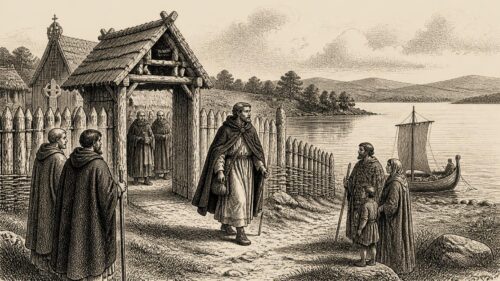
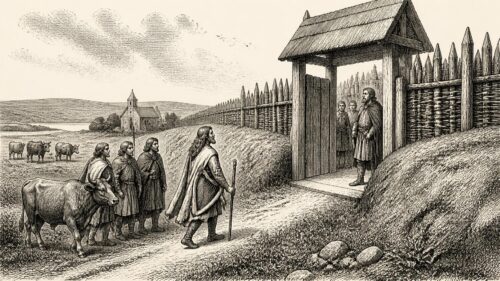
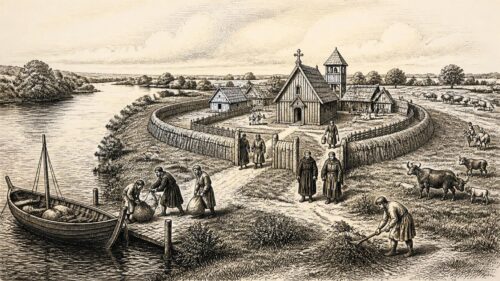
The annal first records “the burning of Foire by Feidlimid”. Foire is usually identified with Fore, in modern County Westmeath, where a major ecclesiastical settlement associated with St Feichín had existed since the seventh century. The surviving medieval ruins at Fore are later than 829, but the site’s early monastic importance helps explain why an attack upon it was worth recording. A raid or burning at such a place could strike not merely a church building but a community of clerics, tenants, craftspeople and dependants, as well as stores, animals and movable wealth.
That said, the annal does not describe what was burned. It does not say whether people were killed, whether a church was entered, or whether Feidlimid sought tribute, hostages or submission. It would be unsafe to turn one terse line into a detailed siege. The important point is firmer: Foire was attacked by the king of Munster in 829, in territory lying well north of his own core power.
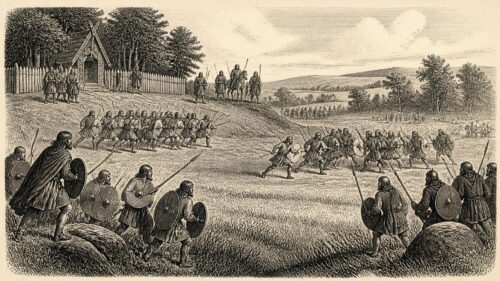
The next major notice is equally compressed: “the smashing of the southern Uí Briúin by Feidlimid”. The Uí Briúin were a powerful Connacht dynastic grouping, divided into several branches and closely bound into the politics of that province. “Smashing” conveys decisive devastation or defeat, but not necessarily a single set-piece battle. The annalist gives neither a battlefield nor named dead. It may denote the breaking of an army, the ravaging of a district, or a campaign combining both. What can responsibly be said is that Feidlimid inflicted a major reverse on a southern Uí Briúin population or political grouping during the year.
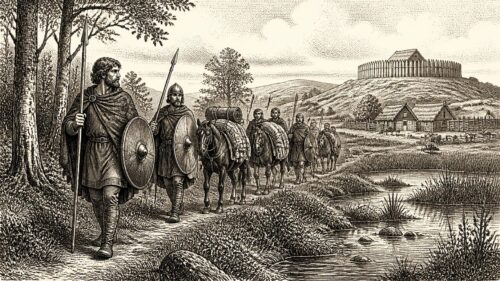
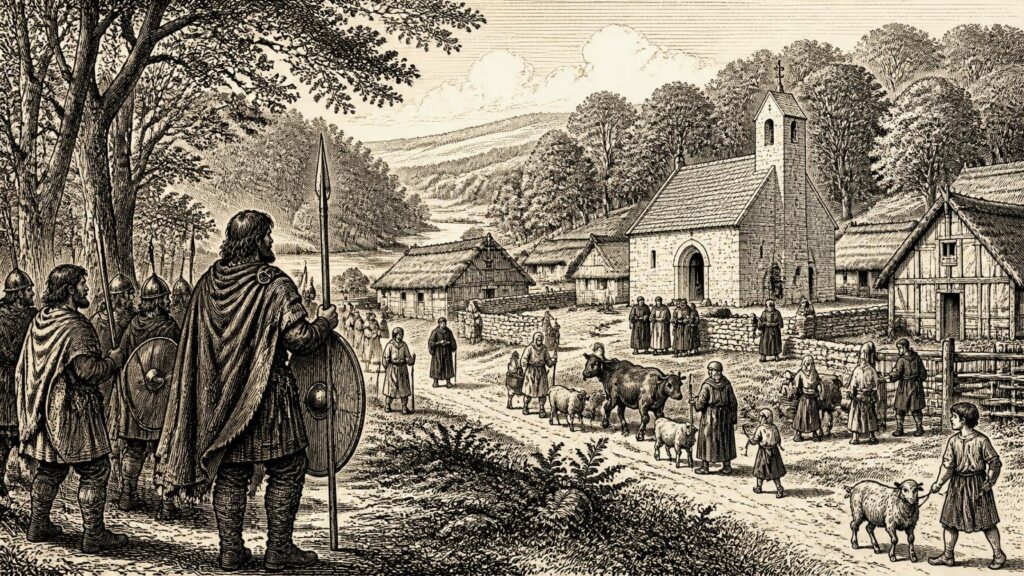
This was not an isolated southern king’s excursion. It belonged to a period in which Feidlimid was testing the reach of Munster authority across Ireland. His power rested on the Eóganacht Chaisil dynasty of Cashel, but his ambitions extended into Leinster, Mide, Connacht and the affairs of great churches. The violence of 829 demonstrates that provincial boundaries were not fixed frontiers. Armies could move through allied or hostile territories, burn strategic settlements and attempt to remake the hierarchy of client-kings.
Conchobor’s Rivalry
Feidlimid’s principal political rival was Conchobor mac Donnchada of Clann Cholmáin, the Uí Néill ruler recognised in northern annalistic tradition as king of Tara. Neither man controlled Ireland as a modern monarch controls a state. Kingship depended on military followings, tribute, hostages, ecclesiastical alliances and the willingness of lesser rulers to acknowledge superiority. Claims could be broad; effective authority was always conditional.
Only two years earlier, in 826, Feidlimid and Conchobor had met at Birr in a rígdál, a royal conference. Such meetings could settle claims or contain conflict, but the agreement, if there was one, did not end their competition. In 829, Conchobor’s brother Folloman was killed by Munstermen. The annal does not state where this happened, identify the men who killed him, or explicitly connect his death to Feidlimid’s attack on the southern Uí Briúin. The proximity of the notices makes a connection plausible, but not demonstrable.
Folloman’s death nevertheless brought the contest close to Conchobor’s own household. Dynastic politics was personal as well as territorial: the killing of a king’s brother could weaken an alliance network, invite retaliation and sharpen disputes over rank. Modern scholarship accordingly sees the campaigns of 829–30 as a phase of manoeuvre by both Feidlimid and Conchobor in Connacht, rather than evidence for a stable settlement between them.
Churches at the Centre of Power
The year’s obituary notices reveal the density of ecclesiastical institutions within political life. Cormac son of Suibne, abbot of Clonard, is described as both scribe and bishop. Cellach son of Cú Chothraige, superior of Achad Crimthainn, also died. So did Ioseph son of Nechtain, abbot of Ros Comáin. Each notice is brief, but the titles are meaningful. An abbot could oversee land, people, hospitality and legal rights; a bishop performed sacramental functions; a scribe belonged to the literate culture that copied texts, maintained records and gave learned authority to a church.
Clonard, Roscommon and Armagh were not remote devotional outposts. Their communities were embedded in regional economies and aristocratic networks. They offered prayer and learning, but also possessed estates, cattle, food renders, workshops and prestigious relics. That combination made churches valuable allies and tempting targets. Feidlimid’s burning of Foire therefore belongs to the same political world as his dealings with kings: religious institutions could anchor power in a landscape, provide legitimacy and mobilise dependants.
The death of Suibne son of Fairnech, abbot of Armagh for only two months, is especially striking. A tenure so short hints at instability, although the annal does not explain why he held office briefly or what followed. Armagh’s importance as the church of Patrick gave its leadership exceptional symbolic weight. Competition around its succession was inseparable from wider struggles among Irish rulers. Feidlimid had already intervened in Armagh politics in the 820s, so the death of an abbot there was more than a local clerical matter.
These notices also show that learning was not separate from public life. The annalist chose to remember Cormac’s scribal and episcopal roles and to call him an abbot. Literacy, scholarship and ecclesiastical office reinforced one another. Even amid campaigning, the deaths of learned church leaders were events considered worthy of preservation in the historical record.
Changing Local Leadership
Two further deaths mark the turnover of regional authority. Aengus son of Donnchad, king of Telcha Mide, died, as did Fínnechta son of Bodbchad, king of Cenél Meic Erca in the north-west. Such entries do not tell us who succeeded them or whether succession was peaceful. They do, however, remind us that Ireland in 829 was a patchwork of small kingdoms and kin-groups, not a simple contest between Munster and Tara.
A king of Telcha Mide mattered in the midlands, where Munster’s northern expeditions crossed politically sensitive ground. The death of a local ruler could open opportunities for stronger neighbours, alter obligations owed by churches and communities, or provoke disputes within a dynasty. Yet the evidence is silent on those consequences in this particular year. It is better to recognise the uncertainty than to supply a succession crisis that the sources do not record.
A Year Without a Recorded Viking Attack
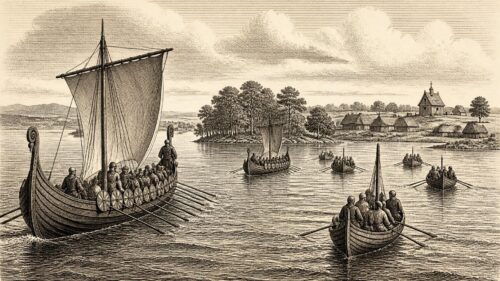
Viking raiding had already become a grave coastal and ecclesiastical concern by 829. In the preceding years, annals record attacks on places including Lusk, Cianachta and churches around the eastern seaboard; Irish rulers had also inflicted defeats on raiders. But the Annals of Ulster does not record a Viking attack in its AD 829 entry. This should not be mistaken for proof that Scandinavians were absent from Irish waters, or that communities felt secure. It simply means that none was entered in this annalistic year.
The contrast is instructive. Ireland’s insecurity did not arise from overseas raiders alone. In 829, the clearest recorded acts of destruction were carried out by Irish forces under an Irish king. Feidlimid’s campaigns demonstrate how warfare between Irish polities could threaten monasteries, settlements and agricultural districts in ways comparable, for those who lived through them, to external attack.
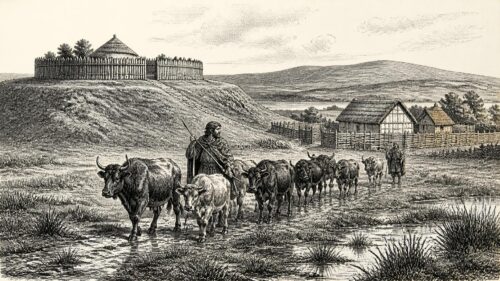
For ordinary people, the surviving record is frustratingly thin. It names kings, abbots and dynasties, not the households who rebuilt after burning, supplied armies, guarded livestock or sought refuge when a host approached. There is no securely dated notice of weather, harvest, disease, trade or building work for this year. Nevertheless, the attacks at Foire and among the southern Uí Briúin must have had practical consequences: movement of armed men consumed food and fodder, while burning endangered the stores and labour on which communities depended. The scale and duration remain unknown.
The Meaning of 829
829 was a year of expansionist pressure rather than final resolution. Feidlimid of Munster struck northwards, damaged Foire and dealt a serious blow to the southern Uí Briúin; Munstermen killed Folloman, brother of the king of Tara. At the same time, the deaths of churchmen and local kings show institutions and lineages continually changing hands. The annals preserve no treaty, decisive battle-plan or settlement. They preserve something more characteristic of early medieval Irish politics: a sequence of violent assertions of authority, framed by ecclesiastical prestige and contested in a landscape of many kingdoms.
Primary Sources
- The Annals of Ulster, Year U830 (AD 829)
- The Annals of Ulster, Year U827 (AD 826)
- The Annals of Ulster, Year U831 (AD 830)
- Annals of the Four Masters, Part 66
- Annals of Inisfallen, Part 39
- Vikings in Irish Chronicles, 794–902: Data
- Vikings in Irish Chronicles, 794–902: Introduction
- The Vikings in Ninth-Century Ireland: Sources and Settlements
- Vikings in Early Medieval Ireland
- Fedelmid (Feidlimid), Dictionary of Irish Biography
- Feidlimid mac Crimthainn: King of Munster, Oxford Dictionary of National Biography
- The Chronology and Sources of the Early Irish Annals
- Daniel P. McCarthy: Publications and Irish Annals Research
- Chronological Synchronisation of the Irish Annals
- Fore Abbey
- County Westmeath Urban Archaeology Survey
- Archaeological Survey, National Monuments Service
- Exploring the Irish Annals
- Irish Texts at CELT
- Viking Activity in Ireland by County in the Annals
- Vikings in Ireland and Scotland
- Brión, Dictionary of Irish Biography