Archived: 30 October 2026
Abstract
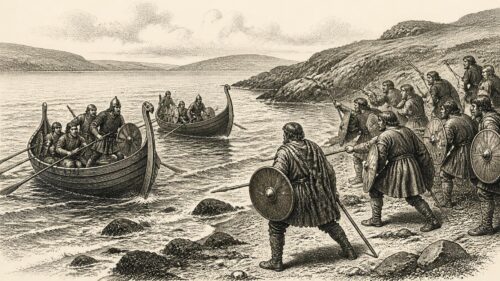
In 811, annalistic evidence records Scandinavian raiding and Irish political religious activity across Ireland. Men of Umall killed raiders, while Scandinavians defeated the Conmaicne; Cobthach of Loch Léin likewise slew raiders in Munster. These mobile incursions brought no proven permanent settlement. Muirgius son of Tomaltach, king of Connacht, led a southern hosting, though its destination and outcome remain unknown. Daire's law was promulgated in Connacht, demonstrating ecclesiastical and secular cooperation. Deaths of prominent abbots, bishops and regional kings highlighted interconnected religious institutions and fragmented political authority. The year reveals local resistance, royal ambition, church privilege, and pressures on coastal communities.
Read Article
Archived: 29 October 2026
Abstract
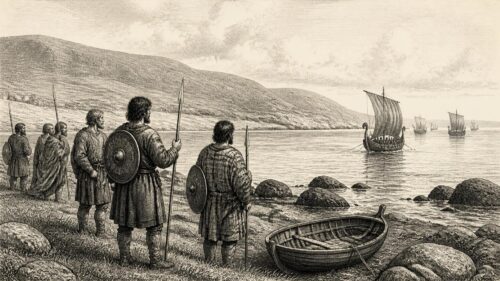
In 812, Irish communities faced Scandinavian raids along the western and south-western coasts. Men of Umall killed raiders, while heathens slaughtered Conmaicne; Cobthach, king of Loch Léin, also defeated a raiding party in Munster. These local successes did not end the threat, as later attacks showed. In Connacht, Muirgius son of Tomaltach plundered southern territories amid Uí Briúin expansion, while the Calraige of Lurg were slaughtered by the Uí Briúin. Daire’s law was promulgated in Connacht, reflecting ecclesiastical and political networks. Deaths of prominent church leaders emphasised churches’ administrative, scholarly and social importance throughout Ireland during an unsettled historical year.
Read Article
Archived: 29 October 2026
Abstract
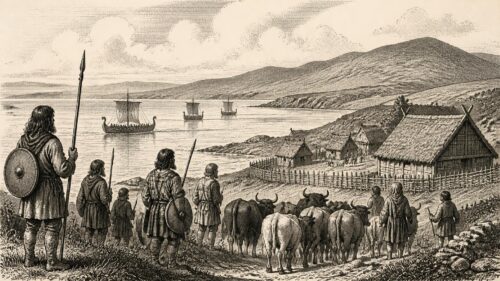
In 813, Dúnadach, king of Umall in modern County Mayo, and Coscrach son of Flannabra were killed when heathen seaborne raiders defeated local forces. The annals provide no details of the battle, loot, or lasting conquest, but place it amid western coastal fighting following Irish resistance in 812. The year also saw Daire’s law promulgated among the Uí Néill, probably protecting cattle, a vital economic resource. Obituaries for rulers and church leaders illustrate dispersed political and ecclesiastical authority. These events depict Ireland as a landscape of vulnerable coasts, regional kingdoms, valuable herds and religious communities, rather than a unified state.
Read Article
Archived: 29 October 2026
Abstract
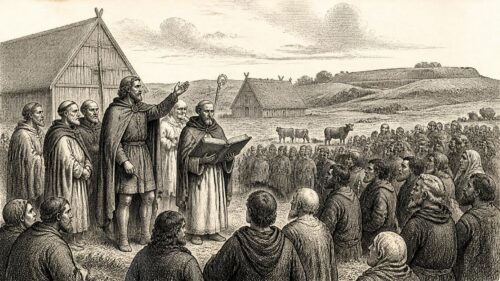
In 814, Muirgius son of Tommaltach, overking of Connacht, and Fairchellach, abbot of Clonmacnoise, campaigned through Uí Maine, killing many people described as innocents. Muirgius later promulgated Ciarán’s law at Cruachain, demonstrating cooperation between royal and ecclesiastical power. In Leinster, the sons of Bran defeated Uí Chennselaig. At Kells, completion of a Columban church preceded Iona abbot Cellach’s resignation and Diarmait’s appointment. Deaths included bishops, abbots, scribes and teachers, notably Fairchellach and the murdered Bishop Máel Dúin. Annals also recorded great distress and severe illnesses, without identifying their cause, revealing interconnected warfare, religious authority, construction, learning and hardship across Ireland.
Read Article
Archived: 29 October 2026
Abstract
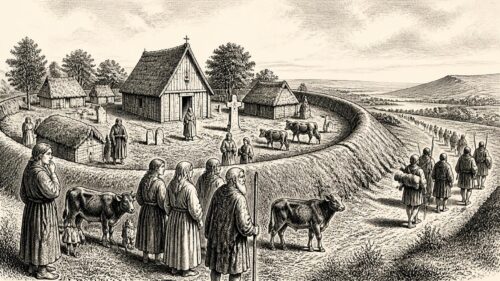
In 815, Irish annals recorded deaths, killings and the plunder of Cluain Creamha, revealing political and ecclesiastical vulnerability. Muirgius son of Tomaltach, dominant Uí Briúin overking of Connacht, died, ending a reign amid rivalries. Men of Bréifne and Síl Cathail attacked Cluain Creamha, killing people and despoiling an ecclesiastical community. Southern Brega lost kings Conall son of Niall and Fócarta son of Cernach. After Cenél Conaill killed his brother Colmán, Áed Oirdnide campaigned northwards. Annals also note deaths of churchmen at Cell Moinne, Lugmad and Iona, while no Viking raid is explicitly recorded for Ireland in the surviving annalistic sources.
Read Article
Archived: 29 October 2026
Abstract
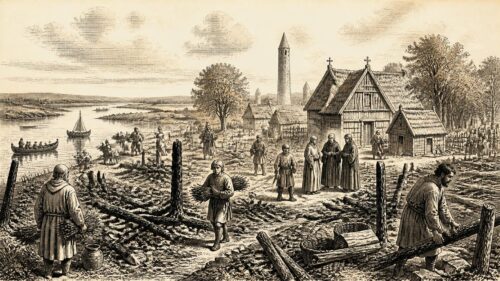
Events conventionally assigned to 816 reveal both chronological uncertainty in Irish annals and disruption. Almost half of Clonmacnoise, a timber-built Shannon monastery and centre, burned; no source identifies the cause. Thirty days later its abbot, Suibne son of Cuanu, died, compounding pressures on recovery and leadership. In Connacht, following overking Muirgius’s death, Diarmait son of Tommaltach fought Uí Fhiachrach, burning and plundering Foibrén and killing many common people; Cathal son of Ailill died. A battle involving Uí Maine is linked to conflicts but variously dated 816 or 818. Other notices record ecclesiastical deaths and burning, underscoring churches’ vulnerability amid warfare.
Read Article
Archived: 29 October 2026
Abstract
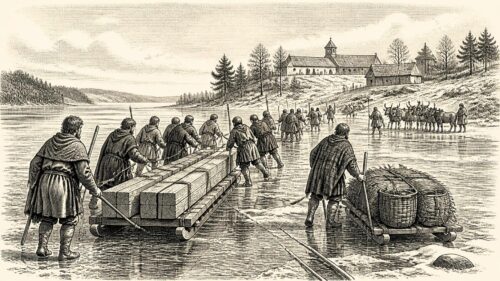
In 817, severe frost and snow transformed Ireland’s rivers and lakes into temporary routes. People crossed the Boyne dry-shod, hunted and moved livestock on Lough Neagh, and carried oratory materials across frozen Lough Erne. Áed Oirdnide, high king of Tara, imposed a partition of Leinster, while violence there dishonoured and killed church officers. Religious authority travelled: Cuanu took Mochta’s shrine to Munster, and Artrí brought Patrick’s shrine to Connacht. In the west, Uí Briúin rulers defeated Uí Maine at Forath, killing King Cathal and nobles. Fire destroyed a third of Clonmacnoise, emphasising ecclesiastical vulnerability and reconstruction during this extraordinary year.
Read Article
Archived: 29 October 2026
Abstract
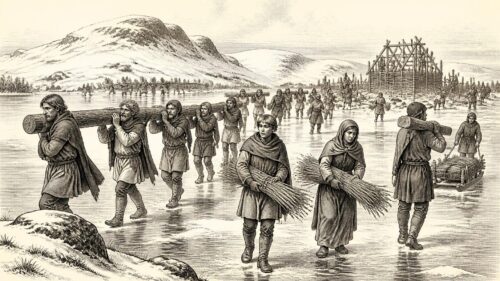
In 818 Ireland experienced an exceptional winter, with rivers and lakes frozen from Epiphany to Shrovetide, enabling travel, hunting and the transport of building materials across Lough Erne. Politically, Áed Oirdnide intervened in Leinster after Muiredach son of Bran’s death, redistributing authority among Bran’s grandsons. Churchmen carried saints’ shrines through Munster and Connacht, while violence breached ecclesiastical protection. In Connacht, Uí Briúin kings defeated Uí Maine at Forath amid regional rivalry. Deaths of abbots and rulers marked shifting local power. On 21 October, fire destroyed a third of Clonmacnoise, damaging a major ecclesiastical settlement and its communities’ buildings and livelihoods.
Read Article
Archived: 29 October 2026
Abstract
In 819, Áed Oirdnide, northern Uí Néill king of Tara, ravaged Cualu and reached Glendalough before dying near Áth dá Ferta in Mag Conaille. His death ended a long pursuit of supremacy but did not create a unified Irish kingdom. Conchobar son of Donnchad of Clann Cholmáin succeeded him, amid rivalry between Cenél nÉogain and Cenél Conaill, in which Máel Bresail was killed. Other conflicts claimed Cairell in Ulaid, while Leinster lost Cathal of Uí Cheinnselaig, prior of Ferns. At Armagh, Whitsun rites were disrupted. Ecclesiastical obituaries underline churches’ political, social and learned importance, while rural communities endured warfare’s burdens.
Read Article
Archived: 29 October 2026
Abstract
In 820 Feidlimid mac Crimthainn of the Eóganacht Chaisil became king of Caisel, Munster’s overkingship. Recorded by the Annals of Inisfallen, despite difficulties in other annals, his accession began a twenty-seven-year reign. The circumstances of succession, amid rivalry between Eóganacht branches, remain unknown. His authority depended upon kinship, armed support, tribute, alliances and ecclesiastical recognition within politically fragmented Ireland. Caisel controlled a central Munster landscape, while churches supplied wealth, status and influence. Rural producers sustained ecclesiastical power. Scandinavian raiding was an established threat though no dated attack occurred in Ireland that year. Later military campaigns extended Feidlimid’s influence beyond Munster.
Read Article
