
Hyaena Hall’s Reindeer World
31,406 BCE is a modern label within Marine Isotope Stage 3, not a precisely recoverable Irish year. Derryvree, County Fermanagh, preserves pre-glacial wetland sediments indicating open, treeless, tundra-like ground with grasses, sedges, mosses, herbs and freshwater habitats. Castlepook Cave, County Cork, contains mixed, long-accumulated faunal remains, including reindeer, mammoth, giant deer, hyaena, wolves, foxes and lemmings, evidencing cold open landscapes. A marked reindeer femur may indicate Upper Palaeolithic butchery, but cannot establish settlement or continuous occupation. No tools, hearths, burials or social institutions are securely known. Later glaciation and mixed deposits limit certainty, revealing active ecosystems rather than historical society.
View Record
BIRM-166 Below the Drumlin
31,407 BCE is a modern label within a broad MIS 3 dating range, not a recoverable annual event. Ireland experienced fluctuating cold conditions as ice expanded, producing a patchwork rather than uniform glaciation. At Derryvree, Fermanagh, freshwater sediments beneath a drumlin document locally ice-free, treeless, periglacial wetlands with plant and insect life. Castlepook Cave, Cork, preserves a disturbed MIS 3 fauna including mammoth, giant deer, reindeer, bear and hyaena, evidencing changing cold-stage ecosystems. A cut-marked reindeer bone may indicate transient Upper Palaeolithic visitors, but proves neither settlement nor continuity. Changing seas and erosion limited survival. Uncertainty fundamentally defines this period.
View Record
Crag Cave’s Thaw Signals
31,408 BCE is a modern nominal date, not a recoverable Irish year. During climatically unstable Marine Isotope Stage 3, Ireland contained varying ice, tundra wetlands and occasional milder conditions. Derryvree, County Fermanagh, preserves freshwater sediments indicating treeless, seasonal, periglacial habitat with plants, insects and pools before later glaciation. Crag Cave calcite shows intermittent above-freezing water circulation in south-west Ireland. Castlepook Cave’s fauna includes reindeer, mammoth, giant deer, carnivores and hyena, although deposits span millennia. A possibly stone-cut reindeer bone may indicate human butchery, but cannot prove occupation. No securely dated settlements, tools, institutions or practices are known; evidence remains fragmentary.
View Record
Maguiresbridge’s Coldwater Silts
Around 31,409 BCE, Ireland lay within Marine Isotope Stage 3 of the Last Glacial Period, though evidence cannot identify events in a single year. Freshwater silts at Derryvree, County Fermanagh, accumulated between glacial episodes and indicate cold, treeless, tundra-like wetlands with shallow water and sparse vegetation. Their calibrated age range plausibly includes this date, but does not establish island-wide conditions. Castlepook Cave, County Cork, preserves mixed remains of mammoth, reindeer, giant deer and other fauna, showing wider ecological connections. A possibly butchered reindeer bone may indicate a brief human visit, but no evidence demonstrates permanent Palaeolithic occupation, settlements or institutions.
View Record
Castlepook’s Uncertain Hunters
31,410 BCE is a modern label for a broad, uncertain interval in Ireland’s Late Glacial history, not a recoverable annual event. Derryvree, County Fermanagh, preserves freshwater sediments between tills, showing locally ice-free, treeless tundra wetlands with arctic-alpine flora during Marine Isotope Stage 3. Castlepook Cave, County Cork, contains a disturbed but significant fauna including reindeer, mammoth, giant deer, carnivores and lemmings, indicating cold open habitats. A marked reindeer femur may record butchery by people around 33,000 years ago, but cannot prove permanent occupation. As ice-sheet expansion approached, evidence portrays diversity, fragmentary records and possible transient hunters, not settlements or polities.
View Record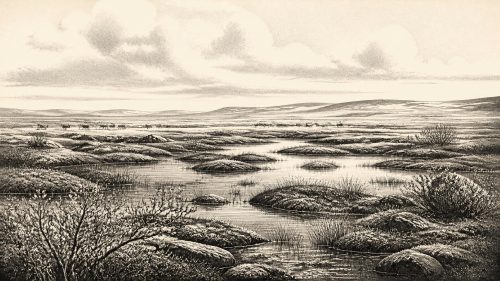
Derryvree’s Clubmoss Basin
31,411 BCE is a retrospective label, approximately 33,361 cal BP, not a date permitting year-specific Irish history. Derryvree, County Fermanagh, preserves freshwater organic sediments between tills, documenting an ice-free Middle Midlandian interval within fluctuating glacial conditions. Its sedges, mosses, clubmoss, dwarf willow and other remains indicate treeless periglacial wetlands rather than continuous ice or forest. Later ice buried this local archive as ice-sheet expansion developed. Castlepook Cave, County Cork, contains cold-adapted fauna and reindeer bone with a possible stone-tool cut mark, suggesting but not proving brief Upper Palaeolithic human visits. No settlement, tools, ritual, economy or political society is known.
View Record
Derryvree’s Mossy Margin
At the notional date of 31,412 BCE, Ireland’s history is reconstructed from environmental evidence rather than annual records. Derryvree, County Fermanagh, preserves a freshwater wetland deposited between glaciations, indicating open, treeless tundra with mosses, pools, sedges and sparse vegetation. Crag Cave’s intermittent calcite growth demonstrates millennial climatic shifts and periods above freezing. Castlepook Cave in County Cork contains Ice Age fauna, including reindeer, mammoth and hyaena, and a possibly stone-tool-marked reindeer femur suggesting fleeting human activity. However, no securely dated occupation evidence exists. Ireland remained a climatically unstable, increasingly glaciated landscape, not a settled or politically identifiable society at all.
View Record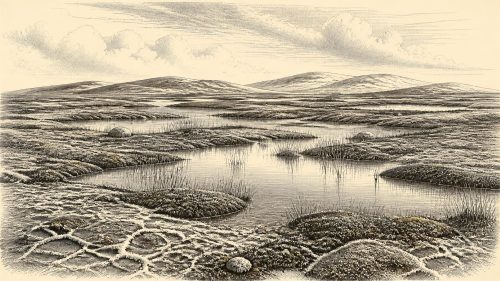
Derryvree’s Bogbean Wetland
At the notional date of 31,413 BCE, Ireland’s evidence records environmental change rather than history. Derryvree, County Fermanagh, preserves freshwater sediments between glacial tills, dated broadly to 36,900–31,700 calibrated BP. Pollen, plants, mosses and insects indicate exposed, treeless tundra-like wetland, with bogbean, sedges and standing water, during an ice-free interval later overwhelmed by glaciers. Castlepook Cave, County Cork, confirms Marine Isotope Stage 3 fauna including reindeer and mammoth. A marked reindeer femur may indicate human butchery, yet cannot prove occupation. Ireland was a climatically unstable, intermittently habitable landscape approaching extensive glaciation, with no securely evidenced society or settlement at all.
View Record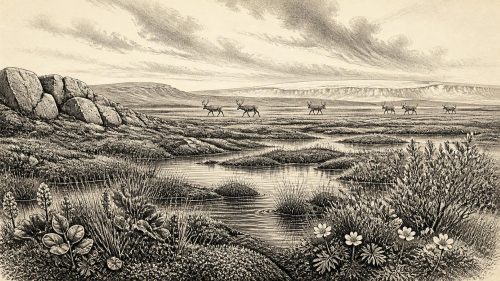
Hyenahall’s Reindeer Corridor
About 31,414 BCE, Ireland belonged to the unstable, cold later Pleistocene, not a historically datable nation. Calibrated evidence from Derryvree, County Fermanagh, indicates treeless tundra, wet hollows and shallow freshwater before renewed glaciation buried the deposits. Castlepook Cave, County Cork, preserves a time-mixed fauna including reindeer, mammoth, giant deer, hyena and Arctic fox, showing ecologically productive open country. A possibly cut-marked reindeer bone may indicate fleeting Upper Palaeolithic human activity in Ireland, but no settlement or associated tools are proven. Shifting ice, coasts and habitats governed survival, leaving evidence of landscapes and animals rather than societies, institutions or permanent communities.
View Record
The Reindeer Femur at Castlepook
Around 31,415 BCE, Ireland lay within the climatically unstable Marine Isotope Stage 3, approaching but preceding maximum last-glacial ice expansion. Evidence cannot date events to a single year. Derryvree sediments in Fermanagh indicate locally ice-free, treeless, cold wetlands with open vegetation. Castlepook Cave, Cork, yielded reindeer, mammoth, giant deer, predators and other cold-climate fauna; revised dating places key remains in this period. A reindeer femur bearing possible stone-tool cut marks suggests, but does not prove, human activity. Mixed cave deposits and absent associated artefacts preclude claims of settlement. Ireland’s record documents environments and animal movements; secure human evidence came later.
View Record