
500–599 CE
Bread Failure
The surviving annal entries associated with 538 CE are sparse and uneven. Two annal traditions record a failure of bread, while others place different events under the same year-labels, including a battle at Claenloch and regnal notices. The surviving entries also show that the dating is not uniformly presented across the texts.
Ulster Annals
The surviving annal excerpts for 539 CE do not preserve a single shared Irish event. Instead, they record different notices in different compilations: papal and ecclesiastical entries in the Annals of Ulster and Tigernach, a reign notice and a striking anecdote in the Four Masters, and a battle in Inisfallen. The result is a sparse and uneven annal year, with some entries dated directly in the manuscripts and others linked to adjacent years through editorial cross-reference.
Gregory Birth
The surviving annal excerpts do not give a single stable picture of 540 CE. One source places Gregory’s birth under 540, another records it under a neighboring year, and a third cross-references it with later and earlier year numbers. The material therefore documents both a notice about Gregory and visible chronological uncertainty rather than a securely fixed Irish event for that year.
Ailbe Deaths
The annals for 541 CE preserve a small set of notices, above all the death of Ailbe and, in some witnesses, the death of Comgall. One source also records a great mortality in that year. The surviving entries are brief and uneven, so the safest account stays close to the wording of each annal and avoids supplying events that are not explicitly dated.
Tortu Battles
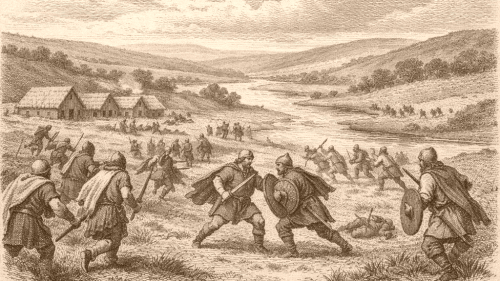
The annalistic record associated with 542 presents two securely dated battle notices in some compilations, while other compilations place the same notices under different annal headings. The Annals of Ulster and the Annals of Tigernach both record the battle of Tortu and the battle of Slicech or Sligo in the same chronological cluster, though their identifier systems and printed headings differ. Chronicon Scotorum and the Annals of Inisfallen also preserve related entries, but with different heading arrangements. The notices are brief and do not by themselves supply broader context beyond the named deaths and victors.
Connacht Conflict — Royal Death
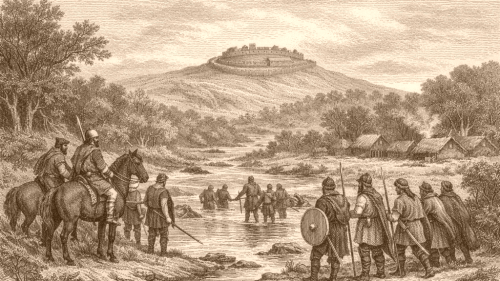
The annals preserve a small but distinct body of material for 543 CE. Some notices are year headings, while others record battles, a royal death, and a plague notice under nearby or conflicting chronological frames. Annals of Ulster, Annals of Tigernach, Chronicon Scotorum, and the Annals of the Four Masters do not always place the same event under the same annal year. This article keeps the notices separate, identifies the printed year heading where present, and limits itself to directly attested entries. The result is a cautious survey of what the sources actually place in, or near, 543 CE.
Diarmait Begins
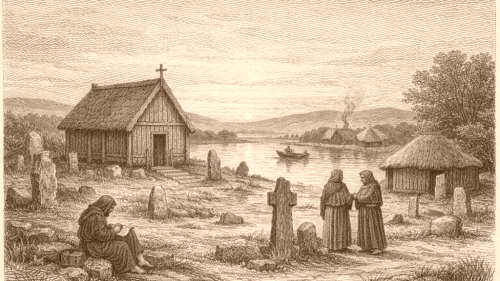
The annals place several notices under 544, but they do not give a single uniform record. The Annals of Ulster assign printed AD 544 to a first mortality called bléfed, the death of Mo-Bí Clárainech, Diarmait son of Fergus Cerrbél’s beginning of rule, and an alternative notice that Gregory was born. The Annals of the Four Masters place under 544 the death of Mobhi Claraineach and the battle of Cuil Conaire. Chronicon Scotorum places under A.D.544 the death of Tuathal Maelgarbh, the accession of Diarmait Mac Cerbhaill, and the death of Ciaran. Other annals preserve overlapping or displaced notices nearby.
Cluain Moccu Nóis — Matching entries
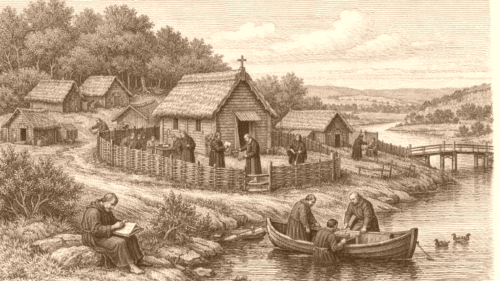
The surviving annal entries for 545 CE are brief. The Annals of Ulster place the foundation of Daire Coluim Cille in 545, while the Chronicon Scotorum records the death of Tigernach, bishop of Cluain Eois, in the same year. The Annals of Inisfallen also give a foundation notice for Cluain Moccu Nóis in an entry marked for the year, but its cross-reference shows that such notices do not align perfectly across the different annal collections. No broader narrative event is securely dated from these excerpts beyond these short notices.
Battle of Slicech
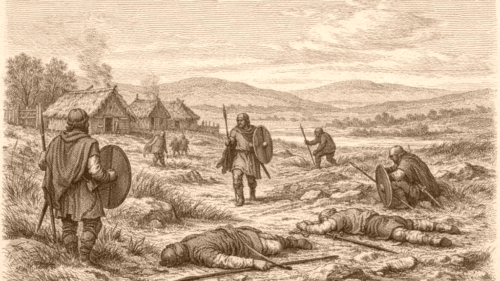
The annal excerpts for 546 CE are brief but not uniform. The Annals of Ulster securely attach the battle of Slicech to that year and name the dead and the victors. The Annals of the Four Masters attach a different battle to 546, while Inisfallen links its 546 heading to yet another pair of battles. Chronicon Scotorum provides only a chronology marker in the retrieved lines, leaving no narrative notice for the year here.
Cluain Moccu Nois
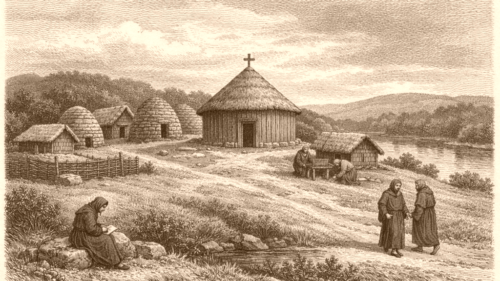
The surviving annals offer a narrow and partly conflicting record for 547 CE. The Annals of the Four Masters explicitly assign several deaths to that year, while the Annals of Inisfallen place the foundation of Cluain Moccu Nóis in 547. The Annals of Ulster preserve a related battle notice within adjacent chronological headings, showing that the evidence for this year is more secure for the presence of recorded events than for a single agreed sequence.
Ciaran Mortality
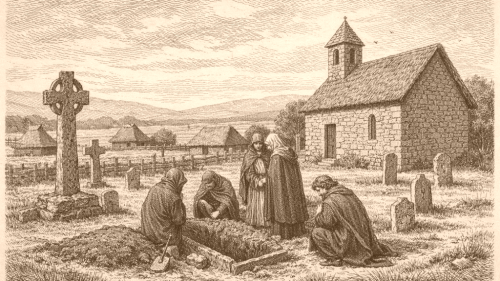
The notices grouped under 548 record several deaths and a mortality in closely related but not identical forms. The Annals of Ulster place Ciarán’s repose, Tigernach’s repose, and a great mortality under the printed heading AD 548, while also naming several associated dead. The Annals of the Four Masters give the Age of Christ, 548, and list Ciarán, Tigernach, Mac Tail, Colum, Sinchell, Odhran, Finnen, and Colam. The Annals of Inisfallen compress the year to Ciarán, Mael, and a date cross-reference. This article compares the year’s notices without reconciling them, and avoids adding events not stated in the texts.
Cúil Conaire
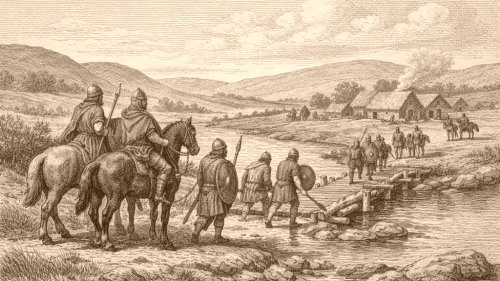
The annals for 549 CE are narrow but not empty. The clearest securely dated notice is the battle of Cúil Conaire in Cera, where Ailill Inbanda and his brother Aed Fortamail fell and Fergus and Domnall were victors. A second tradition in another annalistic collection gives the same battle with slightly different names for the dead and the victors. The year also appears beside a notice for Diarmait’s reign beginning in 549. Other entries near the year concern mortality and religious deaths, but they belong to adjacent annal positions rather than the battle year itself.
Dáuíd Repose
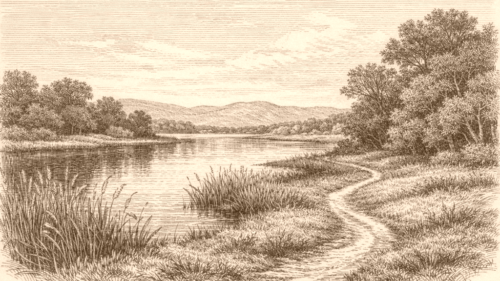
The clearest securely dated item in the retrieved annalistic material for 550 CE is the death of Dáuíd of Farannán, bishop of Armagh and legate of all Ireland. Other excerpts for the same year are sparse or only chronological markers, so the evidence for 550 must be kept narrow.
Cuilen Battle — Associated Death
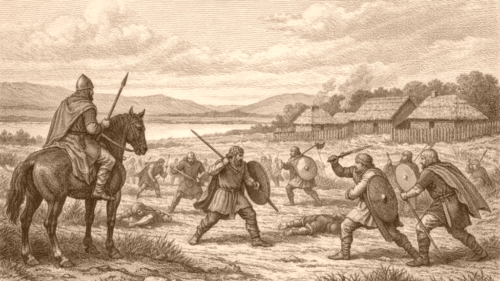
The annals securely place one battle in 551 CE: Cuilen, where the Corcu Óche of Munster were defeated, and one associated death, Fothad son of Conall. Multiple annalistic compilations preserve the same year entry, while the surrounding material remains sparse and does not support adding further events.
Cuilen Battle
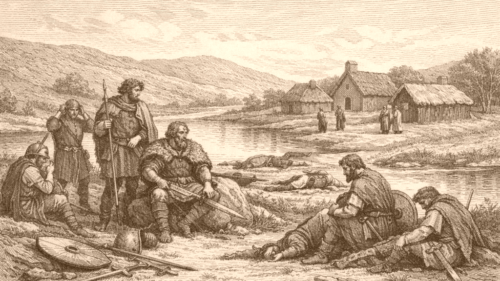
The annals do not present a single uniform record for 552 CE. Annals of Ulster gives an explicit AD heading for 552 and places several notices there, including deaths and a prose note about Patrick’s relics. The Four Masters also assigns notices to 552, while Tigernach and Chronicon Scotorum arrange comparable material under their own year entries without printed AD headings. Across these texts, the securely dated material includes the battle of Cuilen, the death of Eochaid son of Conlaed, the death of Béc son of Deiche or Béc mac Dé, and the death of Crimthann son of Brion. The record is sparse, but it is not empty.
Samthrosc Plague
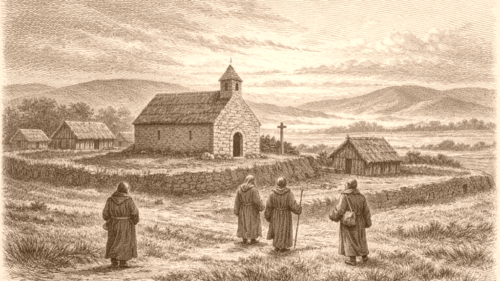
The annalistic notices attached to 553 CE are brief and uneven. Some sources open the year with calendar headings marked 553, while others preserve notices under identifiers that do not automatically convert to CE dates. In these records, a plague named samthrosc appears beside a birth notice for Lugaid moccu Óchae or MoLua moccu Óchae, depending on the text. Other annals place related notices under adjacent headings or give only broader chronological framing. The evidence allows comparison of wording and placement, but not the invention of missing events or harmonization beyond the texts themselves.
Cathub Death
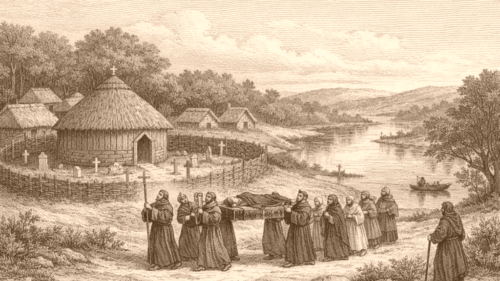
The annals for 554 CE preserve a small set of securely dated notices rather than a full narrative. They record the death of Cathub son of Fergus, described as bishop or abbot of Achad Cinn, and they also place the founding of Bennchor in that year in some traditions. The surviving notices are brief and do not support adding further events beyond what each text explicitly states.
Great Mortality
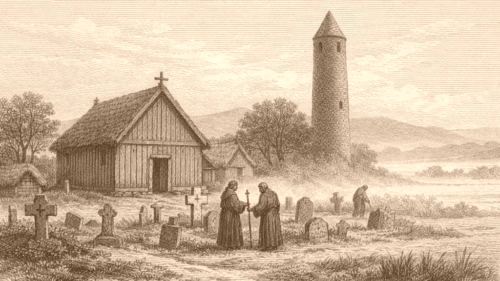
The surviving annals for 555 CE offer a sparse Irish record. The clearest notice in the Ulster tradition records a great mortality in Ireland, while other annals place the death of Cathub or Cathbad, bishop of Achad Cinn or Achad Chinn, in the same year. No securely dated political battle or dynastic event is attached to 555 in the Irish entries reviewed here.
Druim Cleithe
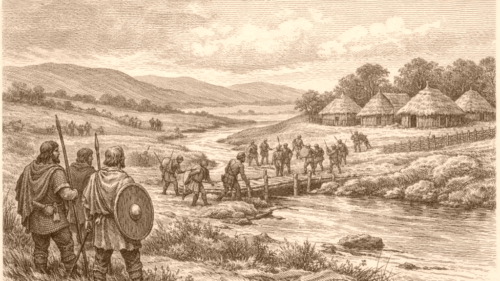
The 556 notices are brief but not empty. Two annals preserve battle entries for the year: one at Cuil Uinnsenn in Teathbha against Diarmaid, and one at Druim Cleithe, where Ferdia, king of Ulaid, fell. Other year entries in the retrieved annals are mostly calendrical or spare, showing how limited the surviving record for this year is.
Ulaid Deaths
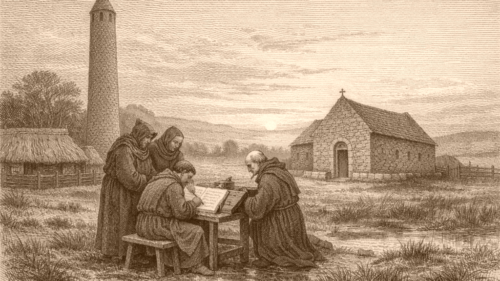
The annals connected with 557 preserve a small and uneven set of notices. In the Annals of Ulster, the year opens with a notice for the Kalends of January and records the death of Fergna or Fiacha, king of Ulaid, without an explicit printed AD heading on that notice. The Annals of Inisfallen also place Fergna’s death in 557 by cross-reference. Other compilations around the same chronological zone supply nearby notices for 557 and 558, but they do not all agree in wording, ordering, or year-labeling. This article keeps those notices separate and avoids forcing them into one reconstructed sequence.
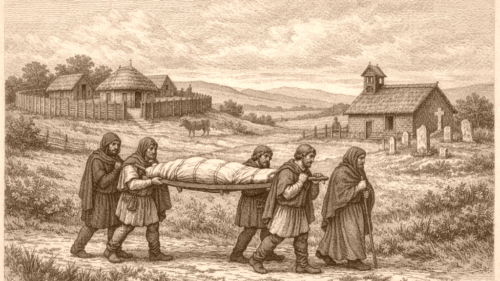
Diarmait Slain
The annals preserve a small cluster of notices for the late 550s, but only some are securely tied to 558. The clearest 558 notice is the killing of Diarmait son of Fergus Cerball at Rath Beag in Mag Line, followed by the burial of his head and body at different ecclesiastical sites. Other notices in the same annalistic neighborhood record a killing at Bennchor, a church foundation at Clonfert, and a feast of Temair, but their placement varies across the annals, so they should be treated as broader-period context rather than as securely fixed to 558 alone.
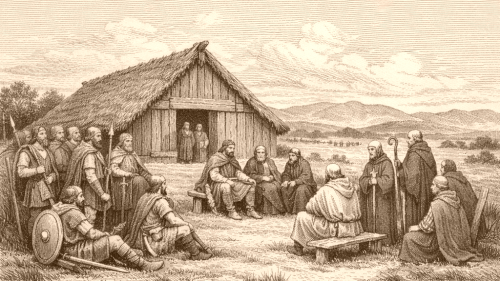
Tara Assembly
The annalistic notices attached to 559 CE are not identical across the surviving Irish chronicles. The Annals of Ulster place an entry under printed AD 559 that includes the Feast of Temair, the death of Gabrán son of Domangart, a migration before Máelchú’s son, and the battle of Cúil Dreimne. The Annals of Tigernach under Annal T559 record the last Assembly of Tara, Gabrán’s death, flight before Bruide son of Maelchon, and Curnán’s death. The Four Masters under the Age of Christ, 559, record the first year of Domhnall and Fearghus and the battles of Gabhra Liffe and Dumha Aichir.
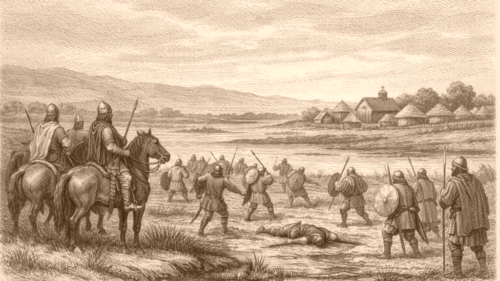
Cúl Dreimne
The annals associated with 560 CE record a small cluster of notices about the feast of Temair, the death of Gabrán son of Domangart, the battle of Cúl Dreimne, and related traditions about Diarmait son of Cerball, Colum Cille, and allied rulers. The surviving entries do not present a single uniform account. Some records place the battle within a broader sequence of events, while others preserve only selected notices or link the battle to later explanatory material. This article distinguishes the notices as they appear in each source and avoids merging them into one reconstructed narrative.
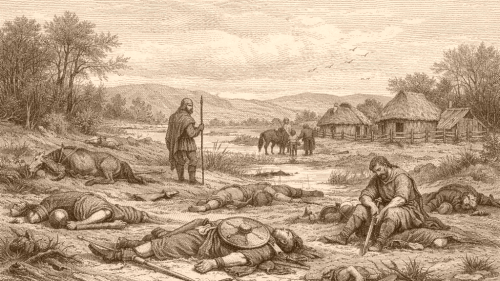
Cuil Uinsen
The annals for 561 CE are sparse and differ in arrangement, but they preserve a small set of notices that can be checked directly. In the Annals of Ulster, the heading AD 561 introduces the battle of Cúil Uinsen. The Annals of Tigernach place the battle of Cúil Uinsenn under their T562 entry, while the Four Masters give Age of Christ 561 notices for the deaths of Domhnall and Fearghus. These records should be read separately, without forcing them into one harmonised sequence.
Moin Daire
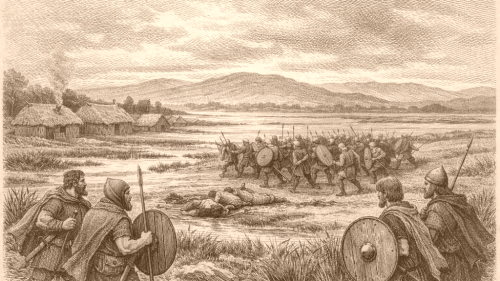
The annals preserve a notice for a battle at Móin Daire Lothair in their entries for 562. The Annals of Ulster place the notice under AD 562 and state that the Uí Néill of the North won over the Cruithin. The Annals of Tigernach place a parallel notice under Annal T562 and describe the battle as won by the Uí Néill of the north over the Picts, adding that seven Pictish kings fell, including Aodh Brecc. Read together, the texts show a shared battle notice and a difference in detail, without allowing a fuller reconstruction.
Colum Cille — Foundations elsewhere
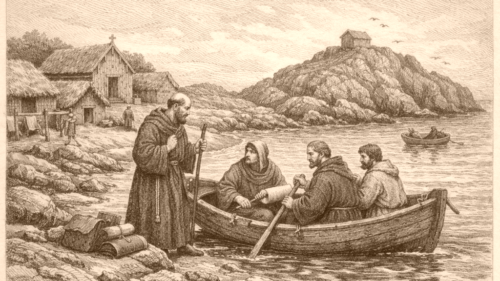
The annals for the mid-sixth century preserve several notices that modern readers may group under 563 CE, but the texts do not place them in exactly the same way. The Annals of Ulster, Tigernach, Inisfallen, and the Four Masters each attach different calendar headings or relative year labels to notices of battles, deaths, and Colum Cille’s voyage. Some entries are duplicated with variant dating, while others appear only in one compilation. Reading them separately shows a compact cluster of notices about conflict, succession, and ecclesiastical movement without forcing the records into a single reconciled year.
Gabair Liphi — Cruinde
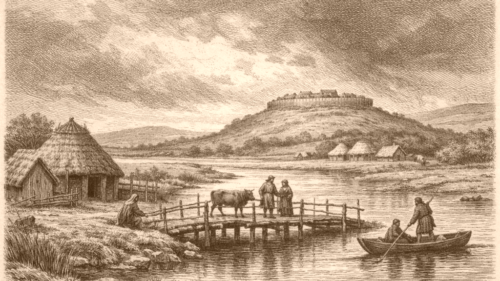
Irish annals place the year 564 CE beside several notices that vary in wording and attribution. The Annals of Ulster under AD 564 record a great wind-storm, the death of Laisre, and an alternative note about Bre9nainn founding Cluain Ferta. The Annals of Tigernach place a family death, a battle at Gabra Life, and a succession notice under their Annal T564. The Annals of the Four Masters mark the Age of Christ 564 as Ainmire's first year in the sovereignty of Ireland. These records can be compared without forcing them into one harmonized narrative.
Gabair Liphi — Deaths Noted
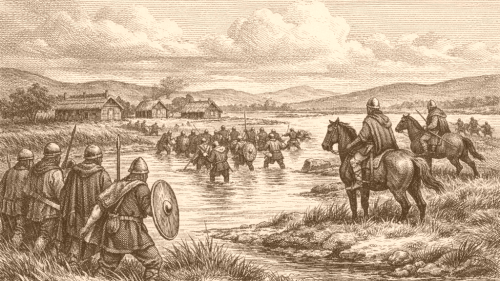
The annalistic notices grouped around 565 CE record a battle at Gabair Liphi, a death in Ulidia, and references to monastic deaths and royal succession. The Annals of Ulster place their notice sequence under U565 and distinguish that year from the calendar heading that follows. Other annals attach overlapping material to 565, but not always in the same order or with the same dating framework. Read side by side, the records preserve brief, discrete notices rather than a continuous narrative, and they should be treated as separate witnesses to a narrow year span.
Gabair Liphi
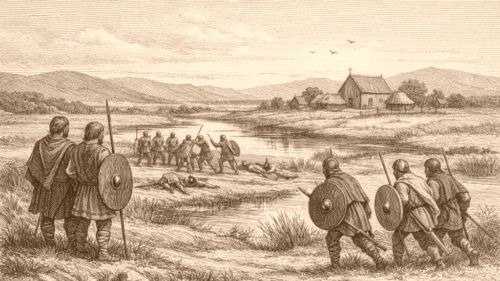
The annals do not align every manuscript notice with the same modern year, so 566 must be handled through the headings and sequence in each text. In the Annals of Ulster, the battle of Gabair Liphi appears under U566, while the printed heading beneath it says AD 565. The Annals of Tigernach place a notice for John the Roman under T566, and the Annals of the Four Masters give the age-of-Christ heading 566 for Ainmire's death. Annals of Inisfallen add a birth notice under AI566. Read together, these entries show overlapping chronological framing rather than one uniform year list.
Iardoman Expedition
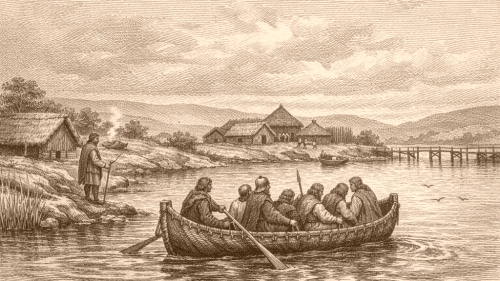
The notices associated with 567 CE are sparse and uneven. The Annals of Ulster place an expedition into Iardoman in an entry whose printed heading is AD 567, while the same work’s adjacent year heading is AD 566. The Annals of the Four Masters give Age of Christ 567 and record the killing of Baedan son of Ninnidh at Leim An Eich. Annals of Tigernach preserve a related sequence of year headings and a different notice for the death of Ainmire son of Setna, but not under the same numbered placement. Taken together, these entries show differing annal structures, not a single harmonized narrative.
Ainmire Slaying
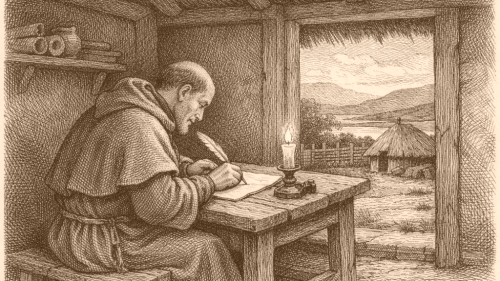
Irish annals preserve several notices aligned with 568 CE, but they do not all describe the same event. In the Annals of Ulster, Annals of Tigernach, Chronicon Scotorum, Annals of the Four Masters, and Annals of Inisfallen, the year-marker or calendar heading is paired with different short entries. Some records concern the death or slaying of Ainmire son of Sétna; others mention a battle involving Colmán Bec son of Diarmait, or the killing of Demán son of Cairell. This article separates those notices, keeps the annal headings in place, and notes only what each text explicitly records, without merging them.

Aedh Reign — Ainmire son of Setna — Death
The annals preserved here present 569 as a compact sequence of notices rather than a single narrative. In the entries labelled for that year, the most prominent name is Aedh son of Ainmire, whose second regnal year is noted in one chronicle, while another records deaths of Ainmire and Fergus, and a third places similar notices within its own annual framework. The same cluster also includes deaths of clerics such as Oenna, Ite, and, in one witness, Gildas. The evidence differs in wording and placement, and those differences are best read separately.
Patrick Anniversary
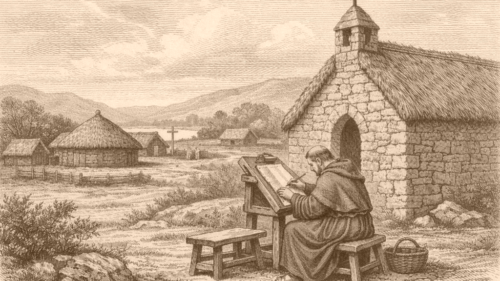
The notices clustered around 570 CE are uneven across the annal traditions. Annals of Ulster prints an AD 570 heading beside notices that follow it, while the corresponding Four Masters entry is explicitly under the Age of Christ 570. Tigernach preserves both a notice for one hundred years from Patrick’s death and a separate obituary for Maenu, bishop of Cluain Fearta Brénainn. The Ulster and Tigernach texts also place some notices in adjacent annal years with different printed headings. These records show a compact but varied year cluster, not a single uniform event.
Tola Feimhin
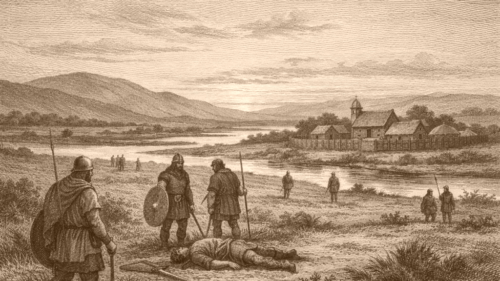
The notices linked with 571 CE are brief and uneven. In the Annals of Ulster, the entry numbered U572 carries the printed heading AD 571 and records the slaying of two descendants of Muiredach, naming their killer, along with deaths of bishops and abbots nearby in the sequence. The Annals of Tigernach and the Annals of the Four Masters both print the year 571 and record battles at Tola and Feimhin, but they differ in detail and emphasis. The notices can be compared as annal wording, not harmonized into a single reconstructed narrative.
Muirchertach Deaths
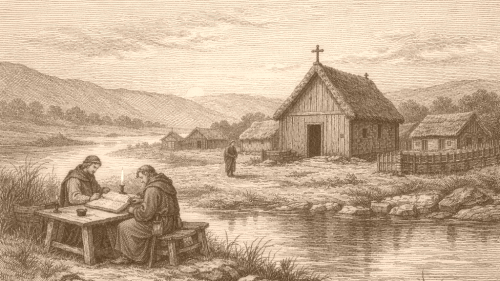
The annals for the year heading associated with 572 preserve a compact sequence of notices rather than a single narrative. In the Ulster text, entries record a slaying among descendants of Muiredach, deaths of a bishop and other men, an uncertain notice about Diarmait son of Cerball, and a sea-wanderer captured, before a battle notice appears under the next year heading. The Tigernach text preserves a similar but not identical sequence, including the same slaying, the battle of Femen, and later notices on deaths and expeditions. The overlap and divergence are best read as parallel annalistic records, not as one harmonized account.
Feimen Battle
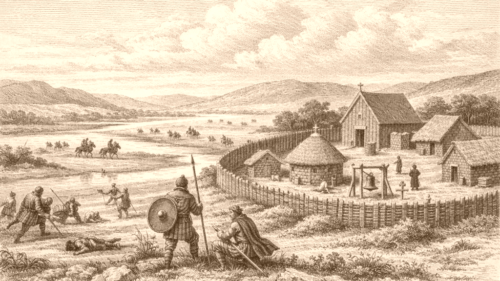
The annals preserve several notices associated with 573, but they do not all align in the same way. One set of records places the battle of Feimen in an entry headed AD 572, while another associates the same battle with a later annal year and different framing. The same year-group also includes notices for the battle of Tola and Fertola, the death of Conall son of Comgall, and related ecclesiastical deaths. This article compares the notices as written, distinguishes the records, and avoids moving any event to a modern year beyond what each annal explicitly states.
Tola Fertola
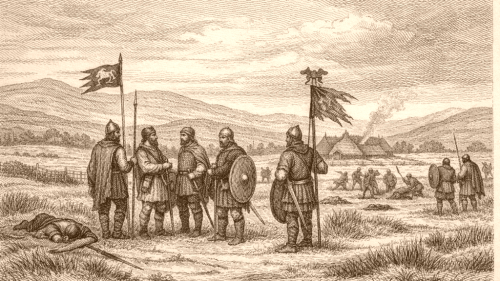
The annalistic notices assigned to 574 present a small set of entries rather than a single unified account. One record places the battle of Tola and Fertola in the territories of the Cruithin and adds a death notice for Conall son of Comgall. Another record assigns the same battle to plains between Éile and Osraige, names Fiachra son of Baetán as victor, and gives a fuller topographical gloss. Related annals place a different battle notice under 574 or nearby years, showing that the surviving entries do not align perfectly in year division. This article compares the notices strictly as written.
Battle Teloch
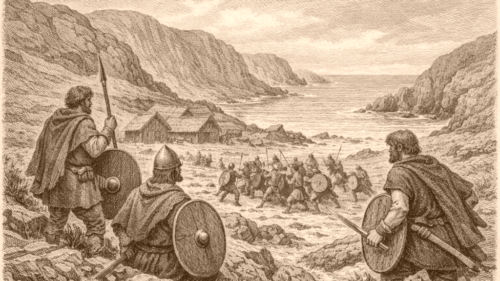
The year 575 CE is sparsely and unevenly recorded in the Irish annals. The Annals of Ulster place a battle of Teloch in Cenn Tire in that year and also note leprosy and an unusual abundance of nuts. The Annals of Inisfallen instead record a battle of Luimnech under 575. Chronicon Scotorum preserves a 575 heading in the retrieved excerpt without accompanying event text, showing how limited the surviving notice can be in that witness.
Teloch Record
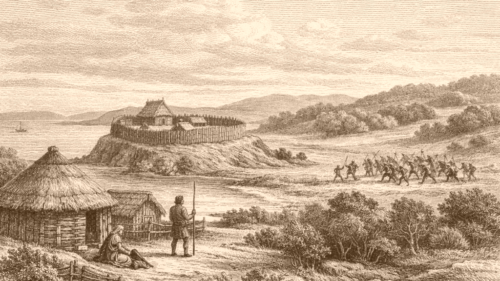
The annalistic material attached to 576 CE is uneven and requires separation of record from record. One set of notices places a battle at Teloch and associates it with deaths among the followers of Gabrán’s sons; another set records a plentiful crop of nuts or an abundance of nuts, together with illness. Other compilations attach deaths of Brénainn, Colman, and related ecclesiastical notices to the same calendar year. The surviving entries do not agree in placement or content, so the year must be read through the wording and headings of each annal independently rather than as a single harmonized narrative.
Aedh Reign
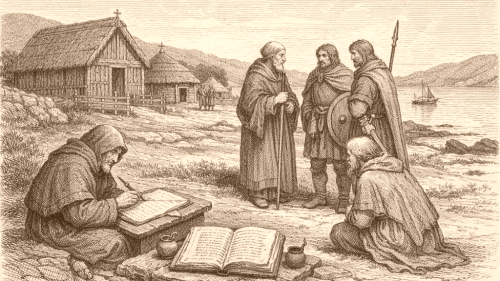
The year 577 CE is marked in the Irish annals by a small cluster of notices rather than a single dominating event. The Annals of Ulster place the year under AD 576 and include the battle of Teloch, the beginning of Tiberius Constantinus’s reign, the repose of Brénainn of Cluain Ferta, a killing by the Uí Briúin, and a notice on the first expedition of the Ulaid to Man. The Annals of Tigernach and the Annals of the Four Masters preserve overlapping but not identical accounts. Their variations show how the same year could be arranged differently.
Finnian Deaths
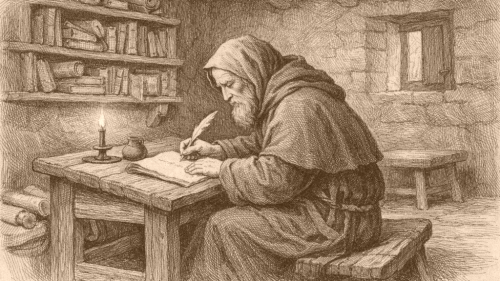
The surviving excerpts for 578 CE do not present one uniform record. In the Annals of Ulster, the entry printed under AD 578 is a cluster of notices about ecclesiastical deaths, a royal death, and a kingly killing. The Annals of Tigernach preserve a nearby sequence with a battle and deaths under a different internal numbering. The Annals of the Four Masters provide adjacent notices, but the extracted passages do not include a separate 578 entry. Read together, the excerpts show comparison, not reconciliation, between dated annal entries and surrounding context.
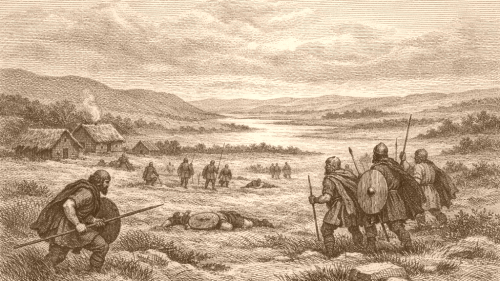
Druim Meic Erca — Druim Meic Erce
The notices grouped with 579 CE preserve a small cluster of deaths and one battle, but they do not all assign the same dating frame. The Annals of Ulster place the battle of Druim Meic Erce under a heading printed as AD 579, while also recording deaths of Áed son of Giun and Bruidge, king of Uí Fhailge, under the same annal entry. The Annals of Tigernach likewise place the battle of Mano and two deaths in a notice headed Annal T579. The Annals of the Four Masters date a battle of Druim Mic Earca to 579 and add a regnal year for Áed. These records can be compared, but not merged beyond what each text states.
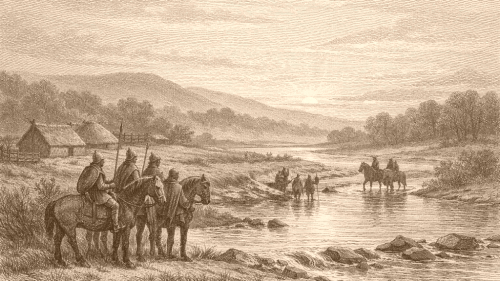
Druim Meic Erca
The surviving annal notices for 580 CE do not all use the same dating frame, so the year must be handled through the printed headings in each record. One set places material under AD 580, another under the Age of Christ 580, while a third relevant notice appears in a nearby year block with an AD 580 heading. Across these entries, the evidence records a battle, a military expedition, and a royal death, with related notices in adjacent years kept separate here.
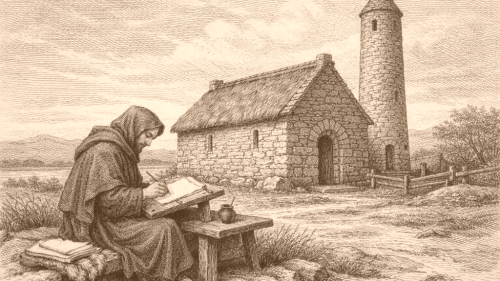
Baetán’s Death
The surviving annals do not give a single uniform notice for 581 CE. In the Annals of Ulster, the entry group U581 is headed AD 580 and contains notices for Druim Meic Erca, Baetán son of Cairell, and an expedition to Innsi Orc. The Annals of Tigernach place death notices and royal notices in the group T581. The Four Masters give the Age of Christ 581 and record Aedh, son of Suibhne, dying. Chronicon Scotorum has no detailed notice for its CS581 grouping in the retrieved excerpt. The evidence therefore shows agreement on a cluster of notices, but not a single identical annual record.
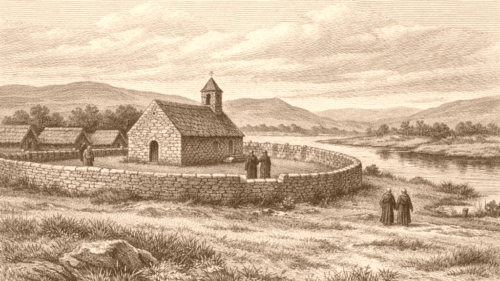
Munster Entries
The retrieved annal passages preserve only a small number of notices under the printed year 582 and related year labels. The Annals of Ulster place a death notice under U583 with AD 582, while the Annals of Tigernach and the Four Masters each record deaths under their own 582-year headings. Tigernach also adds notices for a Munster king, a bishop, and another local ruler. The Four Masters give the same basic pattern in a terser form. In the supplied Inisfallen excerpt, 582 appears only through cross-reference, not as a full standalone entry.
Manu Victory
The surviving annals preserve only a small set of notices associated with 583 CE, and they do not all arrange them in the same way. The Annals of Ulster place an AD 583 heading before a death notice, a papal notice, a battle notice, another death, and an alternative note about Brénainn. The Annals of the Four Masters give an Age of Christ 583 heading with the sixteenth year of Aedh and a death notice for Fergus. Tigernach and Chronicon Scotorum preserve nearby notices with different wording and sequence. This record is sparse, parallel, and not fully harmonised.
Nathcheimhe Death
The Annals of Ulster place entries labelled U585 under the heading “AD 584 alias 85.” They record the deaths of Mac Nisi, abbot of Clonmacnoise, in his seventeenth year as abbot, and Aed, son of Suibne, king of Maenmag. The Four Masters, under 584, identify Aedh’s seventeenth year and record Saint Nathcheimhe’s death on 1 May. Abbot of Terryglass, he was Caeimhighin’s brother. Inisfallen entry AI584.1 records Bruide, son of Maelchú’s death, alongside a reference to Ulster. However, its entry number and cross-reference do not constitute an explicitly printed calendar date, requiring caution when comparing these annals and their respective chronologies.
Colmán’s Fall
The year 585 is sparsely documented in the Irish annals, but the surviving notices allow a close comparison of how different compilations place the same events. The Annals of Ulster, the Annals of Tigernach, the Annals of the Four Masters, and the Annals of Inisfallen all preserve material that can be aligned with this year, though not always with the same wording or numbering. Several texts record a royal death and one battle; some also attach alternative year placements or later cross-references. This account confines itself to directly attested notices and observable differences in presentation, dating, and overlap among the annals.
Baetán’s Assassination
The annals do not present a single uniform record for 586 CE. The Annals of Ulster, Tigernach, the Chronicon Scotorum, and the Annals of the Four Masters each print a year heading near the relevant material and then list notices that vary in wording, sequence, and level of detail. Several texts place the same kingship, deaths, and battles in adjacent years rather than in a single shared entry. This comparison keeps the records separate and reports only what each excerpt explicitly states. It also distinguishes year-headed notices from broader context, such as death notices that appear in nearby years. No omitted material is inferred.
Irish Annals
The annals for the year 587 CE preserve a small cluster of notices rather than a single agreed narrative. In the Annals of Ulster, the year sequence includes the death of Cairlén, bishop of Armagh, the death of Senach, bishop of Clonard, and an alternative notice linking the death of Baetán son of Cairell, king of Ulaid, to the same sequence. The Annals of Tigernach and the Annals of the Four Masters also place episcopal deaths in 587. Other records in adjacent annal years differ in wording and in the exact ordering of events.
Mag Ochtair
Under the year heading printed as 588, the annals preserve a small cluster of notices rather than a single event. One record notes the repose of Aed son of Brec, another records the death of Aed son of Brenainn, and a third mentions a very hot and dry summer. Tigernach places the battle of Magh Ochtair in the same year as the victory of Brandub son of Eochaidh over the Uí Néill, while the Four Masters give a parallel account with the Age of Christ heading 588. Together these notices show overlapping but not identical chronological presentation across the texts, with no need to force them into one synthetic narrative.
Ireland
The annals preserve only a small body of material for 589 CE, and the notices differ in how they are dated and arranged. In the Annals of Ulster, the entry headed AD 589 records the repose of a bishop, the death of a king of Tethba, and a very hot and dry summer. The Annals of Tigernach preserve a nearby sequence with a solar failure and the death of a king of Connacht. Read together, these notices show what can be securely assigned to the year and what must remain adjacent context rather than exact chronology for 589 CE.
Fiachna’s Victory
The annals preserved in the retrieved excerpts do not present a single uniform record for 590 CE. Some notices are placed under headings explicitly marked 590, while others appear under adjacent annal years whose printed headings correspond to 589 or 591. Within the notices that can be read directly, the year includes battle reports, a death notice for Feidlimid son of Tigernach, and an eclipse or dark morning. Other sources for the same calendar year supply parallel but not identical entries, including a battle in Mag Ochtair, a battle in Eadan Mor, and a death notice for Seanchan son of Colman Mor. The excerpts also preserve variant wording across the annals.
Cuiméne’s Birth
The annals do not present a single uniform picture for 591 CE. In the Ulster, Tigernach, Inisfallen, and Four Masters traditions, notices cluster around deaths, an eclipse or dark morning, and a notice of a beginning of rule. Some entries are printed under 591, while others in the same manuscripts fall under adjacent headings, so the evidence has to be read notice by notice. This account distinguishes the records as written and avoids forcing them into one chronology. It focuses only on what is directly stated in the notices themselves.
Gerthide’s Defeat
The annals preserve several notices for 592 CE, but they do not all present the year in the same way. The Annals of Ulster print AD 592 for notices under U593, while the Annals of Tigernach print Annal T592, and the Four Masters print the Age of Christ, 592. Within those notices appear the deaths of Aengus son of Amalngaid and, in another tradition, the killing of Senchán son of Colmán Mór. The same year also carries a battle notice for Belach Daithe or Eudunn Mór and a notice of Gregory of Rome. The records are brief and uneven.
Brandub Accession
The annals for 593 CE preserve a small set of Irish notices, mainly deaths, one reported battle, and a Leinster succession notice. The entries do not agree perfectly from source to source, so the year is best read as an annalistic horizon rather than a single fixed chronology. The securely attested material includes the death of Aengus son of Amalngaid in Ulster and Chronicon Scotorum, while Tigernach and the Four Masters preserve additional 593 entries for Leinster and Munster.

Bran Dubh’s Victory
The surviving annalistic material linked to 594 CE is uneven and does not present a single agreed sequence. One Ulster notice printed under AD 594 records the battle of Gerrthide, while a later Ulster heading printed as AD 594 records the repose of Colum Cille and related deaths. The Four Masters place the death of Aedh son of Ainmire at Dun Bolg in AD 594. Inisfallen preserves shorter cross-referenced notices for the same cluster of deaths and battles. The evidence shows proximity, not complete agreement, and it should be read notice by notice.
Joint Kingship
The annals give a narrow but usable picture of Ireland in 595. In the Annals of Ulster, the notice for AD 595 records the repose of Colum Cille, the death of Eógan son of Gabrán, and other deaths, while the next year’s heading carries the battle notices often used for the following year. The Annals of Tigernach and the Annals of the Four Masters likewise place the first year of Aedh Slaine and Colman, deaths of churchmen, and later battle notices in adjacent annual entries. Read together, these texts show what each compilation places in or near 595, without allowing modern harmonization.
Sliab Cua
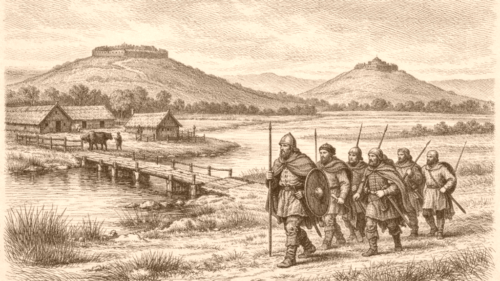
The surviving annals for 596 CE record a small cluster of notices rather than a full narrative. Annals of Ulster place battles, killings, and deaths under its heading for AD 596, while other annals often assign overlapping material to nearby years or preserve alternate wording. Annals of Tigernach, the Annals of the Four Masters, and the Annals of Inisfallen each provide parallel entries that help identify what is securely dated and what is only adjacent context. This summary compares only notices explicitly attached to the year, keeping the wording and placement of each source separate and avoiding any reconstruction beyond the texts themselves.
Columba’s Passing
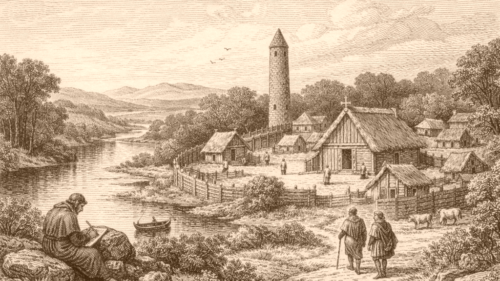
The annals for 597 CE preserve a small but usable set of notices from Ireland and its wider world. They date the death of Colum Cille to 9 June, record the slaying of Aed son of Ainmire in one tradition, and place several battles and deaths in the same year or in closely adjacent annalistic systems. The entries do not give a continuous narrative, and some manuscripts shift the same events by a year. This makes 597 best read as a year with a few securely dated items and several overlapping chronological formulations, not as a full political chronicle.
Cainnech’s Repose
This study assembles the annalistic material closest to 598 CE and separates securely entered events from surrounding chronology. The surviving notices are uneven across the Annals of Tigernach, the Annals of the Four Masters, the Annals of Ulster, the Annals of Inisfallen, and Chronicon Scotorum. The year is marked above all by the death of Cainnech of Aghaboe and by the battle of Eachros in Muirisc. The record also preserves nearby references to the Saxons receiving the faith and to the beginning of the joint rule of Colmán Rímid and Áed Sláine.
Saxon Defeat
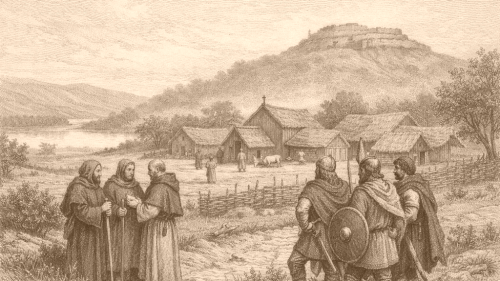
Annals tied to 599 CE preserve a small cluster of entries, but they do not offer a full narrative for the year. In the Annals of Ulster, the year labeled AD 599 includes the repose of Ailither of Clonmacnoise, the repose of Cainnech of Aghaboe, and notices of the battle of the Saxons in which Aedán was defeated and the slaying of Suibne by Aed Sláine. The Annals of Inisfallen cross-reference related notices to other years, showing differing placement rather than a single settled chronology.