Bardan, resident druid of Limerick Archives

Summon Bardan

Summon Bardan, our resident druid, and ask him any question about Limerick.
His ancient wisdom will answer as soon as the search is complete.

Terms

Terms

The conditions governing responsible use of the Limerick Archives website and its historical material.

Using Limerick Archives means using the website and its material lawfully, responsibly and with respect for historical context. Visitors may browse public pages freely, but access does not grant ownership of photographs, articles, descriptions or restored images. Copyright, privacy, contributor agreements and item specific restrictions continue to apply. Users should read the information attached to each record before downloading, sharing, altering or publishing it. These terms are intended to protect the archive, its contributors, rights holders and the people represented in historical material. Continued use of the website indicates acceptance of the conditions that apply at the time of access.

Archive credits must be retained when material is shared. A credit may include Limerick Archives, the photographer or creator, the original source, a contributor and an archive reference. Removing this information can separate an item from its history and prevent others from tracing it. Users must not replace a genuine credit with their own name, add a misleading watermark or suggest that Limerick Archives endorses a publication, product or organisation without permission. Where a record specifies particular wording, that wording should be followed. Proper attribution is a basic condition of responsible reuse and supports the preservation of reliable historical context.

Visitors must not present altered material in a way that falsifies history or misidentifies people, places and events. Cropping, colour changes, captions and digital editing can change how an image is understood. Satire, creative work and interpretation should be identified clearly rather than presented as an untouched archive record. Restored or reconstructed images from Limerick Archives must not be relabelled as original colour photographs. Users are responsible for the claims they attach to copied material. The archive may request correction or removal when its records are used deceptively, offensively or in a manner that causes avoidable harm to identifiable individuals.

Public access does not permit commercial reuse automatically. Anyone planning to use archive material in advertising, merchandise, paid publications, films, commercial websites or promotional campaigns should contact Limerick Archives before production. Separate permission may also be needed from a photographer, publisher, contributor, institution or other rights holder. The archive can grant only the rights it controls. Commercial users should describe the exact item, purpose, format, audience and distribution of the proposed use. Written permission should be obtained where required. Failure to seek permission can result in legal claims, withdrawal requests and damage to relationships with contributors who support public access.

Visitors may contribute corrections, memories, photographs and documents, but submissions must be made honestly and with appropriate authority. A contributor should not knowingly provide stolen material, false ownership information, defamatory claims or private records that cannot lawfully be shared. Limerick Archives may review, edit, decline, restrict or remove submitted material because of relevance, quality, privacy, copyright, safety or verification concerns. Submission does not guarantee publication or immediate response. Unless a separate agreement transfers ownership, contributors retain their lawful rights while granting the archive permission to assess, preserve and publish material according to the understanding reached at the time of contribution.

Automated activity must not disrupt the website or place an unreasonable burden on its systems. Bulk scraping, repeated high volume requests, attempts to bypass security, unauthorised access and interference with normal operation are prohibited. Researchers needing substantial quantities of data or images should contact Limerick Archives to discuss a practical approach. The archive may block addresses, limit requests or temporarily restrict access when activity threatens reliability or security. These measures are not intended to prevent ordinary browsing or legitimate research. They protect an independently operated resource with limited technical capacity and help ensure that public pages remain available to everyone.

The website may contain links to newspapers, institutions, social media platforms, video services, booksellers and other external resources. Limerick Archives is not responsible for the availability, security, accuracy or terms of those outside websites. A link is provided for reference or convenience and does not automatically endorse statements, product or privacy practice found there. Visitors leave the archive’s control when they follow an external link and should review the destination’s own conditions. Third party content can change without notice. The archive may remove or update links when they become broken, misleading, unsafe or no longer relevant to the historical material.

Historical information is supplied in good faith, but Limerick Archives does not guarantee that every date, identification, transcription or interpretation is complete and error free. Sources may conflict, and some records remain provisional until stronger evidence appears. Visitors should verify important claims through original documents or additional research, particularly when information will be used in legal, academic, commercial or public decision making. The archive welcomes supported corrections and may update records without notice. It is not liable for losses arising solely from reliance upon incomplete historical information, except where responsibility cannot lawfully be excluded under applicable legal rules and requirements.

Limerick Archives may change, move, restrict or remove content when required by copyright, privacy, accuracy, technical, ethical or preservation concerns. Pages and features may be unavailable during maintenance, security incidents or system failures. The archive cannot promise uninterrupted access or permanent retention of every public arrangement. However, changes will be guided by the project’s historical mission and a desire to preserve useful records wherever possible. Users should not assume that a particular link, file format or page layout will remain unchanged forever. Important research should record archive references and access dates so sources can be identified after later website revisions.

These terms may be revised as the archive develops, laws change, new services are introduced or practical experience reveals a need for clearer guidance. The version published on the website applies to current use. Major changes should be explained where appropriate, but visitors remain responsible for checking conditions before substantial reuse or contribution. Questions can be submitted through the Contact page. The purpose of these terms is not to discourage exploration, but to support free access within a fair framework. Respect for rights, credits, privacy, accuracy and website security helps Limerick Archives preserve and share local history confidently for everyone.

About Page

Books Supporting the Archive

Every Book Purchased Helps Support The Continuing Work Of Limerick Archives.

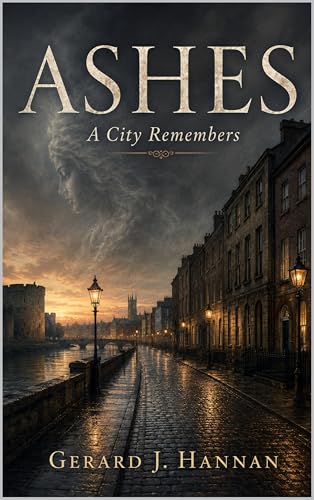
Cover of Ashes

Ashes

The Ashes Trilogy, Book One

Ashes begins the story of a group of children growing up in the streets and lanes of Limerick, where poverty and hardship are balanced by humour, imagination and fierce friendship. Their city is more than a setting: it watches, remembers and gives voice to lives often absent from official history. As the children explore their neighbourhood, they encounter family pressures, faith, hunger, danger and the first signs of a changing world. Through their adventures and loyalties, the novel captures the resilience of ordinary people and introduces the characters whose lives will unfold across the three volumes of The Ashes Trilogy.

View on Amazon UK
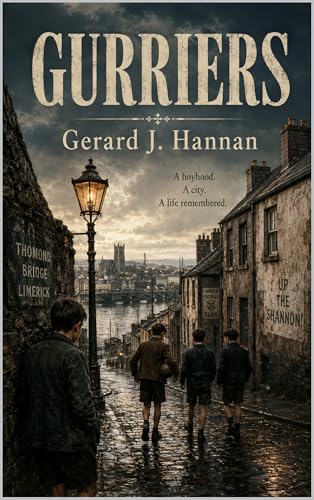
Cover of Gurriers

Gurriers

The Ashes Trilogy, Book Two

Gurriers continues the lives of the Limerick children introduced in Ashes as childhood freedom begins to give way to work, responsibility and harsher choices. Their friendships remain strong, but poverty, family expectations, faith and the pressures of growing older test loyalties once taken for granted. The streets and lanes still offer humour, adventure and belonging, yet the wider world increasingly intrudes upon their lives. Through vivid dialogue, memorable characters and the watchful voice of Limerick itself, the novel explores resilience, identity and change while showing how even the closest companions can be drawn towards futures by circumstances beyond their control.

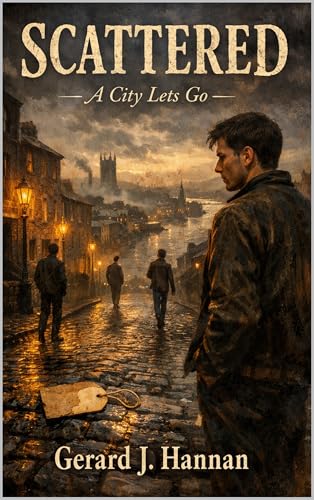
Cover of Scattered

Scattered

The Ashes Trilogy, Book Three

Scattered concludes The Ashes Trilogy as the friends who once shared Limerick’s streets and lanes face adulthood, work, hunger, faith, family duty and emigration. Time has altered their ambitions, tested their loyalties and carried some beyond the city that formed them. Yet memory continues to bind Louie, Seamus, Joe, Sean, Peter, Tony, Bardy, Maura, Eileen, Nora, Lingo and the mysterious Gleamer. Narrated through the enduring presence of Limerick itself, the novel explores separation, sacrifice and survival while recognising the humour and affection that remain. Together, their scattered lives complete a moving portrait of friendship, community and change across changing generations.

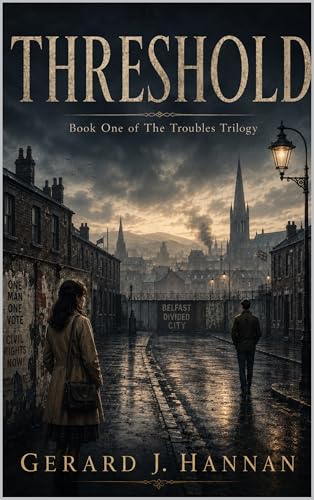
Cover of Threshold

Threshold

The Troubles Trilogy, Book One

Threshold opens in Belfast in 1968, where the Catholic Devlins and Protestant Morrows confront a city divided by religion, memory and fear. Civil rights marches, police violence, riots and internment transform ordinary streets into dangerous frontiers while political conflict enters homes, workplaces and schools. At the centre are Aileen Devlin and Thomas Morrow, whose relationship challenges the boundaries their families regard as essential to survival. As loyalty hardens into suspicion, both must decide whether inherited allegiance excuses injustice. Through family arguments, upheaval and private courage, the novel explores love, conscience, division and survival during the opening years of the Troubles.

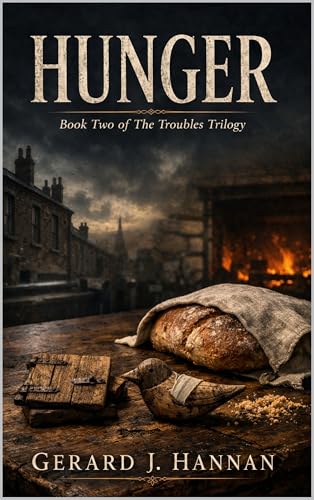
Cover of Hunger

Hunger

The Troubles Trilogy, Book Two

Hunger is Book Two of The Troubles Trilogy, set in Belfast during the 1980s. Aileen Devlin and Thomas Morrow have built a fragile life across the city’s sectarian divide, but the conflict threatens the home they created for their daughter, Claire. As hunger strikes, the Anglo Irish Agreement and violence reshape Northern Ireland, republican Declan and loyalist Billy exploit fear, grief and vulnerable young men. Against them stand Aileen, Kathleen and Elsie, whose quiet strength keeps their families human. This is a story of love, survival and the courage to place people before causes in a divided society under pressure.

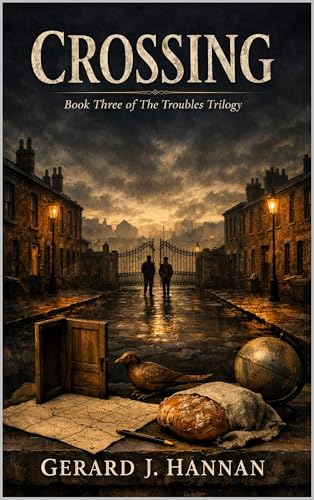
Cover of Crossing

Crossing

The Troubles Trilogy, Book Three

Crossing concludes The Troubles Trilogy during the decade from 1990 to 2000, as Belfast moves from violence towards negotiation, ceasefires and uncertain peace. The Devlin and Morrow families face political change alongside grief, ageing, divided loyalties and the consequences of choices made across three decades. Relationships once threatened by religious boundaries are tested by memory, mistrust and the fear that compromise may betray the dead. As the peace process gathers momentum, ordinary people must decide whether reconciliation is possible. The trilogy closes with a story of endurance, forgiveness, loss and hope beyond inherited division, proving that peace begins with courage.

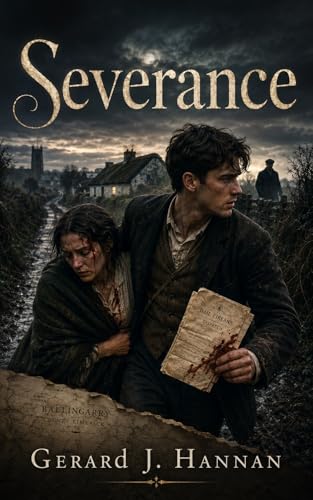
Cover of Severance

Severance

Historical Novel

Severance is a historical novel set in Ballingarry, County Limerick, during Ireland’s struggle for independence. A torn and bloodied dispatch passes through fields, kitchens, lofts and hidden routes, placing everyone who handles it in danger. Michael Enright carries the burden of trust, while Mary, Molly and their neighbours struggle to preserve the message and protect one another. Against them, Captain Edward Harcourt studies every delay, wound and fragment for clues. As loyalty, fear and betrayal tighten around the hidden network, ordinary people must decide what they are willing to risk when history enters their homes and silence itself becomes dangerous.

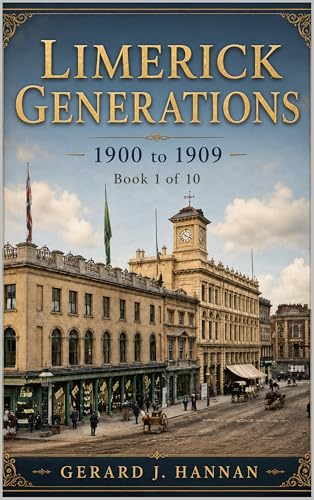
Cover of Limerick Generations: 1900 to 1909

Limerick Generations: 1900 to 1909

Limerick Decalogy, Book One

Limerick Generations: 1900 to 1909 opens the decade by documenting a city and county entering the twentieth century amid political debate, commercial activity, poverty, faith and technological change. Month by month, the book connects major Irish developments with local events, institutions, streets and communities. Public meetings, labour, transport, education, sport, business and everyday life reveal how national questions were experienced in Limerick. Historical reports and carefully reconstructed narratives bring forgotten moments and ordinary people into focus. As Book One of Limerick Decalogy, it establishes the foundation for a ten volume journey through one hundred years of local history and memory.

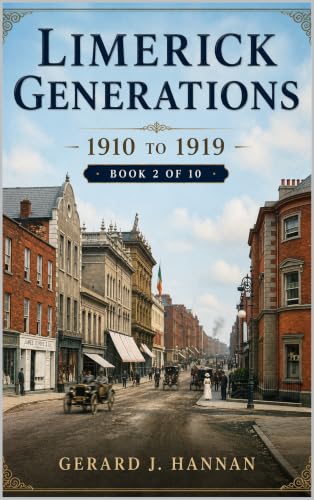
Cover of Limerick Generations: 1910 to 1919

Limerick Generations: 1910 to 1919

Limerick Decalogy, Book Two

Limerick Generations: 1910 to 1919 traces a decade of political transformation, labour conflict, war, revolution and social change across Limerick city and county. Home Rule, unionist resistance, trade union organisation and the First World War entered streets, farms, schools, workplaces and family life. The Easter Rising, conscription crisis, influenza pandemic and general election altered public loyalties and expectations. The decade culminated in the Limerick Soviet of 1919, when workers challenged military restrictions through organised collective action. As Book Two of Limerick Decalogy, the volume preserves local experiences of hardship, courage, grief, endurance and change during years of intense historic upheaval.

Restoring History

Limerick Archives preserves, enhances, restores and colourises historic photographs, sometimes presenting fresh angles on familiar scenes. When no suitable public-domain image exists, we create carefully researched AI illustrations for archive articles. We also invite the public to submit photographs for restoration and possible publication, with ownership always remaining entirely theirs.