Corrections

Corrections

How visitors can correct names, dates, locations, credits and other information within Limerick Archives.

Limerick Archives welcomes corrections because historical records improve when people share knowledge. A photograph may contain an unidentified person, a street may be named incorrectly or a date may have been estimated from incomplete evidence. Visitors often recognise details that were unavailable when an item was first published. Reporting an error does not criticise the purpose of the archive; it contributes to it. Corrections help reconnect records with families, communities and places. The archive reviews each submission carefully, updates information when justified and records uncertainty when evidence conflicts. This process strengthens the collection, preserving valuable knowledge that might otherwise disappear.

A correction should identify the exact item involved. Visitors are asked to provide the page title, image title or archive reference, together with an explanation of what appears wrong. A direct link is useful because similar photographs and titles can exist within the collection. The proposed replacement information should be stated precisely, including correct spelling, dates, locations or relationships. General messages such as that name is wrong are difficult to investigate without additional detail. Clear references allow Limerick Archives to locate the record quickly, compare the existing description and begin checking the evidence behind the suggested change fairly and accurately.

Supporting evidence makes a correction more useful and easier to verify. Helpful sources may include family photographs, birth or marriage records, newspaper reports, directories, maps, school records, letters, inscriptions, published books or information from a recognised institution. A contributor can also explain personal knowledge, such as how the image was preserved or why a person is recognised. Evidence does not need to be formal in every case, but its origin should be described honestly. Limerick Archives compares the new information with existing records and may ask follow up questions. Strong evidence can correct one item and illuminate several related records.

Family and community knowledge is especially valuable for identifying people. Formal archives often preserve a photograph without recording every person shown, while relatives may recognise faces, clothing, workplaces or relationships immediately. When submitting a name, visitors should explain whether the identification comes from direct memory, family tradition, a written label or comparison with another photograph. Approximate ages and relationships can help confirm the conclusion. Limerick Archives may use provisional wording when evidence is persuasive but not conclusive. This approach respects the contribution without turning an uncertain recollection into a permanent statement of fact before careful further research is fully completed.

Dates can be corrected through evidence or visual clues. A newspaper may report the event shown, a directory may confirm when a business operated or a family record may identify the occasion. Clothing, vehicles, buildings and street layouts can also establish an approximate period. Visitors should explain why the proposed date is stronger than the published one. If evidence supports only a range or decade, the archive may retain an approximate description rather than choosing an exact year. Correct dating connects items with historical events and prevents errors from spreading into family histories, publications and websites that reuse archive information.

Location corrections can transform the value of a photograph. Streets may have changed names, buildings may have disappeared and rural townlands can be confused with nearby places. A visitor may recognise a shopfront, church, bridge, landscape or property boundary that establishes the scene. Maps, directories, planning records and comparison photographs can provide further confirmation. Limerick Archives records city, county, street or townland information at the strongest level supported by evidence. When two locations remain possible, both may be noted until the question is resolved. Accurate geography allows researchers to connect people, businesses and events with the physical development of Limerick.

Not every submitted correction can be accepted immediately. Two families may identify the same person differently, published sources may conflict or a memory may be sincere but unsupported. Limerick Archives reviews the available evidence and may retain the existing description, add a note, seek information or mark the identification as uncertain. A rejected suggestion is not a judgement upon the contributor. It means the record requires stronger support before being changed. Where disagreement remains historically important, the archive may explain competing accounts. Transparent uncertainty is more responsible than selecting one version simply because it was submitted first or confidently stated.

Accepted corrections may require changes beyond a single page. A corrected surname, location or date can affect related photographs, articles, tags, search results and catalogue records. Limerick Archives may therefore review connected items to keep information consistent. The original source or earlier description may still be preserved internally, especially when it explains how the mistake arose. Updates can take time because the archive is independent and each change must be checked. Visitors are encouraged to provide complete information in one message where possible. A thoughtful correction improves not only one item, but the wider network of historical records around it.

Corrections involving copyright, privacy or sensitive personal information receive particular attention. A person may believe that an image has been credited to the wrong photographer, published without proper authority or described in a harmful way. The report should identify the material, explain the concern and provide evidence of ownership, identity or relevant circumstances. Limerick Archives may temporarily restrict an item while the issue is reviewed. Possible outcomes include changing a credit, redacting information, adding context, limiting reuse or removing material. The archive seeks a proportionate response that respects legal rights, historical value, public interest and the dignity of people represented.

The corrections process reflects the central purpose of Limerick Archives: preserving history as accurately and openly as possible. The archive does not regard its descriptions as beyond challenge or improvement. Every well supported name, date, location and source adds meaning to the collection. Visitors who share knowledge become participants in protecting Limerick’s historical record. Corrections should be submitted respectfully through the Contact page, with clear references and evidence where available. Replies may not be immediate, but each useful submission will be considered. Through continuing research and community cooperation, the archive can become more complete, reliable and valuable for future generations.

Gerard J. Hannan

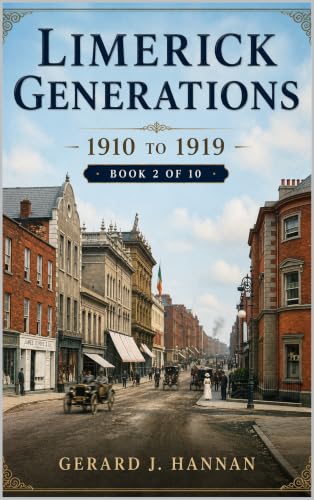
Books By Gerard J. Hannan

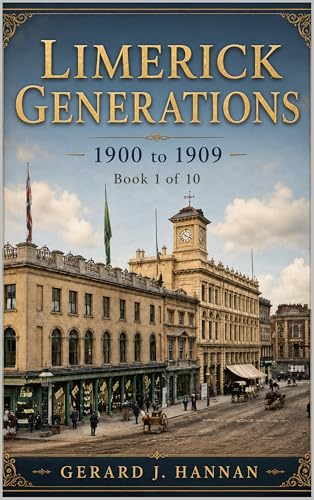
Explore Gerard J. Hannan’s published and forthcoming books, spanning historical fiction, Limerick humour, family sagas and detailed studies of local and modern Irish history. Each title offers a distinctive story, subject or perspective, reflecting his interest in people, memory, identity, conflict and social change. From comic observations rooted in Limerick life to ambitious novels shaped by major historical events, the collection presents a varied and expanding body of work. Every book is accompanied by its cover, full description and publication details, with a direct Amazon link included wherever an edition is currently available for readers to purchase or discover more.

View All Books