Bardan, resident druid of Limerick Archives

Summon Bardan

Summon Bardan, our resident druid, and ask him any question about Limerick.
His ancient wisdom will answer as soon as the search is complete.

Access

Access

How visitors may browse, download, share and responsibly reuse material from Limerick Archives.

Limerick Archives is free to browse because local history should remain accessible to the people whose families and communities created it. Visitors can explore public photographs, articles, descriptions and research material without paying a subscription or creating an account. This openness supports family history, schoolwork, academic research, journalism, writing and community projects. It also allows Limerick people living elsewhere to reconnect with places and memories associated with home. Free access does not mean that every item is without copyright or restriction. It means the archive removes unnecessary financial barriers while explaining the responsibilities attached to individual records and their reuse.

Visitors may ordinarily download public material for personal study, family research, classroom use and other appropriate noncommercial purposes. A downloaded photograph can help identify a relative, illustrate a school project or support a local history presentation. The archive asks users to keep the full credit line, named creator, source and archive reference wherever these details are provided. Preserving that information allows others to trace the item and understand where it originated. Removing credits weakens the historical record and may disregard rights belonging to photographers, contributors or institutions. Responsible downloading therefore combines convenient access with proper acknowledgement of the material’s origin.

Sharing archive material is encouraged when it supports learning about Limerick and when credits and restrictions are respected. Visitors may post images on social media, include them in family histories, share them with community groups or link to archive pages. The complete caption and archive reference should accompany the image where possible, because copied files can quickly become separated from their history. Users should not alter a credit, crop out identifying information or present an archive image as their own work. Clear attribution supports further research, directs audiences back to the source and recognises everyone involved in preserving the record.

Noncommercial use means that the material is not being sold, used to advertise a product or included in a publication created primarily for profit. Personal websites, unpaid community projects, classroom presentations and family research will usually fall within this category, although individual rights statements still apply. A project can be noncommercial while reaching a large audience, and a small publication can still be commercial if it is sold. When the intended use is uncertain, visitors should contact Limerick Archives before publication. Asking can prevent mistakes and clarify whether permission must also be obtained from another photographer, contributor or rights holder.

Commercial reuse requires consideration because Limerick Archives cannot grant rights that belong to somebody else. A historical photograph may be owned by its photographer, an employer, a family, a newspaper, a museum or another institution. Some images may be out of copyright, while restoration work, captions or modern reproductions can carry separate rights. Anyone wishing to use material in advertising, merchandise, paid publications, films, commercial websites or other revenue generating projects should provide details of the proposed use. The archive can explain what it controls, identify known restrictions and direct the applicant towards any additional permission that may be required.

Item specific notices take priority over general access guidance. A photograph may be freely viewable online but restricted from downloading because of copyright, privacy, sensitivity or an agreement with the contributor. Another item may permit broad reuse provided a particular credit is retained. Visitors should therefore read the catalogue description, rights statement, image caption and any visible notice before copying material. These details are included to protect creators, contributors and people represented in the archive. Ignoring them can create legal or ethical problems. Limerick Archives aims to make restrictions clear and proportionate rather than applying unnecessary limits to every collection.

Access also involves usability. Limerick Archives aims to organise material through titles, dates, subjects, locations, archive references and searchable descriptions so visitors can find relevant records without specialist knowledge. Pages are designed to work across desktop, tablet and mobile devices, while clear headings and navigation help users move between articles and images. Some historical scans may remain difficult to read because the original document is damaged, handwritten or poorly printed. Where possible, descriptions and supporting text provide context. Improving access is therefore an continuing shared practical responsibility involving both open availability and practical efforts to make collections understandable and discoverable.

Researchers are welcome to cite Limerick Archives in articles, books, dissertations, broadcasts and other work. A useful citation should identify the item title, creator where known, archive name, archive reference and date of access when appropriate. Researchers should also consult the original source or credited collection whenever a question depends upon exact wording, legal ownership or evidential detail. The archive provides a starting point and a public record, but not every item can replace examination of the underlying document. Careful citation allows readers to verify information, acknowledges the archive’s work and preserves a chain between published research and historical evidence.

Automated downloading, bulk scraping or activity that places an unreasonable burden on the website is not part of normal public access. Large scale research projects should contact Limerick Archives before attempting to collect substantial quantities of files or metadata. A conversation may identify a practical method that protects the site and preserves important credits. Access controls may also be used temporarily when security, privacy or technical problems arise. These measures are not intended to restrict genuine research, but to prevent disruption and misuse. The archive seeks a fair balance between open availability, reliable operation and responsible treatment of its collections.

The access policy is guided by a simple principle: Limerick’s history should be easy to discover, study and share while the rights and dignity attached to each record are respected. Visitors are encouraged to explore widely, download appropriately, retain credits and ask questions when a proposed use is unclear. Restrictions are applied where necessary rather than assumed for everything. As the archive grows, access arrangements may be refined to reflect new collections, contributor agreements, technologies and legal responsibilities. The continuing objective is to keep public material free, useful and understandable for families, communities, students and researchers throughout the wider world.

About Page

Books Supporting the Archive

Every Book Purchased Helps Support The Continuing Work Of Limerick Archives.

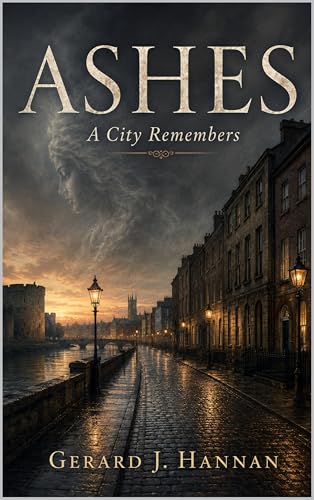
Cover of Ashes

Ashes

The Ashes Trilogy, Book One

Ashes begins the story of a group of children growing up in the streets and lanes of Limerick, where poverty and hardship are balanced by humour, imagination and fierce friendship. Their city is more than a setting: it watches, remembers and gives voice to lives often absent from official history. As the children explore their neighbourhood, they encounter family pressures, faith, hunger, danger and the first signs of a changing world. Through their adventures and loyalties, the novel captures the resilience of ordinary people and introduces the characters whose lives will unfold across the three volumes of The Ashes Trilogy.

View on Amazon UK
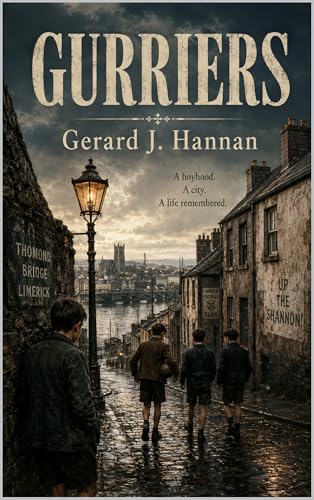
Cover of Gurriers

Gurriers

The Ashes Trilogy, Book Two

Gurriers continues the lives of the Limerick children introduced in Ashes as childhood freedom begins to give way to work, responsibility and harsher choices. Their friendships remain strong, but poverty, family expectations, faith and the pressures of growing older test loyalties once taken for granted. The streets and lanes still offer humour, adventure and belonging, yet the wider world increasingly intrudes upon their lives. Through vivid dialogue, memorable characters and the watchful voice of Limerick itself, the novel explores resilience, identity and change while showing how even the closest companions can be drawn towards futures by circumstances beyond their control.

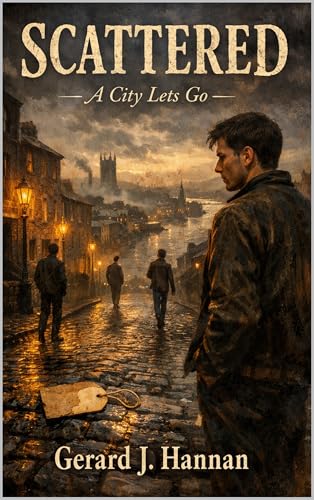
Cover of Scattered

Scattered

The Ashes Trilogy, Book Three

Scattered concludes The Ashes Trilogy as the friends who once shared Limerick’s streets and lanes face adulthood, work, hunger, faith, family duty and emigration. Time has altered their ambitions, tested their loyalties and carried some beyond the city that formed them. Yet memory continues to bind Louie, Seamus, Joe, Sean, Peter, Tony, Bardy, Maura, Eileen, Nora, Lingo and the mysterious Gleamer. Narrated through the enduring presence of Limerick itself, the novel explores separation, sacrifice and survival while recognising the humour and affection that remain. Together, their scattered lives complete a moving portrait of friendship, community and change across changing generations.

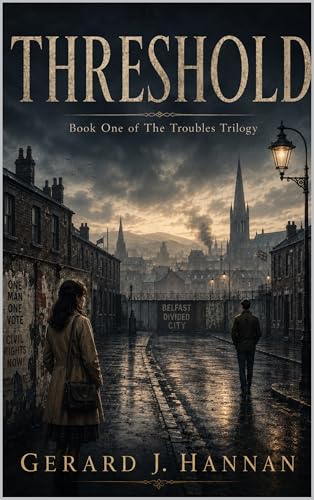
Cover of Threshold

Threshold

The Troubles Trilogy, Book One

Threshold opens in Belfast in 1968, where the Catholic Devlins and Protestant Morrows confront a city divided by religion, memory and fear. Civil rights marches, police violence, riots and internment transform ordinary streets into dangerous frontiers while political conflict enters homes, workplaces and schools. At the centre are Aileen Devlin and Thomas Morrow, whose relationship challenges the boundaries their families regard as essential to survival. As loyalty hardens into suspicion, both must decide whether inherited allegiance excuses injustice. Through family arguments, upheaval and private courage, the novel explores love, conscience, division and survival during the opening years of the Troubles.

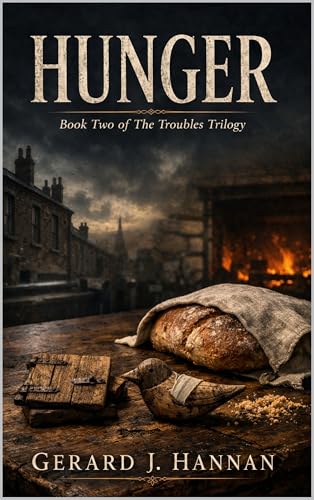
Cover of Hunger

Hunger

The Troubles Trilogy, Book Two

Hunger is Book Two of The Troubles Trilogy, set in Belfast during the 1980s. Aileen Devlin and Thomas Morrow have built a fragile life across the city’s sectarian divide, but the conflict threatens the home they created for their daughter, Claire. As hunger strikes, the Anglo Irish Agreement and violence reshape Northern Ireland, republican Declan and loyalist Billy exploit fear, grief and vulnerable young men. Against them stand Aileen, Kathleen and Elsie, whose quiet strength keeps their families human. This is a story of love, survival and the courage to place people before causes in a divided society under pressure.

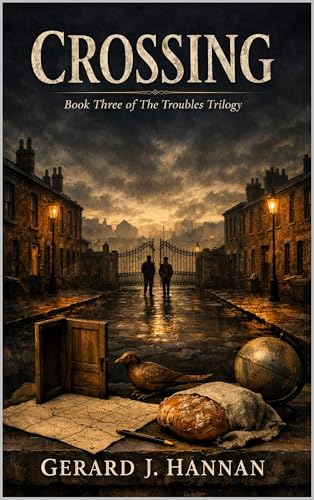
Cover of Crossing

Crossing

The Troubles Trilogy, Book Three

Crossing concludes The Troubles Trilogy during the decade from 1990 to 2000, as Belfast moves from violence towards negotiation, ceasefires and uncertain peace. The Devlin and Morrow families face political change alongside grief, ageing, divided loyalties and the consequences of choices made across three decades. Relationships once threatened by religious boundaries are tested by memory, mistrust and the fear that compromise may betray the dead. As the peace process gathers momentum, ordinary people must decide whether reconciliation is possible. The trilogy closes with a story of endurance, forgiveness, loss and hope beyond inherited division, proving that peace begins with courage.

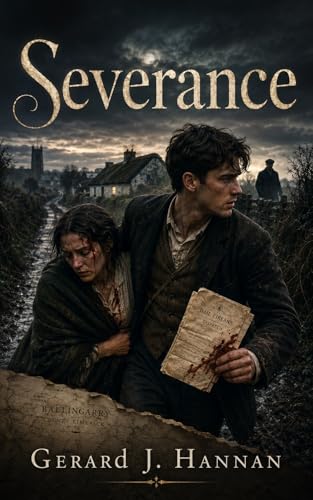
Cover of Severance

Severance

Historical Novel

Severance is a historical novel set in Ballingarry, County Limerick, during Ireland’s struggle for independence. A torn and bloodied dispatch passes through fields, kitchens, lofts and hidden routes, placing everyone who handles it in danger. Michael Enright carries the burden of trust, while Mary, Molly and their neighbours struggle to preserve the message and protect one another. Against them, Captain Edward Harcourt studies every delay, wound and fragment for clues. As loyalty, fear and betrayal tighten around the hidden network, ordinary people must decide what they are willing to risk when history enters their homes and silence itself becomes dangerous.

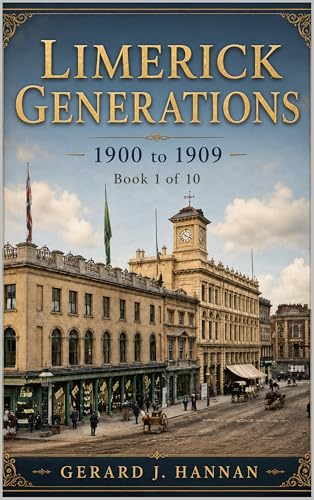
Cover of Limerick Generations: 1900 to 1909

Limerick Generations: 1900 to 1909

Limerick Decalogy, Book One

Limerick Generations: 1900 to 1909 opens the decade by documenting a city and county entering the twentieth century amid political debate, commercial activity, poverty, faith and technological change. Month by month, the book connects major Irish developments with local events, institutions, streets and communities. Public meetings, labour, transport, education, sport, business and everyday life reveal how national questions were experienced in Limerick. Historical reports and carefully reconstructed narratives bring forgotten moments and ordinary people into focus. As Book One of Limerick Decalogy, it establishes the foundation for a ten volume journey through one hundred years of local history and memory.

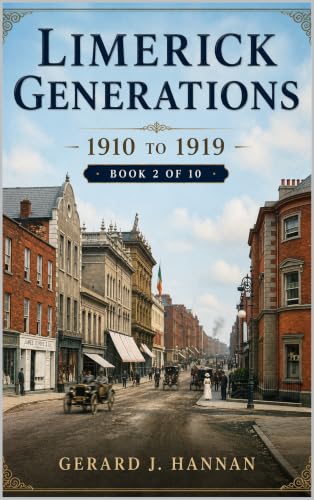
Cover of Limerick Generations: 1910 to 1919

Limerick Generations: 1910 to 1919

Limerick Decalogy, Book Two

Limerick Generations: 1910 to 1919 traces a decade of political transformation, labour conflict, war, revolution and social change across Limerick city and county. Home Rule, unionist resistance, trade union organisation and the First World War entered streets, farms, schools, workplaces and family life. The Easter Rising, conscription crisis, influenza pandemic and general election altered public loyalties and expectations. The decade culminated in the Limerick Soviet of 1919, when workers challenged military restrictions through organised collective action. As Book Two of Limerick Decalogy, the volume preserves local experiences of hardship, courage, grief, endurance and change during years of intense historic upheaval.

Restoring History

Limerick Archives preserves, enhances, restores and colourises historic photographs, sometimes presenting fresh angles on familiar scenes. When no suitable public-domain image exists, we create carefully researched AI illustrations for archive articles. We also invite the public to submit photographs for restoration and possible publication, with ownership always remaining entirely theirs.