Generations
Take a deep dive into Limerick’s past, exploring the story of the city and county month by month, year by year and decade by decade. Each section brings together published archive material to show how local events, changing communities, public decisions, industries, traditions and everyday experiences developed over time. Wider national and international events are also placed within their Limerick context, revealing how distant changes influenced local lives, streets, workplaces and families. Only decades containing sufficient published material appear below, ensuring every available section offers a meaningful, organised and rewarding journey through Limerick’s rich and constantly expanding historical heritage record.
Browse Generations
c.100s
79 items
The 100s section gathers all articles and images assigned to this period within Emerald Archives. Together, these records show how developments within Limerick interacted with political, economic, social and cultural changes across Ireland and the wider world. They reveal how public decisions, employment, transport, trade, conflict, migration, technology, religion and changing customs reached ordinary homes and communities. Some evidence records major events, while other material preserves quieter details of streets, workplaces and family life. As additional records are published and classified, this decade will expand automatically, providing a fuller picture of Limerick experience during these important years for future visitors.
c.110s
94 items
The 110s section gathers all articles and images assigned to this period within Emerald Archives. Together, these records show how developments within Limerick interacted with political, economic, social and cultural changes across Ireland and the wider world. They reveal how public decisions, employment, transport, trade, conflict, migration, technology, religion and changing customs reached ordinary homes and communities. Some evidence records major events, while other material preserves quieter details of streets, workplaces and family life. As additional records are published and classified, this decade will expand automatically, providing a fuller picture of Limerick experience during these important years for future visitors.
c.120s
88 items
The 120s section gathers all articles and images assigned to this period within Emerald Archives. Together, these records show how developments within Limerick interacted with political, economic, social and cultural changes across Ireland and the wider world. They reveal how public decisions, employment, transport, trade, conflict, migration, technology, religion and changing customs reached ordinary homes and communities. Some evidence records major events, while other material preserves quieter details of streets, workplaces and family life. As additional records are published and classified, this decade will expand automatically, providing a fuller picture of Limerick experience during these important years for future visitors.
c.130s
95 items
The 130s section gathers all articles and images assigned to this period within Emerald Archives. Together, these records show how developments within Limerick interacted with political, economic, social and cultural changes across Ireland and the wider world. They reveal how public decisions, employment, transport, trade, conflict, migration, technology, religion and changing customs reached ordinary homes and communities. Some evidence records major events, while other material preserves quieter details of streets, workplaces and family life. As additional records are published and classified, this decade will expand automatically, providing a fuller picture of Limerick experience during these important years for future visitors.
c.140s
94 items
The 140s section gathers all articles and images assigned to this period within Emerald Archives. Together, these records show how developments within Limerick interacted with political, economic, social and cultural changes across Ireland and the wider world. They reveal how public decisions, employment, transport, trade, conflict, migration, technology, religion and changing customs reached ordinary homes and communities. Some evidence records major events, while other material preserves quieter details of streets, workplaces and family life. As additional records are published and classified, this decade will expand automatically, providing a fuller picture of Limerick experience during these important years for future visitors.
c.150s
97 items
The 150s section gathers all articles and images assigned to this period within Emerald Archives. Together, these records show how developments within Limerick interacted with political, economic, social and cultural changes across Ireland and the wider world. They reveal how public decisions, employment, transport, trade, conflict, migration, technology, religion and changing customs reached ordinary homes and communities. Some evidence records major events, while other material preserves quieter details of streets, workplaces and family life. As additional records are published and classified, this decade will expand automatically, providing a fuller picture of Limerick experience during these important years for future visitors.
c.160s
100 items
The 160s section gathers all articles and images assigned to this period within Emerald Archives. Together, these records show how developments within Limerick interacted with political, economic, social and cultural changes across Ireland and the wider world. They reveal how public decisions, employment, transport, trade, conflict, migration, technology, religion and changing customs reached ordinary homes and communities. Some evidence records major events, while other material preserves quieter details of streets, workplaces and family life. As additional records are published and classified, this decade will expand automatically, providing a fuller picture of Limerick experience during these important years for future visitors.
c.170s
93 items
The 170s section gathers all articles and images assigned to this period within Emerald Archives. Together, these records show how developments within Limerick interacted with political, economic, social and cultural changes across Ireland and the wider world. They reveal how public decisions, employment, transport, trade, conflict, migration, technology, religion and changing customs reached ordinary homes and communities. Some evidence records major events, while other material preserves quieter details of streets, workplaces and family life. As additional records are published and classified, this decade will expand automatically, providing a fuller picture of Limerick experience during these important years for future visitors.
c.180s
86 items
The 180s section gathers all articles and images assigned to this period within Emerald Archives. Together, these records show how developments within Limerick interacted with political, economic, social and cultural changes across Ireland and the wider world. They reveal how public decisions, employment, transport, trade, conflict, migration, technology, religion and changing customs reached ordinary homes and communities. Some evidence records major events, while other material preserves quieter details of streets, workplaces and family life. As additional records are published and classified, this decade will expand automatically, providing a fuller picture of Limerick experience during these important years for future visitors.
c.190s
77 items
The 190s section gathers all articles and images assigned to this period within Emerald Archives. Together, these records show how developments within Limerick interacted with political, economic, social and cultural changes across Ireland and the wider world. They reveal how public decisions, employment, transport, trade, conflict, migration, technology, religion and changing customs reached ordinary homes and communities. Some evidence records major events, while other material preserves quieter details of streets, workplaces and family life. As additional records are published and classified, this decade will expand automatically, providing a fuller picture of Limerick experience during these important years for future visitors.
c.200s
80 items
The 200s section gathers all articles and images assigned to this period within Emerald Archives. Together, these records show how developments within Limerick interacted with political, economic, social and cultural changes across Ireland and the wider world. They reveal how public decisions, employment, transport, trade, conflict, migration, technology, religion and changing customs reached ordinary homes and communities. Some evidence records major events, while other material preserves quieter details of streets, workplaces and family life. As additional records are published and classified, this decade will expand automatically, providing a fuller picture of Limerick experience during these important years for future visitors.
c.210s
76 items
The 210s section gathers all articles and images assigned to this period within Emerald Archives. Together, these records show how developments within Limerick interacted with political, economic, social and cultural changes across Ireland and the wider world. They reveal how public decisions, employment, transport, trade, conflict, migration, technology, religion and changing customs reached ordinary homes and communities. Some evidence records major events, while other material preserves quieter details of streets, workplaces and family life. As additional records are published and classified, this decade will expand automatically, providing a fuller picture of Limerick experience during these important years for future visitors.
c.220s
79 items
The 220s section gathers all articles and images assigned to this period within Emerald Archives. Together, these records show how developments within Limerick interacted with political, economic, social and cultural changes across Ireland and the wider world. They reveal how public decisions, employment, transport, trade, conflict, migration, technology, religion and changing customs reached ordinary homes and communities. Some evidence records major events, while other material preserves quieter details of streets, workplaces and family life. As additional records are published and classified, this decade will expand automatically, providing a fuller picture of Limerick experience during these important years for future visitors.
c.230s
82 items
The 230s section gathers all articles and images assigned to this period within Emerald Archives. Together, these records show how developments within Limerick interacted with political, economic, social and cultural changes across Ireland and the wider world. They reveal how public decisions, employment, transport, trade, conflict, migration, technology, religion and changing customs reached ordinary homes and communities. Some evidence records major events, while other material preserves quieter details of streets, workplaces and family life. As additional records are published and classified, this decade will expand automatically, providing a fuller picture of Limerick experience during these important years for future visitors.
c.240s
100 items
The 240s section gathers all articles and images assigned to this period within Emerald Archives. Together, these records show how developments within Limerick interacted with political, economic, social and cultural changes across Ireland and the wider world. They reveal how public decisions, employment, transport, trade, conflict, migration, technology, religion and changing customs reached ordinary homes and communities. Some evidence records major events, while other material preserves quieter details of streets, workplaces and family life. As additional records are published and classified, this decade will expand automatically, providing a fuller picture of Limerick experience during these important years for future visitors.
c.250s
80 items
The 250s section gathers all articles and images assigned to this period within Emerald Archives. Together, these records show how developments within Limerick interacted with political, economic, social and cultural changes across Ireland and the wider world. They reveal how public decisions, employment, transport, trade, conflict, migration, technology, religion and changing customs reached ordinary homes and communities. Some evidence records major events, while other material preserves quieter details of streets, workplaces and family life. As additional records are published and classified, this decade will expand automatically, providing a fuller picture of Limerick experience during these important years for future visitors.
c.260s
80 items
The 260s section gathers all articles and images assigned to this period within Emerald Archives. Together, these records show how developments within Limerick interacted with political, economic, social and cultural changes across Ireland and the wider world. They reveal how public decisions, employment, transport, trade, conflict, migration, technology, religion and changing customs reached ordinary homes and communities. Some evidence records major events, while other material preserves quieter details of streets, workplaces and family life. As additional records are published and classified, this decade will expand automatically, providing a fuller picture of Limerick experience during these important years for future visitors.
c.270s
80 items
The 270s section gathers all articles and images assigned to this period within Emerald Archives. Together, these records show how developments within Limerick interacted with political, economic, social and cultural changes across Ireland and the wider world. They reveal how public decisions, employment, transport, trade, conflict, migration, technology, religion and changing customs reached ordinary homes and communities. Some evidence records major events, while other material preserves quieter details of streets, workplaces and family life. As additional records are published and classified, this decade will expand automatically, providing a fuller picture of Limerick experience during these important years for future visitors.
c.280s
79 items
The 280s section gathers all articles and images assigned to this period within Emerald Archives. Together, these records show how developments within Limerick interacted with political, economic, social and cultural changes across Ireland and the wider world. They reveal how public decisions, employment, transport, trade, conflict, migration, technology, religion and changing customs reached ordinary homes and communities. Some evidence records major events, while other material preserves quieter details of streets, workplaces and family life. As additional records are published and classified, this decade will expand automatically, providing a fuller picture of Limerick experience during these important years for future visitors.
c.290s
80 items
The 290s section gathers all articles and images assigned to this period within Emerald Archives. Together, these records show how developments within Limerick interacted with political, economic, social and cultural changes across Ireland and the wider world. They reveal how public decisions, employment, transport, trade, conflict, migration, technology, religion and changing customs reached ordinary homes and communities. Some evidence records major events, while other material preserves quieter details of streets, workplaces and family life. As additional records are published and classified, this decade will expand automatically, providing a fuller picture of Limerick experience during these important years for future visitors.
c.300s
95 items
The 300s section gathers all articles and images assigned to this period within Emerald Archives. Together, these records show how developments within Limerick interacted with political, economic, social and cultural changes across Ireland and the wider world. They reveal how public decisions, employment, transport, trade, conflict, migration, technology, religion and changing customs reached ordinary homes and communities. Some evidence records major events, while other material preserves quieter details of streets, workplaces and family life. As additional records are published and classified, this decade will expand automatically, providing a fuller picture of Limerick experience during these important years for future visitors.
c.310s
80 items
The 310s section gathers all articles and images assigned to this period within Emerald Archives. Together, these records show how developments within Limerick interacted with political, economic, social and cultural changes across Ireland and the wider world. They reveal how public decisions, employment, transport, trade, conflict, migration, technology, religion and changing customs reached ordinary homes and communities. Some evidence records major events, while other material preserves quieter details of streets, workplaces and family life. As additional records are published and classified, this decade will expand automatically, providing a fuller picture of Limerick experience during these important years for future visitors.
c.320s
80 items
The 320s section gathers all articles and images assigned to this period within Emerald Archives. Together, these records show how developments within Limerick interacted with political, economic, social and cultural changes across Ireland and the wider world. They reveal how public decisions, employment, transport, trade, conflict, migration, technology, religion and changing customs reached ordinary homes and communities. Some evidence records major events, while other material preserves quieter details of streets, workplaces and family life. As additional records are published and classified, this decade will expand automatically, providing a fuller picture of Limerick experience during these important years for future visitors.
c.330s
78 items
The 330s section gathers all articles and images assigned to this period within Emerald Archives. Together, these records show how developments within Limerick interacted with political, economic, social and cultural changes across Ireland and the wider world. They reveal how public decisions, employment, transport, trade, conflict, migration, technology, religion and changing customs reached ordinary homes and communities. Some evidence records major events, while other material preserves quieter details of streets, workplaces and family life. As additional records are published and classified, this decade will expand automatically, providing a fuller picture of Limerick experience during these important years for future visitors.
c.340s
80 items
The 340s section gathers all articles and images assigned to this period within Emerald Archives. Together, these records show how developments within Limerick interacted with political, economic, social and cultural changes across Ireland and the wider world. They reveal how public decisions, employment, transport, trade, conflict, migration, technology, religion and changing customs reached ordinary homes and communities. Some evidence records major events, while other material preserves quieter details of streets, workplaces and family life. As additional records are published and classified, this decade will expand automatically, providing a fuller picture of Limerick experience during these important years for future visitors.
c.350s
54 items
The 350s section gathers all articles and images assigned to this period within Emerald Archives. Together, these records show how developments within Limerick interacted with political, economic, social and cultural changes across Ireland and the wider world. They reveal how public decisions, employment, transport, trade, conflict, migration, technology, religion and changing customs reached ordinary homes and communities. Some evidence records major events, while other material preserves quieter details of streets, workplaces and family life. As additional records are published and classified, this decade will expand automatically, providing a fuller picture of Limerick experience during these important years for future visitors.
c.360s
82 items
The 360s section gathers all articles and images assigned to this period within Emerald Archives. Together, these records show how developments within Limerick interacted with political, economic, social and cultural changes across Ireland and the wider world. They reveal how public decisions, employment, transport, trade, conflict, migration, technology, religion and changing customs reached ordinary homes and communities. Some evidence records major events, while other material preserves quieter details of streets, workplaces and family life. As additional records are published and classified, this decade will expand automatically, providing a fuller picture of Limerick experience during these important years for future visitors.
c.370s
63 items
The 370s section gathers all articles and images assigned to this period within Emerald Archives. Together, these records show how developments within Limerick interacted with political, economic, social and cultural changes across Ireland and the wider world. They reveal how public decisions, employment, transport, trade, conflict, migration, technology, religion and changing customs reached ordinary homes and communities. Some evidence records major events, while other material preserves quieter details of streets, workplaces and family life. As additional records are published and classified, this decade will expand automatically, providing a fuller picture of Limerick experience during these important years for future visitors.
c.380s
82 items
The 380s section gathers all articles and images assigned to this period within Emerald Archives. Together, these records show how developments within Limerick interacted with political, economic, social and cultural changes across Ireland and the wider world. They reveal how public decisions, employment, transport, trade, conflict, migration, technology, religion and changing customs reached ordinary homes and communities. Some evidence records major events, while other material preserves quieter details of streets, workplaces and family life. As additional records are published and classified, this decade will expand automatically, providing a fuller picture of Limerick experience during these important years for future visitors.
c.390s
79 items
The 390s section gathers all articles and images assigned to this period within Emerald Archives. Together, these records show how developments within Limerick interacted with political, economic, social and cultural changes across Ireland and the wider world. They reveal how public decisions, employment, transport, trade, conflict, migration, technology, religion and changing customs reached ordinary homes and communities. Some evidence records major events, while other material preserves quieter details of streets, workplaces and family life. As additional records are published and classified, this decade will expand automatically, providing a fuller picture of Limerick experience during these important years for future visitors.
c.400s
79 items
The 400s section gathers all articles and images assigned to this period within Emerald Archives. Together, these records show how developments within Limerick interacted with political, economic, social and cultural changes across Ireland and the wider world. They reveal how public decisions, employment, transport, trade, conflict, migration, technology, religion and changing customs reached ordinary homes and communities. Some evidence records major events, while other material preserves quieter details of streets, workplaces and family life. As additional records are published and classified, this decade will expand automatically, providing a fuller picture of Limerick experience during these important years for future visitors.
c.410s
8 items
The 410s section gathers all articles and images assigned to this period within Emerald Archives. Together, these records show how developments within Limerick interacted with political, economic, social and cultural changes across Ireland and the wider world. They reveal how public decisions, employment, transport, trade, conflict, migration, technology, religion and changing customs reached ordinary homes and communities. Some evidence records major events, while other material preserves quieter details of streets, workplaces and family life. As additional records are published and classified, this decade will expand automatically, providing a fuller picture of Limerick experience during these important years for future visitors.
c.420s
14 items
The 420s section gathers all articles and images assigned to this period within Emerald Archives. Together, these records show how developments within Limerick interacted with political, economic, social and cultural changes across Ireland and the wider world. They reveal how public decisions, employment, transport, trade, conflict, migration, technology, religion and changing customs reached ordinary homes and communities. Some evidence records major events, while other material preserves quieter details of streets, workplaces and family life. As additional records are published and classified, this decade will expand automatically, providing a fuller picture of Limerick experience during these important years for future visitors.
c.480s
7 items
The 480s section gathers all articles and images assigned to this period within Emerald Archives. Together, these records show how developments within Limerick interacted with political, economic, social and cultural changes across Ireland and the wider world. They reveal how public decisions, employment, transport, trade, conflict, migration, technology, religion and changing customs reached ordinary homes and communities. Some evidence records major events, while other material preserves quieter details of streets, workplaces and family life. As additional records are published and classified, this decade will expand automatically, providing a fuller picture of Limerick experience during these important years for future visitors.
c.520s
14 items
The 520s section gathers all articles and images assigned to this period within Emerald Archives. Together, these records show how developments within Limerick interacted with political, economic, social and cultural changes across Ireland and the wider world. They reveal how public decisions, employment, transport, trade, conflict, migration, technology, religion and changing customs reached ordinary homes and communities. Some evidence records major events, while other material preserves quieter details of streets, workplaces and family life. As additional records are published and classified, this decade will expand automatically, providing a fuller picture of Limerick experience during these important years for future visitors.
c.580s
15 items
The 580s section gathers all articles and images assigned to this period within Emerald Archives. Together, these records show how developments within Limerick interacted with political, economic, social and cultural changes across Ireland and the wider world. They reveal how public decisions, employment, transport, trade, conflict, migration, technology, religion and changing customs reached ordinary homes and communities. Some evidence records major events, while other material preserves quieter details of streets, workplaces and family life. As additional records are published and classified, this decade will expand automatically, providing a fuller picture of Limerick experience during these important years for future visitors.
c.660s
7 items
The 660s section gathers all articles and images assigned to this period within Emerald Archives. Together, these records show how developments within Limerick interacted with political, economic, social and cultural changes across Ireland and the wider world. They reveal how public decisions, employment, transport, trade, conflict, migration, technology, religion and changing customs reached ordinary homes and communities. Some evidence records major events, while other material preserves quieter details of streets, workplaces and family life. As additional records are published and classified, this decade will expand automatically, providing a fuller picture of Limerick experience during these important years for future visitors.
c.730s
14 items
The 730s section gathers all articles and images assigned to this period within Emerald Archives. Together, these records show how developments within Limerick interacted with political, economic, social and cultural changes across Ireland and the wider world. They reveal how public decisions, employment, transport, trade, conflict, migration, technology, religion and changing customs reached ordinary homes and communities. Some evidence records major events, while other material preserves quieter details of streets, workplaces and family life. As additional records are published and classified, this decade will expand automatically, providing a fuller picture of Limerick experience during these important years for future visitors.
c.870s
7 items
The 870s section gathers all articles and images assigned to this period within Emerald Archives. Together, these records show how developments within Limerick interacted with political, economic, social and cultural changes across Ireland and the wider world. They reveal how public decisions, employment, transport, trade, conflict, migration, technology, religion and changing customs reached ordinary homes and communities. Some evidence records major events, while other material preserves quieter details of streets, workplaces and family life. As additional records are published and classified, this decade will expand automatically, providing a fuller picture of Limerick experience during these important years for future visitors.
c.960s
10 items
The 960s section gathers all articles and images assigned to this period within Emerald Archives. Together, these records show how developments within Limerick interacted with political, economic, social and cultural changes across Ireland and the wider world. They reveal how public decisions, employment, transport, trade, conflict, migration, technology, religion and changing customs reached ordinary homes and communities. Some evidence records major events, while other material preserves quieter details of streets, workplaces and family life. As additional records are published and classified, this decade will expand automatically, providing a fuller picture of Limerick experience during these important years for future visitors.
c.1140s
88 items
The 1140s section gathers all articles and images assigned to this period within Emerald Archives. Together, these records show how developments within Limerick interacted with political, economic, social and cultural changes across Ireland and the wider world. They reveal how public decisions, employment, transport, trade, conflict, migration, technology, religion and changing customs reached ordinary homes and communities. Some evidence records major events, while other material preserves quieter details of streets, workplaces and family life. As additional records are published and classified, this decade will expand automatically, providing a fuller picture of Limerick experience during these important years for future visitors.
c.1190s
10 items
The 1190s section gathers all articles and images assigned to this period within Emerald Archives. Together, these records show how developments within Limerick interacted with political, economic, social and cultural changes across Ireland and the wider world. They reveal how public decisions, employment, transport, trade, conflict, migration, technology, religion and changing customs reached ordinary homes and communities. Some evidence records major events, while other material preserves quieter details of streets, workplaces and family life. As additional records are published and classified, this decade will expand automatically, providing a fuller picture of Limerick experience during these important years for future visitors.
c.1580s
110 items
The 1580s section gathers all articles and images assigned to this period within Emerald Archives. Together, these records show how developments within Limerick interacted with political, economic, social and cultural changes across Ireland and the wider world. They reveal how public decisions, employment, transport, trade, conflict, migration, technology, religion and changing customs reached ordinary homes and communities. Some evidence records major events, while other material preserves quieter details of streets, workplaces and family life. As additional records are published and classified, this decade will expand automatically, providing a fuller picture of Limerick experience during these important years for future visitors.
c.1640s
13 items
The 1640s section gathers all articles and images assigned to this period within Emerald Archives. Together, these records show how developments within Limerick interacted with political, economic, social and cultural changes across Ireland and the wider world. They reveal how public decisions, employment, transport, trade, conflict, migration, technology, religion and changing customs reached ordinary homes and communities. Some evidence records major events, while other material preserves quieter details of streets, workplaces and family life. As additional records are published and classified, this decade will expand automatically, providing a fuller picture of Limerick experience during these important years for future visitors.
c.1670s
17 items
The 1670s section gathers all articles and images assigned to this period within Emerald Archives. Together, these records show how developments within Limerick interacted with political, economic, social and cultural changes across Ireland and the wider world. They reveal how public decisions, employment, transport, trade, conflict, migration, technology, religion and changing customs reached ordinary homes and communities. Some evidence records major events, while other material preserves quieter details of streets, workplaces and family life. As additional records are published and classified, this decade will expand automatically, providing a fuller picture of Limerick experience during these important years for future visitors.
c.1680s
34 items
The 1680s section gathers all articles and images assigned to this period within Emerald Archives. Together, these records show how developments within Limerick interacted with political, economic, social and cultural changes across Ireland and the wider world. They reveal how public decisions, employment, transport, trade, conflict, migration, technology, religion and changing customs reached ordinary homes and communities. Some evidence records major events, while other material preserves quieter details of streets, workplaces and family life. As additional records are published and classified, this decade will expand automatically, providing a fuller picture of Limerick experience during these important years for future visitors.
c.1690s
35 items
The 1690s section gathers all articles and images assigned to this period within Emerald Archives. Together, these records show how developments within Limerick interacted with political, economic, social and cultural changes across Ireland and the wider world. They reveal how public decisions, employment, transport, trade, conflict, migration, technology, religion and changing customs reached ordinary homes and communities. Some evidence records major events, while other material preserves quieter details of streets, workplaces and family life. As additional records are published and classified, this decade will expand automatically, providing a fuller picture of Limerick experience during these important years for future visitors.
c.1740s
11 items
The 1740s section gathers all articles and images assigned to this period within Emerald Archives. Together, these records show how developments within Limerick interacted with political, economic, social and cultural changes across Ireland and the wider world. They reveal how public decisions, employment, transport, trade, conflict, migration, technology, religion and changing customs reached ordinary homes and communities. Some evidence records major events, while other material preserves quieter details of streets, workplaces and family life. As additional records are published and classified, this decade will expand automatically, providing a fuller picture of Limerick experience during these important years for future visitors.
c.1750s
57 items
The 1750s section gathers all articles and images assigned to this period within Emerald Archives. Together, these records show how developments within Limerick interacted with political, economic, social and cultural changes across Ireland and the wider world. They reveal how public decisions, employment, transport, trade, conflict, migration, technology, religion and changing customs reached ordinary homes and communities. Some evidence records major events, while other material preserves quieter details of streets, workplaces and family life. As additional records are published and classified, this decade will expand automatically, providing a fuller picture of Limerick experience during these important years for future visitors.
c.1770s
34 items
The 1770s section gathers all articles and images assigned to this period within Emerald Archives. Together, these records show how developments within Limerick interacted with political, economic, social and cultural changes across Ireland and the wider world. They reveal how public decisions, employment, transport, trade, conflict, migration, technology, religion and changing customs reached ordinary homes and communities. Some evidence records major events, while other material preserves quieter details of streets, workplaces and family life. As additional records are published and classified, this decade will expand automatically, providing a fuller picture of Limerick experience during these important years for future visitors.
c.1780s
41 items
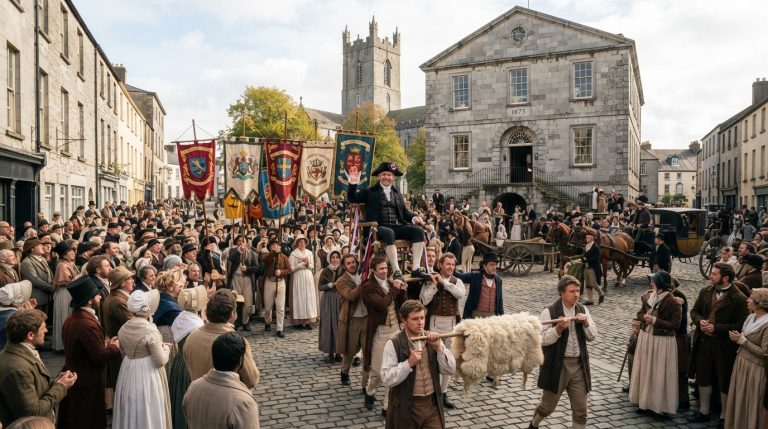
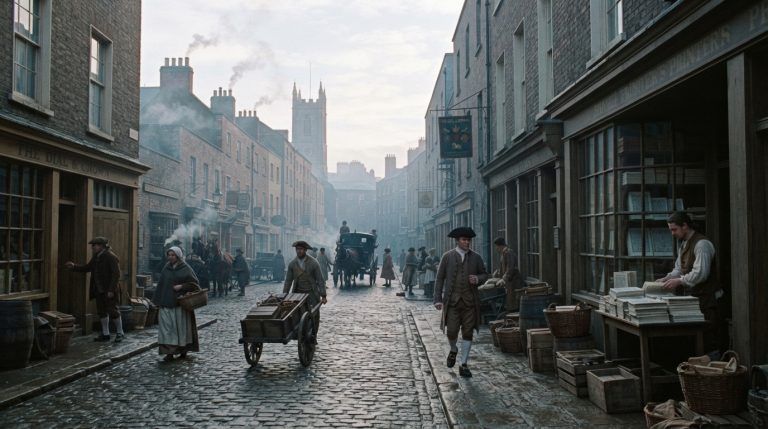
During the 1780s, Limerick expanded beyond its medieval core as Newtown Pery developed with broad streets, Georgian houses and new commercial ambition. Trade through the Shannon connected merchants, craftsmen and labourers with Atlantic markets, while rural families remained dependent upon uncertain harvests, rents and landlord decisions. Legislative independence in 1782 encouraged political confidence among Ireland’s Protestant elite, although Catholics still faced restrictions. News of the American Revolution and growing unrest in France widened public discussion about liberty and representation. For ordinary Limerick people, urban improvement and commercial opportunity existed beside poverty, inequality, disease, overcrowding and recurring pressure upon household incomes.
c.1790s
89 items
The 1790s brought Limerick Georgian development, political radicalism and wartime insecurity. The French Revolution inspired debate about liberty, religion and representation, while the Society of United Irishmen challenged established power across Ireland. War between Britain and revolutionary France disrupted trade, raised prices and increased military recruitment. The 1798 Rebellion caused fear, arrests and political suspicion, even where open fighting remained limited. Landlords continued building country houses and improving estates, but labourers and tenant farmers faced daily poverty, rents and uncertain harvests. Ordinary citizens experienced expanding streets and commerce alongside repression, sectarian tension, food costs and anxiety about invasion and rebellion.
c.1800s
163 items
The 1800s section gathers all articles and images assigned to this period within Emerald Archives. Together, these records show how developments within Limerick interacted with political, economic, social and cultural changes across Ireland and the wider world. They reveal how public decisions, employment, transport, trade, conflict, migration, technology, religion and changing customs reached ordinary homes and communities. Some evidence records major events, while other material preserves quieter details of streets, workplaces and family life. As additional records are published and classified, this decade will expand automatically, providing a fuller picture of Limerick experience during these important years for future visitors.
c.1810s
40 items
The 1810s section gathers all articles and images assigned to this period within Emerald Archives. Together, these records show how developments within Limerick interacted with political, economic, social and cultural changes across Ireland and the wider world. They reveal how public decisions, employment, transport, trade, conflict, migration, technology, religion and changing customs reached ordinary homes and communities. Some evidence records major events, while other material preserves quieter details of streets, workplaces and family life. As additional records are published and classified, this decade will expand automatically, providing a fuller picture of Limerick experience during these important years for future visitors.
c.1820s
245 items
The 1820s section gathers all articles and images assigned to this period within Emerald Archives. Together, these records show how developments within Limerick interacted with political, economic, social and cultural changes across Ireland and the wider world. They reveal how public decisions, employment, transport, trade, conflict, migration, technology, religion and changing customs reached ordinary homes and communities. Some evidence records major events, while other material preserves quieter details of streets, workplaces and family life. As additional records are published and classified, this decade will expand automatically, providing a fuller picture of Limerick experience during these important years for future visitors.
c.1830s
145 items
The 1830s section gathers all articles and images assigned to this period within Emerald Archives. Together, these records show how developments within Limerick interacted with political, economic, social and cultural changes across Ireland and the wider world. They reveal how public decisions, employment, transport, trade, conflict, migration, technology, religion and changing customs reached ordinary homes and communities. Some evidence records major events, while other material preserves quieter details of streets, workplaces and family life. As additional records are published and classified, this decade will expand automatically, providing a fuller picture of Limerick experience during these important years for future visitors.
c.1840s
520 items
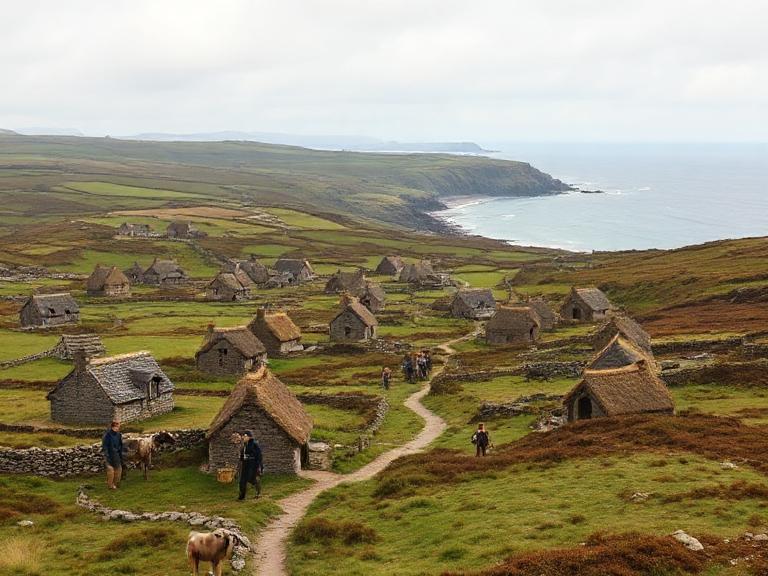
The 1840s brought catastrophe to Limerick as the Great Famine destroyed livelihoods across city and county. Potato failure caused hunger, disease, eviction and mass dependence upon relief works, soup kitchens and workhouses. Rural labourers and small tenants suffered most, while urban streets received families seeking food, employment and shelter. Death and emigration emptied townlands and permanently altered communities. The Shannon remained a route for trade and departure, linking local suffering with wider imperial markets and migration. Political debate over relief, land and government intensified. Ordinary people endured loss on an immense scale, relying upon family, charity, faith and survival daily.
c.1850s
269 items
The 1850s section gathers all articles and images assigned to this period within Emerald Archives. Together, these records show how developments within Limerick interacted with political, economic, social and cultural changes across Ireland and the wider world. They reveal how public decisions, employment, transport, trade, conflict, migration, technology, religion and changing customs reached ordinary homes and communities. Some evidence records major events, while other material preserves quieter details of streets, workplaces and family life. As additional records are published and classified, this decade will expand automatically, providing a fuller picture of Limerick experience during these important years for future visitors.
c.1880s
435 items
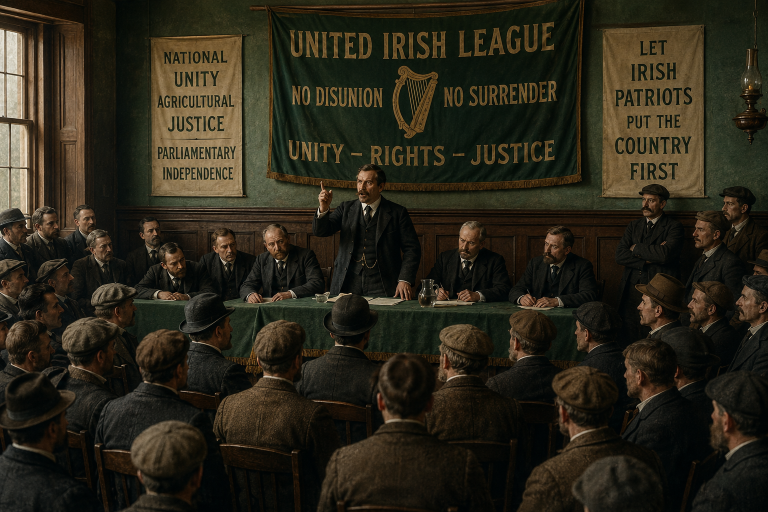
The 1880s placed Limerick at the centre of the Land War, Home Rule politics and social organisation. Tenant farmers attended meetings, resisted eviction and supported demands for fair rent, fixity of tenure and free sale. Charles Stewart Parnell’s movement mobilised city and county supporters, while coercion, imprisonment and agrarian violence created tension. Railways, docks, markets and food industries sustained employment, although wages and housing remained poor for many urban families. Emigration continued as international agricultural competition reduced incomes. Newspapers, political clubs and sporting organisations widened participation. Ordinary citizens experienced reform, conflict and hope while questioning ownership, government and national identity.
c.1890s
87 items
Limerick’s 1890s were shaped by nationalism, local democracy, industrial employment and persistent poverty. The fall of Charles Stewart Parnell divided political loyalties, while Fenian veteran John Daly returned from prison and became a powerful civic figure. The Local Government Act of 1898 created elected county and district councils, widening participation in public affairs. Bacon factories, docks, railways, shops and building trades supported thousands, but overcrowded housing, disease and insecure wages remained common. International trade influenced agricultural prices and employment. New technologies, popular newspapers and organised sport changed leisure. Ordinary citizens entered 1900 expecting continued reform while facing inequality and emigration.
c.1900s
1,406 items
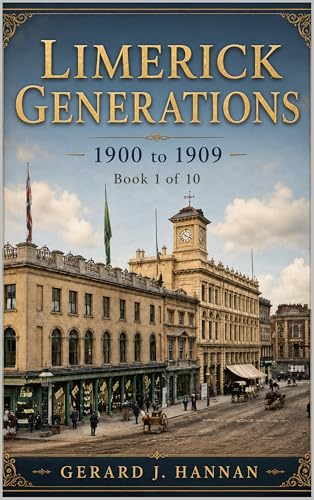
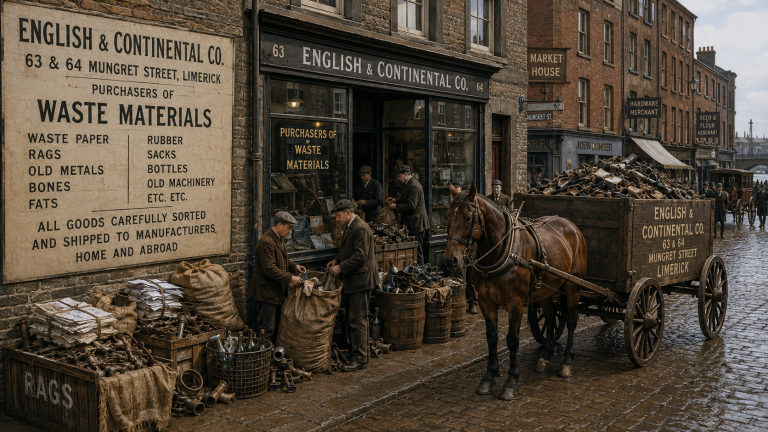
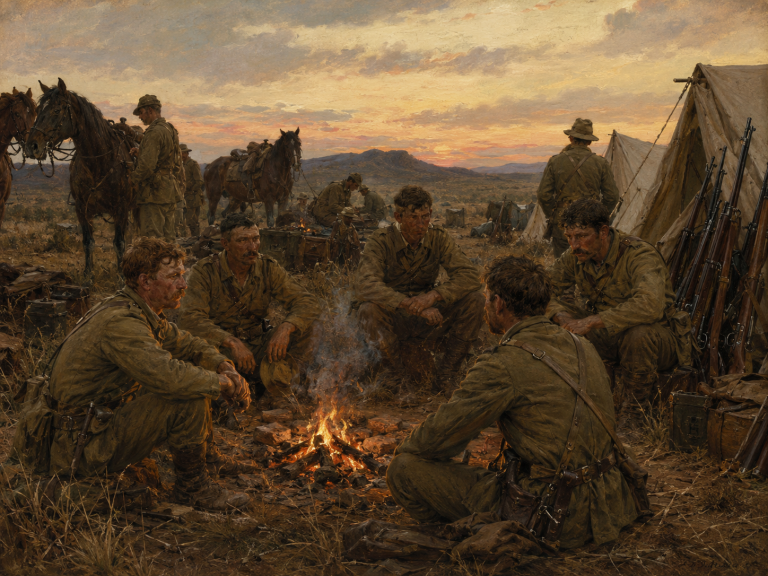
Limerick entered the twentieth century as a commercial city surrounded by an agricultural county. Shops, docks, bacon factories, creameries and railways supported employment, yet overcrowded housing, low wages and emigration shaped lives. New county and urban councils widened local political participation, while land reform altered relationships between farmers and landlords. The Boer War connected Limerick families with imperial conflict and strengthened nationalist opposition to British rule. The Gaelic revival encouraged renewed interest in Irish language, sport and culture. For ordinary citizens, the decade mixed civic confidence and technological progress with poverty, insecurity, political argument and persistent demands for national self-government.
c.1910s
283 items
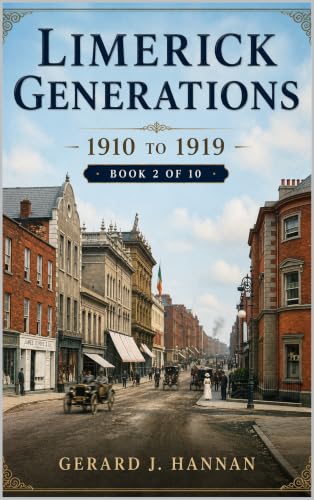
The 1910s transformed Limerick through war, labour organisation and revolution. Home Rule debates raised hopes and fears before the First World War drew local soldiers and families into an international conflict. Rising prices, bereavement and shortages affected households across city and county. The Easter Rising, conscription crisis and Sinn Féin’s advance weakened confidence in British government. Trade unions grew, culminating in the 1919 Limerick Soviet, when workers resisted military restrictions and organised food, transport and essential services. Ordinary people faced checkpoints, strikes, political division and economic uncertainty while witnessing the emergence of an independence movement that reshaped Irish public life.
c.1920s
1,157 items
The 1920s brought independence but also violence, division and difficult reconstruction. Limerick experienced the stages of the War of Independence, followed by Civil War fighting in the city and conflict throughout the county. Families, neighbours and former comrades were divided by the Treaty, while businesses, transport and daily routines were disrupted. After the Irish Free State was established, local authorities faced housing shortages, unemployment, damaged infrastructure and finances. The Shannon hydroelectric scheme created employment and symbolised national ambition, although change was uneven. Ordinary citizens adapted to new institutions while enduring emigration, economic hardship, political bitterness and the return of stability.
c.1930s
1,074 items
Limerick’s 1930s were shaped by economic depression, unemployment and the work of building the Irish state. The collapse in trade reduced opportunities, while the Anglo-Irish Economic War affected farmers, merchants and food producers throughout the county. Emigration remained an escape from limited work and poor housing. Ardnacrusha’s electricity increasingly transformed homes, streets, workshops and businesses, linking Limerick with national modernisation. Religious observance strongly influenced education, entertainment and family life, while sport, cinema and local societies offered relief from hardship. As dictatorship and conflict spread across Europe, ordinary citizens entered the decade’s final years facing uncertainty about another possible world war.
c.1940s
96 items
During the 1940s, Limerick lived through the Emergency while Ireland remained neutral in the Second World War. International conflict brought rationing, fuel shortages, restricted imports and concern about invasion or attack. Families queued for scarce goods, reused materials and depended heavily upon bicycles, turf and local food production. Farmers faced controls and changing prices, while many workers travelled to Britain for employment despite wartime danger. Shannon Airport opened in 1945, strengthening Limerick’s connection with transatlantic travel and future economic development. After 1945, shortages continued, but returning peace encouraged rebuilding, new expectations and cautious hope among ordinary city and county communities.
c.1960s
61 items
Limerick changed during the 1960s as economic planning, foreign investment and expanding education challenged older patterns of life. The Shannon industrial zone and improved transport created new employment across the region, while factories and services drew workers from traditional trades and farms. Housing estates expanded the city and altered neighbourhood relationships. Television brought international news, advertising and popular culture into family homes. Vatican II changed religious practice, and educational reforms opened secondary schooling to more children. Emigration continued, yet confidence grew. By the decade’s end, events in Northern Ireland reminded ordinary citizens that modernisation had not resolved Ireland’s political divisions.
c.1970s
127 items
The 1970s brought Limerick European connection but also inflation, industrial uncertainty and political tension. Ireland’s entry into the European Economic Community in 1973 created new markets and supports, especially for agriculture, while exposing businesses to competition. Oil crises raised transport, heating and production costs, placing pressure on household budgets. New suburbs, roads and public services changed the city’s shape, although unemployment and inadequate housing persisted. The Troubles influenced security, politics and public discussion, even as daily life continued through schools, workplaces, sport and entertainment. Television expanded shared experience, and local cultural activity strengthened a distinctive Limerick identity during unsettled years.
c.1980s
247 items
Limerick endured recession during the 1980s, when unemployment, factory closures, public debt and emigration dominated family life. Many young people left for Britain, America or Australia, while those remaining faced restricted opportunities and pressure on public services. Older urban districts experienced decline, yet residents, voluntary groups and community organisations responded through local development, education and social action. New technology entered offices, schools and homes, and expanding television connected audiences with global culture. Sport, music and theatre provided pride during difficult years. Peace initiatives in Northern Ireland encouraged cautious optimism, but economic recovery arrived slowly and unevenly across city and county.
c.2020s
2,136 items
The 2020s opened with the COVID-19 pandemic transforming everyday life throughout Limerick. Lockdowns closed workplaces, schools, shops, churches and cultural venues, while health workers, carers and essential staff carried exceptional responsibilities. Remote work, online education and digital communication became familiar, but isolation and unequal access created difficulties. Brexit altered trade relationships, and Russia’s invasion of Ukraine contributed to inflation, energy costs and the arrival of displaced families. Housing shortages and rising prices placed pressure upon households, while climate concerns influenced planning and transport debates. Ordinary citizens adapted through community support, technology and renewed appreciation of local places and shared history.