Archived: 1 November 2026
Abstract
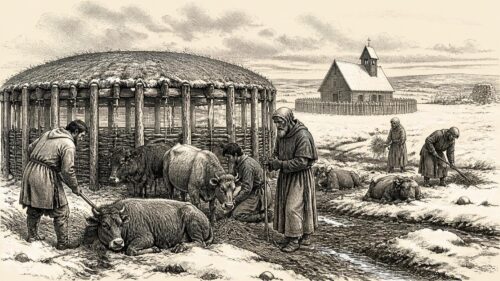
In 747, Ireland experienced exceptionally deep snow, widespread cattle mortality and subsequent drought, shocks that endangered a rural economy dependent on livestock for food, labour, tribute and status. The annals do not establish famine or population loss, but attest severe island-wide disruption. Political life continued: Indrechtach of the Ciannachta and Queen Muirenn died, while Congal of the Airthir was slain. Suanach’s grandson’s law operated in Leth Cuinn, indicating public legal or ecclesiastical authority. Obituaries recorded abbots, anchorites and scholars, including Cúan Cam. Munster sources noted fighting at Cúil Géisi. Together, the entries reveal interconnected environmental, political, legal and religious pressures.
Read Article
Archived: 1 November 2026
Abstract
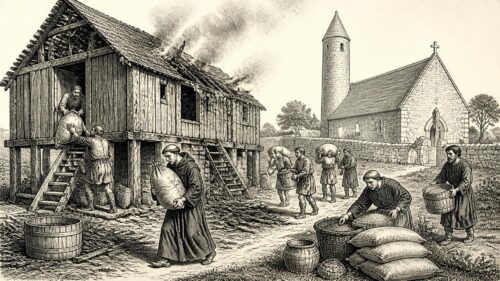
In 746, Irish annals recorded the violation of sanctuary at Domnach Pátraic, where six unnamed captives were hanged, exposing the religious and political weight of ecclesiastical protection. They also noted local warfare, including deaths among rival leaders, defeat of the Conmaicne, slaughter among southern Uí Briúin, and kin-slaying at Les Mór. Obits of abbots, bishops and rulers reveal a dispersed network of churches and regional powers. The Four Masters record fire damage to half Clonard’s granary, highlighting institutional resources and vulnerability. Notices concerning Domnall Midi’s era and dragons seen in the sky further convey a fragmented, unsettled Ireland in transition.
Read Article
Archived: 1 November 2026
Abstract
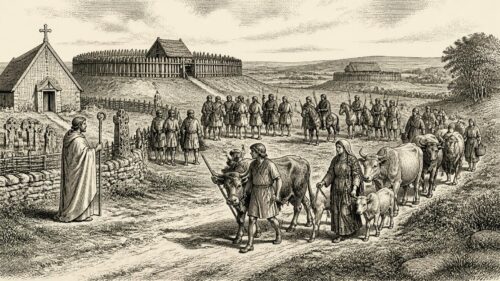
An annalistic dossier assigned to 742 by the Annals of Ulster, but often dated 743, records intense political, ecclesiastical and social change in Ireland. At Seredmag near Kells, Domnall Midi defeated and killed Áed Allán, gaining wider kingship and strengthening Clann Cholmáin against Cenél nÉogain. Other regional battles and killings reveal widespread instability. Deaths of Affrica of Kildare and abbots of Rechru and Mag Bile marked ecclesiastical successions. Suanach’s law was enacted, and relics of Trian of Cell Delge travelled on circuit. The annals also report widespread bolgach, probably a smallpox-like disease, showing warfare, religious authority and illness shaped communities.
Read Article
Archived: 1 November 2026
Abstract
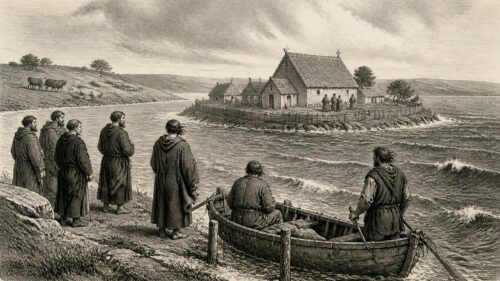
In 720, Irish annals recorded a rainy summer, the death of Sínach of Inis Clothrann, and a great sea-flood in October. The wet season may have disrupted cereal growing, haymaking, travel and fodder supplies, although its effects varied by resources and status and cannot prove famine. Sínach’s obituary attests to an ecclesiastical community on Lough Ree, connected through the Shannon to estates, labour and exchange. Politically, the year lay between Fergal’s campaigns against Leinster, though no conflict is securely dated to it. The sea-flood, perhaps storm surge or tsunami, remains unlocated and unexplained, demonstrating environmental vulnerability and maritime connections alike.
Read Article
Archived: 1 November 2026
Abstract
In 705 CE, Ireland’s surviving annalistic record presents a small but unusually revealing cluster of deaths, violence and political change. The notices are terse: the abbot Cenn Faelad of Bangor died; a battle was fought in Corcu Modruad, where Céilechair son of Comán fell; Cellach son of Rogallach, king of Connacht, died after entering clerical life; Conamail son of Canu was killed; and Congal Cenn Magair, son of Fergus of Fána, “begins to reign”. No contemporary narrative tells how these events unfolded. Yet, read alongside the preceding and following annals, they illuminate an Ireland in which monasteries, dynasties and local
Read Article
Archived: 2 November 2026
Abstract
In 693 CE, Ireland’s surviving annalistic record is unusually compact but revealing. The Annals of Ulster, whose annal headed 694 is synchronised to AD 693, record the death of Crón Bec, abbot of Clonmacnoise; the deaths of ecclesiastics at Movilla and Balla; the killing of a layman named Cerball son of Máel Odar; and a siege at Dún Foither. No contemporary narrative explains how these events were connected. Yet together they show an island in which monastic communities, local lordship and fortified places formed the essential framework of public life. The year was not one of a single, island-wide turning
Read Article
Archived: 2 November 2026
Abstract
In 681 CE, Ireland’s surviving annalistic record preserves three securely associated notices: the killing of Cenn Fáelad, described as king of Connacht; a battle at Ráith Mór in Mag Line against Britons, in which Cathasach, king of the Cruithin, was killed; and the death of Suibne, superior of Corcach. These are short entries, but they reveal a political world in which royal authority remained precarious, conflict crossed the narrow seas, and ecclesiastical communities were led by figures important enough to be entered beside kings and battles. The evidence must be handled carefully. The Annals of Ulster place these items under
Read Article
Archived: 2 November 2026
Abstract
In 680 CE, Ireland’s surviving annalistic record brings together a striking mixture of dynastic violence, ecclesiastical change and a grave outbreak of illness. The entries are brief, and the manuscripts that preserve them were written much later, so their calendar headings require care. This account follows modern chronological synchronisation rather than simply repeating the sometimes displaced year-numbers in individual annals. On that basis, several developments can responsibly be assigned to 680: the death of Colmán, abbot of Bennchor (Bangor); the killing of Fíanamail mac Máel Tuile, king of Leinster; deaths and fighting in several regions; and, most memorably, the report
Read Article
Archived: 2 November 2026
Abstract
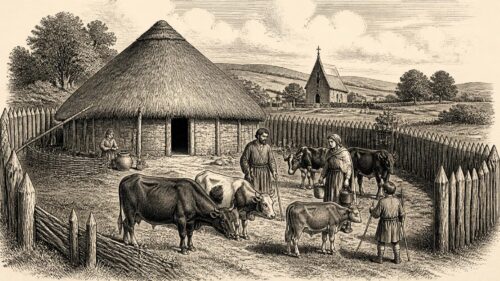
In 656 CE, the surviving Irish annals place a small but revealing cluster of deaths, a battle and an extraordinary report from the countryside within the year. None amounts to a narrative of a united Irish kingdom: Ireland was divided among many dynasties and petty kingdoms, while churches and monasteries exercised influence across political frontiers. Yet the entries for this year illuminate several connected worlds: the Columban community of Iona, the ecclesiastical landscape of Meath and Munster, local violence, cattle-centred rural life, and Ireland’s close relationship with northern Britain. The evidence is terse and must be handled cautiously, but it
Read Article
Archived: 3 November 2026
Abstract
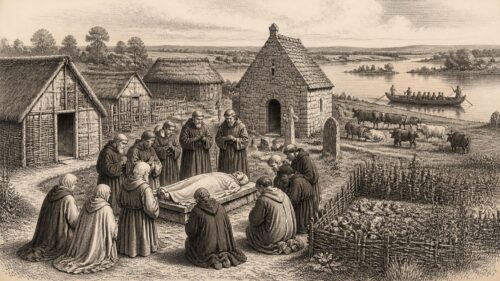
In 652 CE, the Irish annalistic record conventionally places a striking cluster of deaths among leading churchmen alongside a local dynastic battle in the midlands. Yet this is also a year that demands unusual chronological care. The surviving Annals of Ulster group these notices under U652, but their own kalend entry identifies the year as AD 651; related chronicles and later compilations distribute some of the same material under different years. The safest conclusion is not that every event can be fixed to a modern 1 January–31 December 652, but that these events belong to the narrowly defined historical horizon
Read Article
Archived: 3 November 2026
Abstract
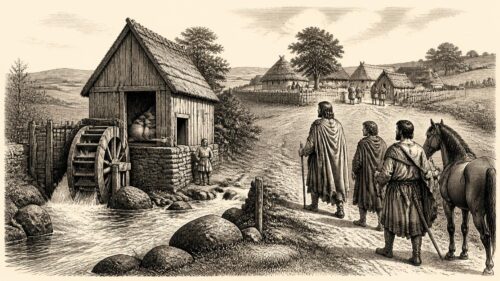
In 651 CE, the Irish annals associate one striking episode with the year: the killing of Dúnchad and Conall, sons of Blathmac son of Áed Sláine, at or beside the mill of Máel Odhrán. The surviving accounts are terse, poetic and chronologically complicated, so the event should not be treated as a securely dated incident on a modern calendar day. Yet it is firmly lodged in the annalistic sequence conventionally discussed under 651. The deaths mattered because the victims belonged to the powerful Síl nÁedo Sláine of Brega, a leading southern branch of the Uí Néill. Their violent end, remembered
Read Article





