Archived: 25 October 2026
Abstract
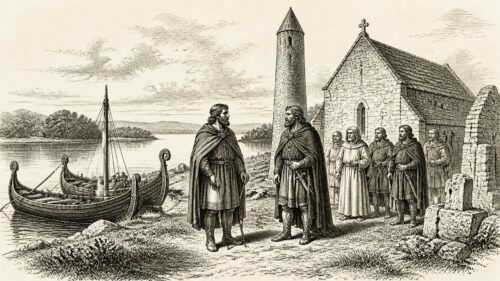
In 1259, Áed Ó Conchobair of Connacht asserted authority in Breifne by replacing rivals, taking hostages, raiding opponents and ordering blinding. At Devenish, he and Brian Ó Néill restored Domnall Ó Ruairc, demonstrating northern alliance politics and Brian’s wider influence. Áed’s marriage at Derry to Dubgall Mac Somairle’s daughter linked Connacht with the western seaways and armed support. Ulster, Thomond and Desmond saw raids, conflict and attacks affecting churches and communities. Tomaltach Ó Conchobair returned from Rome as archbishop of Tuam, while the deaths of Bishop Cormac Ó Luimlín and poet Gilla Cam marked losses to learning and ecclesiastical life.
Read Article

Archived: 25 October 2026
Abstract
In 1253, Sligo gained a Dominican friary and consecrated cemetery, establishing a centre for preaching, learning, burial and patronage in a strategic Geraldine settlement. The foundation reflected mendicant expansion supported by both Anglo-Irish and Gaelic rulers, also evident at Roscommon. Politically, Maurice FitzGerald’s Anglo-Irish expedition into Tír Eógain failed to secure hostages from Brian Ó Néill, demonstrating limits to colonial power and strengthening Ó Néill’s position. Church notices recorded deaths of leading bishops and construction of an episcopal residence at Elphin. Annals described a notably productive summer, while December royal orders sought Irish military and logistical aid for threatened Gascony.
Read Article
Archived: 26 October 2026
Abstract
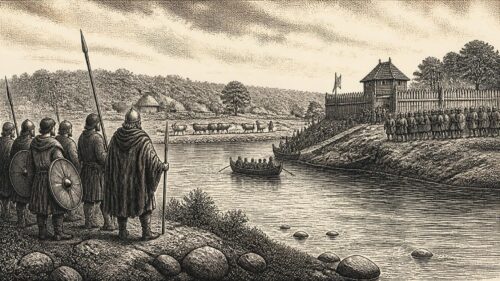
In 1230, Áed mac Ruaidrí Ó Conchobair’s revolt against Richard de Burgh, Mac William, intensified Connacht’s succession crisis. De Burgh assembled Anglo-Norman and Gaelic allies, advanced through Galway and Mayo, secured submissions and hostages, and defeated Donn Óc Mac Airechtaig’s forces at Fincharn. His troops devastated communities sheltering with cattle in remote terrain, causing hunger, deaths and dispossession. At Lough Key, de Burgh installed Fedlimid mac Cathail Chrobdeirg as king and expelled Áed, who sought Ó Néill’s protection in Tír Eógain. The year also recorded Áed Ó Néill’s death and obituaries illuminating ecclesiastical leadership, monastic craftsmanship and scholarship across Ireland.
Read Article

Archived: 26 September 2026
Abstract
In 1222, Ireland remained politically divided between Gaelic lordships and the Anglo-Norman lordship, whose authority was strongest in eastern and south-eastern towns and castles. Hugh de Lacy’s return exposed fragile royal control: Henry III restored some inherited lands but retained Ulster, while annals link de Lacy’s alliance with Áed Ó Néill to raids, Culrathain’s destruction and negotiated terms at Dundalk. An exceptional great wind damaged buildings, woods, churches and ships, disrupting rural, maritime and commercial life. Annals also record ecclesiastical deaths, elite benefaction and moral judgement. Farming, trade, kinship, warfare and religious institutions bound together a connected yet uneven society.
Read Article
Archived: 26 September 2026
Abstract
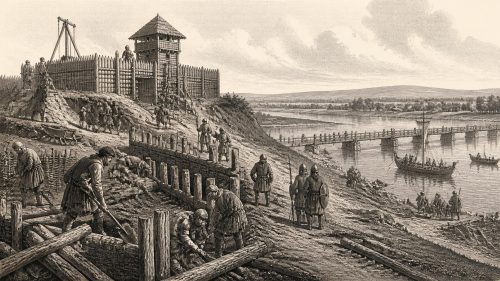
In 1213, King John’s submission of England and Ireland to Pope Innocent III altered the lordship’s international status, while Henry of London became archbishop of Dublin and justiciar. Royal and settler forces campaigned in Mide, defeating Cormac Ó Máel Sechlainn’s allies and building castles at Athlone, Birr, Durrow and Kinnitty to control crossings and routes. Cormac nevertheless recovered influence, illustrating frontier instability. Ulster saw Gaelic feuds, Anglo-Norman attacks, church plundering, Coleraine Castle’s construction and Áed Ó Néill’s raids. Clerical deaths highlighted enduring ecclesiastical centres. Ireland remained politically plural, as castles, warfare, alliances and royal administration reshaped contested regions across Ireland.
Read Article

Archived: 26 September 2026
Abstract
In 1209, Ireland remained politically divided between King John’s lordship, centred on Dublin and Anglo-Norman estates, and competing Gaelic dynasties. John de Grey, acting justiciar, strengthened royal administration, while Dublin’s developing castle symbolised expanding governance. The later tradition of Black Monday recalled settlers’ vulnerability beyond the city walls, though its details are uncertain. Warfare in Inishowen between Ó Néill and Ó Domnaill forces demonstrated contested northern borderlands. In Desmond, Finghin Mac Carthaigh’s killing during a booty dispute triggered succession change; Breifne likewise saw rival Ó Ruairc claimants. Ecclesiastical deaths and everyday economic obligations underscore communities affected by unstable, negotiated power.
Read Article

Archived: 26 September 2026
Abstract
In 1208, conflict within the Anglo-Norman lordship undermined royal authority in Ireland. William Marshal’s allies captured justiciar Meiler fitz Henry at Thurles, prompting King John to restore Marshal’s lands and appoint John de Grey. These settlements strengthened supervision but did not end rivalry among colonial magnates. Gaelic rulers remained independent actors: northern dynasties fought and later negotiated, while English influence shaped succession in Breifne. In Munster, dynastic disputes involved Limerick’s English community and church guarantors, despite breaches of protection. Ecclesiastical life continued amid violence and uncertainty. The year revealed a fragmented Ireland, governed through local alliances, force, charters and negotiation.
Read Article





