10 July 2026
Pery Square
Around 1900, Pery Square presented one of Limerick’s most elegant urban settings, facing the newly opened People’s Park and framed by distinctive Georgian terraces. The celebrated Tontine Buildings, built between 1835 and 1838 as a speculative venture, gave the square a story as unusual as its architecture. Their shares, tied to named lives in the so-called Life and Death Lottery, were still gaining value as horse-drawn traffic, pedestrians, gas lamps, and civic buildings animated the street. The tontine was finally won in 1913 by Sophia Vanderkiste, closing a remarkable chapter in Limerick’s local social and architectural history.
View Image15 July 2026
Edwardian Limerick
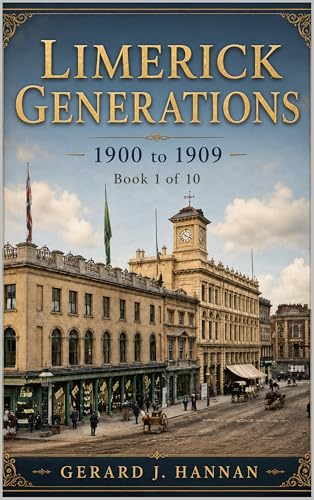
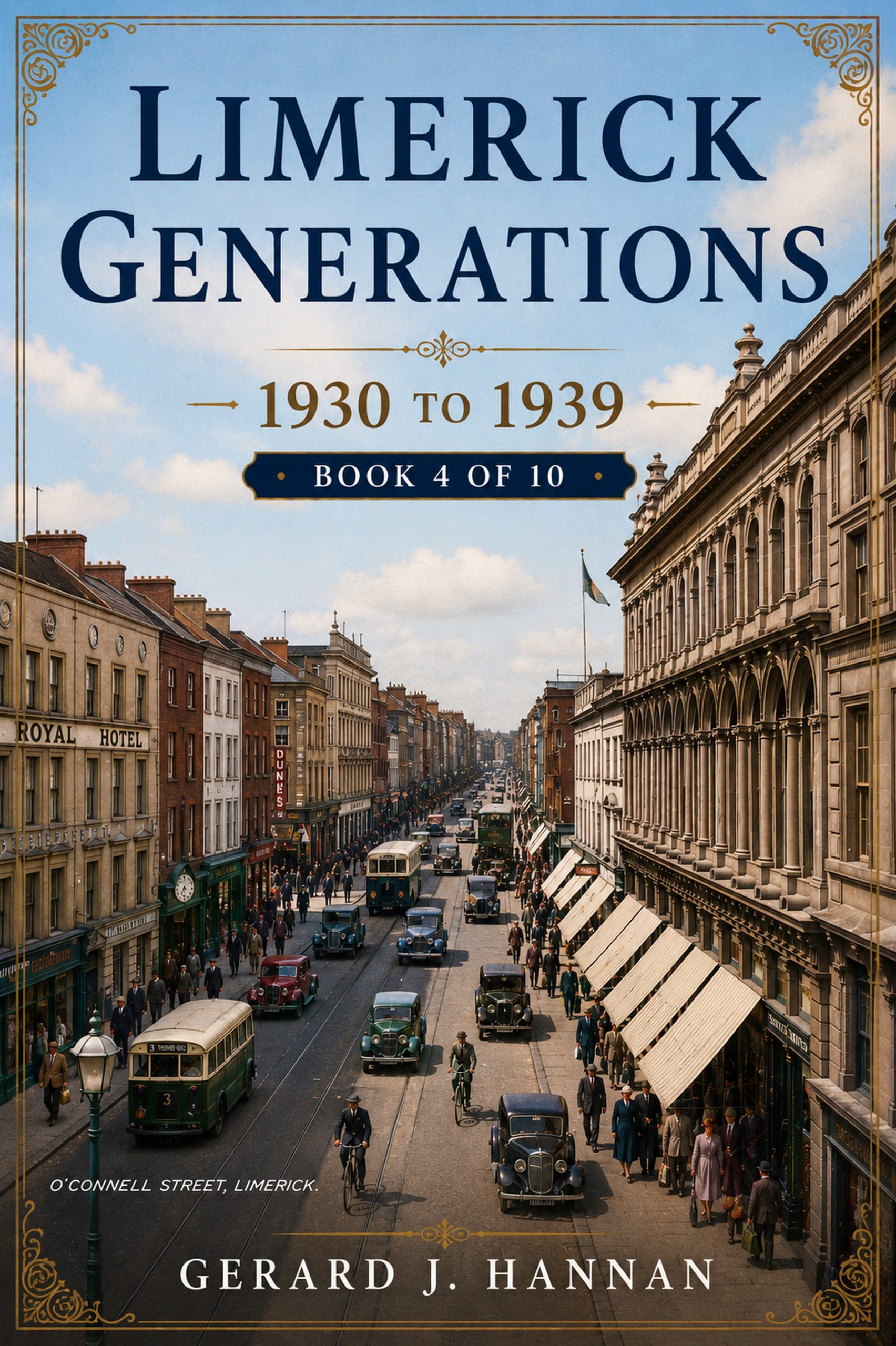
“The Heart of Edwardian Limerick” is preserved as a separate photographic record in Limerick Archives under archive reference LA-PH-000302. Its catalogue records the location as Limerick City & County and the subject as Businesses and Shops. At the beginning of the twentieth century, George Street stood at the centre of commercial life in Limerick. Today known as O’Connell Street, it was bordered by impressive Georgian buildings housing hotels, shops, offices and established local businesses. Horse-drawn carts, private carriages and crowds of pedestrians moved constantly along the busy thoroughfare, while traders brought additional noise and colour to the scene. Landmarks included the Royal Hotel, MacMahon’s Temperance Hotel and firms such as O’Mahony & Company. The street’s elegant architecture and lively commerce made it one of Edwardian Limerick’s most important and recognisable urban spaces for residents and visitors.
View Image10 July 2026
Marys Cathedral
AI-assisted archival reconstruction showing St Mary’s Cathedral, Limerick, viewed from the surrounding garden grounds. The image presents the cathedral tower, Gothic windows, mature trees, planted walks, benches, and landscaped foreground in a restored historical setting, preserving the atmosphere of the original source photograph while removing modern watermarking and visual damage.
View Image16 July 2026
Shortest Street
Quinlan Street is one of the shortest principal streets in Limerick City, measuring approximately eighty-five feet at its centre. Located within the historic Georgian Quarter, it forms an important connection between the Crescent, at the southern end of O’Connell Street, and O’Connell Avenue. Developed between the 1820s and 1840s, the street is lined with distinctive multi-storey red-brick Georgian townhouses built over basements. Its unusual layout means that one side is longer than the other. The street was named after Thomas Quinlan, the builder responsible for the original houses at numbers 1 and 2, preserving his contribution to Limerick’s urban development.
View Image10 July 2026
Wellesly Bridge
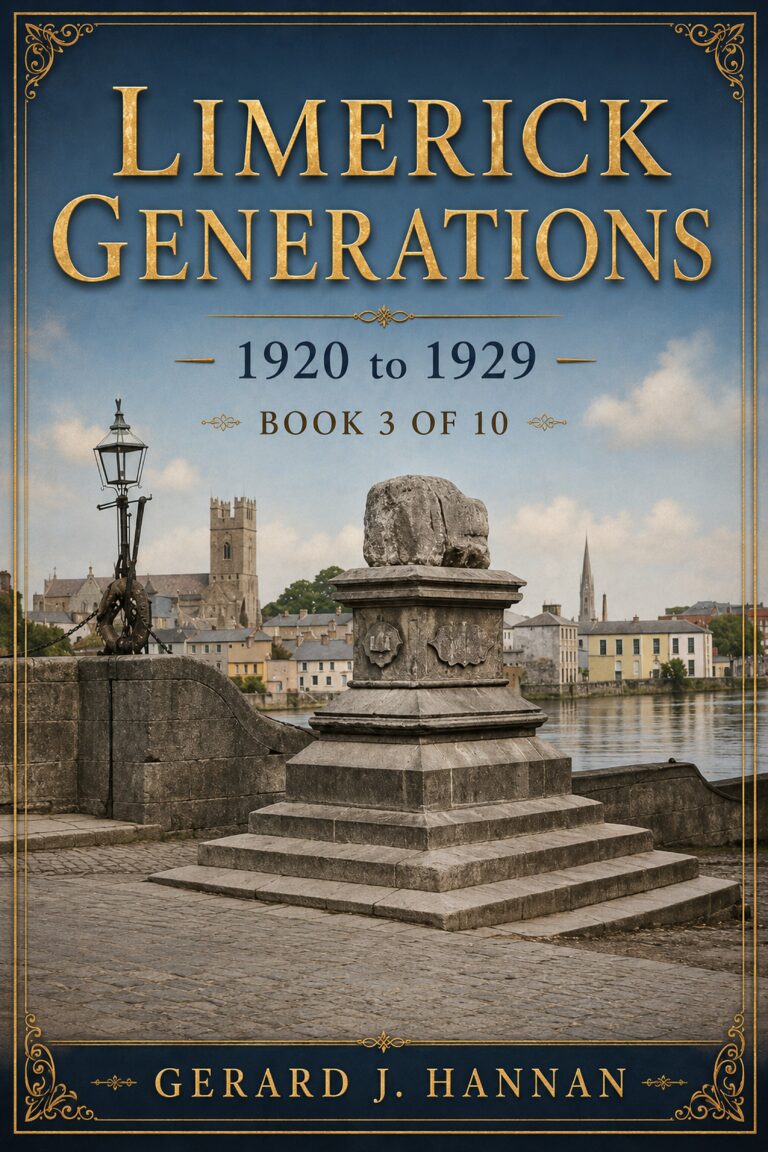
A sweeping view of Wellesley Bridge, now Sarsfield Bridge, crossing the River Shannon in Limerick City. The elegant 1835 structure rises with restrained neoclassical grace, its stone arches carrying traffic between the historic city centre and Thomondgate on the northern shore. Calm river water reflects the bridge’s pale masonry, while quays, rooftops, and distant activity suggest a city expanding beyond its old boundaries. Maritime details, mooring points, and riverside movement evoke Limerick’s trading past. The scene should feel dignified, atmospheric, and historically grounded, presenting the bridge as both active crossing and enduring architectural landmark.
View Image16 July 2026
Mary Street
Dutch Billy houses were once a distinctive feature of Limerick’s Englishtown and Irishtown districts. Characterised by narrow brick façades, steeply pitched gables and tall windows, the style developed in Irish towns during the late seventeenth and early eighteenth centuries. Many examples survived along Mary Street into the early twentieth century, preserving the appearance of Limerick’s merchant quarters. Their name is traditionally associated with King William III, although the term was applied broadly to gabled urban houses of the period. By around 1900, these buildings stood as reminders of the city’s commercial growth, architectural character and changing streetscape across previous centuries.
View Image16 July 2026
Monasteranenagh Abbey
Founded in 1148 by Toirdelbhach mac Diarmaida Ua Briain, Monasteranenagh Abbey became one of County Limerick’s most important Cistercian foundations. This reconstruction imagines the monastery during its earliest years, with newly completed stone buildings, steep roofs, narrow lancet windows, timber doors, and monks moving quietly through the surrounding grounds. The austere architecture reflects the Cistercian ideals of simplicity, discipline, prayer, and communal labour. Supported by the O’Brien dynasty, the abbey later expanded under Domnall Mór Ua Briain. Though centuries of conflict and collapse reduced it to ruins, its surviving walls remain a powerful monument to medieval Irish faith and craftsmanship.
View Image16 July 2026
Mary Street
Dutch Billy houses were once a distinctive feature of Limerick’s Englishtown and Irishtown districts. Characterised by narrow brick façades, steeply pitched gables and tall windows, the style developed in Irish towns during the late seventeenth and early eighteenth centuries. Many examples survived along Mary Street into the early twentieth century, preserving the appearance of Limerick’s merchant quarters. Their name is traditionally associated with King William III, although the term was applied broadly to gabled urban houses of the period. By around 1900, these buildings stood as reminders of the city’s commercial growth, architectural character and changing streetscape across previous centuries.
View Image10 July 2026
Wellesly Bridge
A sweeping view of Wellesley Bridge, now Sarsfield Bridge, crossing the River Shannon in Limerick City. The elegant 1835 structure rises with restrained neoclassical grace, its stone arches carrying traffic between the historic city centre and Thomondgate on the northern shore. Calm river water reflects the bridge’s pale masonry, while quays, rooftops, and distant activity suggest a city expanding beyond its old boundaries. Maritime details, mooring points, and riverside movement evoke Limerick’s trading past. The scene should feel dignified, atmospheric, and historically grounded, presenting the bridge as both active crossing and enduring architectural landmark.
View Image12 July 2026
Police Cabin
Around 1880, the interior of a police cabin at Gurranmore, near Pallas in County Limerick, reveals the modest conditions in which rural constables lived and worked. The small room is sparsely furnished, with simple wooden fittings, basic household utensils and few comforts. Uniformed officers occupy the cramped space, suggesting that the cabin served as both workplace and living quarters. Published in The Graphic in 1880, the image offers a rare glimpse of everyday policing in nineteenth-century Ireland. It preserves not only the appearance of the station, but also the disciplined, isolated life experienced by men posted in rural communities nearby.
View Image