10 July 2026
Memorial 1940s
On Sarsfield Bridge in 1940s Limerick, the 1916 Memorial rises proudly beside the roadway, enclosed by green iron railings and watched over by elegant lamps. Its pale stone pedestal supports bronze figures commemorating the Rising, their solemn poses lending dignity to the riverside setting. Trees line the background, softening the urban scene and framing the monument against a bright open sky. Pedestrians in period dress walk along the bridge, suggesting ordinary city life continuing around a place of remembrance. The image captures civic pride, republican memory, and the enduring presence of national history within Limerick’s daily landscape and local identity.
View Image10 July 2026
Barricades Limerick
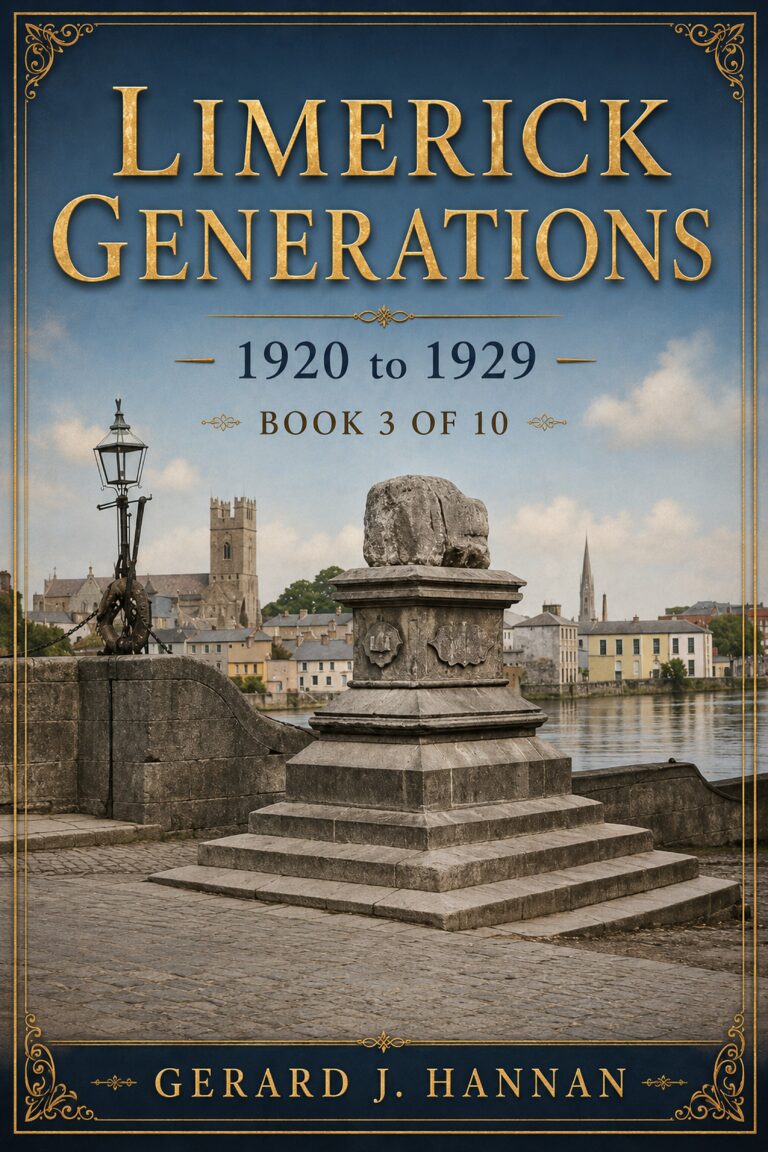
At Thomond Bridge in Limerick in 1923, a soldier stands guard beside a rough barricade near the Treaty Stone, a symbolic landmark now overshadowed by civil conflict. The scene evokes the tense aftermath of the Treaty split, when Anti-Treaty IRA forces and pro-Treaty National Army troops fought for control of the city. Sandbags, timber, stone, and street debris suggest hurried urban fortification, while the soldier’s watchful posture conveys danger and uncertainty. The bridge becomes both military checkpoint and historic threshold, linking Limerick’s medieval memory with the bitter street warfare that marked the Irish Civil War in the city that summer.
View Image14 July 2026
Shannon 1850s
By the mid-nineteenth century, Limerick remained one of Ireland's most strategically significant river cities, its fortunes long tied to the Shannon as a route for trade, defence, and settlement. The medieval walls and towers still visible in this period recalled centuries of contested history, from Norman fortification to the sieges of the seventeenth century that shaped the city's identity. Alphonse Dousseau's romanticised depiction reflects a wider mid-Victorian fascination among European artists with Ireland's older townscapes, capturing Limerick at a moment when its historic core coexisted with the pressures of modernisation, emigration, and post-Famine recovery reshaping much of the country during…
View Image15 July 2026
Knockaderry House
Knockaderry House, near Newcastle West in County Limerick, is an eighteenth-century country residence built around 1780. The detached, three-bay, two-storey house is distinguished by its balanced proportions, limestone eaves course and an attached architectural folly. Although now derelict, much of the original structure and historic fabric survives, allowing the building to retain a strong sense of its former character. The house is also remembered as the birthplace of pioneering Irish aviator Sophie Peirce-Evans. Set within the rural Limerick landscape, Knockaderry House remains an important reminder of the county’s architectural, social and aviation heritage for future generations to study and appreciate.
View Image10 July 2026
Boat Club
Athlunkard Boat Club was founded in 1898, taking its name from its home beside O’Dwyer Bridge at the end of Athlunkard Street. By the 1930s, the club was already firmly woven into Limerick’s rowing tradition, with a proud record on the water. Its greatest distinction came through the Senior Eight Championship, which Athlunkard won twice, in 1913 and 1923. That achievement made it the only Limerick club to secure the title on two occasions. Its riverside presence and competitive success gave Athlunkard Boat Club a lasting place in the sporting history of the city and the wider Shannon rowing community.
View Image14 July 2026
Grange House
This reconstructed scene evokes the life of a prosperous Georgian country estate around the turn of the nineteenth century. The imposing house, formal gardens and gravel approach reflect the architectural taste and social order of the period. Elegantly dressed visitors, household servants, gardeners and horse-drawn carriages suggest activity surrounding such residences, where family life, hospitality and estate management met. Although idealised, the image offers a vivid historical impression of how the property may once have appeared when newly built, occupied and maintained, before decline altered its character and left only fragments of its former grandeur for future generations to study.
View Image16 July 2026
Monument Gathering
This reconstructed image depicts the Treaty Stone in Limerick as it may have appeared around 1880, standing on its substantial stepped pedestal as a powerful emblem of the city’s past. Groups of townspeople, including men, women and children in period clothing, gather around the monument in a lively public setting. In the background, traditional buildings, stone walls and the nearby tower reinforce the historic atmosphere of the riverside area. Long associated with the Treaty of Limerick of 1691, the stone remained an important civic landmark, meeting place and symbol of memory, identity and local heritage in nineteenth-century Limerick.
View Image13 July 2026
George Street
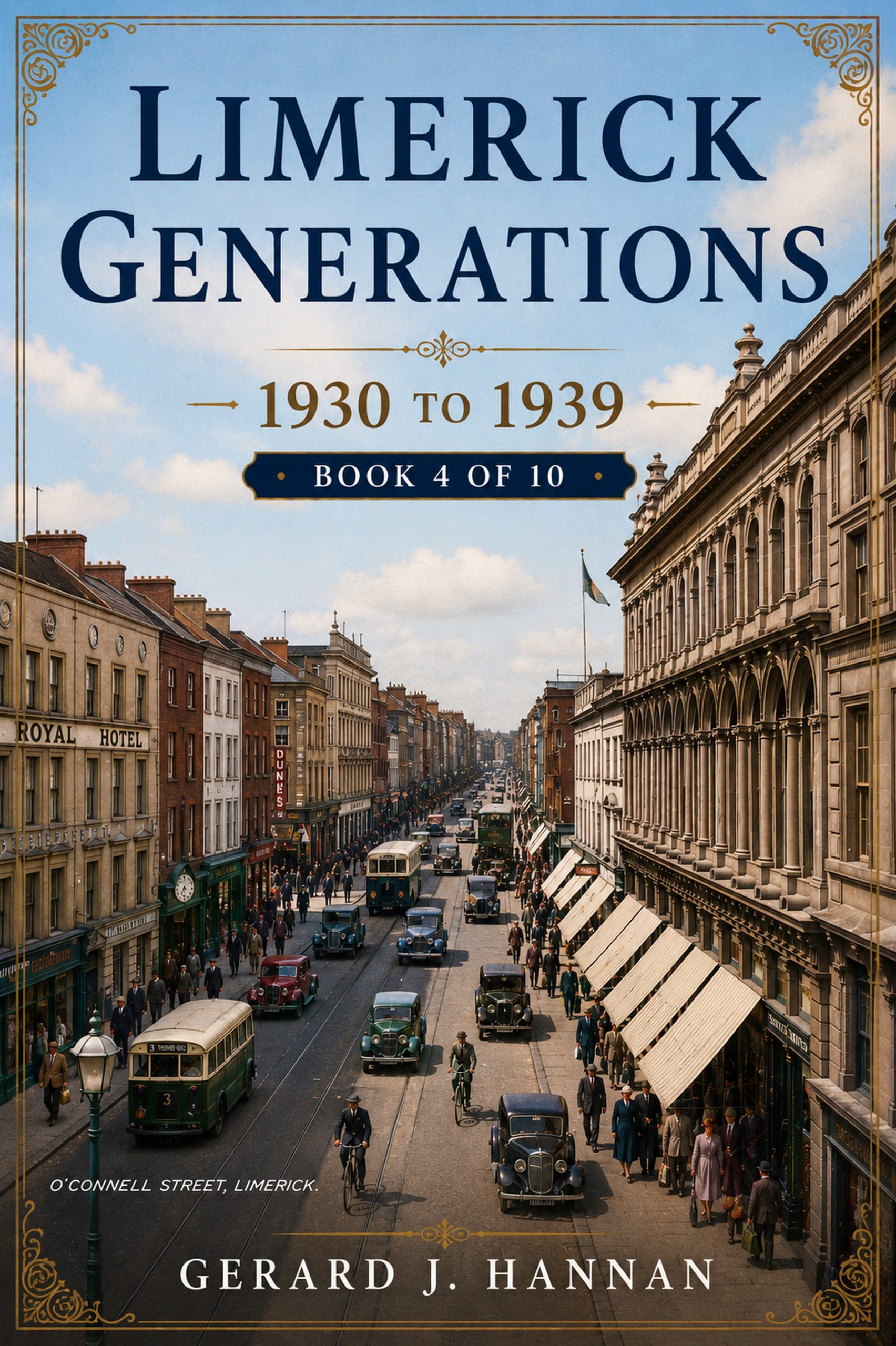
George Street, now O’Connell Street, formed the bustling commercial and social heart of Limerick around 1900. Elegant Georgian and Victorian façades lined the thoroughfare, their ornate shopfronts illuminated by gaslight and filled with goods for local shoppers. Horse-drawn carriages, jaunting cars and merchant carts crowded the roadway, while pedestrians in heavy coats and hats moved between businesses and hotels. The grand Cruises Royal Hotel stood among the street’s most prominent landmarks, welcoming merchants, travellers and visitors. This scene reflects the energy of late-Victorian Limerick before motor traffic transformed the city’s principal shopping street and historic urban centre during a changing…
View Image15 July 2026
George Street
In 1900, George Street, now O’Connell Street, formed the commercial heart of Edwardian Limerick. Its broad thoroughfare was lined with elegant Georgian buildings, busy shops, hotels and offices, while horse-drawn carts, carriages and pedestrians filled the roadway. Street traders added colour and activity to the city’s principal avenue. Among its notable establishments were the Cruises Royal Hotel, MacMahon’s Temperance Hotel and respected merchants such as O’Mahony & Company. The street reflected Limerick’s growing prosperity at the opening of the twentieth century, combining refined architecture with energetic daily commerce and serving as a central meeting place for residents, visitors and travellers…
View Image16 July 2026
Thomond Gate
Thomond Gate Distillery stood beside the River Shannon from 1809 until 1919, forming an important part of Limerick’s industrial and distilling heritage. During the nineteenth century, the complex operated three copper pot stills and produced traditional Irish whiskey under several owners, including Stein Brown & Co. and Archibald Walker’s Limerick Distillery. These reconstructed scenes imagine the surrounding streets, workers, carts, buildings and towering chimneys during the distillery’s active years. Although production eventually ceased, the Thomond Gate name has been revived through an independent Limerick whiskey brand dedicated to preserving the memory and traditions of the original enterprise for future generations.
View Image