13 July 2026
Limerick Stone
This February 1937 photograph shows a weathered stone cottage in Limerick, with children gathered at its doorway and along the narrow street outside. The rough masonry, patched walls, boarded upper windows and low, sloping roof reveal the building’s age and modest condition. Electrical wires cross above the house, suggesting the gradual arrival of modern services within an older urban landscape. The children’s presence brings warmth and life to the scene, contrasting with the severe exterior and surrounding ruins. The image provides a valuable record of working-class housing, childhood and community life in pre-war Limerick during a period of social change.
View Image16 July 2026
Castlegarde Castle
Castlegarde Castle, near Cappamore in County Limerick, is regarded as Ireland’s oldest continuously inhabited castle. Established by the O’Brien family around 1190, its five-storey medieval tower rises from a limestone outcrop, strengthening its defensive position. Original features include an internal well and a murder hole above the entrance passage. In 1820, Waller O’Grady commissioned architects James and George Pain to add a castellated Gothic extension, harmonised with the ancient keep. A carved head of Brian Boru overlooks the entrance, while three unusual stone figures representing Bacchus, Pallas Athene and Aphrodite survive within the gatehouse. Today, it remains a private residence.
View Image13 July 2026
OConnell Street
This 1937 view of O’Connell Street, historically known as George’s Street, captures Limerick’s principal commercial thoroughfare during a period of urban transition. Georgian façades, prominent shopfronts and the landmark clock tower frame a busy scene of pedestrians, cyclists, motorcars and public transport. Heavy coats and formal dress reflect everyday life before the Second World War, while traditional businesses line both sides of the street. Several buildings and upper storeys shown here were later altered or demolished during redevelopment. Despite extensive modernisation and pedestrianisation, O’Connell Street remains central to Limerick’s commercial, architectural and social identity within the changing modern city today.
View Image16 July 2026
Mountshannon House
Mountshannon House, near Castleconnell in County Limerick, was one of Ireland’s grandest eighteenth-century mansions. Built around 1750, it later gained a monumental Ionic portico during an 1813 remodelling by architect Lewis Wyatt. Tradition claimed the house contained 365 windows, while its vast entrance hall could accommodate a horse-drawn carriage. Surrounded by a 900-acre demesne between the River Shannon and Mulkear River, its celebrated gardens were designed by John Sutherland. Home to the powerful FitzGibbon family, including John “Black Jack” FitzGibbon, 1st Earl of Clare, the mansion became a renowned centre of political influence, hospitality, wealth, political power, and aristocratic life.
View Image11 July 2026
Limerick Market
This photograph, dated 1 March 1937, captures a busy market day in Limerick city. Horse-drawn carts, traders, shoppers, and farmers crowd the wet street, creating a vivid picture of everyday commercial life. On the right, a man drives a horse and trap, a form of transport commonly associated with more prosperous Irish farmers. Market goods are displayed on carts and stalls, while pedestrians move between the buildings lining the street. The scene records the importance of markets to Limerick’s economy, bringing rural producers and urban customers together during a period when horses remained central to transport and trade throughout Ireland.
View Image16 July 2026
Castlegarde Castle
Castlegarde Castle, near Cappamore in County Limerick, is regarded as Ireland’s oldest continuously inhabited castle. Established by the O’Brien family around 1190, its five-storey medieval tower rises from a limestone outcrop, strengthening its defensive position. Original features include an internal well and a murder hole above the entrance passage. In 1820, Waller O’Grady commissioned architects James and George Pain to add a castellated Gothic extension, harmonised with the ancient keep. A carved head of Brian Boru overlooks the entrance, while three unusual stone figures representing Bacchus, Pallas Athene and Aphrodite survive within the gatehouse. Today, it remains a private residence.
View Image15 July 2026
George Street
In 1900, George Street, now O’Connell Street, formed the commercial heart of Edwardian Limerick. Its broad thoroughfare was lined with elegant Georgian buildings, busy shops, hotels and offices, while horse-drawn carts, carriages and pedestrians filled the roadway. Street traders added colour and activity to the city’s principal avenue. Among its notable establishments were the Cruises Royal Hotel, MacMahon’s Temperance Hotel and respected merchants such as O’Mahony & Company. The street reflected Limerick’s growing prosperity at the opening of the twentieth century, combining refined architecture with energetic daily commerce and serving as a central meeting place for residents, visitors and travellers…
View Image16 July 2026
George Street
Before becoming Cannocks, the premises at 134 George Street, now O’Connell Street, housed a successful drapery business dating from around 1814. By the mid-nineteenth century, the shop was operated by Cumine and Mitchell and was regarded as a high-class retail establishment. In 1850, Scottish businessmen George Cannock and John Arnott purchased the property, establishing Cannocks and Company, which developed into one of Limerick’s best-known department stores. The business remained a prominent feature of the city’s commercial life for generations. In 1980, the store was sold to Penneys, which continues to occupy the historic site today on O’Connell Street in Limerick.
View Image31 July 2026
ODwyer Bridge
This rare 1932 photograph shows the newly completed Bishop O’Dwyer Bridge linking Limerick city with Corbally. Constructed between 1929 and 1931 at a cost of £21,308, the concrete structure replaced the older Park Bridge, which had served the district since 1798. It was named in honour of Dr Edward Thomas O’Dwyer, Bishop of Limerick from 1886 to 1917. The bridge represented a new era of engineering, transport and urban development, while maintaining a crossing essential to local life for generations. Nearly a century later, it remains a familiar landmark, practical route and enduring part of Limerick’s architectural and social history.
View Image9 July 2026
Treaty Stone
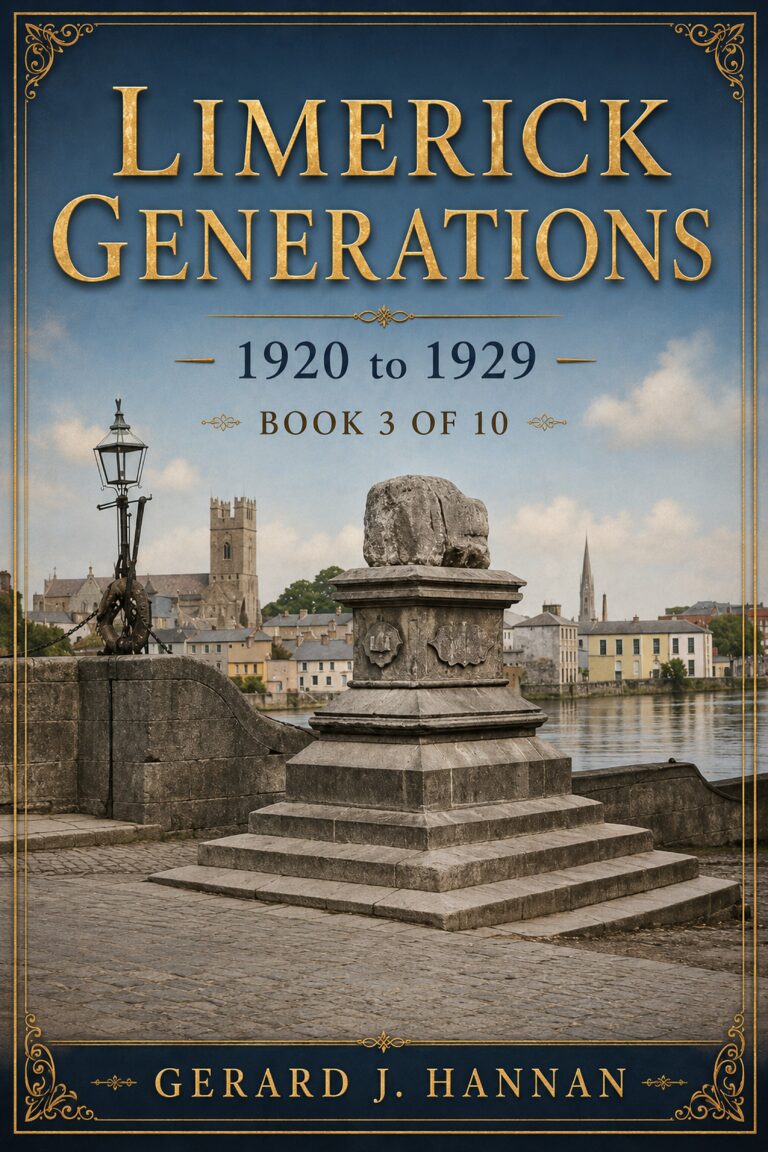
AI-assisted archival reconstruction showing the Treaty Stone on Thomond Bridge, Limerick, with the riverside castle buildings and historic bridge approach in the background. The scene presents the monument, cobbled roadway, bridge parapet, pedestrians, and horse-drawn traffic in a restored early twentieth-century setting, preserving the atmosphere of the original historical source image.
View Image