15 July 2026
Street Limerick
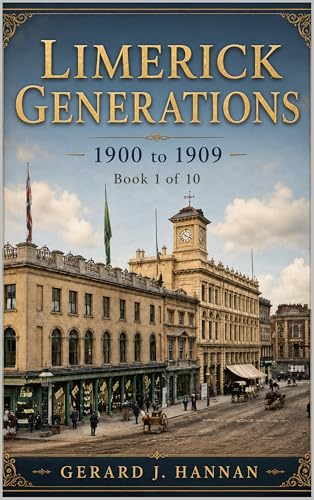
In 1900, George Street, now O’Connell Street, formed the commercial heart of Edwardian Limerick. Its broad thoroughfare was lined with elegant Georgian buildings, busy shops, hotels and offices, while horse-drawn carts, carriages and pedestrians filled the roadway. Street traders added colour and activity to the city’s principal avenue. Among its notable establishments were the Cruises Royal Hotel, MacMahon’s Temperance Hotel and respected merchants such as O’Mahony & Company. The street reflected Limerick’s growing prosperity at the opening of the twentieth century, combining refined architecture with energetic daily commerce and serving as a central meeting place for residents, visitors and travellers…
View Image31 July 2026
ODwyer Bridge
This rare 1932 photograph shows the newly completed Bishop O’Dwyer Bridge linking Limerick city with Corbally. Constructed between 1929 and 1931 at a cost of £21,308, the concrete structure replaced the older Park Bridge, which had served the district since 1798. It was named in honour of Dr Edward Thomas O’Dwyer, Bishop of Limerick from 1886 to 1917. The bridge represented a new era of engineering, transport and urban development, while maintaining a crossing essential to local life for generations. Nearly a century later, it remains a familiar landmark, practical route and enduring part of Limerick’s architectural and social history.
View Image14 July 2026
Castle Restored
This reconstructed view presents Glenduff Castle in County Limerick as it may have appeared before its destruction in 1922. The imposing residence combines the fortified character of an earlier seventeenth-century tower house with the Gothic Revival additions created for the Ievers family around 1840. Tall crenellated towers, pointed windows, battlements and a formal central entrance give the building a commanding presence. Set within carefully maintained lawns and mature woodland, the castle reflects the scale and confidence of a nineteenth-century Irish country estate. The image offers a plausible visual impression rather than a definitive record of its original appearance or grandeur.
View Image14 July 2026
Co Limerick
Elm Hill, County Limerick, was built around 1790 for the Studdert family as an elegant Georgian country residence. The six-bay, two-storey house stood over a raised basement and contained spacious reception rooms, nine bedrooms, servants’ quarters, kitchens, cellars and service rooms. Following the Great Famine, it was offered for sale and described as being in excellent repair. The property remained substantial for generations but gradually fell vacant and deteriorated. A 2008 architectural survey praised its limestone doorcase, carved timber entrance, slate-hung elevations, fireplaces and decorative plasterwork. Its recognised importance led to designation as a protected structure under Irish planning legislation.
View Image11 July 2026
Market Day
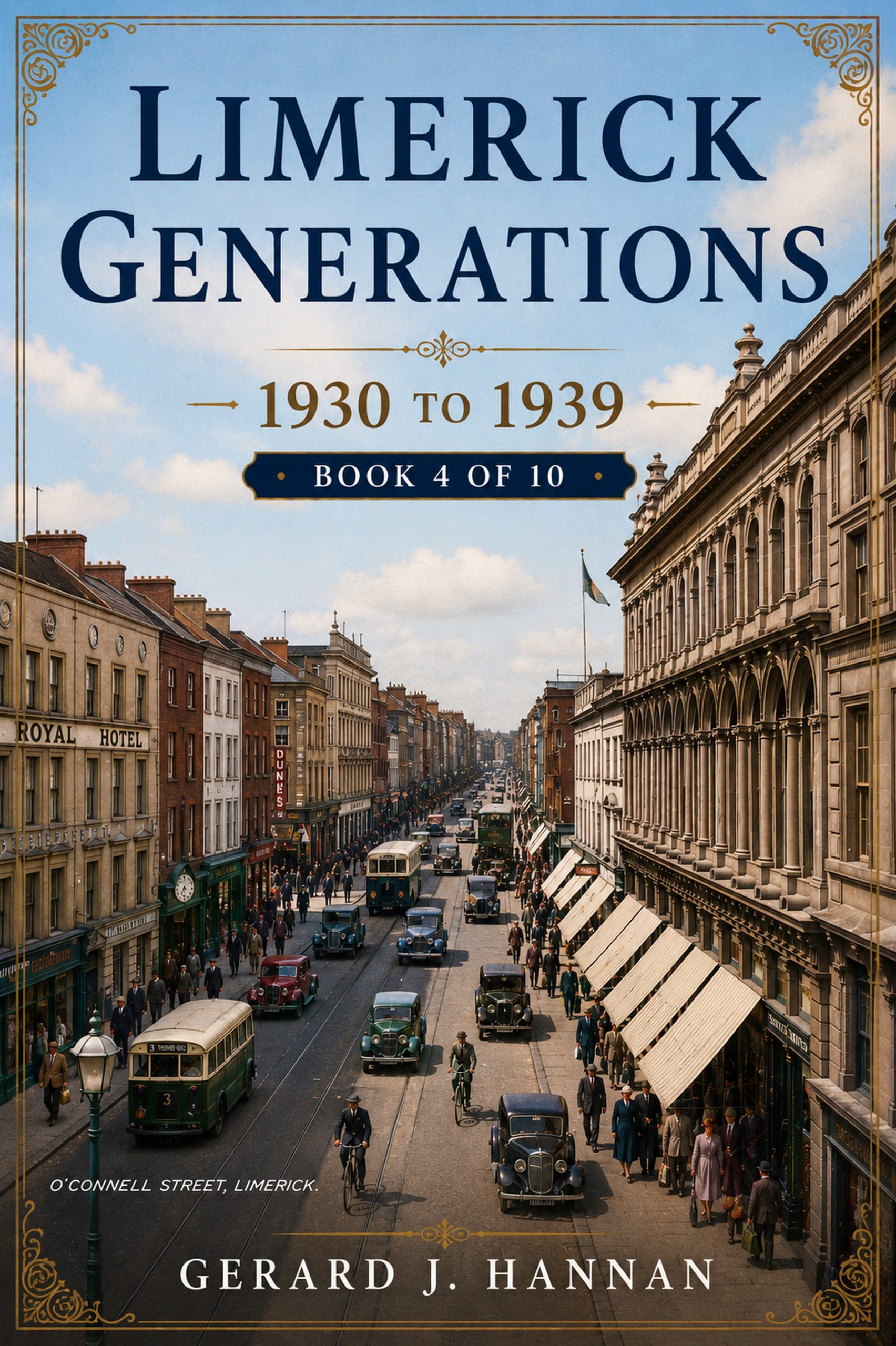
This photograph, dated 1 March 1937, captures a busy market day in Limerick city. Horse-drawn carts, traders, shoppers, and farmers crowd the wet street, creating a vivid picture of everyday commercial life. On the right, a man drives a horse and trap, a form of transport commonly associated with more prosperous Irish farmers. Market goods are displayed on carts and stalls, while pedestrians move between the buildings lining the street. The scene records the importance of markets to Limerick’s economy, bringing rural producers and urban customers together during a period when horses remained central to transport and trade throughout Ireland.
View Image10 July 2026
Industry Memory
A hazy bird’s-eye view of Limerick in the 1920s stretches across rooftops, chimneys, lanes, and terraces fading into mist. Smoke rises from houses and workshops, softening the city skyline and giving the scene a wintery industrial atmosphere. A tall church spire dominates the distance, standing above packed streets and modest dwellings, while long rows of buildings suggest dense urban life along the Shannon. The elevated perspective captures Limerick as a working city of faith, labour, and close-knit neighbourhoods. Though blurred by age and weather, the photograph preserves a rare panoramic impression of everyday Limerick between war, industry, and memory.
View Image16 July 2026
Monasteranenagh Abbey
Founded in 1148 by Toirdelbhach mac Diarmaida Ua Briain, Monasteranenagh Abbey became one of County Limerick’s most important Cistercian foundations. This reconstruction imagines the monastery during its earliest years, with newly completed stone buildings, steep roofs, narrow lancet windows, timber doors, and monks moving quietly through the surrounding grounds. The austere architecture reflects the Cistercian ideals of simplicity, discipline, prayer, and communal labour. Supported by the O’Brien dynasty, the abbey later expanded under Domnall Mór Ua Briain. Though centuries of conflict and collapse reduced it to ruins, its surviving walls remain a powerful monument to medieval Irish faith and craftsmanship.
View Image3 August 2026
Origin Jpeg
Barringtons Hospital, overlooking George’s Quay in Limerick, was founded in 1829 by Sir Joseph Barrington and his sons to provide free medical care to the poor, regardless of background or religion. Designed by architect Frederick Darley, the imposing Georgian building featured a raised podium, arcaded portico and commanding riverside presence. It opened to patients on 5 November 1831 and served generations as a charitable public infirmary. After closing as a state hospital in 1988, the landmark was purchased by surgeon Paul O’Byrne in 1991, restored and reopened as a modern private acute hospital serving Limerick and the wider Mid-West region.
View Image3 August 2026
Treaty Childhood
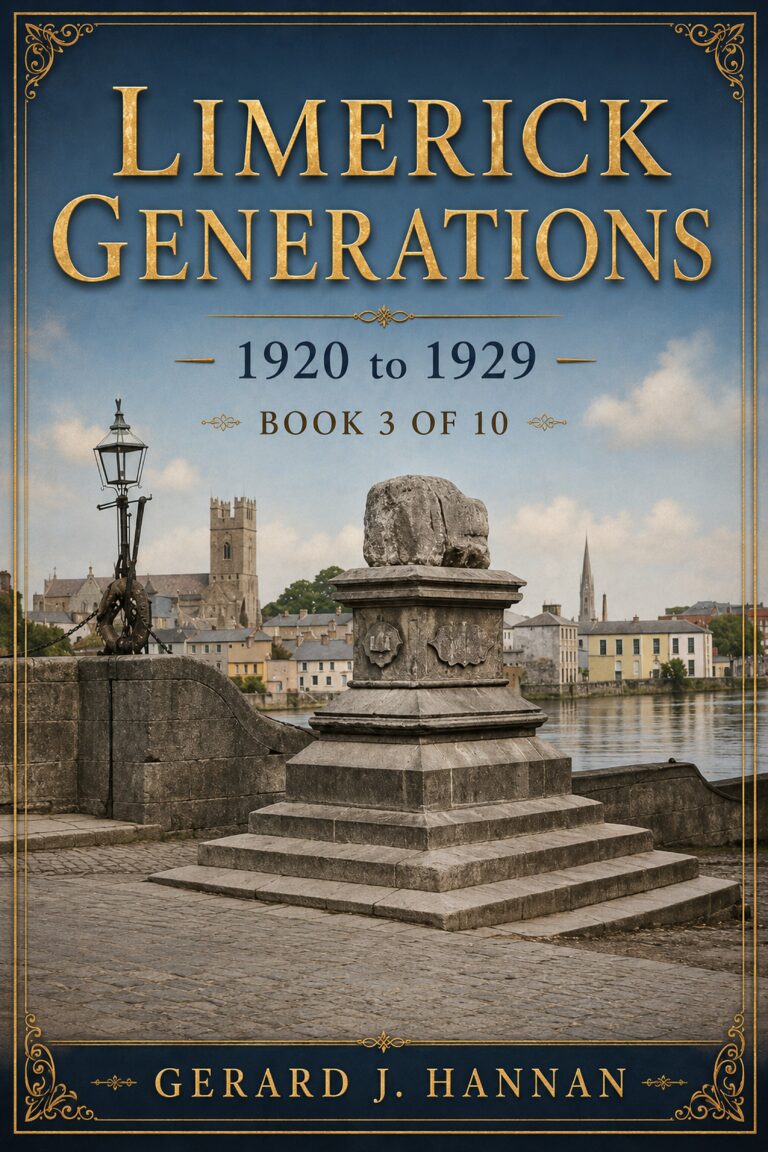
During the 1940s, children gathered around the Treaty Stone, transforming one of Limerick’s most historic landmarks into an informal playground. Perched above the River Shannon near Thomond Bridge, the stone was already deeply associated with the signing of the Treaty of Limerick in 1691. For local youngsters, however, it was also part of their everyday neighbourhood, a familiar place for games, conversation and adventure. Their presence captures a gentler side of city life during a difficult decade, showing how history and childhood naturally shared the same streets. The scene preserves a lively memory of community life beside the Shannon waterfront.
View Image