13 July 2026
George Street
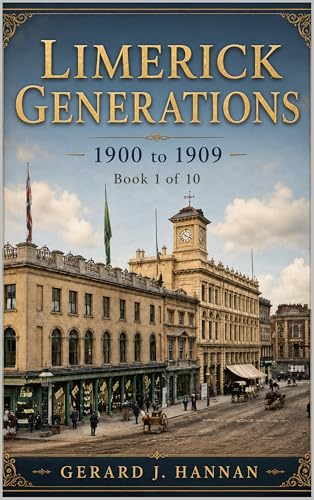
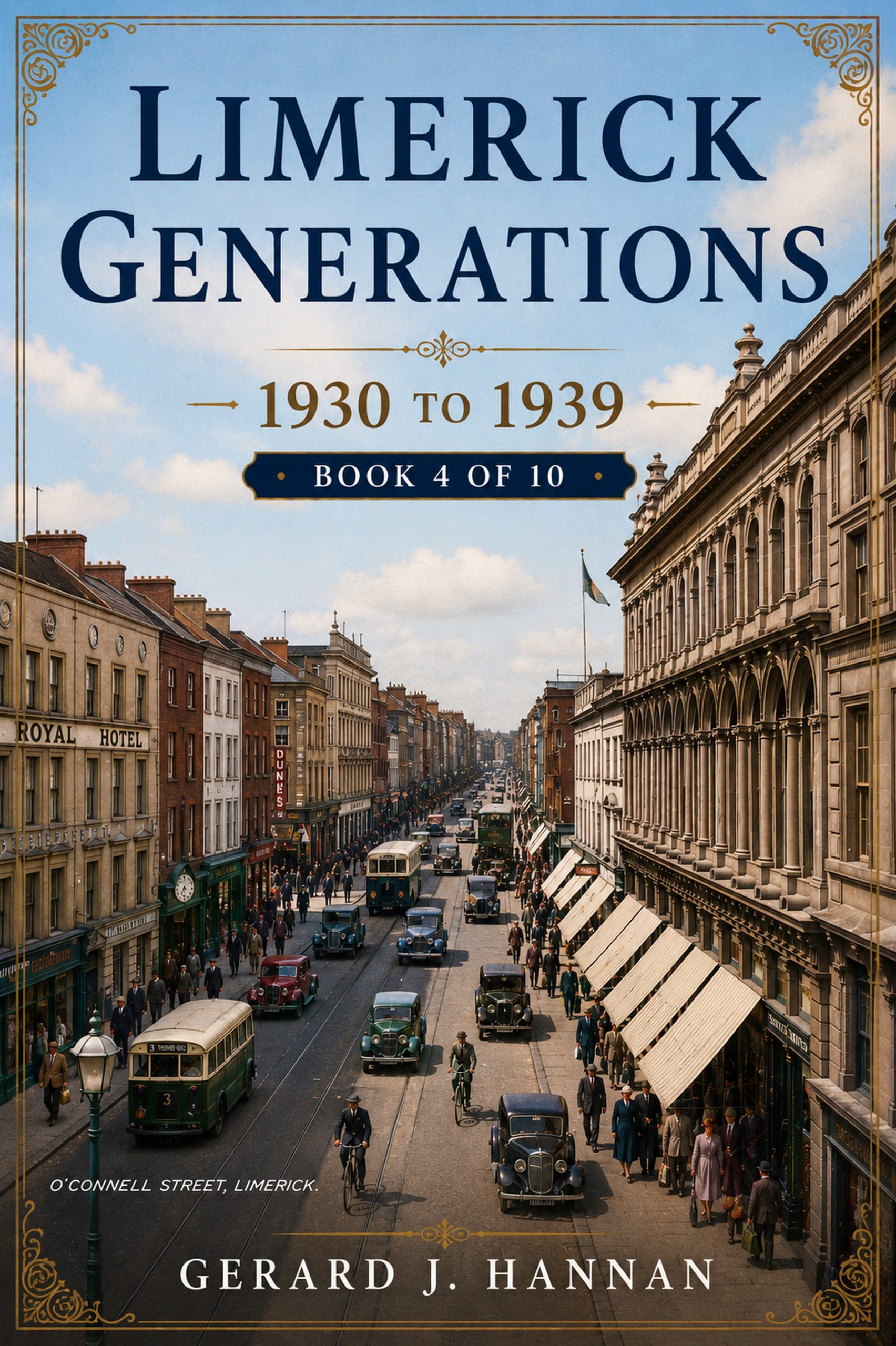
George Street, now O’Connell Street, formed the bustling commercial and social heart of Limerick around 1900. Elegant Georgian and Victorian façades lined the thoroughfare, their ornate shopfronts illuminated by gaslight and filled with goods for local shoppers. Horse-drawn carriages, jaunting cars and merchant carts crowded the roadway, while pedestrians in heavy coats and hats moved between businesses and hotels. The grand Cruises Royal Hotel stood among the street’s most prominent landmarks, welcoming merchants, travellers and visitors. This scene reflects the energy of late-Victorian Limerick before motor traffic transformed the city’s principal shopping street and historic urban centre during a changing…
View Image14 July 2026
Glenduff Castle
This reconstructed view presents Glenduff Castle in County Limerick as it may have appeared before its destruction in 1922. The imposing residence combines the fortified character of an earlier seventeenth-century tower house with the Gothic Revival additions created for the Ievers family around 1840. Tall crenellated towers, pointed windows, battlements and a formal central entrance give the building a commanding presence. Set within carefully maintained lawns and mature woodland, the castle reflects the scale and confidence of a nineteenth-century Irish country estate. The image offers a plausible visual impression rather than a definitive record of its original appearance or grandeur.
View Image14 July 2026
Shannon Bridge
Shannon Bridge, opened on 30 May 1988, remains widely known in Limerick as the “New Bridge”, despite now being several decades old. This four-lane concrete girder crossing connects the Dock Road and Mallow Street area with the North Circular Road and Clancy Strand, providing an important inner-city relief route across the River Shannon. Soon after opening, it acquired another memorable nickname, the “Whistling Bridge”. Strong winds travelling up the Shannon Estuary passed through gaps in the original railings, producing a loud, eerie shrill sound. The problem was later reduced by fitting mesh grilles over the railings along the exposed crossing.
View Image10 July 2026
Barricades Limerick
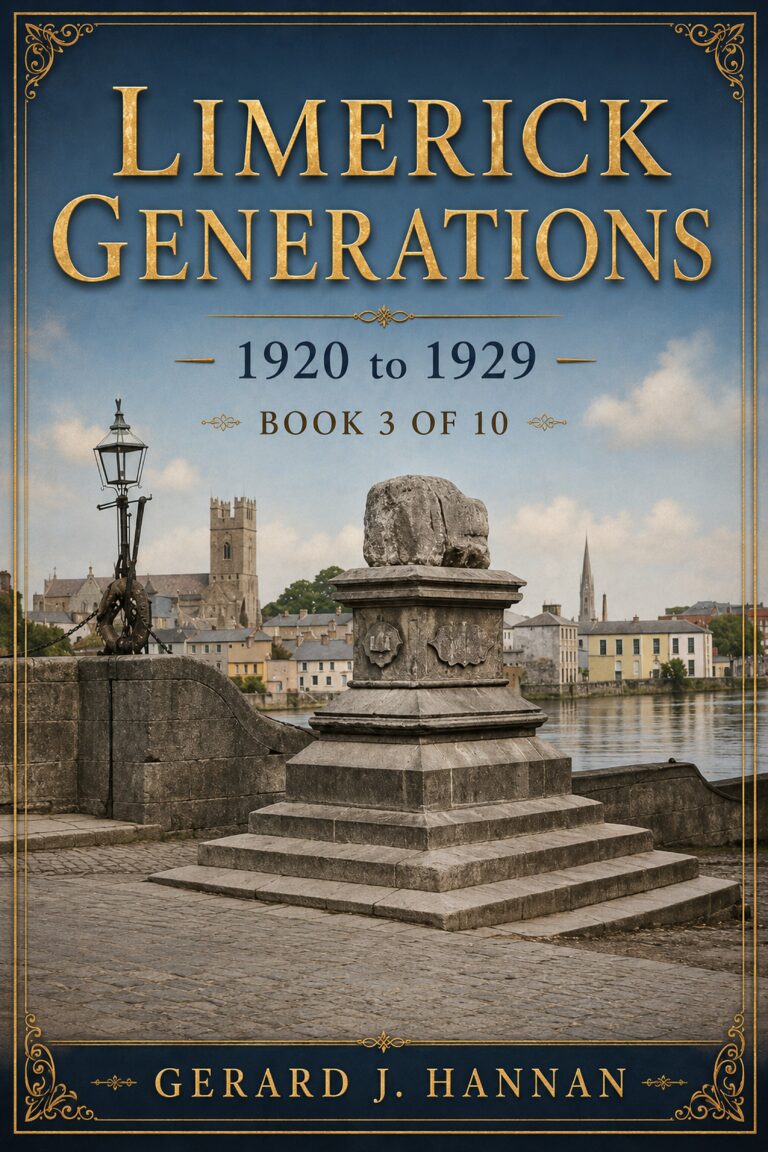
At Thomond Bridge in Limerick in 1923, a soldier stands guard beside a rough barricade near the Treaty Stone, a symbolic landmark now overshadowed by civil conflict. The scene evokes the tense aftermath of the Treaty split, when Anti-Treaty IRA forces and pro-Treaty National Army troops fought for control of the city. Sandbags, timber, stone, and street debris suggest hurried urban fortification, while the soldier’s watchful posture conveys danger and uncertainty. The bridge becomes both military checkpoint and historic threshold, linking Limerick’s medieval memory with the bitter street warfare that marked the Irish Civil War in the city that summer.
View Image14 July 2026
OConnell Street
By 1937, O'Connell Street stood as Limerick's principal commercial thoroughfare, its Victorian and Georgian frontages housing chemists, drapers, and grocers that served the city's daily life. Ireland was still finding its footing after the Economic War with Britain, which had strained trade and agriculture through much of the decade, while the country prepared to adopt a new Constitution that same year. Horse-drawn jaunting cars remained a familiar sight on Limerick's streets even as motor vehicles grew more common, reflecting a city balancing older rhythms of trade and transport with the slow arrival of modern urban life in provincial Ireland.
View Image17 July 2026
Through Ages
Shanagolden, whose Irish name Seanghualainn means “old shoulder,” possesses a history stretching from early medieval warfare to plantation settlement and modern political struggle. Nearby lands witnessed Mahon’s victory over Norse forces in 968, while Shanid Castle later became a major FitzGerald stronghold. St Katherine’s Abbey reflects the district’s medieval religious heritage. Following the Desmond conflicts, the village was reshaped as an Elizabethan plantation settlement, leaving its broad street, square and central green. During the nineteenth century, policing, trade, farming and creamery production shaped local life. Shanagolden also played a remembered role during Ireland’s War of Independence in the twentieth century.
View Image16 July 2026
Horse Brake
By 1900, Limerick’s great long-distance stagecoach era had largely disappeared, replaced by the expanding railway network. Horse-drawn vehicles nevertheless remained essential throughout the city and surrounding countryside. Large brakes and passenger wagons carried groups on local journeys, outings and transfers, while hackney cars, jaunting cars, drays and private carriages crowded the streets. Horses also transported goods from the docks, breweries, distilleries and railway station. This reconstructed scene captures a group of formally dressed men aboard a substantial horse-drawn vehicle, reflecting a transitional age when steam powered intercity travel, but horses still firmly supported Limerick’s everyday commercial, urban and social life.
View Image16 July 2026
Mary Street
Dutch Billy houses were once a distinctive feature of Limerick’s Englishtown and Irishtown districts. Characterised by narrow brick façades, steeply pitched gables and tall windows, the style developed in Irish towns during the late seventeenth and early eighteenth centuries. Many examples survived along Mary Street into the early twentieth century, preserving the appearance of Limerick’s merchant quarters. Their name is traditionally associated with King William III, although the term was applied broadly to gabled urban houses of the period. By around 1900, these buildings stood as reminders of the city’s commercial growth, architectural character and changing streetscape across previous centuries.
View Image10 July 2026
Boat Club
Athlunkard Boat Club was founded in 1898, taking its name from its home beside O’Dwyer Bridge at the end of Athlunkard Street. By the 1930s, the club was already firmly woven into Limerick’s rowing tradition, with a proud record on the water. Its greatest distinction came through the Senior Eight Championship, which Athlunkard won twice, in 1913 and 1923. That achievement made it the only Limerick club to secure the title on two occasions. Its riverside presence and competitive success gave Athlunkard Boat Club a lasting place in the sporting history of the city and the wider Shannon rowing community.
View Image12 July 2026
Police Cabin
Around 1880, the interior of a police cabin at Gurranmore, near Pallas in County Limerick, reveals the modest conditions in which rural constables lived and worked. The small room is sparsely furnished, with simple wooden fittings, basic household utensils and few comforts. Uniformed officers occupy the cramped space, suggesting that the cabin served as both workplace and living quarters. Published in The Graphic in 1880, the image offers a rare glimpse of everyday policing in nineteenth-century Ireland. It preserves not only the appearance of the station, but also the disciplined, isolated life experienced by men posted in rural communities nearby.
View Image