-
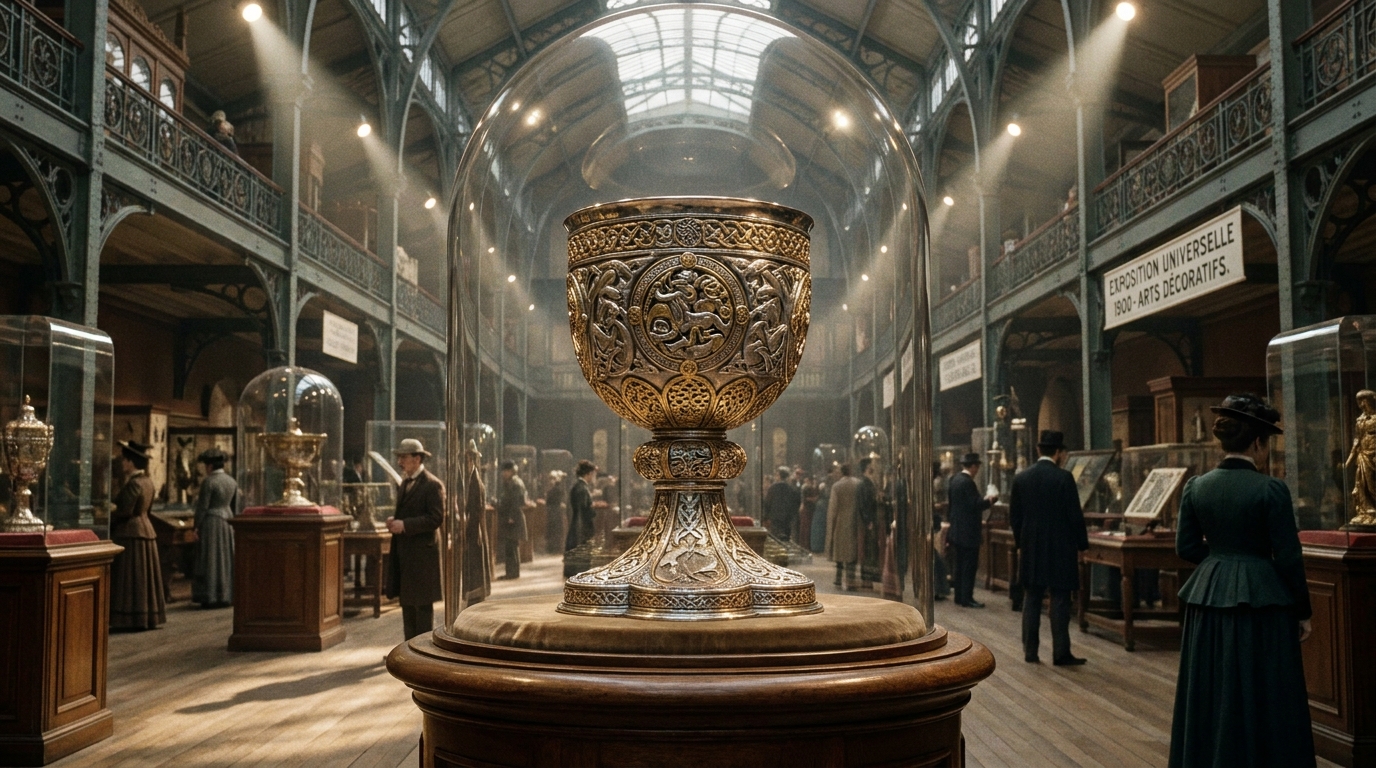
Chalice Replica
Read Article: Chalice ReplicaAn elaborate reproduction of the Ardagh Chalice, rather than the original early medieval vessel, brought County Limerick’s artistic inheritance before the public in April 1900. The copy formed part of a collection assembled by the Goldsmiths’ and Silversmiths’ Company for the Exposition Universelle in Paris and was shown at the firm’s London premises before travelling to France. Contemporary coverage therefore does not support the claim that the object received a preliminary display in Limerick. Its relevance to the county remained unmistakable, however, because the celebrated original had been discovered at Reerasta, near Ardagh, in 1868.
The original chalice had been concealed beneath a stone within an earthen fort and recovered alongside a smaller bronze cup and four ornate brooches. Fashioned principally from silver and enriched with gold, gilt metal, glass, amber and intricate decorative work, it represented one of the finest survivals of early Irish ecclesiastical craftsmanship. Scholars have generally dated it to about the eighth century and associated its form with the celebration of the Eucharist. Its discovery transformed an ordinary County Limerick field into the source of an object recognised as internationally important to the study of early medieval Irish art.
By 1900 the original chalice had passed into the national collection in Dublin, while carefully made reproductions allowed its design to reach audiences elsewhere. The Goldsmiths’ and Silversmiths’ Company included such a copy among the silverwork and jewellery prepared for Paris. A contemporary account in The Art Journal described the “Ardagh Cup” as a reproduction of the ancient object and drew attention to its Irish origin. Visitors examining the London preview were therefore seeing modern craftsmanship based closely upon an archaeological treasure, not the fragile original removed temporarily from its museum display.
The Paris Exposition opened on 14 April 1900 and continued until 12 November, attracting millions of visitors to displays of industry, technology, design and fine craftsmanship. Within that immense spectacle, the Ardagh reproduction connected modern silver manufacture with the artistic achievements of early Ireland. Its interlaced ornament, carefully modelled handles and richly decorated surfaces belonged to a wider Celtic Revival that had made medieval Irish forms increasingly influential in jewellery and decorative art. The replica presented County Limerick’s archaeological inheritance not as a provincial curiosity, but as a source from which contemporary craftsmen could draw international inspiration.For Limerick people, the episode offered legitimate pride, though the surviving evidence requires the story to be stated accurately. The object exhibited before departure was a modern reproduction, and the preliminary viewing took place in London rather than locally. Nevertheless, the design carried the identity of Ardagh and County Limerick into one of the largest international exhibitions yet organised. Amid displays celebrating modern progress, the chalice demonstrated that Irish artistic accomplishment possessed a history extending far beyond the nineteenth century, while its reproduction helped make that achievement visible to audiences who might never encounter the original in Dublin.
- The Art Journal, “The Paris Exhibition, 1900,” London: Virtue and Company, 1900, pp. 187–188.
- National Museum of Ireland, collection record AC 53, The Ardagh Chalice, found at Reerasta Rath, near Ardagh, County Limerick.
- Royal Irish Academy, “History of the Academy,” account of the Academy’s antiquities collection and its transfer to the National Museum of Ireland in 1890.
- Bureau International des Expositions, “Expo 1900 Paris,” official historical record of the Exposition Universelle, 14 April–12 November 1900.
-
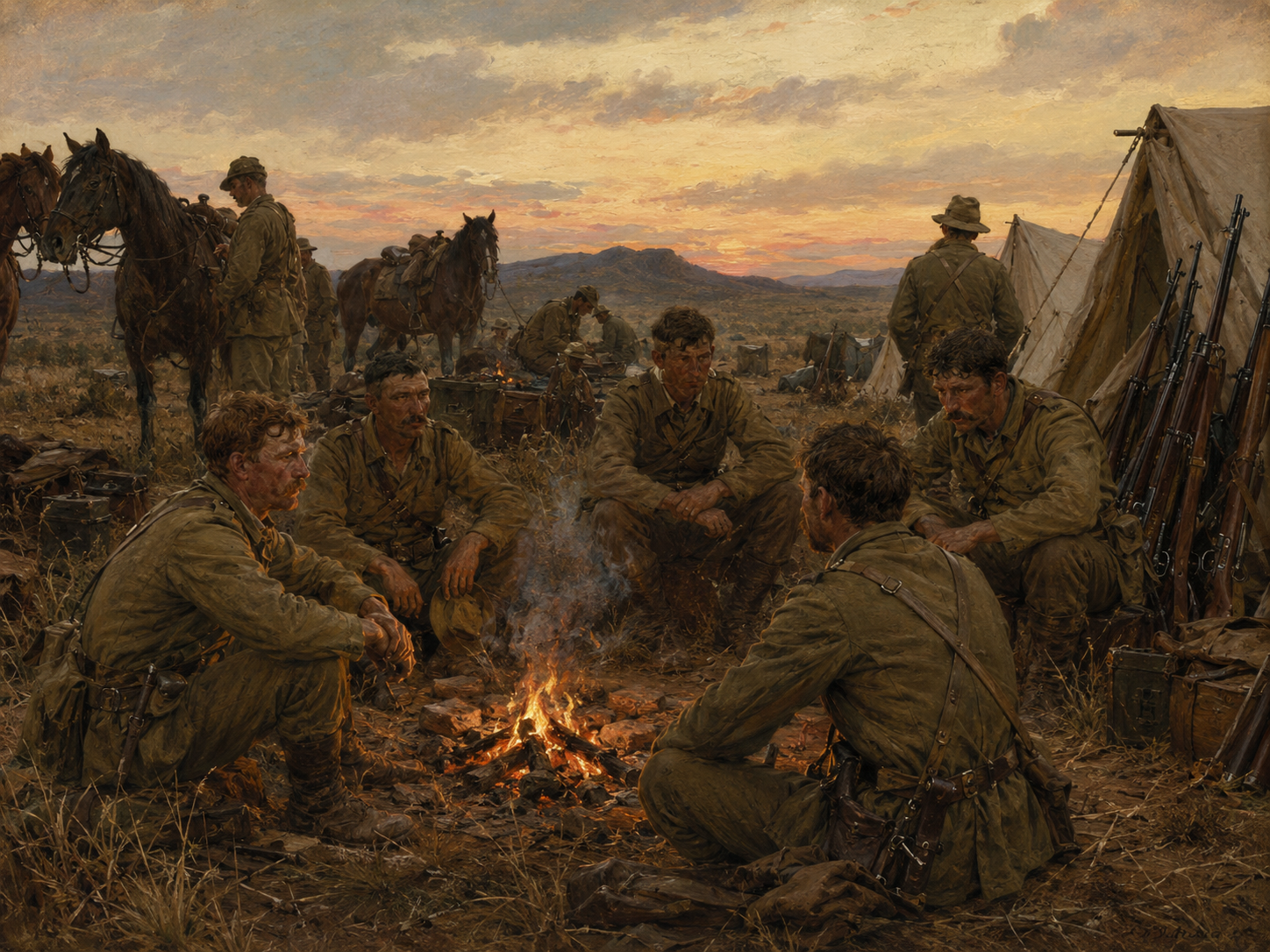
Yeomanry Depart
Read Article: Yeomanry DepartReports from Cape Town in early March 1900 carried the movement of the Leicestershire Yeomanry into Limerick homes already preoccupied with the South African War. The 7th (Leicestershire) Company of the 4th Battalion, Imperial Yeomanry, had reached the Cape near the end of February and was ordered inland with its battalion on 4 March. Although this county contingent had not been recruited in Limerick, its departure held local meaning because the Royal Munster Fusiliers drew heavily from Limerick city and county, while their 1st Battalion was already serving in South Africa.
The Imperial Yeomanry had been created by Royal Warrant on 24 December 1899 after severe British reverses demonstrated the need for additional mounted troops. Existing yeomanry regiments were invited to provide volunteer service companies for overseas duty, a departure from their traditional home-defence role. The Leicestershire contingent became the 7th Company and joined the 4th Battalion under Colonel F. G. Blair of the Leicestershire Yeomanry. Its men were intended to operate as mounted infantry, travelling on horseback but ordinarily dismounting to fight with rifles rather than charging as conventional cavalry.
After arriving at Cape Town on 26 February, the Leicestershire men passed through the military organisation surrounding the port and nearby Maitland Camp. Horses, saddlery, ammunition, personal equipment and transport arrangements had to be assembled before the contingent could move towards the interior. On 4 March the battalion was directed towards Naauwpoort, an important railway and military position in the northern Cape Colony. The departure therefore marked the end of the volunteers’ ocean journey and the beginning of active campaigning, where distances, difficult ground, sickness and uncertain intelligence could prove as dangerous as direct encounters with Boer commandos.
In Limerick, the news carried a political tension extending far beyond the fortunes of one English county unit. Irishmen served throughout the British forces, and military families depended upon irregular newspaper reports and official messages for information. At the same time, many Irish nationalists sympathised with the Boer republics and viewed the conflict as an imperial struggle against smaller communities defending their independence. No distinct Limerick participation in the Leicestershire company has been established, but its movement illustrated the machinery of a war that directly involved regiments, recruits and households connected with the city and county.
The volunteers leaving Cape Town could not know the character or duration of the service ahead. The 4th Battalion would later join Lieutenant-General Sir Leslie Rundle’s operations in the Orange Free State, undertaking reconnaissance, escort and mounted-infantry duties across a demanding landscape. In March 1900, however, the immediate story was one of departure: men and horses moving away from the comparative security of the Cape towards an expanding campaign. For Limerick readers, such reports joined distant military movements to familiar anxieties about absence, loyalty, survival and the uncertain fate of Irishmen already serving under the same imperial command.
- War Office, Royal Warrant establishing the Imperial Yeomanry for active service in South Africa, 24 December 1899.
- The National Archives, Kew, WO 128, War Office: Imperial Yeomanry, Soldiers’ Documents, South African War, 1899–1902; records relating to the 7th (Leicestershire) Company, 4th Battalion.
- L. S. Amery, ed., The Times History of the War in South Africa, 1899–1902, vol. III, London: Sampson Low, Marston and Company, 1905.
- Louis Creswicke, South Africa and the Transvaal War, vol. III, Edinburgh and New York: T. C. and E. C. Jack, 1900.
- Donal P. McCracken, Forgotten Protest: Ireland and the Anglo-Boer War, Belfast: Ulster Historical Foundation, 2003.
- Stephen Griffin, The Royal Munster Fusiliers 1881–1922, online exhibition commissioned by Limerick Museum, Limerick City and County Council, 2023.
-
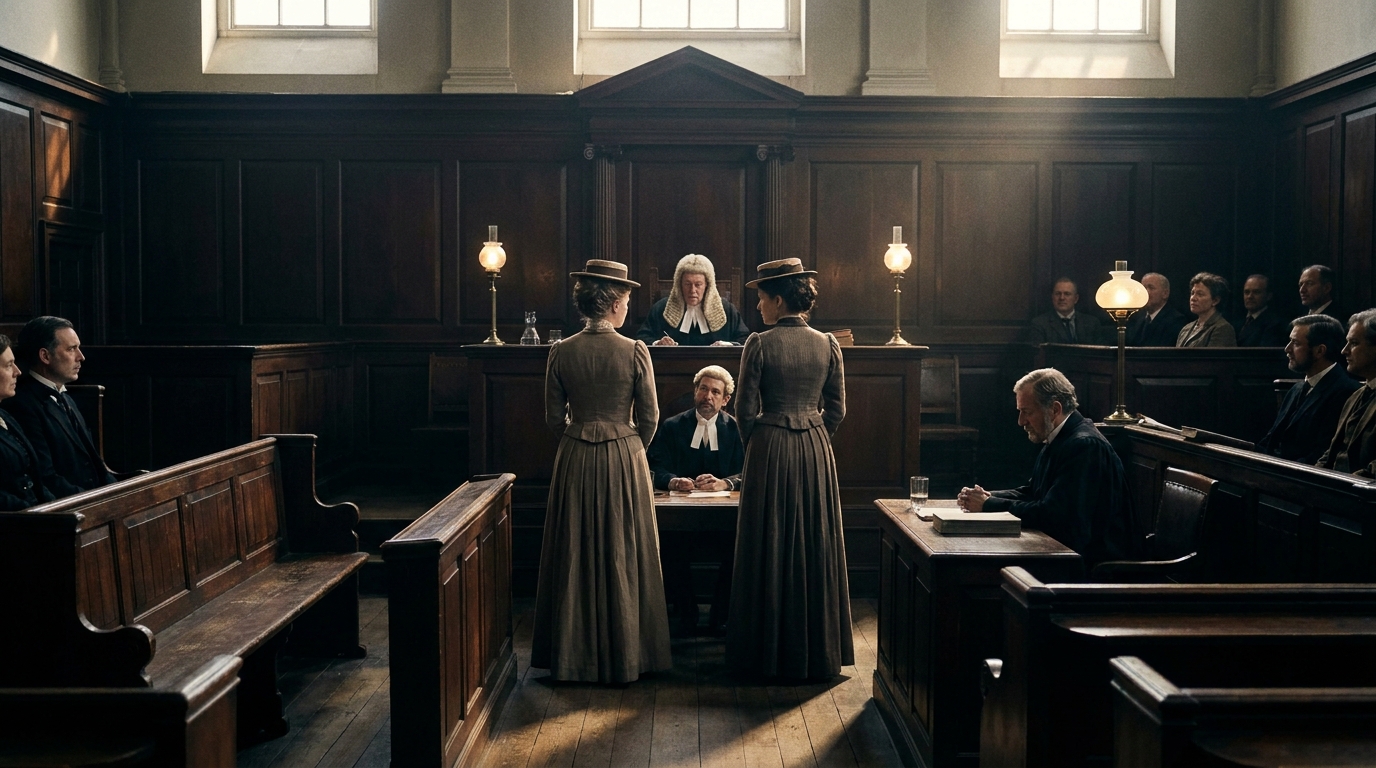
Tenancy Dispute
Read Article: Tenancy DisputeA tenancy dispute involving a Limerick woman came before Cheltenham County Court in March 1900, revealing the uncertainty that could accompany rented accommodation far from home. The proceedings concerned Mrs J. Lestbah and Mrs J. M. Harnett, whose disagreement arose from the letting of two rooms at 2 Queen’s Parade. The tenancy had begun in September 1899, several months before the hearing. For Limerick people living in Britain, such cases formed part of the less visible experience of migration, in which securing rooms, meeting rent and establishing responsibility could become matters for formal legal judgement.
Mrs Lestbah brought the action against Mrs Harnett following a disagreement over rent and the conditions under which the rooms had been occupied. The surviving account indicates that the women differed over the tenancy, the period of occupation and the financial responsibility arising from it. What may initially have appeared to be a straightforward arrangement between landlady and tenant therefore became a contested civil claim. The address at Queen’s Parade was central to the proceedings, as the court considered what had been agreed when Mrs Harnett entered the accommodation and what obligations remained after the relationship between the parties deteriorated.
The hearing was concerned not with serious crime but with the practical details of domestic life: rooms, payment, possession and responsibility. Such disputes could be difficult to resolve when agreements depended upon conversation, personal understanding or incomplete records. Each woman had reason to present the arrangement differently, and the county court was required to consider their competing accounts. The case demonstrates how even a modest tenancy could produce considerable uncertainty when the parties disagreed about what had been promised, when occupation had ended or whether rent remained due. Legal proceedings offered a remedy, but also imposed expense, anxiety and public exposure.
For Irish people living in English towns, rented rooms often provided the first foundation of life away from home. Their security could depend upon regular earnings, personal references and the willingness of property owners to accept them. The Cheltenham dispute should not be treated as evidence of a wider hostility towards Irish tenants, since the surviving report concerns a particular disagreement between two women. It nevertheless records the vulnerability of those whose homes rested upon private arrangements that could quickly become contested. A disagreement over two rooms was capable of threatening both financial security and personal reputation.
Though modest beside the major political and military events reported in March 1900, the case preserves an instructive fragment of ordinary social history. Mrs Lestbah and Mrs Harnett entered the public record because a private arrangement concerning accommodation could no longer be settled privately. Their dispute reveals the importance of rent, clear terms and secure possession in the lives of women managing households at the beginning of the twentieth century. For Limerick Archives, the hearing also records how local lives extended beyond Ireland, carrying questions of work, housing and legal protection into the courts of English towns.
- Cheltenham Chronicle, Saturday, 17 March 1900, report of the Cheltenham County Court proceedings involving Mrs J. Lestbah and Mrs J. M. Harnett.
- Cheltenham Annuaire and County Directory for 1899, Cheltenham street guide and public-office directory; Edward Davies, Office of The Cheltenham Looker-On, Cheltenham, 1899.
- County Courts Act 1888, 51 & 52 Victoria, chapter 43.
-
Divided Welcome
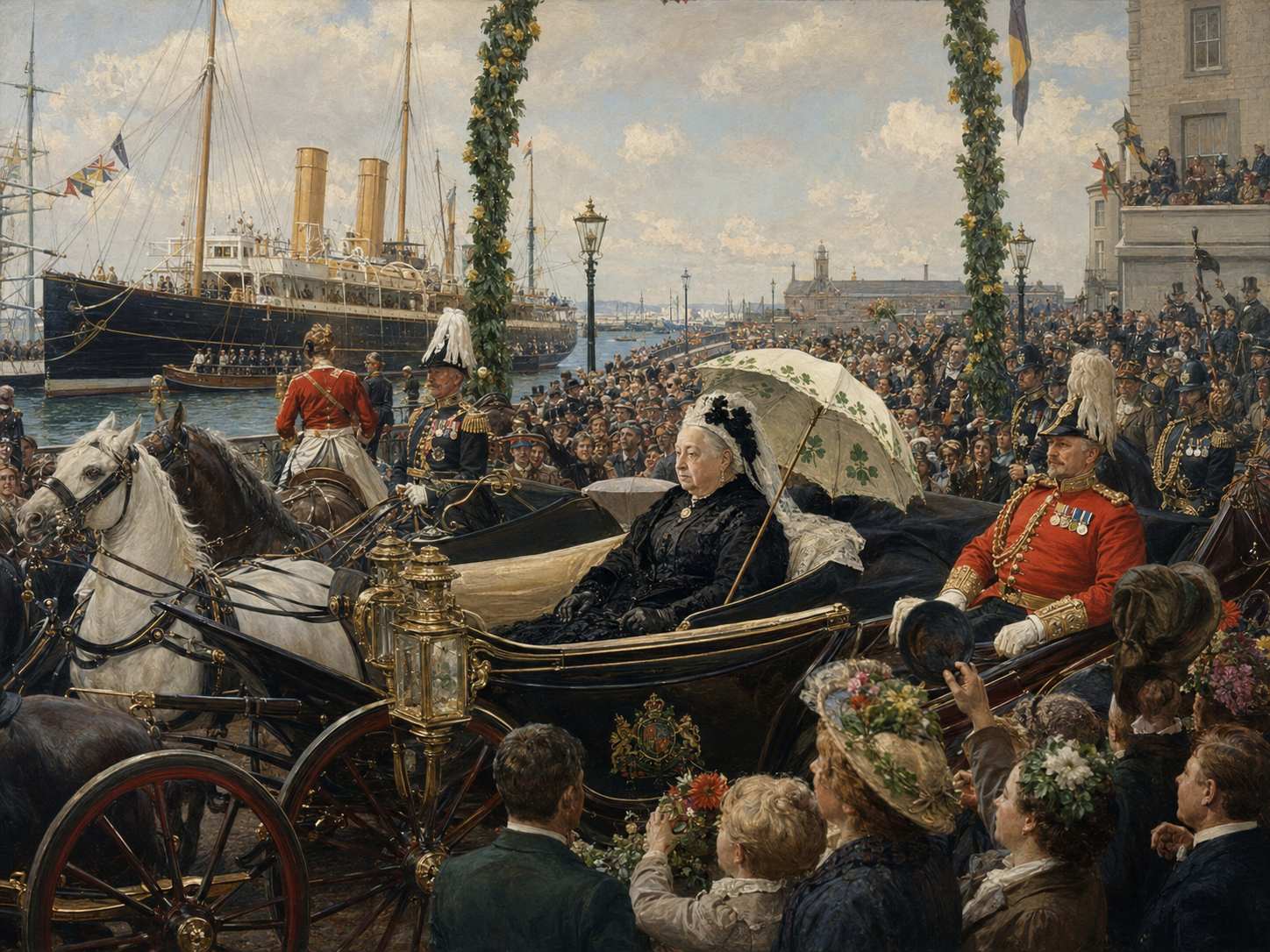
Read Article: Divided WelcomeQueen Victoria’s final visit to Ireland in April 1900 became a matter of immediate political argument in Limerick before the royal party entered Dublin. Patrick Fidelis Kavanagh, a Franciscan friar and president of the Limerick Young Ireland Society, received a circular from the county’s High Sheriff inviting him to a meeting intended to organise an address of welcome. Kavanagh declined and sent a lengthy reply attacking both British rule and the South African War. His refusal provides direct evidence that the proposed civic greeting was not a simple expression of shared enthusiasm, but an occasion on which Limerick’s competing loyalties were sharply exposed.
Victoria landed at Kingstown on 4 April and began the nine-mile journey to the Vice-Regal Lodge in Phoenix Park in an open carriage. The route passed through decorated streets and beneath a temporary triumphal arch at Leeson Street, while soldiers, police, civic officials and large crowds formed the public setting for the procession. Shamrocks appeared prominently in the Queen’s dress and in the ceremonies surrounding her arrival, giving the royal spectacle an intentionally Irish character. To supporters of the visit, such gestures represented recognition of Ireland within the monarchy; to critics, they could not erase the constitutional grievances and coercive legislation associated with Victoria’s long reign.
The timing made the visit especially contentious. Britain was fighting the South African War, and Irish regiments were serving in the imperial forces while nationalist sympathy for the Boer republics was widespread. Kavanagh argued that the royal journey was connected with efforts to encourage Irish enlistment, a charge frequently made by advanced nationalists. The visit’s defenders could point instead to the Queen’s acknowledgement of Irish soldiers and to the ceremonial attention given to the country. These rival interpretations turned apparently harmless decorations, addresses and cheering crowds into political signs, read either as evidence of loyalty or as an attempt to strengthen imperial authority during an unpopular conflict.
In Limerick, the surviving correspondence reveals opposition but does not establish that Kavanagh spoke for the whole city or county. The High Sheriff’s attempt to gather supporters for an address demonstrates that an organised loyal response also existed, even though the available account does not identify everyone involved or record the meeting’s outcome. Reports of the Dublin ceremonies nevertheless carried the dispute beyond the capital, allowing readers to compare the official pageantry with nationalist objections. The same shamrocks, uniforms and civic formalities could therefore produce very different meanings in households, clubs and political circles already divided over Home Rule, the monarchy and Ireland’s place within the United Kingdom.
The visit lasted through much of April and became one of the final great public ceremonies of Victoria’s reign. Its importance lay not merely in the sight of an elderly monarch travelling through Dublin, but in the arguments the occasion brought into public view. Royal organisers presented Ireland as welcomed and recognised within the empire, while opponents insisted that ceremony could not substitute for political self-government or justify war abroad. Limerick’s proposed address and Kavanagh’s refusal captured that contradiction with unusual clarity. The episode showed how a royal visit could celebrate Irish symbols while deepening disagreement over who possessed the right to define Irish loyalty, identity and national interest.
- Queen Victoria, Journal, 4 April 1900, Royal Archives, Windsor Castle.
- British Pathé, Queen Victoria in Dublin 1900, silent newsreel, 4 April 1900, Irish Film Institute Archive Player, duration 1 minute 48 seconds.
- The Advocate (Melbourne), 19 May 1900, p. 1, letter from Patrick Fidelis Kavanagh to the High Sheriff of Limerick concerning the proposed address of welcome.
- Michael J. F. McCarthy, Five Years in Ireland, 1895–1900 (London: Simpkin, Marshall, Hamilton, Kent & Co.; Dublin: Hodges, Figgis & Co., 1901), chapter XXXII, “Narrative of Queen Victoria’s Visit to Ireland in 1900.”
- Colin Fowler, “‘Firebrand Friar’—Patrick Fidelis Kavanagh OSF (1838–1918),” Journal of the Australian Catholic Historical Society 41 (2020): 6–18.
- Senia Pašeta, “Nationalist Responses to Two Royal Visits to Ireland, 1900 and 1903,” Irish Historical Studies 31, no. 124 (November 1999): 488–504.
- Donal P. McCracken, Forgotten Protest: Ireland and the Anglo-Boer War (Belfast: Ulster Historical Foundation, 2003).
-
Shamrock Resolve
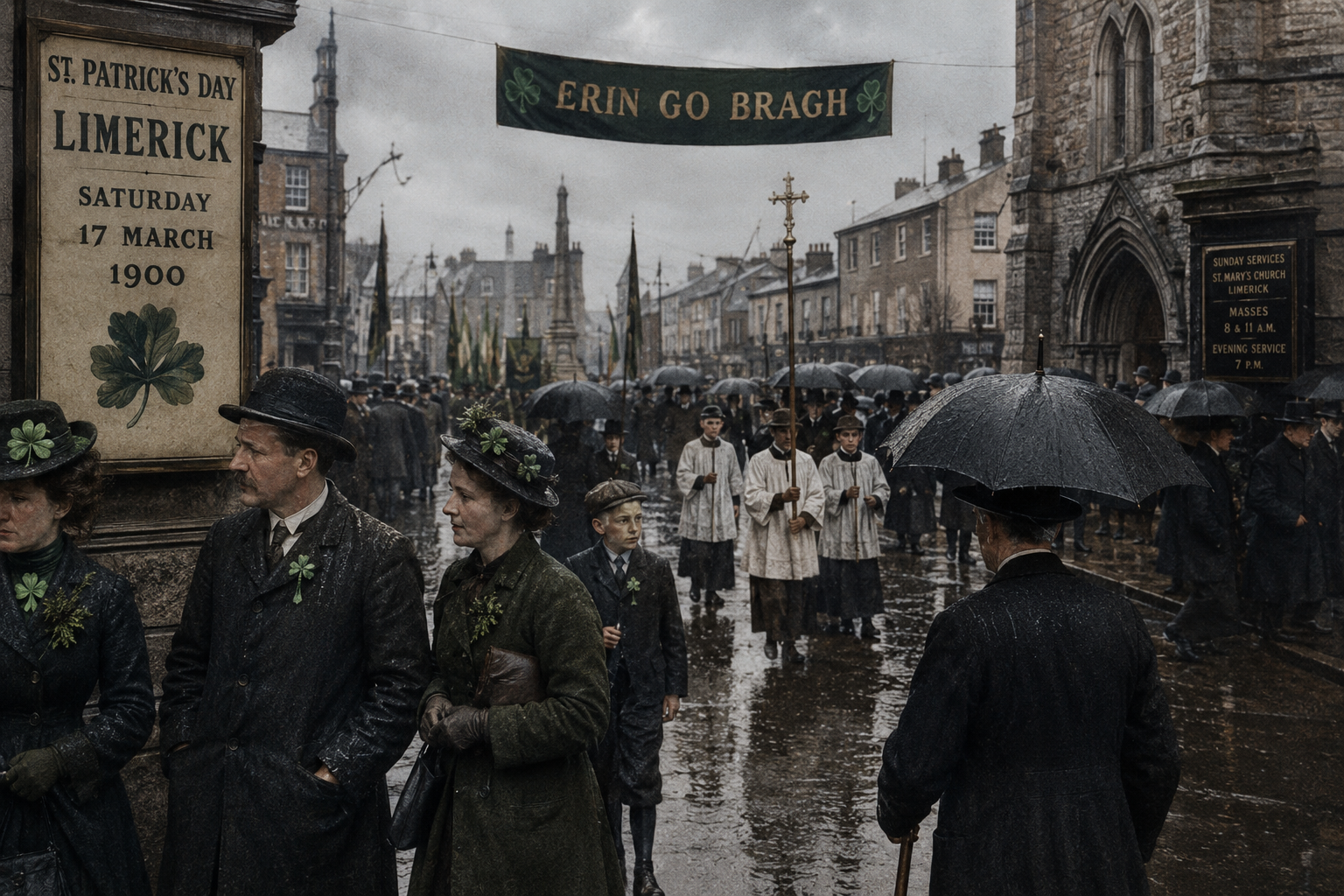
Read Article: Shamrock ResolveLimerick observed St Patrick’s Day on Saturday, 17 March 1900, beneath dark skies, persistent rain and an unwelcome chill. The difficult weather reduced the comfort of those moving through the city but did not erase the feast from public life. Residents attended religious services, wore shamrock and gathered wherever music, companionship and shelter could be found. The occasion belonged less to the organised civic spectacle familiar in later generations than to churches, families, neighbourhoods and voluntary associations. Its importance lay in the determination to honour Ireland’s patron saint despite conditions that might otherwise have emptied the streets.
Religious observance remained central to the day. Congregations entered Limerick’s churches in wet coats and heavy footwear, carrying the feast into buildings where prayers, sermons and sacred music gave order to an otherwise bleak Saturday. Shamrock appeared on lapels and hats as a familiar emblem of national and devotional attachment. Music also formed part of the wider celebration, whether provided by organised players or heard in more informal gatherings. The surviving account emphasises the contrast between the hostile weather and the persistence of celebration, presenting the people’s attendance not as an act of defiance, but as an ordinary expression of inherited custom.
St Patrick’s Day had not yet become a statutory public holiday in Ireland, and the city did not enjoy the uniform closures later associated with the feast. Work, trade and religious observance therefore existed beside one another, while participation depended upon occupation, opportunity and personal conviction. This made the public presence of shamrock, music and churchgoing especially significant. The celebration emerged from community practice rather than official direction. Limerick’s streets revealed a society in which devotion to the saint could unite people temporarily, even as differences of class, religion and political allegiance remained deeply embedded in the life of the city.
The observance also took place during the South African War, when Irish military service and Irish political opinion were pulling in different directions. Queen Victoria had recently permitted Irish soldiers to wear shamrock on St Patrick’s Day, giving the emblem a new official visibility within the British Army. That gesture carried particular resonance in Limerick, a city and county with long connections to military recruitment, while nationalists continued to debate Britain’s imperial war against the Boer republics. The same sprig could consequently signify Catholic tradition, Irish nationality, regimental pride or political unease, depending upon the wearer and the setting.
The cold and rain of 1900 did not produce the large modern parade now associated with the feast, but the day belonged to the gradual transformation of St Patrick’s Day into a more public expression of Irish identity. Three years later, legislation promoted by Limerick-born MP James O’Mara established the day as a bank holiday in Ireland. The celebrations of 1900 therefore stood at a point between older religious custom and the emerging civic holiday. Limerick’s persistence beneath the rain showed how firmly the feast was already rooted before Parliament gave it formal recognition, public closure and a larger national stage.
- Limerick Chronicle, 17 March 1900, contemporary coverage of St Patrick’s Day observance and weather in Limerick; exact page and column remain to be confirmed from the original issue.
- Limerick Leader, March 1900, contemporary local coverage surrounding St Patrick’s Day; exact issue, page and column remain to be confirmed from the original newspaper.
- British Newspaper Archive, digitised holdings of the Limerick Chronicle, 1768–1918, and the Limerick Leader, including issues from 1900.
- Royal Irish Regiment Museum, “Saint Patrick’s Day and the Sprig of Shamrock,” historical account of Queen Victoria’s 1900 direction permitting Irish soldiers to wear shamrock.
- Bank Holiday (Ireland) Act 1903, 3 Edward VII, c. 1, establishing St Patrick’s Day as a bank holiday in Ireland following the parliamentary initiative associated with James O’Mara.
-
Rockbarton Burning
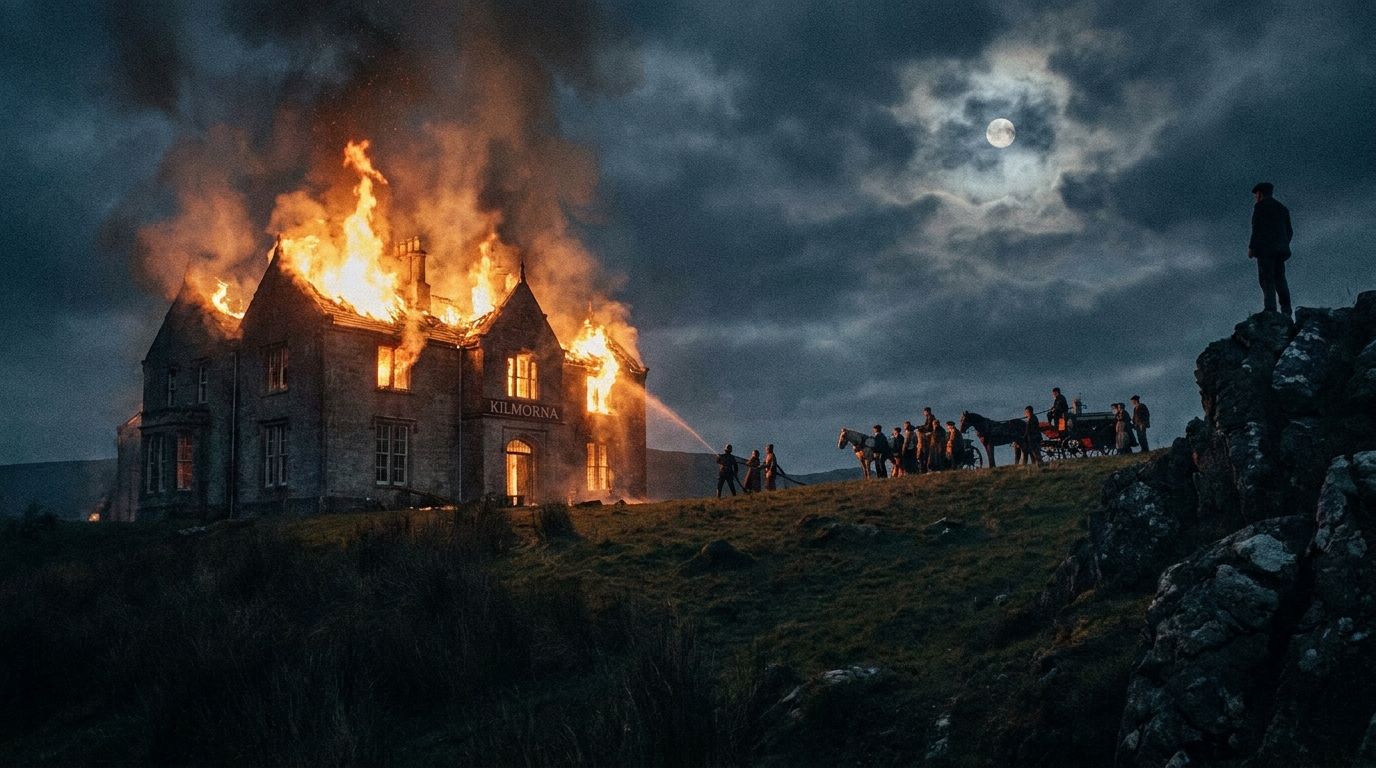
Read Article: Rockbarton BurningLimerick society was disturbed in 1900 by reports of a suspicious fire at Rockbarton, the imposing country residence near Bruff associated with wealth, landownership and titled families. Contemporary reporting described the outbreak as an alleged act of arson, but the surviving evidence presently available does not establish who started it, what motive was involved or whether anyone was prosecuted. The distinction matters. The fire was a serious incident at one of County Limerick’s best-known estate houses, yet suspicion cannot be treated as proof, and the language of accusation must remain separate from any confirmed judicial finding.
Rockbarton, also known historically as Mount Prospect, had long been connected with the O’Grady family and the Viscounts Guillamore. By the closing decades of the nineteenth century it had passed into the orbit of the Roche family through the marriage of Cecilia O’Grady to the second Baron Fermoy. The residence represented more than domestic comfort. Its demesne, tenants, servants, agricultural interests and social connections placed it within the structure of landed authority that continued to shape rural Limerick. An attack upon such a property was therefore likely to be interpreted through the wider political and social divisions surrounding Irish landownership.
The available account identifies the outbreak as suspected arson, but it does not justify claims about an organised conspiracy, an agrarian faction or a named offender. Nor did the fire destroy Rockbarton completely. Later valuation evidence records the house as occupied by Lord Fermoy in 1906, and the mansion survived into the twentieth century before its eventual demolition in 1941. The 1900 incident should consequently be understood as a damaging and alarming outbreak rather than the final destruction of the residence. Any fuller description of the rooms affected, the financial loss or the means of ignition requires direct confirmation from the original report.
Suspicion nevertheless carried powerful meaning in rural County Limerick. The land question remained central to political life, while tenant purchase, disputed holdings, grazing lands and resentment of inherited privilege continued to divide communities. Newspapers and property owners frequently interpreted attacks upon houses, hay, livestock or farm buildings as agrarian intimidation, although individual incidents could arise from many causes. No surviving evidence presently located proves that the Rockbarton fire formed part of an organised land campaign. Its significance lies partly in the speed with which a blaze at a great house could become associated with the unsettled relationship between estates and the surrounding countryside.
Rockbarton’s fire exposed the insecurity beneath the outward confidence of landed society at the beginning of the twentieth century. A country mansion could embody family prestige and political influence while also standing as a visible reminder of unequal ownership and social distance. For labourers, tenants, estate employees and neighbouring farmers, the house belonged to a system affecting rents, work, access to land and local authority. For its owners, the alleged attack threatened property, personal safety and social order. The event deserves remembrance not as a proven political outrage, but as an unresolved fire whose surrounding suspicion revealed the tensions within rural Limerick.
- Limerick Leader, 1900, contemporary report concerning the suspicious fire and alleged arson at Rockbarton, near Bruff; exact publication date and page remain to be confirmed from the original issue.
- Thom’s Irish Almanac and Official Directory for the Year 1900, Dublin: Alexander Thom and Company, 1900, entries relating to the Baron Fermoy and Rockbarton.
- Return of Owners of Land of One Acre and Upwards in Ireland, Dublin: HMSO, 1876, County Limerick returns relating to the O’Grady and Guillamore estates.
- Valuation Office, Dublin, valuation and revision records relating to Rockbarton House and demesne, County Limerick.
- University of Galway, Landed Estates Database, “Rockbarton,” historical property record drawing upon Griffith’s Valuation, the 1906 valuation and the Irish Tourist Association survey.
-
Surrender Refused
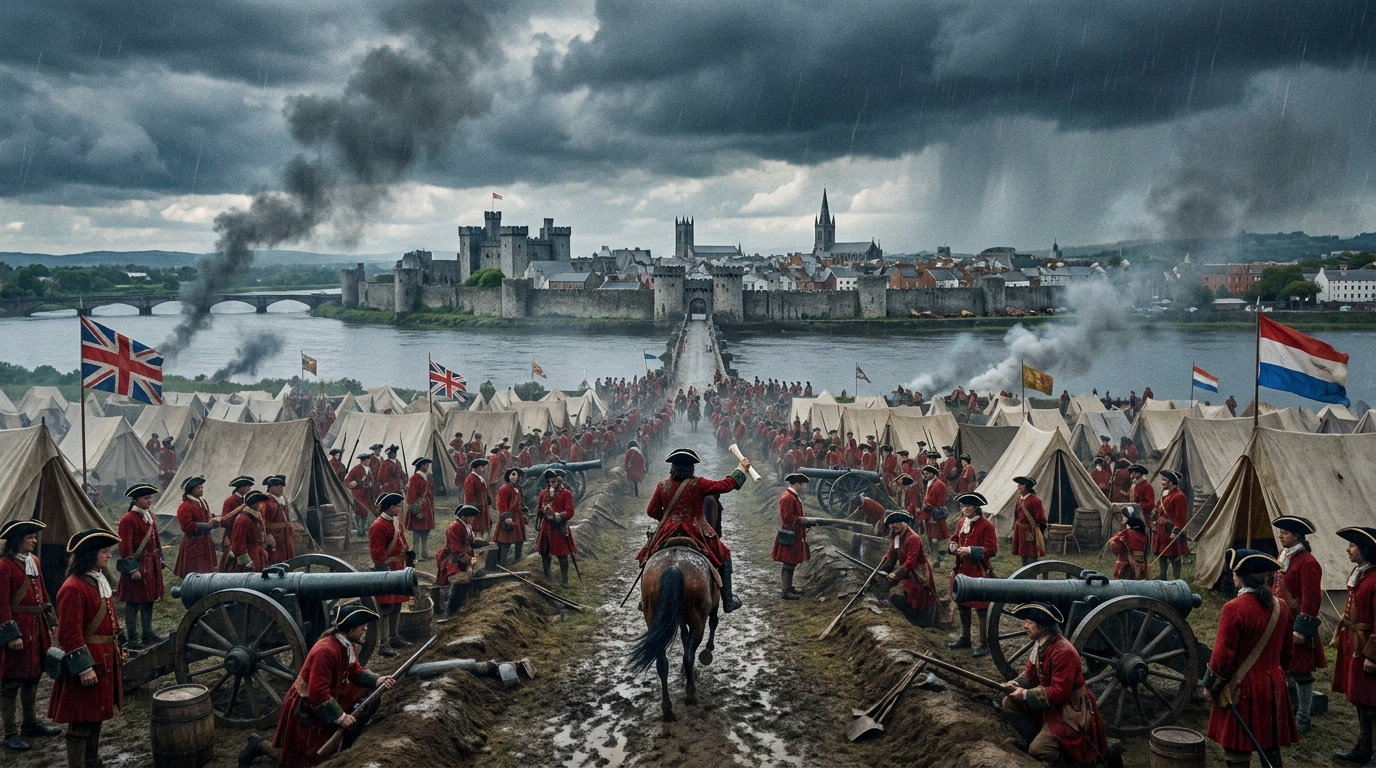
Read Article: Surrender RefusedLimerick formally entered a state of siege on 9 August 1690 when William III’s army moved from its camp near Cahirconlish and established itself before the city. William sent a summons demanding surrender to Alexandre de Rainier de Droué, Marquis de Boisseleau, the French officer entrusted with commanding the Jacobite infantry within Limerick. The decision placed the city’s inhabitants, soldiers and defences at the centre of the war following the Boyne. William expected the remaining Jacobite resistance to collapse, but Limerick’s position behind the Shannon and the presence of a substantial garrison offered the defenders a final opportunity to continue the campaign.
Boisseleau returned his answer through Sir Robert Southwell, William’s secretary of state, rather than addressing William directly as king. George Story’s contemporary Williamite account records that Boisseleau expressed surprise at the summons and maintained that a determined defence offered a better means of earning the Prince of Orange’s respect than surrendering the place entrusted to him. The language was diplomatically careful but politically unmistakable. Boisseleau would not acknowledge William’s royal title, because he remained an officer of James II, yet he answered without insult and made clear that Limerick would resist rather than capitulate without an attempt at defence.
The refusal did not follow a final council attended by every figure named in later literary versions of the episode. Tyrconnell had already departed from Limerick after an earlier council at which he and most of the French officers had favoured accepting whatever terms William might offer. Boisseleau alone among the senior French officers opposed that recommendation and was left to command the city’s infantry. Patrick Sarsfield remained central to the Jacobite effort, but his principal responsibility lay with the cavalry stationed beyond the Shannon in County Clare. The summons therefore confirmed a division already established within the Jacobite leadership.
William’s encampment reflected the multinational character of the army assembled against Limerick. Dutch and English guards served alongside English, Scottish, Danish, German, Brandenburg and French Huguenot formations, supported by cavalry, artillery, engineers and supply units. These troops occupied positions across the ground east and south-east of the city while preparations began for trenches and batteries. Contemporary evidence supports the presence of these national contingents, although the precise right-to-left arrangement described in later popular accounts is less secure. The familiar claim that Danish soldiers were deliberately stationed inside an ancient Irish earthwork called a “Danish fort” appears to belong to later literary embellishment.
Boisseleau’s answer transformed William’s summons into an active siege. The defenders had already strengthened the vulnerable Irishtown sector by digging a shallow ditch and using the excavated earth to form a rampart protected by palisades. Williamite engineers opened their trenches during the night of 9 August, beginning the methodical approach towards the city walls. For Limerick people, the refusal meant exposure to bombardment, shortages, military labour and the threat of assault, but it also preserved the Jacobite position in western Ireland. The struggle that followed would establish Boisseleau as the practical commander of one of the most important urban defences of the Williamite War.
- George Warter Story, An Impartial History of the Wars of Ireland, with a Continuation Thereof, London: Richard Chiswell, 1693.
- John Stevens, The Journal of John Stevens, Containing a Brief Account of the War in Ireland, 1689–1691, edited by Robert H. Murray, Oxford: Clarendon Press, 1912.
- John White, Descriptio Obsidionis Urbis Limericensis, 1690; translated and discussed by M. Lloyd and E. O’Flaherty, “A Descriptive Poem of Limerick in 1690,” Old Limerick Journal, no. 28, Winter 1990.
- John Childs, The Williamite Wars in Ireland, 1688–1691, London: Hambledon Continuum, 2007.
- Pádraig Lenihan, “The Marquis de Boisseleau and the ‘Battle of the Breach’ at the First Siege of Limerick, 1690,” History Ireland, vol. 28, no. 5, September–October 2020.
-
Shannon Retreat
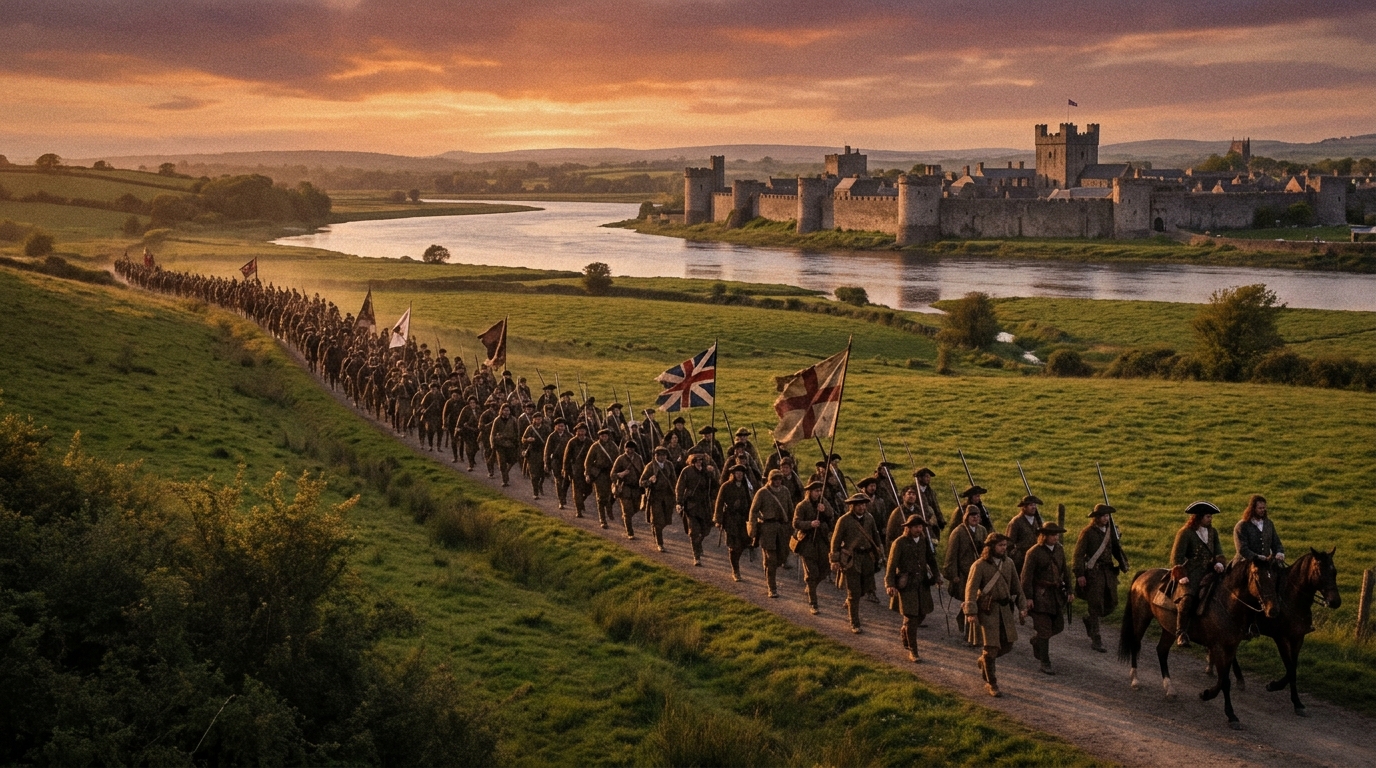
Read Article: Shannon RetreatLimerick became one of the principal centres of Jacobite resistance after William III’s victory at the Boyne on 1 July 1690 forced the Irish army to abandon the eastern approaches to Dublin. James II departed for France, but most of his surviving soldiers remained under arms and withdrew westwards towards the River Shannon. Some gathered around Athlone, which guarded an important crossing into Connacht, while the larger concentration developed around Limerick. The city’s walls, river position and access to the western counties offered the Jacobites a defensible base from which the war might continue despite the loss of Dublin.
William did not allow the retreating army to reorganise without pursuit. He divided his forces, sending Lieutenant-General James Douglas towards Athlone while leading the principal Williamite army along the southern approach towards Limerick. Later narratives differ over the exact number of regiments detached with Douglas, but the force included substantial bodies of cavalry and infantry. The division reflected William’s intention to threaten both major Shannon strongholds at once. Athlone controlled the central crossing, while Limerick commanded the lower Shannon and remained capable of receiving troops, provisions and assistance from the Jacobite-held counties of western Ireland.
Douglas appeared before Athlone on 17 July and demanded its surrender. Colonel Richard Grace, the veteran Jacobite governor, had abandoned the less defensible eastern portion of the town and destroyed part of the bridge connecting it with the fortified western bank. Douglas opened a bombardment and attempted to overcome the Shannon defences, but his artillery and supplies were insufficient for a prolonged operation. The Jacobite garrison resisted firmly, while reports that cavalry might be approaching from the direction of Limerick increased the danger of remaining before the town. Douglas withdrew on 24 July without capturing the western fortress.
The resistance at Athlone gave the Jacobites valuable time to strengthen Limerick and gather the remnants of their field army. Within the city, military officers, French advisers, civic inhabitants and displaced supporters of James confronted difficult questions of command, defence and negotiation. Some senior figures doubted whether continued resistance could succeed, while others believed the Shannon line offered the only honourable and practical alternative to surrender. Limerick consequently became more than a refuge. Its possession determined whether the Jacobites could preserve an organised army, maintain authority across much of Connacht and Munster, and prevent William from claiming complete control of Ireland.
Douglas eventually moved south to rejoin William, whose main force reached the neighbourhood of Limerick in early August. The failure at Athlone demonstrated that the Shannon could not be crossed merely by appearing before its fortified towns, while the concentration at Limerick prepared the ground for the first great siege of the city. William expected that the retreat from the Boyne had broken Jacobite resistance, but the western army had not dissolved. Its withdrawal brought the war directly to Limerick, where soldiers and civilians would soon face bombardment, assault, hunger and the prospect that the city’s survival might determine the future of the Jacobite cause.
- George Warter Story, An Impartial History of the Wars of Ireland, with a Continuation Thereof, London: Richard Chiswell, 1693.
- John Stevens, The Journal of John Stevens, Containing a Brief Account of the War in Ireland, 1689–1691, edited by Robert H. Murray, Oxford: Clarendon Press, 1912.
- John Childs, The Williamite Wars in Ireland, 1688–1691, London: Hambledon Continuum, 2007, Chapter 14, “From Dublin to Limerick.”
- J. G. Simms, Jacobite Ireland, 1685–1691, London: Routledge and Kegan Paul, 1969.
- Pádraig Lenihan, “The Marquis de Boisseleau and the ‘Battle of the Breach’ at the First Siege of Limerick, 1690,” History Ireland, vol. 21, no. 4, July–August 2013.
-
Summit Disaster
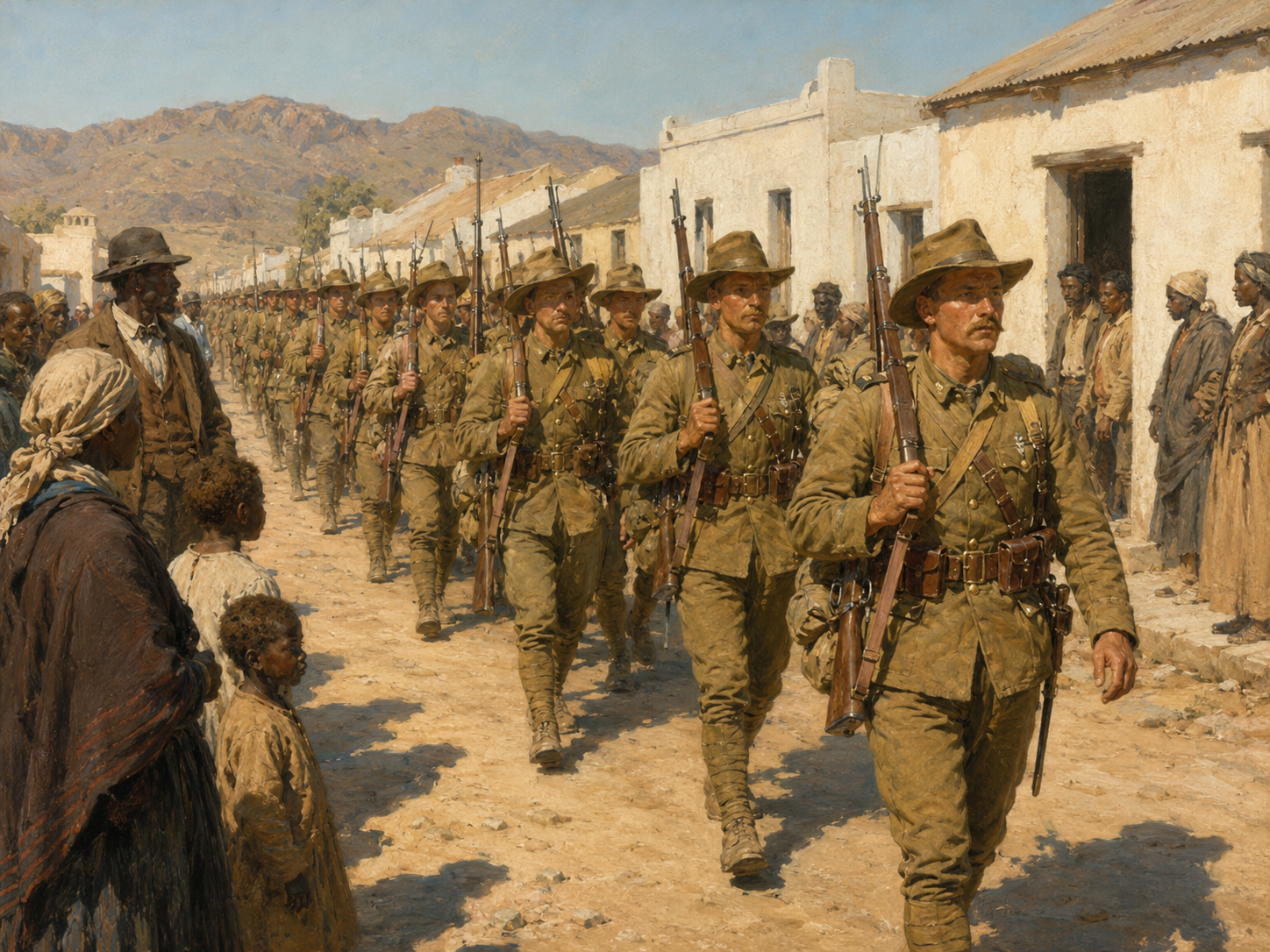
Read Article: Summit DisasterFor Limerick, whose city and county belonged to the recruiting region of the Royal Munster Fusiliers, reports from Spion Kop carried immediate human significance even though that regiment did not fight upon the summit. During the night of 23–24 January 1900, British troops commanded by Major-General Edward Woodgate climbed the steep hill in Natal as part of Sir Redvers Buller’s renewed attempt to relieve besieged Ladysmith. The attackers surprised a Boer outpost and secured part of the summit before dawn, but mist and darkness concealed the true shape of the ground and the stronger positions lying beyond them.
British engineers began digging defensive trenches, but the rocky soil prevented them from creating adequate protection. When the mist lifted, the troops discovered that they occupied only a cramped portion of the plateau and remained exposed to Boer rifles and artillery firing from several directions. Louis Botha rallied the defenders while Boer commandos advanced towards the summit from neighbouring ridges. Woodgate was seriously wounded early in the fighting, leaving authority uncertain among officers who lacked reliable information about neighbouring units, reinforcements and the plans of their commanders below. The captured height rapidly became a confined and increasingly dangerous position.
Reinforcements climbed the hill throughout 24 January, including men of the Middlesex, Dorset and Somerset regiments, the Imperial Light Infantry and other formations. Their arrival increased the number of rifles available but also crowded thousands of soldiers into ground offering little cover. Ammunition, water, medical assistance and clear orders moved slowly over the steep approaches. British artillery below could not effectively silence Boer guns concealed behind intervening ridges. Rifle fire, shells and rapid-firing weapons swept the summit for hours, while sections of trench changed hands and exhausted soldiers struggled to hold their positions amid wounded comrades and broken unit formations.
Lieutenant-Colonel Alexander Thorneycroft eventually assumed command on the summit, although the arrangements were poorly communicated and several senior officers remained uncertain about who held final authority. After nightfall, believing the shattered force could not endure another day without artillery, water and properly organised support, Thorneycroft ordered a withdrawal. Many Boer fighters had also become discouraged, but the British commanders did not know this. By dawn on 25 January, Boer forces had reoccupied the abandoned summit. The later official despatches criticised the failures of communication, organisation and command that allowed a position gained through a difficult night assault to be surrendered.
British losses at Spion Kop amounted to approximately 1,500 killed, wounded, missing or captured, while Boer casualties numbered several hundred. Warren’s force subsequently withdrew across the Tugela, and Ladysmith remained under siege until the end of February. For Limerick households following relatives and neighbours in South Africa, the defeat exposed the personal cost hidden behind imperial reports of advance and relief. It also entered an Irish political climate divided between military service within the British Empire and sympathy for the Boer republics. Spion Kop therefore reached Limerick not as a distant battlefield alone, but as news carrying anxiety, argument and possible bereavement.
- The London Gazette, issue 27183, 17 April 1900, pp. 2497–2503, War Office despatches concerning the Tugela operations and the capture and evacuation of Spion Kop.
- Winston S. Churchill, London to Ladysmith via Pretoria, London: Longmans, Green, and Co., 1900.
- Arthur Conan Doyle, The Great Boer War, London: Smith, Elder & Co., 1900, Chapter XV, “Spion Kop.”
- Frederick Maurice, ed., History of the War in South Africa, 1899–1902, vol. II, London: Hurst and Blackett, 1907.
- National Army Museum, “‘Spions Kop, Natal. Jan 26th 1900’, British Casualties, 1900,” collection accession 2006-09-2-2.
-
Drogheda Muster
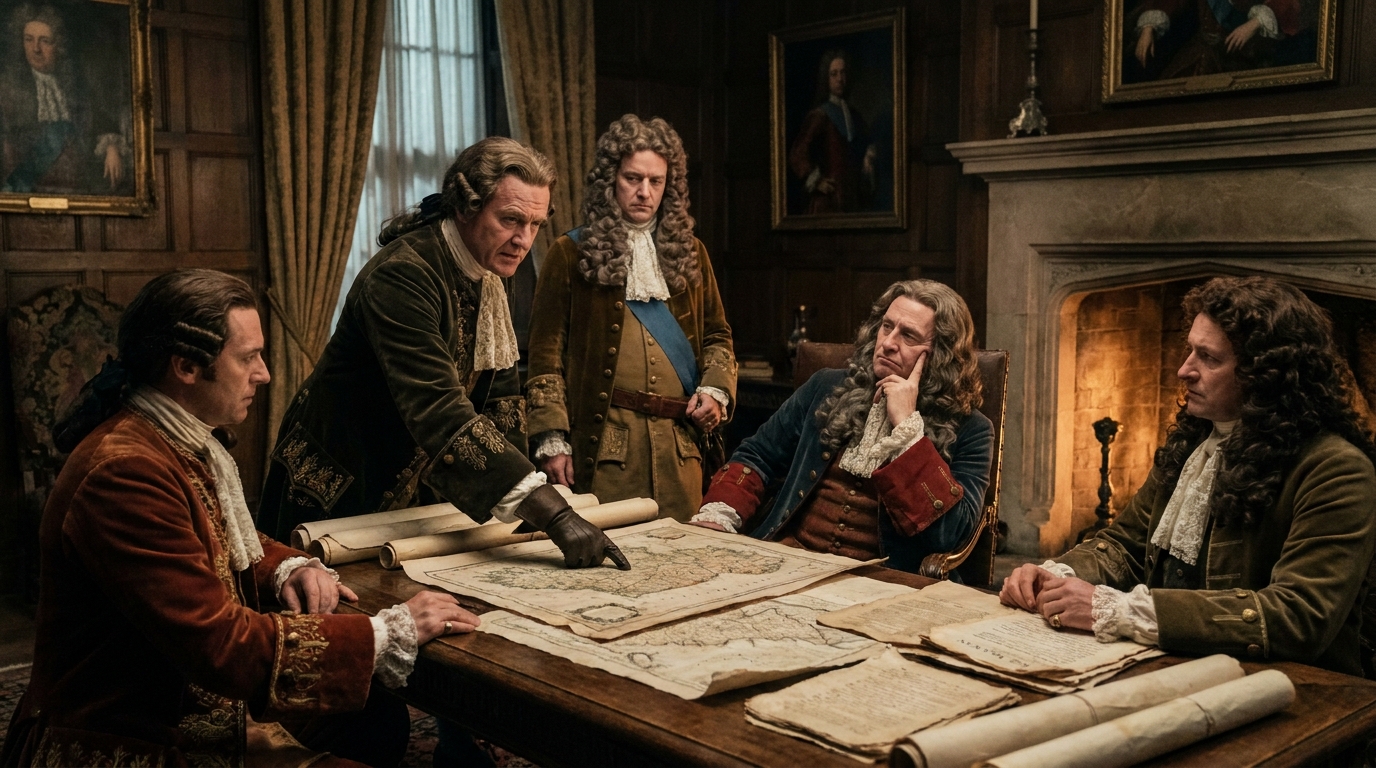
Read Article: Drogheda MusterLimerick entered the military calculations of the Jacobite leadership during the first half of September 1689, as Marshal Schomberg’s Williamite army advanced southwards through Ulster. French commander Conrad de Rosen regarded Dublin and Drogheda as dangerously exposed and favoured concentrating the Irish forces behind the Shannon, with Athlone and Limerick forming the principal defensive centres. The proposal revealed how rapidly Limerick had become important to the survival of James II’s cause. Richard Talbot, Duke of Tyrconnell, opposed an immediate abandonment of the eastern approaches and supported assembling the available Jacobite regiments around Drogheda to confront the advancing enemy.
Schomberg reached Dundalk on 7 September after taking Carrickfergus and passing through Newry. South of him, Jacobite units were gathering at Drogheda, where the eyewitness John Stevens had joined the Grand Prior’s Regiment. Stevens recorded that numerous regiments camped outside the town from 5 September, although many were weak, newly raised, poorly clothed and inadequately shod. He nevertheless described considerable eagerness among the soldiers to move against the Williamites. Their cavalry appeared in better condition than much of the infantry, which had received limited training and remained short of equipment despite the urgency created by Schomberg’s approach.
By the middle of September the Jacobite army moved north from Drogheda towards Ardee and the River Fane. Contemporary accounts differ slightly in their dating and estimates, but they agree that James II brought a substantial field army close to Dundalk. One Jacobite narrative placed the king at the Fane on 15 September and estimated his force at approximately 26,000 men. Stevens described the army advancing from Drogheda on 14 September, moving farther north over the following days, and approaching Schomberg’s entrenched position on 21 September in an unsuccessful effort to draw the Williamites into open battle.
The surviving evidence supports the broader picture of rapid mobilisation, strategic disagreement and the gathering of Irish regiments, although it does not securely confirm every dramatic detail found in later popular retellings. In particular, the precise council conversation, Tyrconnell’s alleged promise to assemble 20,000 men overnight, and the description of all Munster troops undertaking a single forced march should be treated cautiously. Limerick’s documented importance lies in its identification as a defensible western centre beyond the Shannon. That judgement proved perceptive, for the city subsequently became the principal Jacobite stronghold during the decisive campaigns of 1690 and 1691.
No major battle followed the September concentration. Schomberg remained within his entrenched camp at Dundalk, while James declined to order a costly assault upon prepared works. Disease, rain, poor ground and supply difficulties weakened both armies, although the Williamite camp suffered particularly severe sickness. The Jacobites eventually withdrew towards winter quarters, leaving the campaign unresolved. For Limerick, the episode marked an early recognition that the city’s walls, river crossings and western position might preserve resistance if Dublin and eastern Leinster became untenable. The proposed retreat was rejected in 1689, but the strategic importance assigned to Limerick would shape the remainder of the war.
- John Stevens, The Journal of John Stevens, Containing a Brief Account of the War in Ireland, 1689–1691, edited by Robert H. Murray, Oxford: Clarendon Press, 1912, pp. 78–82.
- Anonymous, possibly Nicholas Plunket, A Jacobite Narrative of the War in Ireland, edited by John T. Gilbert, Dublin, 1892; photolithographic facsimile, Shannon: Shannon University Press, 1971, pp. 87–89.
- John Childs, The Williamite Wars in Ireland, 1688–1691, London: Hambledon Continuum, 2007, pp. 157–160.
- Pádraig Lenihan, “Schomberg at Dundalk, 1689,” Journal of the County Louth Archaeological and Historical Society, vol. 27, no. 1, 2009, pp. 39–52.
- G. A. Henty, Orange and Green: A Tale of the Boyne and Limerick, London and Glasgow: Blackie & Son, 1888. Historical novel containing the supplied wording; used to identify the passage, not as independent evidence for its detailed claims.