
Drogheda Muster(c.1680s)
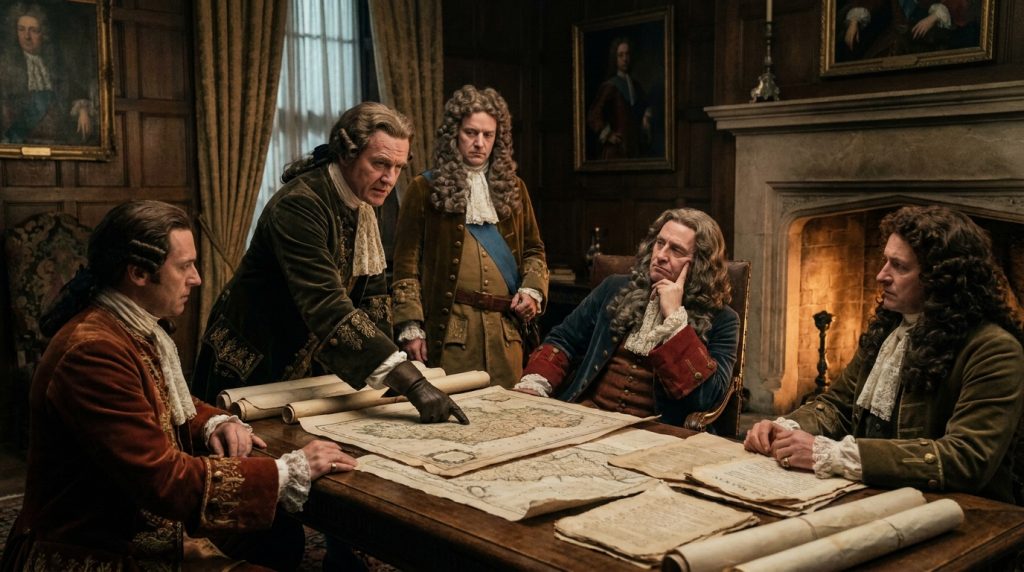
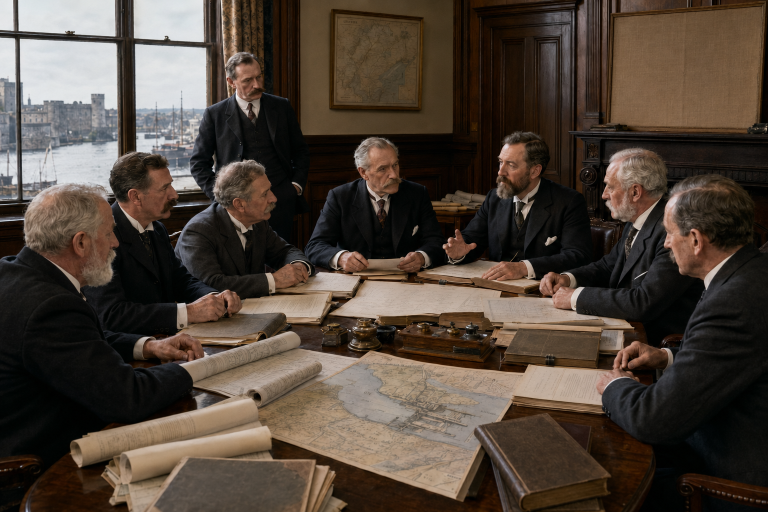
Limerick entered the military calculations of the Jacobite leadership during the first half of September 1689, as Marshal Schomberg’s Williamite army advanced southwards through Ulster. French commander Conrad de Rosen regarded Dublin and Drogheda as dangerously exposed and favoured concentrating the Irish forces behind the Shannon, with Athlone and Limerick forming the principal defensive centres. The proposal revealed how rapidly Limerick had become important to the survival of James II’s cause. Richard Talbot, Duke of Tyrconnell, opposed an immediate abandonment of the eastern approaches and supported assembling the available Jacobite regiments around Drogheda to confront the advancing enemy.
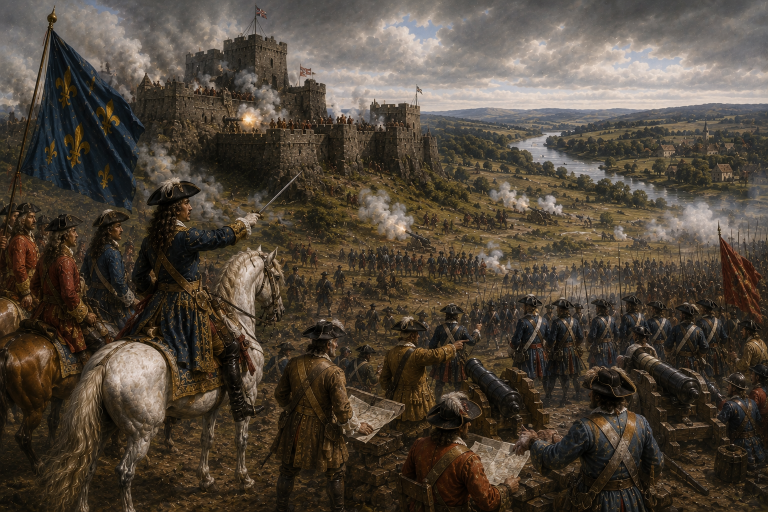
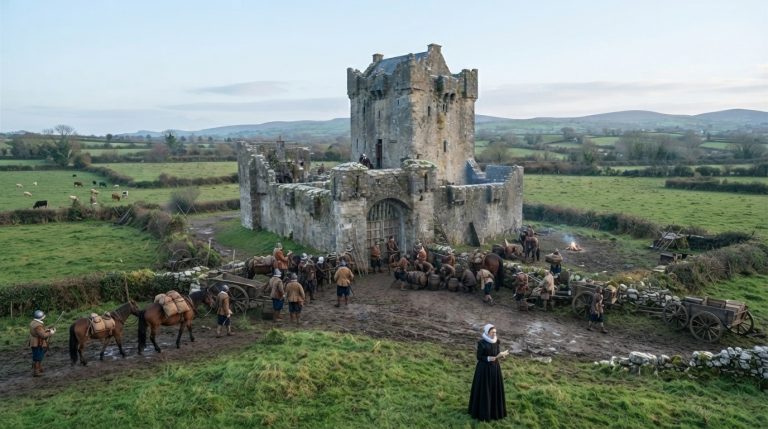
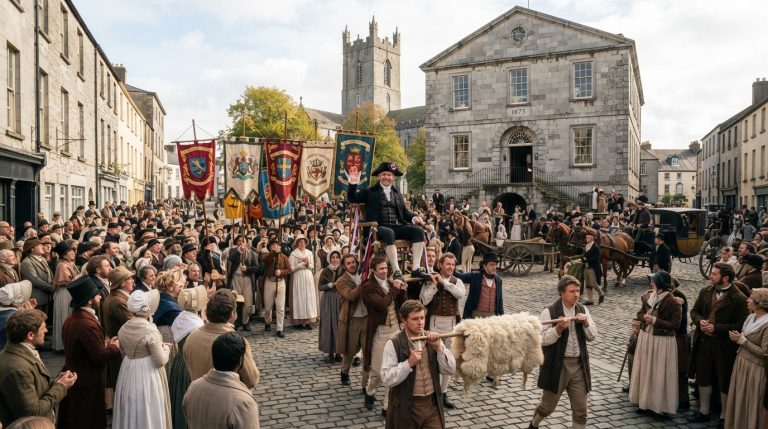
Schomberg reached Dundalk on 7 September after taking Carrickfergus and passing through Newry. South of him, Jacobite units were gathering at Drogheda, where the eyewitness John Stevens had joined the Grand Prior’s Regiment. Stevens recorded that numerous regiments camped outside the town from 5 September, although many were weak, newly raised, poorly clothed and inadequately shod. He nevertheless described considerable eagerness among the soldiers to move against the Williamites. Their cavalry appeared in better condition than much of the infantry, which had received limited training and remained short of equipment despite the urgency created by Schomberg’s approach.
By the middle of September the Jacobite army moved north from Drogheda towards Ardee and the River Fane. Contemporary accounts differ slightly in their dating and estimates, but they agree that James II brought a substantial field army close to Dundalk. One Jacobite narrative placed the king at the Fane on 15 September and estimated his force at approximately 26,000 men. Stevens described the army advancing from Drogheda on 14 September, moving farther north over the following days, and approaching Schomberg’s entrenched position on 21 September in an unsuccessful effort to draw the Williamites into open battle.
The surviving evidence supports the broader picture of rapid mobilisation, strategic disagreement and the gathering of Irish regiments, although it does not securely confirm every dramatic detail found in later popular retellings. In particular, the precise council conversation, Tyrconnell’s alleged promise to assemble 20,000 men overnight, and the description of all Munster troops undertaking a single forced march should be treated cautiously. Limerick’s documented importance lies in its identification as a defensible western centre beyond the Shannon. That judgement proved perceptive, for the city subsequently became the principal Jacobite stronghold during the decisive campaigns of 1690 and 1691.
No major battle followed the September concentration. Schomberg remained within his entrenched camp at Dundalk, while James declined to order a costly assault upon prepared works. Disease, rain, poor ground and supply difficulties weakened both armies, although the Williamite camp suffered particularly severe sickness. The Jacobites eventually withdrew towards winter quarters, leaving the campaign unresolved. For Limerick, the episode marked an early recognition that the city’s walls, river crossings and western position might preserve resistance if Dublin and eastern Leinster became untenable. The proposed retreat was rejected in 1689, but the strategic importance assigned to Limerick would shape the remainder of the war.
Primary Sources
- John Stevens, The Journal of John Stevens, Containing a Brief Account of the War in Ireland, 1689–1691, edited by Robert H. Murray, Oxford: Clarendon Press, 1912, pp. 78–82.
- Anonymous, possibly Nicholas Plunket, A Jacobite Narrative of the War in Ireland, edited by John T. Gilbert, Dublin, 1892; photolithographic facsimile, Shannon: Shannon University Press, 1971, pp. 87–89.
- John Childs, The Williamite Wars in Ireland, 1688–1691, London: Hambledon Continuum, 2007, pp. 157–160.
- Pádraig Lenihan, “Schomberg at Dundalk, 1689,” Journal of the County Louth Archaeological and Historical Society, vol. 27, no. 1, 2009, pp. 39–52.
- G. A. Henty, Orange and Green: A Tale of the Boyne and Limerick, London and Glasgow: Blackie & Son, 1888. Historical novel containing the supplied wording; used to identify the passage, not as independent evidence for its detailed claims.