Now Sharing: Articles (154) | Images (445) | Total Items Archived (599)
Our Mission: 100,000 Items | Total Percentage Achieved (0.60%)

Treaty Stone

The Treaty Stone

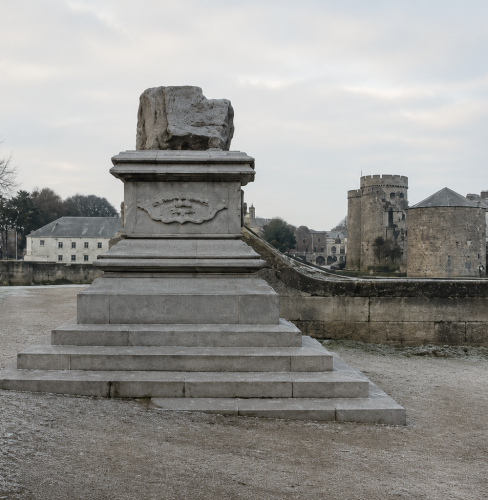
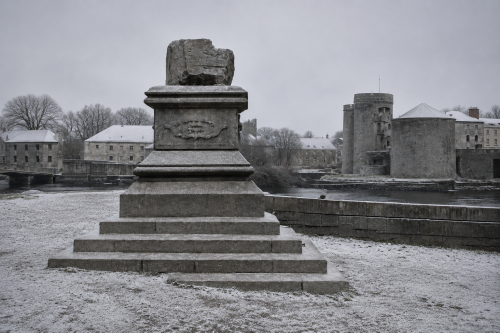
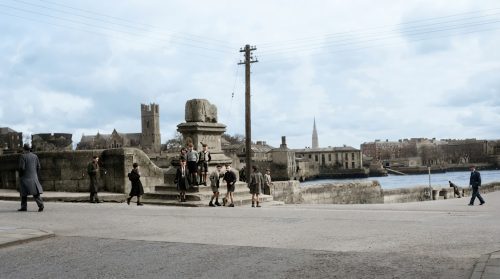
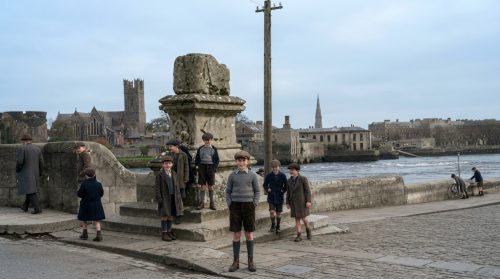
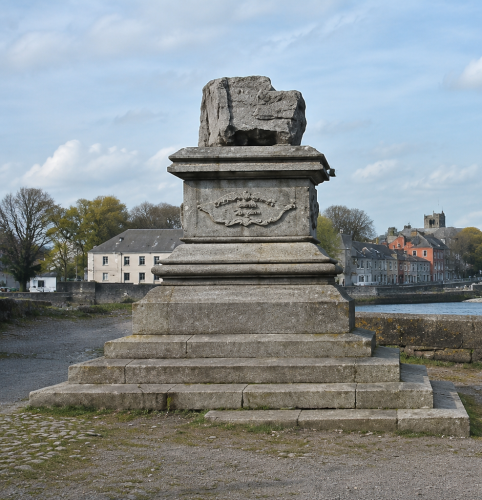
The Treaty Stone on Clancy’s Strand is traditionally believed to have served as the table upon which the Treaty of Limerick was signed on 3 October 1691. Concluded after the Siege of Limerick, the agreement ended the Williamite War in Ireland. Its military articles permitted Patrick Sarsfield’s Jacobite army to depart for France in the Flight of the Wild Geese, while the civil articles promised protections for Catholics. These promises were later undermined by the Penal Laws. Originally a mounting block outside the Black Bull Inn, the stone was placed on its decorated pedestal by Mayor John Rickard Tinslay in 1865.

The Treaty Stone

The Treaty Stone on Clancy’s Strand is traditionally believed to have served as the table upon which the Treaty of Limerick was signed on 3 October 1691. Concluded after the Siege of Limerick, the agreement ended the Williamite War in Ireland. Its military articles permitted Patrick Sarsfield’s Jacobite army to depart for France in the Flight of the Wild Geese, while the civil articles promised protections for Catholics. These promises were later undermined by the Penal Laws. Originally a mounting block outside the Black Bull Inn, the stone was placed on its decorated pedestal by Mayor John Rickard Tinslay in 1865.

The Treaty Stone

The Treaty Stone on Clancy’s Strand is traditionally believed to have served as the table upon which the Treaty of Limerick was signed on 3 October 1691. Concluded after the Siege of Limerick, the agreement ended the Williamite War in Ireland. Its military articles permitted Patrick Sarsfield’s Jacobite army to depart for France in the Flight of the Wild Geese, while the civil articles promised protections for Catholics. These promises were later undermined by the Penal Laws. Originally a mounting block outside the Black Bull Inn, the stone was placed on its decorated pedestal by Mayor John Rickard Tinslay in 1865.

The Treaty Stone

The Treaty Stone on Clancy’s Strand is traditionally believed to have served as the table upon which the Treaty of Limerick was signed on 3 October 1691. Concluded after the Siege of Limerick, the agreement ended the Williamite War in Ireland. Its military articles permitted Patrick Sarsfield’s Jacobite army to depart for France in the Flight of the Wild Geese, while the civil articles promised protections for Catholics. These promises were later undermined by the Penal Laws. Originally a mounting block outside the Black Bull Inn, the stone was placed on its decorated pedestal by Mayor John Rickard Tinslay in 1865.

The Monument Gathering

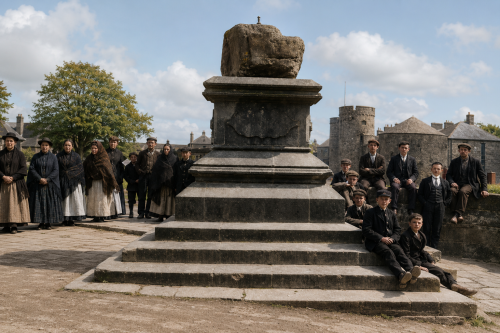
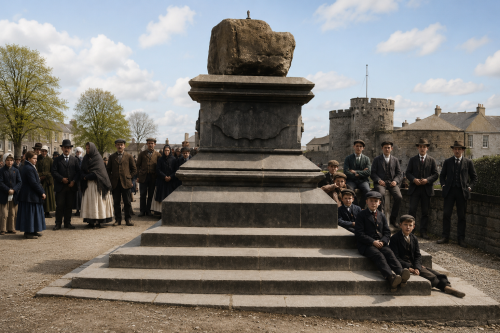
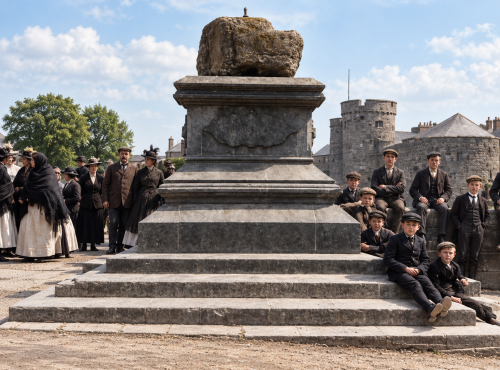
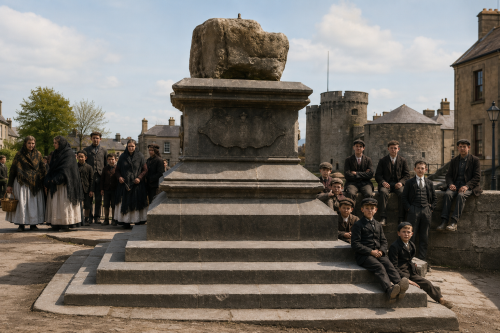
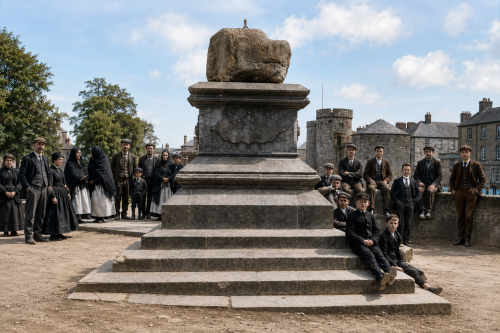
This reconstructed image depicts the Treaty Stone in Limerick as it may have appeared around 1880, standing on its substantial stepped pedestal as a powerful emblem of the city’s past. Groups of townspeople, including men, women and children in period clothing, gather around the monument in a lively public setting. In the background, traditional buildings, stone walls and the nearby tower reinforce the historic atmosphere of the riverside area. Long associated with the Treaty of Limerick of 1691, the stone remained an important civic landmark, meeting place and symbol of memory, identity and local heritage in nineteenth-century Limerick.

The Monument Gathering

This reconstructed image depicts the Treaty Stone in Limerick as it may have appeared around 1880, standing on its substantial stepped pedestal as a powerful emblem of the city’s past. Groups of townspeople, including men, women and children in period clothing, gather around the monument in a lively public setting. In the background, traditional buildings, stone walls and the nearby tower reinforce the historic atmosphere of the riverside area. Long associated with the Treaty of Limerick of 1691, the stone remained an important civic landmark, meeting place and symbol of memory, identity and local heritage in nineteenth-century Limerick.

The Monument Gathering

This reconstructed image depicts the Treaty Stone in Limerick as it may have appeared around 1880, standing on its substantial stepped pedestal as a powerful emblem of the city’s past. Groups of townspeople, including men, women and children in period clothing, gather around the monument in a lively public setting. In the background, traditional buildings, stone walls and the nearby tower reinforce the historic atmosphere of the riverside area. Long associated with the Treaty of Limerick of 1691, the stone remained an important civic landmark, meeting place and symbol of memory, identity and local heritage in nineteenth-century Limerick.

The Monument Gathering

This reconstructed image depicts the Treaty Stone in Limerick as it may have appeared around 1880, standing on its substantial stepped pedestal as a powerful emblem of the city’s past. Groups of townspeople, including men, women and children in period clothing, gather around the monument in a lively public setting. In the background, traditional buildings, stone walls and the nearby tower reinforce the historic atmosphere of the riverside area. Long associated with the Treaty of Limerick of 1691, the stone remained an important civic landmark, meeting place and symbol of memory, identity and local heritage in nineteenth-century Limerick.

The Monument Gathering

This reconstructed image depicts the Treaty Stone in Limerick as it may have appeared around 1880, standing on its substantial stepped pedestal as a powerful emblem of the city’s past. Groups of townspeople, including men, women and children in period clothing, gather around the monument in a lively public setting. In the background, traditional buildings, stone walls and the nearby tower reinforce the historic atmosphere of the riverside area. Long associated with the Treaty of Limerick of 1691, the stone remained an important civic landmark, meeting place and symbol of memory, identity and local heritage in nineteenth-century Limerick.

The Monument Gathering

This reconstructed image depicts the Treaty Stone in Limerick as it may have appeared around 1880, standing on its substantial stepped pedestal as a powerful emblem of the city’s past. Groups of townspeople, including men, women and children in period clothing, gather around the monument in a lively public setting. In the background, traditional buildings, stone walls and the nearby tower reinforce the historic atmosphere of the riverside area. Long associated with the Treaty of Limerick of 1691, the stone remained an important civic landmark, meeting place and symbol of memory, identity and local heritage in nineteenth-century Limerick.