1900

Boycott Pressure

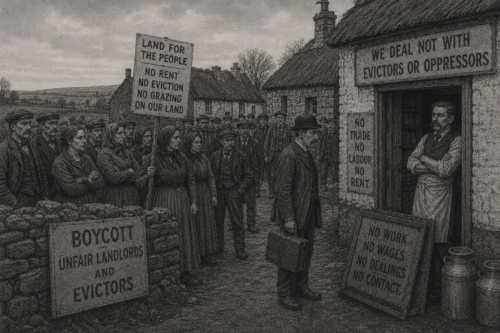
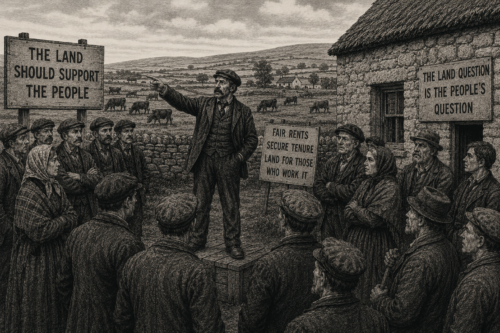
Boycotting and organised public pressure are being employed in some Irish districts against landlords, graziers and tenants whose conduct is considered hostile to the land campaign. The methods range from public condemnation and refusal of ordinary dealings to the withdrawal of labour, trade and social contact. Supporters describe such action as a peaceful means of enforcing communal discipline where legal and parliamentary remedies appear ineffective. Opponents call it intimidation imposed upon people who may have broken no law. In County Limerick, the practice carries particular force wherever eviction, disputed holdings or the occupation of grazing land has divided neighbours.
Land Dominates

The land question remains the dominant economic and social issue across rural Ireland, shaping political organisation, family security and relations between landlords and tenant farmers. In County Limerick, holdings vary greatly in quality and size, while rents, arrears, grazing land and the prospect of tenant purchase remain constant subjects of discussion. Earlier Land Acts granted greater protection and introduced limited purchase schemes, but they did not complete the transfer of ownership sought by many farmers. Rural households continue to measure political promises against the practical questions of who owns the soil, who works it and who benefits from its produce.

Networks Endure

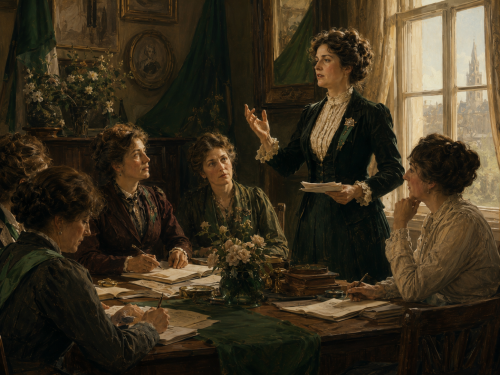
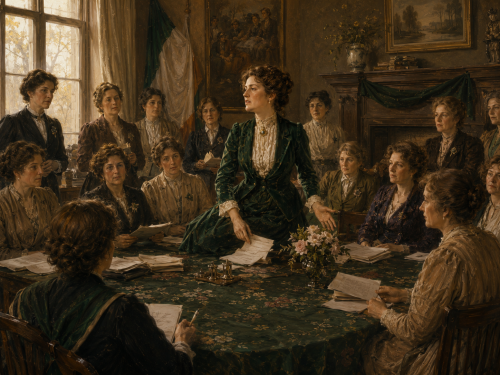
The establishment of Cumann na mBan has revealed how strongly the women’s nationalist networks created during Queen Victoria’s visit in 1900 have endured. Fourteen years ago, Maud Gonne and her associates organised resistance to the royal ceremonies, arranged an alternative patriotic celebration for children and founded Inghinidhe na hÉireann. Those efforts brought women together as fundraisers, teachers, speakers and political organisers. Many of the relationships, practical skills and separatist convictions formed during that campaign have now entered a broader organisation intended to support the Irish Volunteers and advance the cause of national independence.

Daughters Founded

Inghinidhe na hÉireann, translated as the Daughters of Ireland, has been established in Dublin under the leadership of Maud Gonne. The women’s nationalist organisation emerged from a meeting held in the rooms of the Celtic Literary Society on Easter Sunday, where participants discussed practical opposition to Queen Victoria’s visit and its accompanying children’s celebrations. The founders intend to give women an independent place within advanced nationalism rather than restricting them to supporting roles in organisations directed by men. News of the initiative will attract attention in Limerick among women already active in cultural, charitable and political life.

Royal Residence

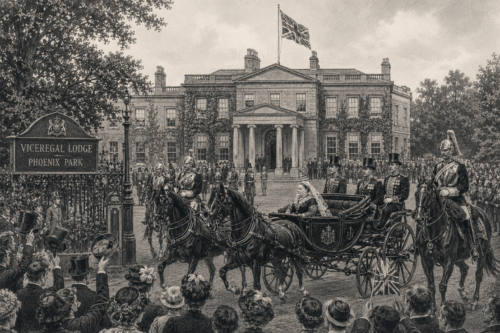
Queen Victoria has taken up residence at the Viceregal Lodge in Phoenix Park following her arrival at Kingstown and ceremonial journey through Dublin. The house, normally occupied by the Lord Lieutenant of Ireland, will serve as the monarch’s principal residence throughout her final Irish visit. Situated within the extensive parklands west of the capital, the lodge provides both privacy and convenient access to the military, charitable and public engagements arranged for the coming weeks. Reports reaching Limerick describe an elaborate administrative operation involving royal officials, Dublin Castle, police forces, military escorts and household servants responsible for the Queen’s accommodation and security.

Wyndham Appointed

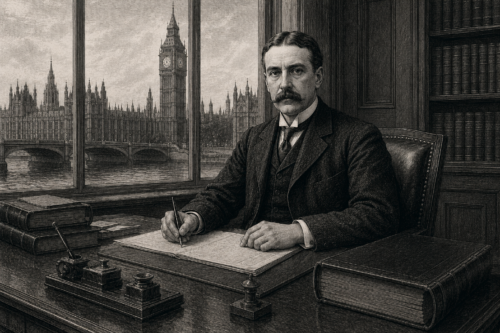
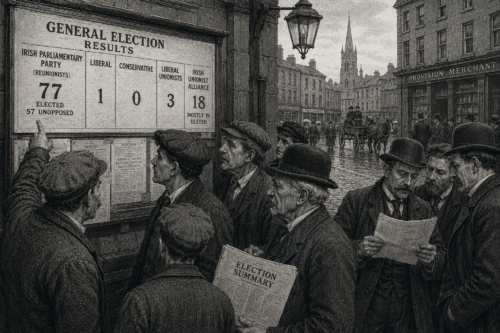
George Wyndham has been appointed Chief Secretary for Ireland in succession to Gerald Balfour, placing a younger Conservative minister in charge of Irish administration at a moment of renewed nationalist organisation and growing agitation over the land. His appointment will be watched closely throughout Limerick city and county, where tenant ownership, congested holdings, rural poverty and the position of evicted families remain pressing political concerns. Wyndham enters office after the reunited Irish Parliamentary Party secured seventy-seven seats at the general election, although Lord Salisbury’s government remains firmly opposed to Home Rule and possesses a substantial Westminster majority.

Home Rule Deferred

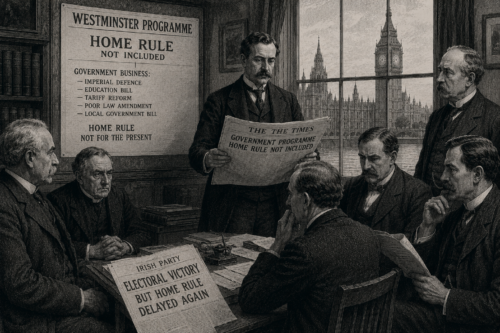
The opening of the new Parliament has confirmed that Home Rule remains outside the immediate programme of the government, despite the strong electoral recovery of John Redmond’s reunited Irish Parliamentary Party. Nationalists returned seventy-seven members from Ireland’s 103 constituencies, giving the demand for an Irish legislature a commanding parliamentary voice. Yet the administration of Lord Salisbury, strengthened by its general-election victory, has offered no proposal for restoring domestic government in Dublin. In Limerick city and county, where nationalist representatives were returned and Home Rule remains central to organised political life, the omission will be received as a deliberate refusal to recognise Ireland’s electoral verdict.

British Absence

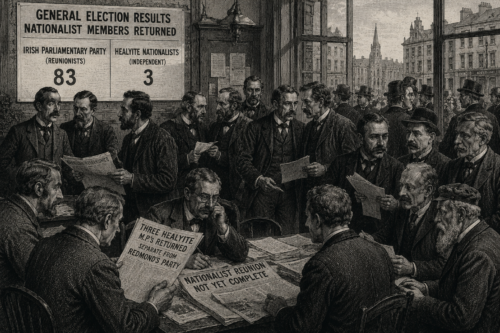
The completed general election has again demonstrated the weakness of the principal British political parties throughout nationalist Ireland. John Redmond’s reunited Irish Parliamentary Party has taken seventy-seven of Ireland’s 103 seats, while candidates standing directly for the British Liberal and Conservative parties made little impression across the south, west and much of the midlands. In Limerick, voters returned nationalist representatives without any prospect of an ordinary contest between the parties governing and opposing at Westminster. Irish political organisation remains shaped principally by the constitutional struggle between nationalism and unionism rather than by the divisions governing electoral life in Great Britain.

Unity Fractures

The completion of the general election has shown that the reunion of Irish parliamentary nationalism remains incomplete. Although John Redmond’s Irish Parliamentary Party has secured the overwhelming majority of nationalist seats, six supporters of Timothy Michael Healy have been returned outside the disciplined party organisation. The result will attract close attention among nationalists in Limerick city and county, where unity has been presented as essential to advancing Home Rule and land reform. Healy’s surviving parliamentary following demonstrates that the personal, clerical and local rivalries created during the bitter divisions of the 1890s have not been entirely overcome.

Redmond Returned

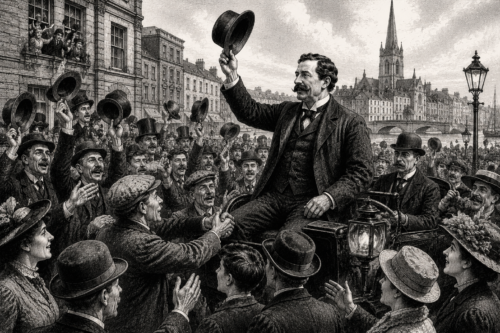
John Redmond has retained Waterford City in the general election, reinforcing his authority as chairman of the reunited Irish Parliamentary Party and strengthening his claim to speak for constitutional nationalism throughout Ireland. The result will be closely observed in Limerick, where nationalist supporters are judging whether reunion has truly ended the divisions that followed the fall of Charles Stewart Parnell. Redmond’s return from a strongly nationalist urban constituency gives him more than a Westminster seat. It provides a local electoral foundation from which he can direct a party attempting to restore discipline, confidence and influence after nearly a decade of internal conflict.