1900

Reunion Negotiations

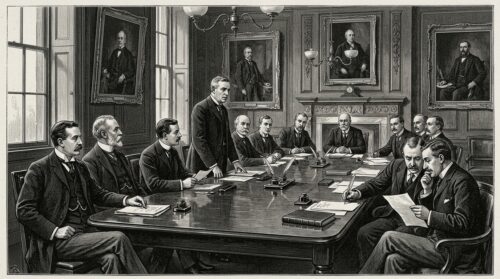
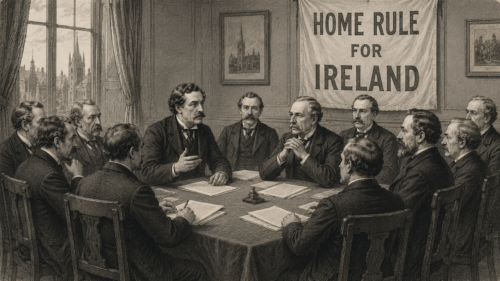
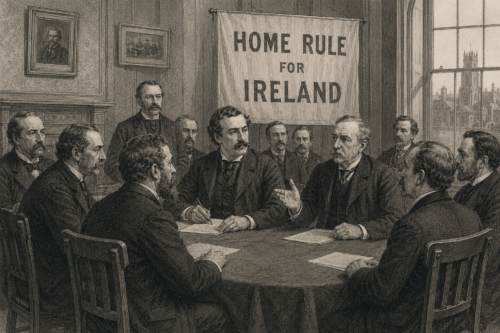
John Redmond’s Parnellite followers opened formal communications with their former anti-Parnellite opponents as pressure intensified to repair the divisions created by the fall of Charles Stewart Parnell. Since the parliamentary split of 1890, Irish constitutional nationalism had broken into competing groups whose leaders differed over authority, organisation and political strategy. Redmond led the principal Parnellite body, John Dillon commanded much of the anti-Parnellite majority, and Timothy Healy exercised influence through a separate following. Years of rivalry had weakened nationalist discipline at Westminster and frustrated supporters who believed that factional quarrels were obstructing Home Rule and land reform.
Reunion Talks

John Redmond’s Parnellite followers entered formal discussions with their former anti-Parnellite opponents as pressure mounted to end nearly a decade of nationalist division. Redmond had led the minority that remained loyal to Charles Stewart Parnell after the Irish Parliamentary Party split in December 1890. The larger anti-Parnellite body was principally associated with John Dillon, while Timothy Healy commanded another influential grouping. Their separate organisations had competed for authority, funds and electoral support throughout the 1890s, weakening the parliamentary movement and leaving constitutional nationalism without the concentrated leadership it had possessed under Parnell.

Headlines Divided

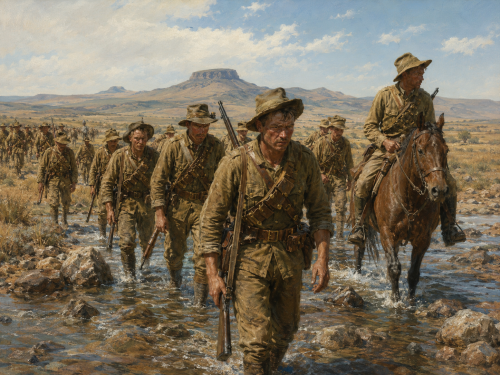
Dublin newspapers published extensive political and military coverage on 25 January 1900, placing Ireland’s internal nationalist divisions beside the continuing conflict in South Africa. Reports on the recent Mansion House conference examined attempts to reunite the parliamentary factions separated since the fall of Charles Stewart Parnell. In adjoining columns, readers encountered military dispatches, troop movements and casualty information from a war involving thousands of Irish soldiers. The combination revealed the conflicting pressures shaping Irish public life: demands for national political unity existed alongside intense concern for men serving throughout the British Army and widespread nationalist sympathy for Britain’s Boer opponents.

Veteran Dies

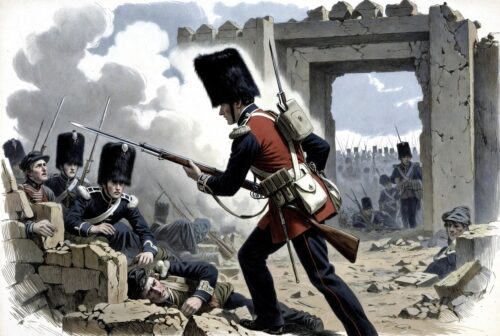
Sergeant James Pearson, an Irish-born recipient of the Victoria Cross, died at Poonamallee near Madras on 23 January 1900, aged seventy-seven. Born at Rathdowney in Queen’s County on 2 October 1822, he had spent much of his adult life in India. Pearson first entered military service with the 86th Regiment of Foot, later associated with the Royal Irish Rifles, and rose from private soldier to sergeant. His reputation rested upon two acts of gallantry during the violent Central India campaign of 1858, when British forces fought to suppress the widespread uprising against East India Company rule.

Veteran Dies

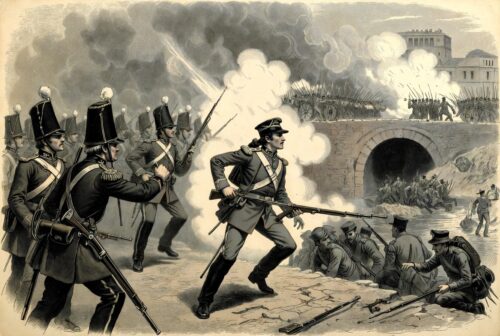
Lieutenant-Colonel Abraham Boulger, one of Ireland’s earliest recipients of the Victoria Cross, died at Moate, County Westmeath, on 23 January 1900, aged sixty-four. Born at Kilcullen, County Kildare, on 4 September 1835, he entered the British Army and rose from the ranks during a long career of active service. His reputation rested principally upon his conduct during the Indian Rebellion of 1857, when, as a young lance-corporal in the 84th Regiment of Foot, he repeatedly placed himself in exposed positions during the campaign associated with Cawnpore and the relief and defence of Lucknow.

Painter Born

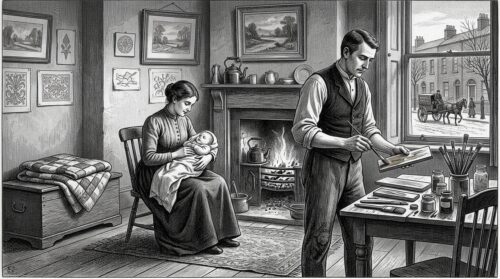
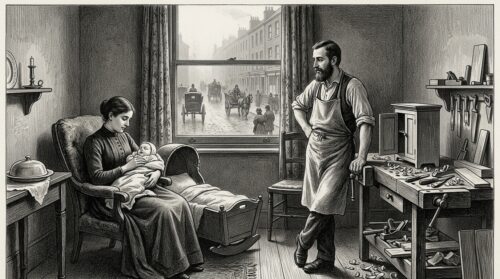
Maurice Joseph MacGonigal was born in Ranelagh, Dublin, on 22 January 1900, the only son and third child of Francis MacGonigal and Caroline Lane. His father was a painter and decorator from County Sligo, while his mother belonged to a family already connected with Irish craftsmanship and art. Growing up within that environment exposed him to colour, design and skilled manual work long before he entered formal training. The child born in suburban Dublin would eventually become an influential painter, teacher and administrator whose landscapes, portraits and scenes of Irish life secured him a prominent place in twentieth-century Irish art.

Champion Born

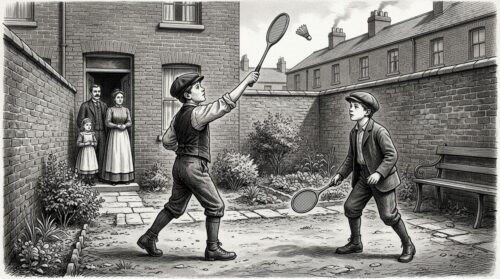
Joseph Francis Devlin, later known throughout international badminton as Frank Devlin, was born at 11 Wellington Place in Dublin on 19 January. He was the son of Joseph Edmund Devlin, a government official, and his wife, Elizabeth. Nothing surrounding the arrival of the child suggested that he would become one of the most successful competitors in the history of his sport. Badminton remained largely associated with private clubs, schools and middle-class recreation, but the game was developing rapidly. Devlin’s extraordinary ability would eventually carry an Irish player from domestic competition to sustained success at the most prestigious championship in the badminton world.

Reunion Advances

Negotiations to reunite Ireland’s divided nationalist parliamentarians advanced formally during the Mansion House conference held on 17 January. Representatives associated with the rival factions created by the fall of Charles Stewart Parnell met in Dublin to consider practical terms for restoring a single parliamentary organisation. Nearly a decade of internal conflict had weakened nationalist influence at Westminster and exhausted many supporters throughout Ireland. The conference did not instantly remove the personal distrust, political grievances and competing ambitions that had accumulated since 1890, but it transformed informal appeals for reconciliation into a structured negotiation between recognised representatives of the opposing groups.

Artist Born

Harry Aaron Kernoff was born in London on 9 January 1900 into a Jewish family whose origins reached across eastern and southern Europe. His father, Isaac Kernoff, was a furniture maker of Russian-Jewish background, while his mother, Katherine, came from a Sephardic Jewish family. The household combined skilled craftsmanship with the experience of migration, placing the future artist within a world shaped by manual work, cultural inheritance and adaptation. Although born outside Ireland, Kernoff would become closely associated with Dublin and would eventually be recognised as one of the most distinctive visual chroniclers of Irish urban life during the twentieth century.

Farming Progress

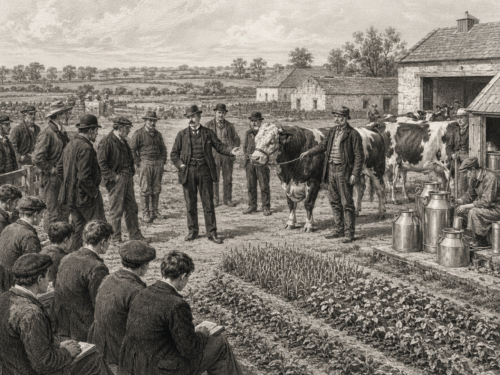
The Department of Agriculture and Technical Instruction is promoting improved farming methods, livestock breeding, dairying and practical education as part of its new programme for Irish rural development. Established under the Agriculture and Technical Instruction Act of 1899, the Department has begun bringing agricultural advice, scientific knowledge and technical training under one central authority. Farmers in County Limerick are watching closely, particularly in districts where cattle raising, milk production and butter making sustain local households, creameries, merchants and labourers. The initiative promises a more organised relationship between government, local committees, agricultural societies and the people working directly upon the land.