1900

Sessions Rejected

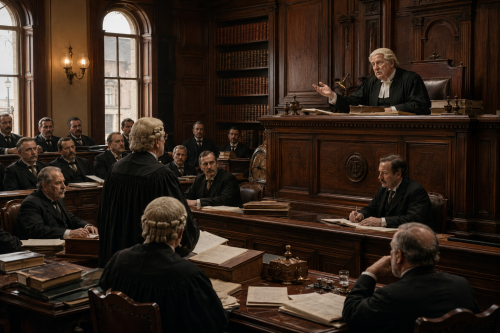
Judge Richard Adams firmly resisted a proposal to double the number of annual Quarter Sessions held in Limerick from four to eight. At the opening of the Hilary sittings, reported on 3 January 1900, the County Court judge asked whether any members of the legal profession present supported the suggested increase. Receiving no affirmative response, he declared that the demand did not come from local barristers, solicitors or the wider public. Adams presented the proposal as the work of a small deputation seeking attention rather than as a reform arising from demonstrated pressure upon the court.
Garrison Announced

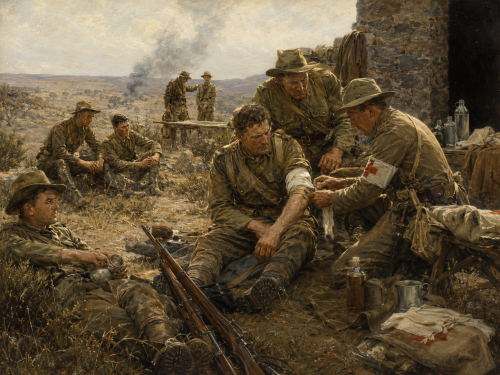
A new military garrison was announced for Limerick on 2 January 1900, although the arrangement proved provisional. Contemporary reports stated that the 3rd Battalion, Oxfordshire Light Infantry, formerly the Royal Bucks Militia, would be embodied at High Wycombe and sent to Limerick for garrison duty during the South African War. The announcement also noted that the home details left behind by the regiment’s 1st Battalion, which had departed Aldershot for active service, had already reached the city. Within days, however, the proposed destination was altered, and the militia battalion was directed to Buttevant rather than Limerick.

Shannon Defence

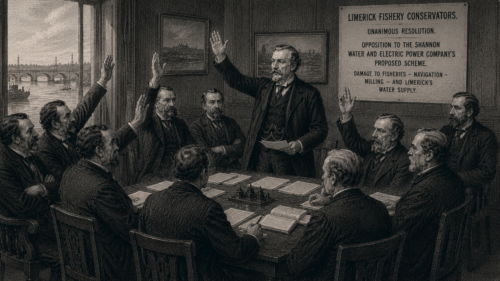
On 2 January 1900, the Limerick Fishery Conservators unanimously opposed the scheme promoted by the Shannon Water and Electric Power Company. Meeting under Lord Massy’s chairmanship, the members viewed the proposed parliamentary bill as a direct threat to interests dependent upon the river. Their objections extended beyond salmon fishing to navigation, milling and the public water supply of Limerick. The Conservators feared that private promoters seeking to harness the Shannon for electricity might secure broad powers before the consequences for existing river users had been fully investigated or adequately protected.

Railway Resistance

On 2 January 1900, the Freeman’s Journal reported that the Limerick Harbour Commissioners had again engaged Mr Fottrell, a Dublin solicitor, to organise opposition to the renewed railway amalgamation scheme. He was also instructed to retain senior counsel on the Commissioners’ behalf. The proposed arrangement would absorb the Waterford, Limerick and Western Railway into the larger Great Southern and Western Railway system. By appointing legal representatives before the parliamentary contest developed further, the Harbour Commissioners signalled that they regarded the scheme not as a private commercial transaction, but as a matter affecting the future prosperity of Limerick and its port.

Branches Demand

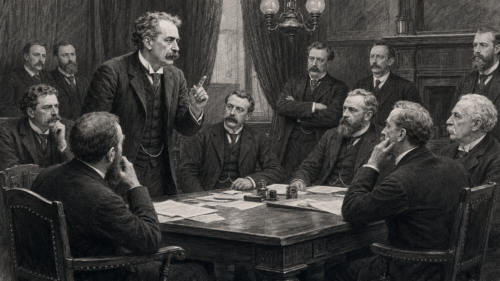
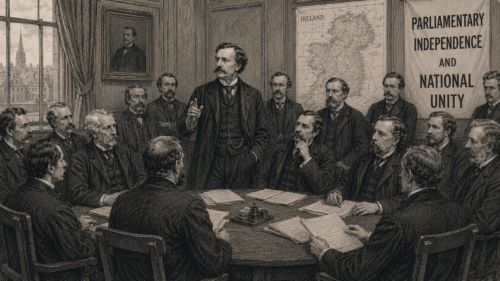
United Irish League branches pressed nationalist MPs to place national unity above personal disagreement as the organisation expanded during 1899. Founded at Westport in January 1898, the League combined agrarian agitation with a campaign to reconstruct the divided parliamentary movement. Local meetings and resolutions allowed tenant farmers, organisers and constituency workers to express impatience with leaders whose rivalries had weakened Irish representation since the fall of Charles Stewart Parnell. Branches possessed no constitutional power to command MPs, but their subscriptions, electoral labour and influence over candidate selection gave their appeals a force that Westminster politicians could not safely dismiss.

Unity Resolutions

Local political organisations passed resolutions supporting a united Irish parliamentary representation as dissatisfaction deepened with the factional divisions inherited from the fall of Charles Stewart Parnell. United Irish League branches, nationalist associations and constituency bodies increasingly treated reunion as a public obligation rather than a private matter for rival leaders. Their resolutions urged parliamentarians to restore cooperation, accept common discipline and present Ireland’s claims through one organised party at Westminster. Such declarations did not possess formal authority over every MP, but they demonstrated that continued separation risked alienating local supporters whose votes, subscriptions and organisational labour sustained constitutional nationalism.

Editorial Pressure

Nationalist newspapers increasingly presented reunion as a political necessity if Ireland was to recover influence at Westminster. Nearly ten years of division had left the parliamentary movement broken into Parnellite, Dillonite and Healyite groupings, each claiming to represent the national cause while weakening the collective strength of Irish MPs. Editorial argument did not always conceal sympathy for particular leaders, but a common warning became difficult to ignore: a divided party could neither discipline its members nor exploit opportunities created by close divisions in the House of Commons. Unity was therefore described less as reconciliation between personalities than as an instrument of national effectiveness.

Factional Shadows

The legacy of the Parnell split continued to shape personal rivalries within Irish nationalism nearly a decade after the parliamentary rupture of December 1890. Charles Stewart Parnell’s refusal to surrender the party leadership during the crisis created by the O’Shea divorce case divided former colleagues into Parnellite and anti-Parnellite camps. Political disagreement quickly became entangled with questions of loyalty, honour and betrayal. Parnell’s death in October 1891 removed the central figure but did not settle the quarrel. Memories of who had defended him, abandoned him or challenged his authority remained powerful within parliamentary groups, newspapers, constituency organisations and personal relationships.

Difficult Ally

Tim Healy remained one of the most influential yet troublesome figures involved in the effort to reunite Ireland’s divided parliamentary nationalists during January 1900. A formidable barrister, experienced Member of Parliament and devastating political speaker, Healy possessed an authority that could not easily be ignored. He had opposed Charles Stewart Parnell during the leadership crisis of 1890 and subsequently quarrelled with leading anti-Parnellites, particularly John Dillon. By the end of the decade, Healy commanded his own following of MPs and local activists. Any credible agreement restoring nationalist unity therefore required his cooperation, even though many former colleagues distrusted his intentions and feared his independence.

Discipline Debated

John Dillon’s supporters debated the conditions under which parliamentary discipline could be restored as negotiations advanced towards reunion among Ireland’s constitutional nationalists. Dillon led the Irish National Federation, the larger anti-Parnellite organisation created after the Irish Parliamentary Party divided over Charles Stewart Parnell’s leadership in 1890. Nearly a decade of separate committees, competing election funds and bitter personal rivalries had left nationalist MPs unable to reproduce the cohesion once associated with Parnell. Dillon’s followers wanted unity, but many were reluctant to accept an agreement that might weaken their majority or revive the authority of former Parnellites without firm organisational safeguards.