Membership is completely free, giving members unlimited access to all available resources, services, features, and benefits without any restrictions or fees.
Welcome back. Sign in to continue enjoying unlimited access to all available resources, services, features, and member benefits at no cost.
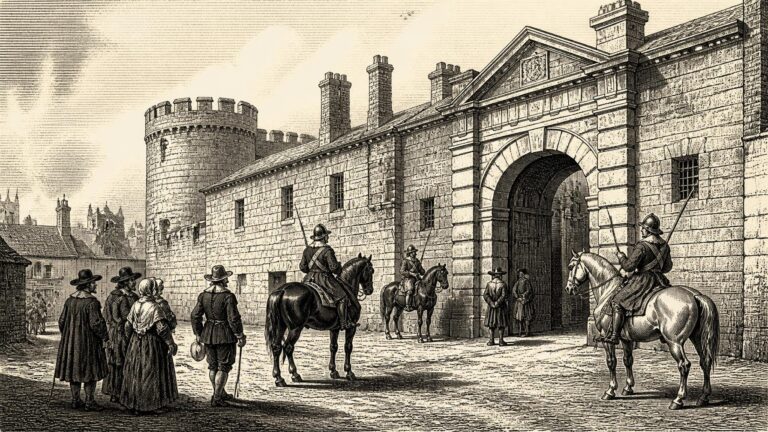
The calendar of 1684 needs to be handled with some care. Older chronologies give 25 March as the completion date of the Royal Hospital at Kilmainham. Other institutional and architectural evidence shows a longer process: the hospital was chartered on 19 February 1684, its governors first met on 21 March, pensioners were admitted during the year, and work on parts of the complex, including its chapel, continued afterwards. The firm conclusion is therefore not that every element of the great building was finished on one spring day, but that 1684 marked its formal establishment and the beginning of its active life as an institution for old and disabled soldiers.
On 13 April Richard Butler was appointed lord deputy to act during his father’s absence. Ormond and his duchess sailed from Ireland on 3 May, and Arran was sworn in shortly afterwards. The distinction matters. Ormond did not surrender the lord lieutenancy: he remained the king’s senior representative and the decisive connection between Irish administration and the court. Arran, however, was physically present to chair government, receive petitions, oversee officials and communicate with England. His appointment was also dynastic. Since the death of Arran’s elder brother, Thomas, earl of Ossory, in 1680, Arran had become the principal adult son available to sustain the duke’s political and familial interests.
The central firmly dated event was Plunkett’s death at Tyburn on 1 July 1681 in the English and Irish calendar then in use. England and Ireland still followed the Julian calendar; the corresponding Gregorian date was 11 July. The distinction explains why modern accounts sometimes give different July dates for the same execution.
Ormond’s position was complicated. He was a durable royal servant with deep Irish connections, but he was also exposed to attack from English political opponents who accused him of insufficient vigilance. During the Exclusion Crisis, English politicians disputed whether the king’s Catholic brother, James, duke of York, should succeed to the throne. Ireland was inseparable from that wider argument: opponents of Catholic influence could present the kingdom as a potential base for a French-backed invasion or a renewed Catholic rising. Supporters of Ormond, meanwhile, stressed the importance of steady government and an army loyal to the crown.
James Butler, duke of Ormond, governed as lord lieutenant for Charles II. He had returned to office in 1677 after the departure of the earl of Essex, bringing unrivalled experience of Irish politics but also deep personal entanglements in its landowning and religious divisions. His third administration sought fiscal solvency, a better-supported army and a final reassurance of property titles. These aims were connected: a parliament might confirm landholdings, grant revenue and make military expenditure more secure. But the political price of a land settlement was high, since the Restoration arrangements had left many Catholic claimants dissatisfied while Protestant proprietors feared any reopening of the question.
Charles II was king, and Arthur Capel, earl of Essex, was lord lieutenant of Ireland. Essex had first taken office in 1672, but after a period in England he returned to Ireland in May 1676. His restoration administration was preoccupied less with parliamentary politics than with the difficult mechanics of authority: revenue, land titles, local charges, security and the management of competing interests among officeholders, Protestant landowners and the large Catholic population.
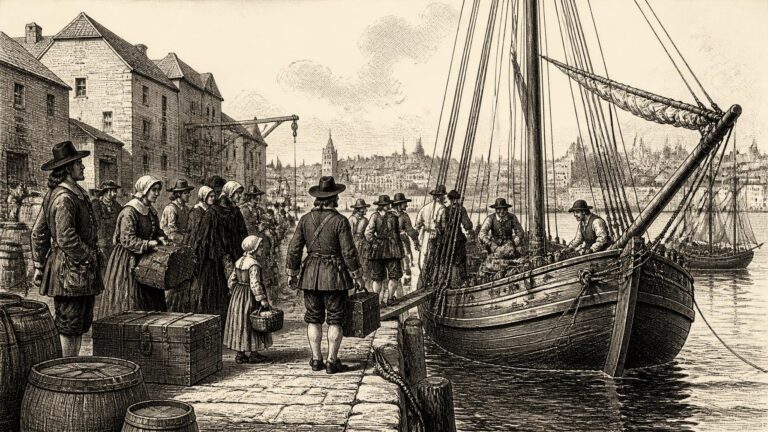
The word “transplanter” carried a long and painful history. Under the Cromwellian settlement of the 1650s, many Catholic landholders and their dependants had been compelled, or pressured, to leave lands in Leinster, Munster and Ulster for assignments in Connacht and County Clare. The slogan commonly associated with that policy, “To Hell or Connacht”, oversimplifies a complicated process, but it captures the coercive geography behind it. Families had to establish rights to new holdings, while soldiers, adventurers, Protestant purchasers, restored royalists and old proprietors advanced overlapping interests elsewhere.
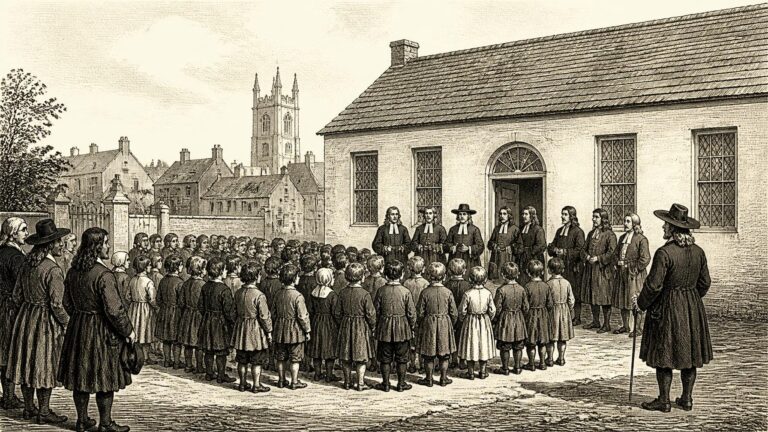
The word “hospital” did not chiefly mean a place of medical treatment in the modern sense. The new foundation was intended as a charitable home and free school for poor children, modelled in part on English urban charities. Its establishment had taken years. Dublin’s civic elite, churchmen and officials had raised subscriptions from the later 1660s, and the building was nearing completion early in 1674. Earlier plans were ambitious: accommodation was envisaged for as many as 350 residents. The opening intake of sixty therefore reveals both a real achievement and the limits imposed by money, building costs and the practical task of maintaining children as well as teaching them.
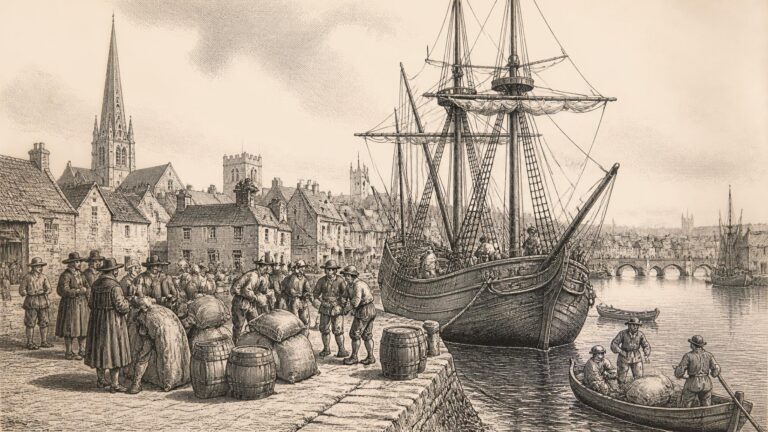
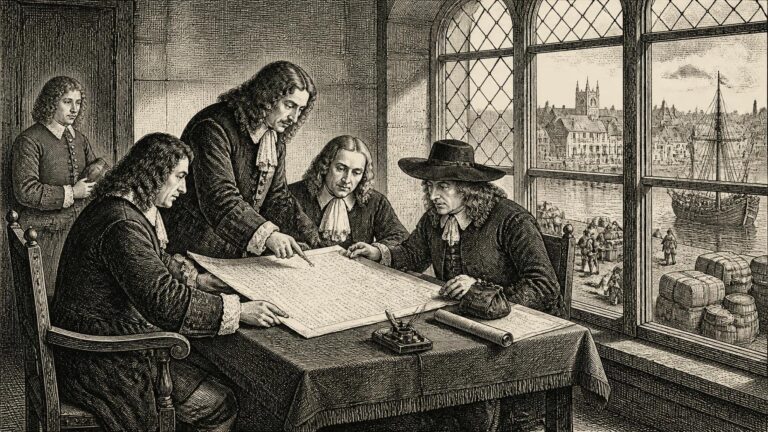
The Council of Trade’s paper offered a striking, if necessarily approximate, survey. It reckoned Ireland to contain about twelve million English acres of arable, meadow and good pasture, with another two million acres of rocky, boggy or scrubby ground considered largely unprofitable. Annual rents were put at £900,000; livestock at £3 million; housing with one or more chimneys at £2.5 million; and corn, household goods, merchandise and shipping together at about £1 million. Coin actually circulating in trade was estimated at only £250,000 to £300,000. Such figures should not be mistaken for a census or a neutral portrait. They were estimates made to guide policy, and their exclusion of cabins without chimneys is itself telling: some of the poorest dwellings, and therefore many of the poorest people, disappeared from this official picture.
Essex was appointed lord lieutenant on 21 May and sworn in on 5 August. His accession mattered because the office concentrated the crown’s Irish executive authority: the lord lieutenant presided over government at Dublin Castle, directed the army and influenced the handling of revenue, law, corporations and religious policy. He succeeded Lord Berkeley, whose administration had acquired powerful critics. Essex was not an Irish magnate of the scale of James Butler, duke of Ormond, or Roger Boyle, earl of Orrery; that relative detachment may have been part of his usefulness to Charles II.
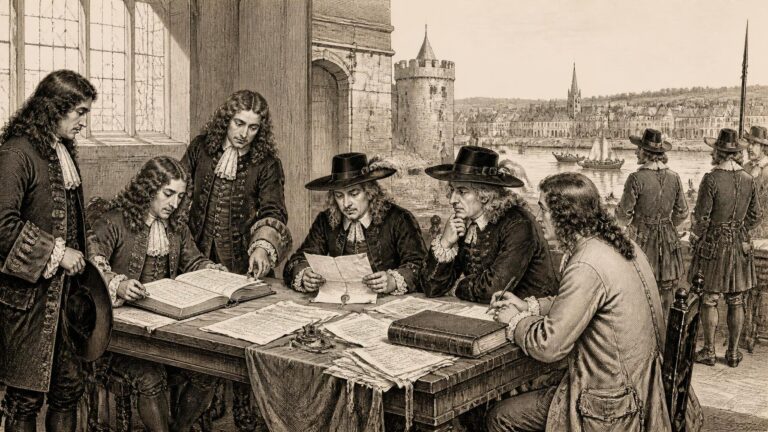
On 18 January, Sir Richard Talbot petitioned Charles II on behalf of Catholic nobles and gentry. The issue was land. The Restoration settlement of the 1660s had confirmed the enormous transfer of property produced by the wars, Cromwellian conquest and transplantation. Some Catholic proprietors had recovered land through the Acts of Settlement and Explanation, but many believed the settlement had been unfairly administered or had left legitimate claims unheard. Talbot’s petition did not undo the existing order. It was, however, an organised attempt to bring the grievances of the dispossessed back before the king.
Government changed hands early in the year. On 4 February John Berkeley, Baron Berkeley of Stratton, was appointed lord lieutenant of Ireland; he was sworn in on 12 April, replacing John Robartes. Berkeley came to office after a period of strained politics. The Restoration land acts had, by the middle of the 1660s, largely confirmed the transfers of property made during the Cromwellian period. Some Catholic proprietors had recovered land, but the broad result of conquest remained: political authority and much landed wealth were securely Protestant.
In 1669, Irish government changed hands, though not in a manner that promised a clean break. On 14 February Charles II announced his intention to remove James Butler, duke of Ormond, from the lord lieutenancy. Ormond had been the dominant figure in Restoration Ireland since taking office in 1662: an exceptionally well-connected Protestant magnate, a royalist survivor of the wars, and the architect of much of the practical settlement that followed them. His replacement was John, Lord Robartes, formally appointed lord lieutenant on 3 May. The transfer matters because it exposed a central fact of Restoration rule: Ireland was governed from Dublin, but decisive political calculations were made at the English court.
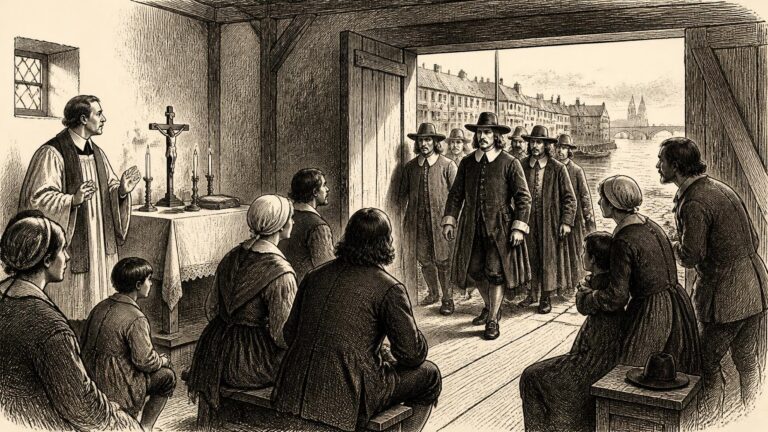
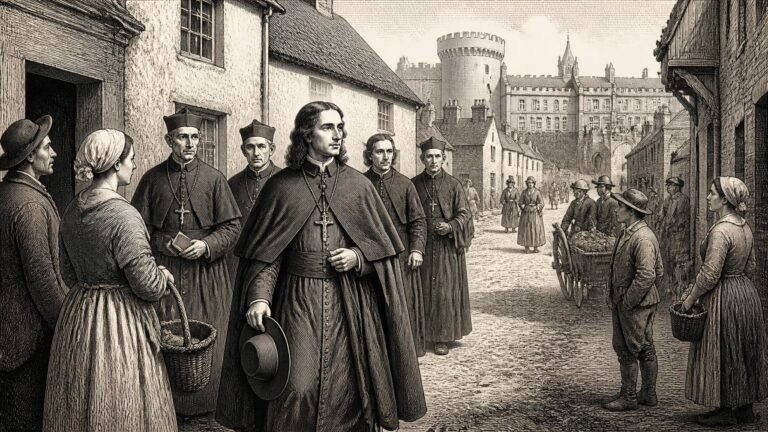
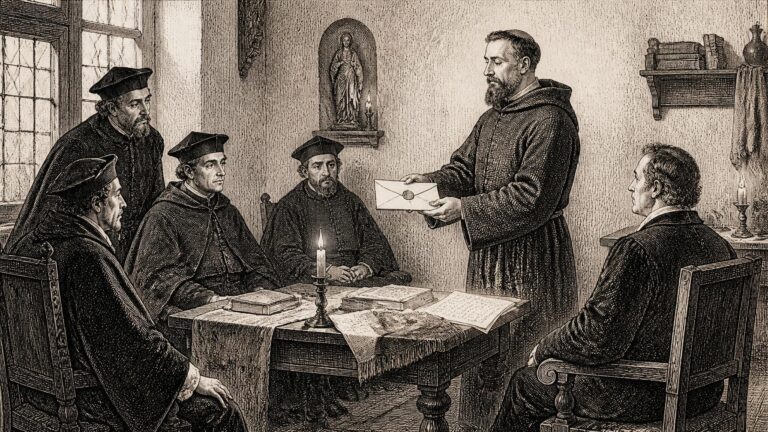
Ireland in 1668 was not marked by a great battle, a meeting of parliament, or a dramatic change of sovereign. Charles II remained king; James Butler, duke of Ormond, remained lord lieutenant; and the Restoration land settlement continued to define who possessed property, influence and security. Yet the year was far from uneventful. Its best-documented Irish drama unfolded in and around Dublin among Catholic clergy, government officials and a Franciscan friar, James Taaffe. Claiming extraordinary papal authority that he did not possess, Taaffe attempted to impose order on a divided Catholic church. His forged commission exposed the precarious place of Catholic religious organisation in Restoration Ireland and made ecclesiastical disagreement a matter of public government.
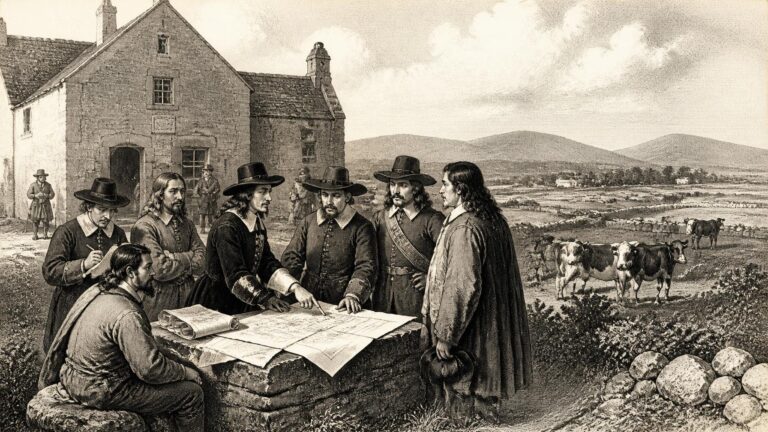
The Act of Settlement of 1662 had attempted to reconcile claims that could not all be met from the land available. Cromwellian soldiers and financial ‘adventurers’ had received Irish estates after the 1650s conquest. Protestant royalists who had lost out during the Commonwealth also expected recompense. So did some Catholic proprietors who had remained loyal to the Stuart crown, qualified under earlier peace agreements, or could establish legal ‘innocence’ under the exacting post-war rules. Each claim rested on a different account of service, suffering and loyalty; all competed for the same confiscated land.
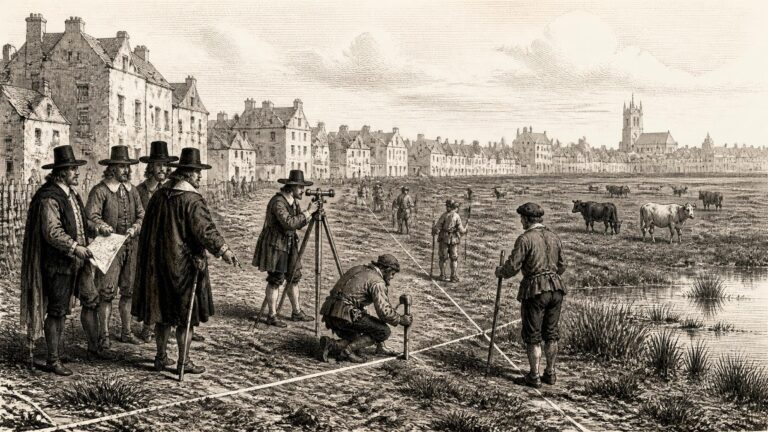
The most visible development associated with 1664 was at St Stephen’s Green, then on Dublin’s southern edge. This was not the leafy Victorian park familiar today, nor yet a completed square of fashionable townhouses. It had been a broad, low-lying common, marshy in places and used for pasture. Dublin Corporation had decided in 1663 to turn the land into a source of revenue. During 1664, the scheme moved into its practical, marketable phase: the ground was divided into ninety-six plots around a much reduced central green.
The Act of Settlement, passed in 1662, supplied the legal framework, but not a painless solution. It confirmed many adventurers and soldiers in estates acquired after the parliamentary conquest, while offering restoration to specified groups of dispossessed proprietors, especially Catholics who could establish their “innocence” of participation in the rebellion that began in 1641. The word had a highly technical legal meaning. It did not simply distinguish a peaceful person from a violent one; it determined whether a claimant might recover land, house, income and local standing.
The Act of Settlement was the central Irish development of 1662. Its full title promised the “better execution” of the king’s earlier declaration for settling Ireland and satisfying adventurers, soldiers and other subjects. That language concealed a problem which no formula could neatly resolve. Adventurers who had financed the parliamentary war, officers and soldiers paid in confiscated land, Protestant landowners dispossessed during the 1641 rebellion, royalists, and Catholic proprietors who claimed both loyalty and innocence all advanced titles that overlapped. The land available could not meet every obligation.
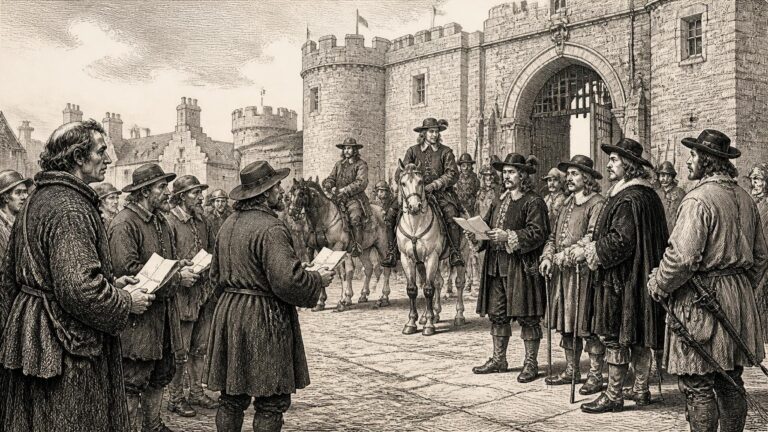
On 26 March, a proclamation announced that a parliament would meet in Dublin on 8 May. That date is firmly established. It was the first Irish parliament summoned by Charles II after the Restoration, replacing the Convention that had helped smooth the king’s return in 1660. The new assembly was overwhelmingly Protestant in complexion, reflecting the political changes of the Cromwellian period and the restricted position of Catholics in public life. Sir Audley Mervyn became Speaker of the House of Commons, and the session gave the restored regime an Irish constitutional forum through which to enact its priorities.
The opening political event of the year was the meeting in Dublin of the General Convention of Ireland. It first assembled on 27 February, adjourned for broader attendance, and met again from 2 March. It was not a lawful parliament in the older constitutional sense: the Irish parliament had not been summoned, and the Convention had only one chamber. Nevertheless, it created a forum through which the dominant Protestant political interest could co-ordinate its response to the crisis of the English republic.