Archived: 9 September 2026
Abstract
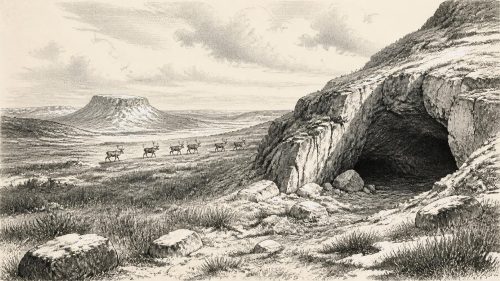
About 34,000 years before present, Ireland experienced cold, unstable Marine Isotope Stage 3 conditions as the British–Irish Ice Sheet began expanding. Deposits at Derryvree and Greenagho indicate north-central areas remained ice-free until roughly this period, although local glaciers and periglacial processes occurred. Open tundra-like habitats supported reindeer, giant deer, spotted hyaenas, bears and other fauna, evidenced especially at Castlepook Cave. A marked reindeer bone may indicate brief Upper Palaeolithic butchery, but cannot prove permanent human occupation. No settled communities or political institutions are evidenced. Changing coastlines, glaciation and disturbed deposits obscure evidence, leaving animal life and possible mobile human visits.
Read Article

Archived: 9 September 2026
Abstract
31,947 BCE is an approximate modern label for later Pleistocene Ireland, not a witnessed year. During Marine Isotope Stage 3, cooling fostered uneven ice growth, though much of Ireland may still have contained exposed grassland, rivers, caves and changing coasts before the Last Glacial Maximum. Glacial erosion explains the scarcity of archaeological evidence. Castlepook Cave preserves remains of mammoth, reindeer, giant deer, predators and other cold-adapted fauna, accumulated across different periods. A possibly stone-tool-marked reindeer bone, dated around 33,000 years ago, may indicate a brief human visit, not settlement. Ireland’s evidence chiefly records environmental transformation, while human activity remains uncertain.
Read Article

Archived: 9 September 2026
Abstract
Around 31,951 BCE, Ireland lay in the Late Pleistocene, before the Last Glacial Maximum, experiencing increasingly cold, unstable conditions rather than uniform ice cover. Southern areas may initially have remained ice-free, while changing sea levels and ice margins altered connections with Britain and Europe. Cave fauna, particularly from Castlepook, demonstrates reindeer, mammoth, hyaena, bears, wolves and other cold-adapted animals during this broad period. A marked reindeer bone may indicate brief Upper Palaeolithic butchery, but cannot prove settlement or continuous occupation. Glacial erosion, drowned landscapes and disturbed cave deposits explain the sparse record, leaving environmental change as the clearest documented development.
Read Article

Archived: 8 September 2026
Abstract
Approximately 34,000 calendar years ago, Ireland lay in the unstable later Marine Isotope Stage 3, before the Last Glacial Maximum. Derryvree and Greenagho deposits show intervals without overriding ice in north-central Ireland, although conditions varied regionally. Periglacial terrain, local or expanding glaciers, lower sea levels and episodic milder phases shaped the landscape. Cave faunas document mammoth, giant deer, reindeer, horse, predators and other animals, indicating open, shifting habitats and links with north-west Europe. No secure evidence demonstrates people in Ireland then; the earliest accepted sign of human activity is much later, from butchered bear bone dated about 12,700 cal BP.
Read Article

Archived: 8 September 2026
Abstract
Around 31,965 BCE, a retrospective and imprecise date, Ireland lay within the climatically unstable Upper Palaeolithic. It was not yet uniformly covered by the later maximum ice sheet: Fermanagh sediments and calcite growth at Crag Cave indicate local ice-free or intermittently unfrozen ground, although regional glaciation was advancing. Lower sea levels altered coastlines without guaranteeing land access. Open steppe-tundra supported fauna including reindeer, giant deer, mammoth and hyaena, though cave deposits are complex. No secure human settlement is known. A possibly cut-marked reindeer bone suggests brief human visitation, but not occupation. This glacial era shaped Ireland’s terrain and remains uncertain.
Read Article

Archived: 8 September 2026
Abstract
Around 31,968 BCE, Ireland lay in the climatically unstable Late Pleistocene, before the Last Glacial Maximum and without evidence permitting calendar-year reconstruction. Greenagho deposits indicate that parts of north-central Ireland remained ice-free until roughly 34,000 years ago, although ice, coastlines and sea levels were changing. Later glaciation created many familiar landforms. Castlepook Cave preserves evidence of diverse cold-climate fauna, including mammoth, reindeer, giant deer, bear and hyena, but accumulated remains cannot define a single moment. No secure human settlement is known. A possibly tool-marked reindeer bone suggests an uncertain brief visit. Ireland was a dynamic, ecologically connected, increasingly glaciated landscape.
Read Article

Archived: 8 September 2026
Abstract
Around 33,900 years ago, Ireland lay within a cold, unstable Late Pleistocene landscape, with regionally variable ice cover preceding the Last Glacial Maximum. Lower sea levels altered coastlines and potential animal routes. Open tundra-steppe habitats supported mammoth, giant deer, reindeer, bears and predators, evidenced especially at Castlepook Cave, County Cork. A cut-marked reindeer femur there provides limited evidence that Upper Palaeolithic hunters may briefly have visited or crossed Ireland. It does not demonstrate settlement, population continuity, polities or cultural practices. Subsequent ice expansion destroyed or obscured much evidence, leaving caves as selective archives. Post-glacial Mesolithic settlement occurred many millennia later.
Read Article

Archived: 8 September 2026
Abstract
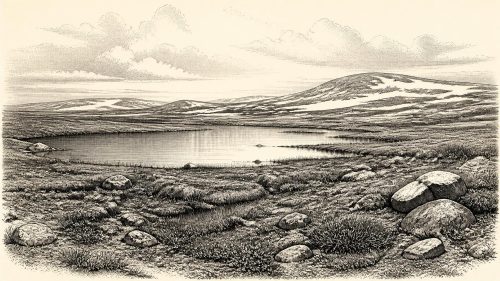
Around 31,976 BCE, Ireland had no securely attested human population, settlement or political history. Evidence from Derryvree, County Fermanagh, places the island within a later Marine Isotope Stage 3 ice-free interval, before major expansion of the last Irish Ice Sheet. Freshwater sediments, dated broadly to 36,900–31,700 years before present, indicate cold periglacial conditions and open tundra vegetation of herbs, grasses, sedges and mosses. Fossil records suggest shifting cold-adapted mammal communities, but cannot establish species present locally in that year. Approaching glaciation subsequently reshaped Ireland’s landforms and obscured much earlier evidence. The earliest persuasive human visit occurred over twenty millennia later.
Read Article
Archived: 8 September 2026
Abstract
Around 31,977 BCE, or c. 34,000 cal BP, Ireland was a climatically unstable Late Pleistocene landscape approaching expansion of the last Irish Ice Sheet. Organic lake and freshwater deposits beneath till at Derryvree and Greenagho, County Fermanagh, show that parts of north-central Ireland were ice-free, supporting open tundra and periglacial environments. Offshore evidence indicates later ice advances, chiefly after this period. No archaeological evidence demonstrates human occupation: Palaeolithic and Mesolithic finds cannot be projected backwards. Glacial erosion, redeposition and subsequent sea-level rise hinder preservation. Thus this date records environmental transformation, with advancing ice, water and sediments shaping the future landscape.
Read Article

Archived: 8 September 2026
Abstract
Circa 31,986 BCE, Ireland was undergoing environmental transition during Marine Isotope Stage 3, before the Last Glacial Maximum. Evidence from Fermanagh sediments and Kerry speleothems indicates that some regions remained ice-free, though climate, coastlines and access routes changed rapidly. Castlepook Cave in County Cork preserves a diverse cold-stage fauna, including mammoth, reindeer, giant deer, carnivores and Arctic mammals, but its deposits represent long-term ecological change rather than a single date. No secure evidence demonstrates permanent human settlement or polity at this time. Expanding British-Irish ice reshaped landscapes, deposits and habitats, determining conditions faced by later post-glacial colonists in subsequent millennia.
Read Article

Archived: 8 September 2026
Abstract
About 31,989 BCE, Ireland lay within Marine Isotope Stage 3, a cold Late Pleistocene interval preceding the last ice sheet’s greatest expansion. Evidence from Fermanagh, notably Derryvree freshwater sediments, indicates locally ice-free, open, treeless tundra or wet muskeg, with sedges, grasses, mosses and pools. Glacial landforms and offshore records show an ice mass developing unevenly, not uniform island-wide cover. Fossils suggest intermittent presence of large mammals, including mammoth and reindeer, but cannot establish contemporaneous communities. Lower sea levels altered coasts and access. No credible evidence demonstrates human occupation. Environmental phase helped create landscapes and conditions encountered by Ireland’s Mesolithic settlers.
Read Article

Archived: 8 September 2026
Abstract
About 31,994 BCE, Ireland lay in the climatically unstable Late Pleistocene, before the Last Glacial Maximum. Expanding ice had not covered all regions: north-central and southern areas retained exposed ground, while low sea levels reshaped coasts. Castlepook Cave in County Cork preserves fauna including reindeer, mammoth, giant deer, predators and cold-adapted species, indicating open steppe-tundra habitats. A reindeer femur, dated near 31,000 BCE, bears a possible stone-tool butchery mark, but disturbed deposits and absent associated artefacts prevent confirmation of human occupation. Secure Irish human evidence is later. Glacial expansion subsequently shaped terrain, leaving this era ecologically significant yet archaeologically uncertain.
Read Article

