
Archived: 26 September 2026
Abstract
In 1173, Ireland remained a fragile, contested conquest after Henry II’s intervention. Strongbow governed Leinster under royal authority, while de Lacy held Meath and Ruaidrí Ua Conchobair retained Gaelic overlordship. The Angevin revolt drew leading Anglo-Norman commanders overseas, weakening garrisons, though Strongbow returned as Henry’s representative and supplied troops for the royal war. Domnall Mór Ua Briain, aided by Connacht forces, captured Kilkenny, exposing colonial vulnerability. Leinster dynasts also resisted Strongbow’s inheritance claim. Conflict persisted in Meath and Ulster, alongside church deaths, pestilence, plunder, trade and scholarship. By year’s end, conquest endured but remained insecure across a deeply divided island.
Read Article

Archived: 26 September 2026
Abstract
In 1169 Diarmait Mac Murchada, seeking to recover Leinster, recruited Cambro-Norman mercenaries from Wales. Robert FitzStephen’s force landed at Bannow, joined Irish allies, captured Wexford and received land, creating a fortified coastal foothold. Diarmait’s subsequent campaign devastated Osraige and secured renewed submission, but prompted High King Ruaidrí Ua Conchobair to negotiate hostages and require dismissal of the foreigners. Ireland remained politically sophisticated, with competing kingdoms, active ports, rural economies and reforming Church institutions. The newcomers initially served an Irish king, not Henry II. Yet grants of territory and Diarmait’s continuing ambitions established a durable bridgehead, enabling larger interventions after 1169.
Read Article

Archived: 26 September 2026
Abstract
In 1039, Ireland remained divided among competing provincial and regional rulers after the collapse of broadly accepted high kingship. Donnchad mac Gilla Pátraic, overking of Leinster and Osraige, led a destructive hosting through Meath to Knowth and Drogheda before dying during or soon after it. His death weakened Osraige’s wider authority and aided conditions for Diarmait mac Máel na mBó’s later ascent. Annals also record killings, blinding and contested lordships across Leinster, the midlands, Ulster and Connacht. Church leaders died, Clonard’s bell tower reportedly collapsed, and a solar eclipse was observed. Rural production, monasteries and Hiberno-Norse trading towns sustained society.
Read Article
Archived: 26 September 2026
Abstract
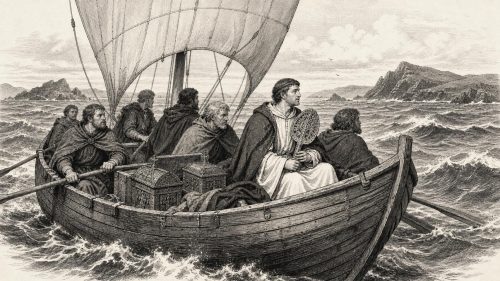
In 1034, Ireland lacked an uncontested high king, as regional dynasties, churches and maritime networks shaped a fragmented political landscape. Donnchad mac Briain of Munster ravaged Osraige, challenging its ruler’s expanding Leinster authority, while Flaithbertach Ua Néill resumed control of Ailech after his son’s death. Killings and treachery destabilised Connacht, Brega, Tethba and neighbouring regions. Ecclesiastical losses included leading figures at Cork, Mungret and Clonmacnoise, and Kells’s lector drowned returning from Scotland with companions and relics. Amlaíb, Dublin’s royal pilgrim, was killed en route to Rome. Annals reveal elite conflict and religious connections, while rural communities bore warfare’s economic burdens.
Read Article
Archived: 26 October 2026
Abstract
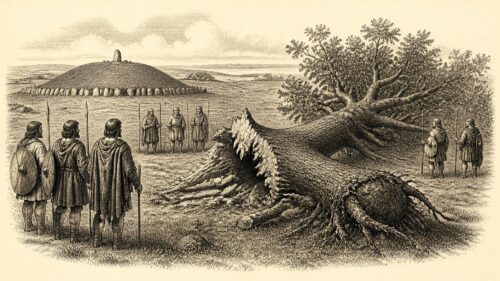
In 982, Máel Sechnaill mac Domnaill, king of Tara, raided Dál Cais territory and uprooted the Tree of Mag Adair, an inauguration symbol challenging Brian’s growing Munster power. Annalistic dating varies, but several sources connect these events with 982. Munster forces raided Osraige, gaining booty but suffering losses, while Ímar of Waterford plundered or destroyed Kildare, exposing the wealth and vulnerability of major churches. Deaths and killings among rulers in Leinster, Ulster, Connacht and smaller kingdoms highlighted unstable successions. The year reveals Ireland as interconnected competing lordships, where raids, sacred sites, ecclesiastical wealth and dynastic authority shaped political power throughout.
Read Article
Archived: 26 October 2026
Abstract
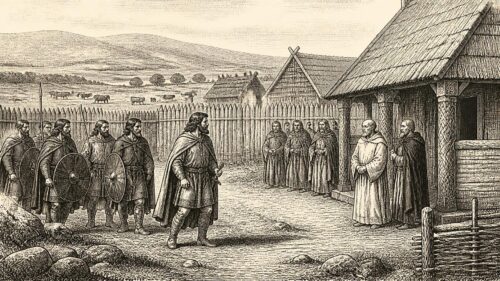
In 976, Ireland experienced political upheaval marked by Mathgamain son of Cennétig’s treacherous killing after Donnubán of Uí Fidgente surrendered him to Máel Muad despite guarantees. His death disrupted Dál Cais ascendancy in Munster, leaving Brian’s future leadership uncertain. Donnchad of Osraige and Domnall of Brega also died, while Tadc of Cianachta and Máel Sechnaill of Gabair were killed. Ecclesiastical authority remained influential yet vulnerable: Conaing died, Colum Cille’s shrine was plundered, and Nendrum’s superior was burned. Annals depict fragmented, negotiated power, linking kingship, churches, warfare and Norse-Gaelic involvement across Ireland while stressing continuity in ordinary life beyond recorded events.
Read Article


