Archived: 10 October 2026
Abstract
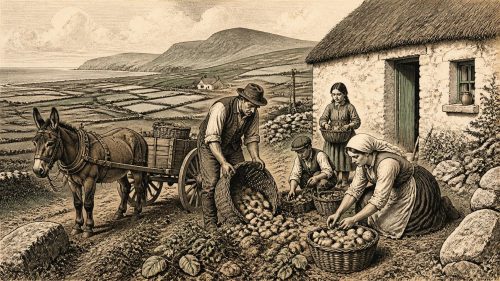
In 1877, Charles Stewart Parnell and Joseph Gillis Biggar used prolonged Commons obstruction to challenge Westminster’s neglect of Irish concerns, weakening Isaac Butt’s constitutional leadership. A poor potato harvest and falling agricultural prices increased hardship among tenants, especially in western districts, foreshadowing but not yet constituting the Land War. Dublin saw centralising prison reform, creation of the Science and Art Museum, and medical licences for Sophia Jex-Blake, Mary Edith Pechey and Louisa Atkins. Dom Pedro II of Brazil toured Ireland, highlighting international connections. Meanwhile, the Ballymena and Larne Railway opened goods traffic, illustrating uneven regional economic development within Ireland clearly.
Read Article

Archived: 26 September 2026
Abstract
Ireland in 1183 remained fragmented between Gaelic kingdoms and expanding Anglo-Norman lordships, with Henry II’s overlordship largely remote. The pivotal event was Conchobar Máenmaige’s accession in Connacht after Ruaidrí Ua Conchobair retired to Cong, initiating or intensifying a dynastic conflict rather than ending Ruaidrí’s influence. Annals also record killings among regional kindreds, illustrating persistent intra-Gaelic rivalry. De Lacy governed Meath and de Courcy defended Ulaid, where his Benedictine foundation at Down combined religious patronage with political consolidation. Anglo-Norman settlements, castles and estates remained vulnerable, while ports, farming, crafts and exchange linked changing lordships with enduring local communities across the island.
Read Article

Archived: 26 September 2026
Abstract
1179 Ireland remained politically fragmented despite Henry II’s overlordship, Ruaidrí Ua Conchobair’s western influence, and expanding lordships under Hugh de Lacy and John de Courcy. Laurence O’Toole attended the Third Lateran Council, became papal legate, secured Dublin’s privileges, and convened Clonfert synod to advance church reform against lay control. Henry reprimanded de Lacy following Irish complaints, but settlement continued. In the north, a relic-sworn peace at Ardstraw ended in treacherous killings and devastation. Fires damaged Armagh and several church centres. Annals recorded famine, warfare and destructive snow, exposing vulnerable rural communities amid religious reform, diplomatic engagement, and enduring political instability.
Read Article

Archived: 26 September 2026
Abstract
In 1160, Ruaidrí Ua Conchobair exploited the assassination of Meath’s king, installing Diarmait Ua Máel Sechlainn and securing hostages from Meath and Tethbae. His subsequent Shannon expedition compelled Thomond’s rulers to acknowledge his authority, marking Connacht’s recovery against high-king claimant Muirchertach Mac Lochlainn. Rival armies confronted one another without settlement, while Mac Lochlainn’s instigated killings and broken guarantees fostered northern instability. Dublin’s king Brodar was slain amid conflict. Clerical and scholarly deaths reflected reform and learned culture, while institutions including Jerpoint emerged. Burnings, warfare and cattle exactions burdened communities. Ireland remained divided, but rivalry centred upon Ruaidrí and Mac Lochlainn.
Read Article

Archived: 26 September 2026
Abstract
In 1155, Ireland’s competing overkings, Tairrdelbach Ua Conchobair and Muirchertach Mac Lochlainn, struggled for influence through Meath, hostages, cattle raids and control of Shannon crossings. Following Maelsechlainn Ua Mael Sechlainn’s death, Mac Lochlainn installed Donnchad, who was deposed by Meathmen. Campaigns destroyed bridges and fortifications, while captives, oaths and restitution shaped alliances. Fires affected major ecclesiastical settlements amid continuing church reform and construction. Rural life depended on farming, livestock and lordly obligations, while coastal towns traded. Henry II considered, but abandoned, an Irish expedition. Laudabiliter’s disputed papal authority later furnished arguments supporting English conquest, although no intervention occurred until 1169.
Read Article

Archived: 26 September 2026
Abstract
In 1125 Tairdelbach Ua Conchobair, king of Connacht, extended his supremacy across central and southern Ireland through campaigns, tribute and political appointments. After southern revolts, warfare affected Limerick, Lismore and coastal Munster. He exacted compensation at Aghaboe, asserted influence over Leinster and Dublin, then invaded Meath after Murchad Ua Mael Sechlainn destroyed Shannon bridges. Tairdelbach expelled Murchad and partitioned Meath among dependent rivals, provoking immediate killings and continued instability. Fighting also affected Brega, Airgialla and Connacht. Meanwhile Armagh’s church received a new roof, prominent clerics died, and warfare burdened farming, trade and local communities. His authority remained powerful but insecure.
Read Article

Archived: 26 September 2026
Abstract
In 1094 Muirchertach Ua Briain, king of Munster, recovered influence across Ireland amid rivalry with Domnall Ua Lochlainn. After campaigning involving Dublin, Meath, Leinster and northern forces, he expelled Gofraid Méránach, probably Godred Crovan, from Dublin, securing its maritime wealth. Domnall Ua Máel Sechlainn of Meath was killed and Muirchertach divided Meath between dependent rivals. His authority nevertheless met limits: Connacht’s Síl Muiredaig defeated Munster-backed forces at Fidnach, and one expedition failed to obtain hostages. Armagh’s abbot visited Munster successfully, while violence, severe weather and scarcity compounded disruption. Dublin’s trade and crafts endured. The year redistributed power without unifying Ireland.
Read Article
Archived: 26 September 2026
Abstract
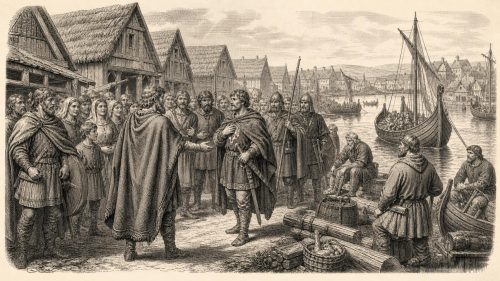
In 1046, Ireland remained politically fragmented, with regional rulers relying on alliances, military strength and lesser kings’ submission. Art Uallach Ua Ruairc, king of Connacht, was killed by Cenél Conaill, enabling Áed in Gaí Bernaig Ua Conchobair’s succession. Northern, midland and Munster elites also suffered killings, exposing conflict beneath provincial overkingship. Dublin’s inhabitants expelled Ímar mac Arailt and restored Echmarcach mac Ragnaill, linking Irish politics to the Irish Sea world. Ecclesiastical life continued through clerical successions, pilgrimage and Ardfert’s lightning damage. Annals preserve elite events, while farming, trade, churches and local communities sustained everyday life amid raids, obligations and insecurity.
Read Article

Archived: 7 October 2026
Abstract
30,150 BCE denotes an approximate late-Marine Isotope Stage 3 horizon, rather than a recoverable Irish year. Ireland experienced unstable cold conditions before maximum British-Irish ice expansion, with local ice-free intervals indicated by Crag Cave speleothems. Castlepook Cave, County Cork, preserves a fauna including reindeer, mammoth, giant deer, predators and tundra species, demonstrating open habitats. A National Museum reindeer femur, possibly cut by a stone tool and dated around 31,000–33,000 BCE, may indicate Ireland's human activity. However, disturbed context and explanations preclude proof of settlement. Glaciation and later landscape change destroyed evidence, leaving caves as archives of change and hunter presence.
Read Article

Archived: 13 September 2026
Abstract
The reference year 31,801 BCE places Ireland within the Late Pleistocene, without claiming an event datable to that precise year. Glacial deposits, freshwater sediments and cave faunas suggest cold conditions before greater ice expansion. Open ground and freshwater environments could persist locally as the British-Irish Ice Sheet developed unevenly. Later glaciation destroyed or buried earlier surfaces, making annual reconstruction impossible. Evidence from Derryvree, Castlepook and regional ice studies instead supports environmental sequences. The article treats the date as an archival marker, explaining how fragmentary deposits, animal remains and calibrated dating inform cautious accounts of Ireland’s changing prehistoric landscape and ecology.
Read Article
Archived: 13 September 2026
Abstract
The reference year 31,805 BCE introduces Ireland’s Late Pleistocene animal communities without assigning them to an exact calendar event. Castlepook Cave preserves remains of reindeer, mammoth, giant deer, bear, wolf and spotted hyaena from the wider period. These finds illuminate cold environments before later glaciation. Open habitats could persist locally while ice expanded elsewhere, producing an uneven regional landscape. Later glacial activity erased many earlier surfaces, leaving a fragmentary record. Castlepook studies, Derryvree environmental evidence, museum collections and regional reconstructions provide context. The article explains how surviving animal and sediment evidence informs cautious interpretation of Ireland’s changing Ice Age ecology.
Read Article
Archived: 13 September 2026
Abstract
The reference year 31,806 BCE provides an archival setting for cold environments before later glaciation in Ireland. Deposits near Maguiresbridge in County Fermanagh preserve plants and invertebrates associated with treeless freshwater habitats. They demonstrate biological activity during a period of growing glacial influence. Across the British-Irish region, ice developed unevenly rather than covering every landscape simultaneously. Subsequent glaciation removed much earlier evidence, limiting chronological precision and local reconstruction. Derryvree studies, regional ice research, museum collections and radiocarbon calibration help interpret the remains. The article distinguishes this broad environmental history from claims about an identifiable event in one exact prehistoric year.
Read Article

