Animals on the Ice-Age Plain31805 BCE
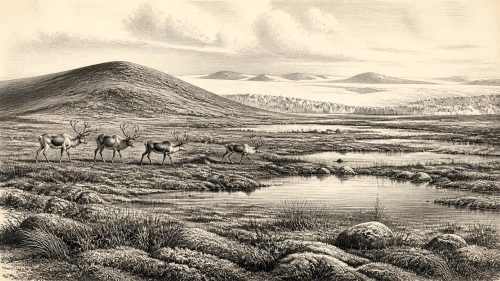
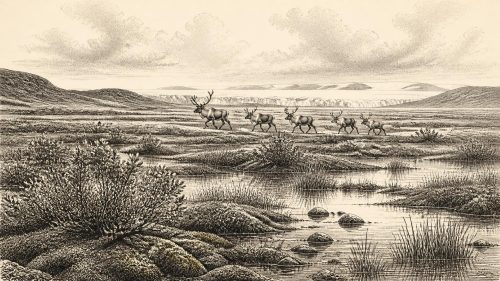
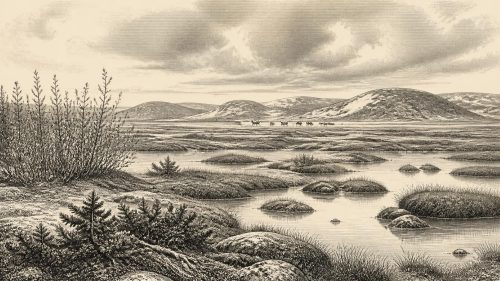
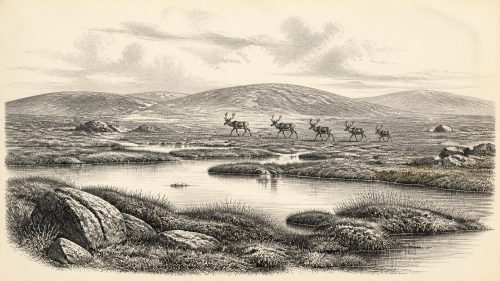
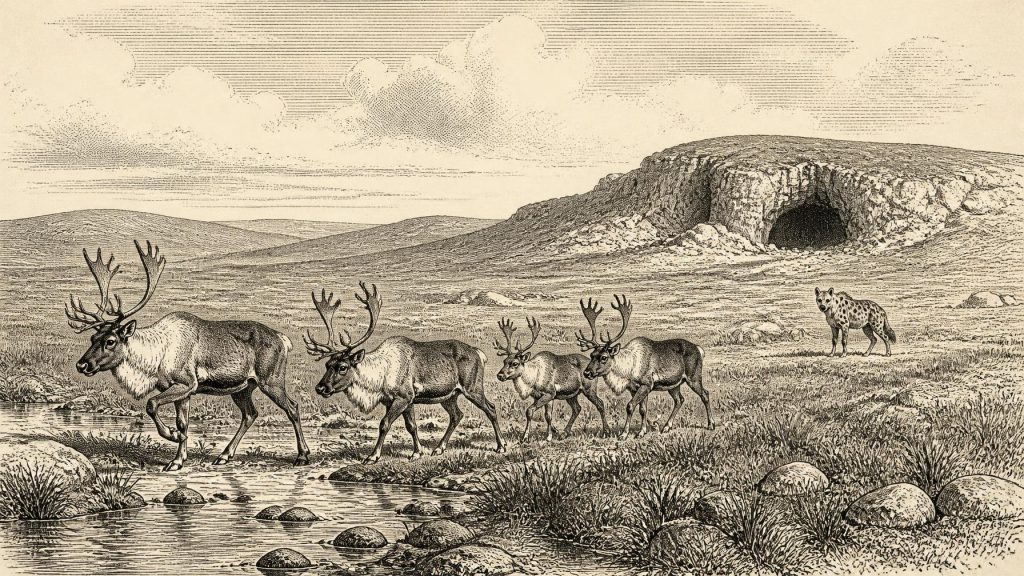
The reference year 31,805 BCE introduces Ireland’s Late Pleistocene animal communities without assigning them to an exact calendar event. Castlepook Cave preserves remains of reindeer, mammoth, giant deer, bear, wolf and spotted hyaena from the wider period. These finds illuminate cold environments before later glaciation. Open habitats could persist locally while ice expanded elsewhere, producing an uneven regional landscape. Later glacial activity erased many earlier surfaces, leaving a fragmentary record. Castlepook studies, Derryvree environmental evidence, museum collections and regional reconstructions provide context. The article explains how surviving animal and sediment evidence informs cautious interpretation of Ireland’s changing Ice Age ecology.
Dateline
31,805 BCE is a modern archive reference year within the Late Pleistocene. Ireland preserves no exact event for this date. Cave remains and environmental deposits instead describe a cold landscape undergoing major climatic change.
Ice-Age Fauna
Castlepook Cave preserves evidence of reindeer, mammoth, giant deer, bear, wolf and spotted hyaena from the wider period. These finds help reconstruct the ecology of Ireland before later glaciation.
Changing Ground
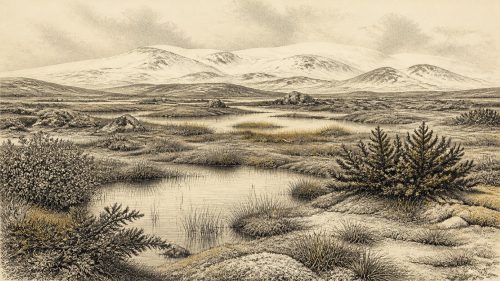
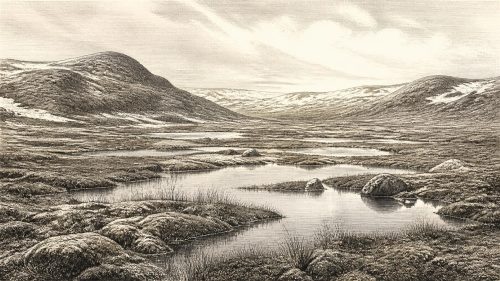
Open habitats could persist locally while ice expanded elsewhere. Later glacial activity removed many earlier surfaces, leaving a fragmentary record.
Primary Sources
Research draws on National Museum collections, Castlepook studies, Derryvree environmental evidence, BRITICE-CHRONO and radiocarbon calibration research.