Kingship in Flux1046 CE
In 1046, Ireland remained politically fragmented, with regional rulers relying on alliances, military strength and lesser kings’ submission. Art Uallach Ua Ruairc, king of Connacht, was killed by Cenél Conaill, enabling Áed in Gaí Bernaig Ua Conchobair’s succession. Northern, midland and Munster elites also suffered killings, exposing conflict beneath provincial overkingship. Dublin’s inhabitants expelled Ímar mac Arailt and restored Echmarcach mac Ragnaill, linking Irish politics to the Irish Sea world. Ecclesiastical life continued through clerical successions, pilgrimage and Ardfert’s lightning damage. Annals preserve elite events, while farming, trade, churches and local communities sustained everyday life amid raids, obligations and insecurity.
Dateline
The surviving Irish annals make 1046 unusually visible, but only in sharp fragments. They record killings, changes of ruler, ecclesiastical deaths and a destructive lightning strike; they do not supply a continuous narrative or exact dates for most events. Several chronicles agree closely, suggesting dependence on shared earlier records, while the Munster-focused Annals of Inisfallen preserve additional southern material. What emerges is a year of unstable regional kingship, contested succession and continuing interaction between Gaelic Ireland and the Hiberno-Norse towns.
A Divided Political World
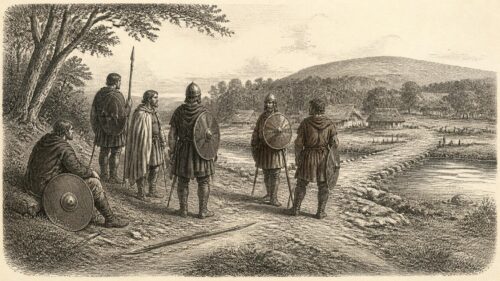
Ireland had no uncontested island-wide monarch in 1046. Donnchad mac Briain, son of Brian Bóruma, remained king of Munster and had previously extracted submissions from much of southern Ireland, but his wider authority had weakened. Diarmait mac Maíl na mBó was consolidating power in Leinster, while the Northern Uí Néill, the kingdoms of Ulaid and Airgialla, and competing Connacht dynasties pursued their own interests. Overkingship depended on personal alliances, hostages, military success and the recognition of lesser rulers; it was never simply inherited as a modern territorial crown.
The year’s most consequential western event was the death of Art Uallach Ua Ruairc, king of Connacht. The Annals of Ulster, Annals of Tigernach, Chronicon Scotorum, Annals of Loch Cé and Annals of Inisfallen all place his killing in 1046. The fuller accounts say that Cenél Conaill killed him, in the second year after he had plundered Clonmacnoise. The wording encourages a providential interpretation: violence against the great monastery was followed by punishment. It does not, however, prove that vengeance for Clonmacnoise was the attackers’ actual motive.
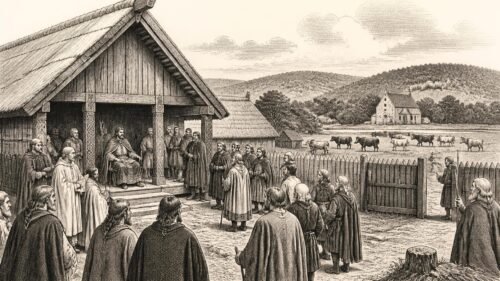
Art belonged to the Ua Ruairc dynasty of Bréifne, one of several branches of the wider Uí Briúin competing for supremacy in Connacht. His death ended a reign conventionally dated from 1030. The subsequent sequence of kings places Áed in Gaí Bernaig Ua Conchobair, of the Síl Muiredaig, in the Connacht kingship from 1046. No annal describes a formal inauguration that year, so the accession should be understood as a reconstruction from the regnal sequence rather than a precisely narrated ceremony. Nevertheless, the change marked another stage in the long rivalry between the Ua Ruairc and Ua Conchobair kindreds.
Killings Across the Kingdoms
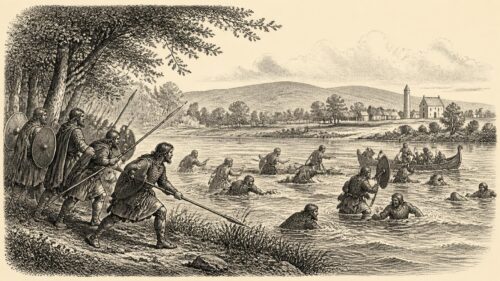
Violent deaths were also recorded in the north. Muiredach, son of the former Ailech king Flaithbertach Ua Néill and designated heir of Ailech, was burned in a house together with Aiteid Ua hAiteid, king of Uí Echach Ulad. The fire was deliberately set by Cú Ulad son of Congalach, ruler of Uachtar Tíre. The annals give no location or explanation. The episode nevertheless illustrates a recurring form of elite violence: rivals or guests trapped within a timber building could be killed without the risks of open battle. It also removed figures connected with two important northern dynasties in a single attack.
In the central midlands, Fergal Ua Ciardha, king of Cairpre, was killed by Ua Flannacáin, king of Tethba, or by the men of Tethba. Maelruanaid Got Ua Ciardha was also killed, although the chronicles do not explain whether the deaths were connected. These terse notices reveal conflict at a level below provincial kingship, where neighbouring peoples competed over lordship, tribute, grazing, routes and allegiance. Such local struggles mattered greatly because provincial rulers depended upon the military support and submission of these smaller kingdoms.
Conchobar Ua Loingsig, king of Dál Araidi, was killed in Leinster by a son of Domnall Ua Loingsig. The later Annals of the Four Masters add that the killing occurred in Uí Buidhe and violated guarantees provided by Niall mac Eochada, king of Ulaid, and Diarmait mac Maíl na mBó. That detail cannot be independently confirmed from every chronicle, but it is historically plausible and important. Guarantees issued by powerful kings were a principal means of creating safe conduct and negotiated peace. Breaking one was not merely murder: it challenged the honour and authority of the guarantors.
Munster’s record is less uniform. The Annals of Tigernach and Four Masters report the killing of Ua Findgaine, an Eóganacht ruler. The Annals of Inisfallen instead preserve the deaths of a king of Eóganacht Locha Léin and Ua Cerbaill, described as a nobleman of Munster. These may represent separate events rather than contradictory versions of one death. The entries show that, beneath Donnchad mac Briain’s provincial overkingship, older Eóganacht lines remained politically active and vulnerable.
A New King in Dublin
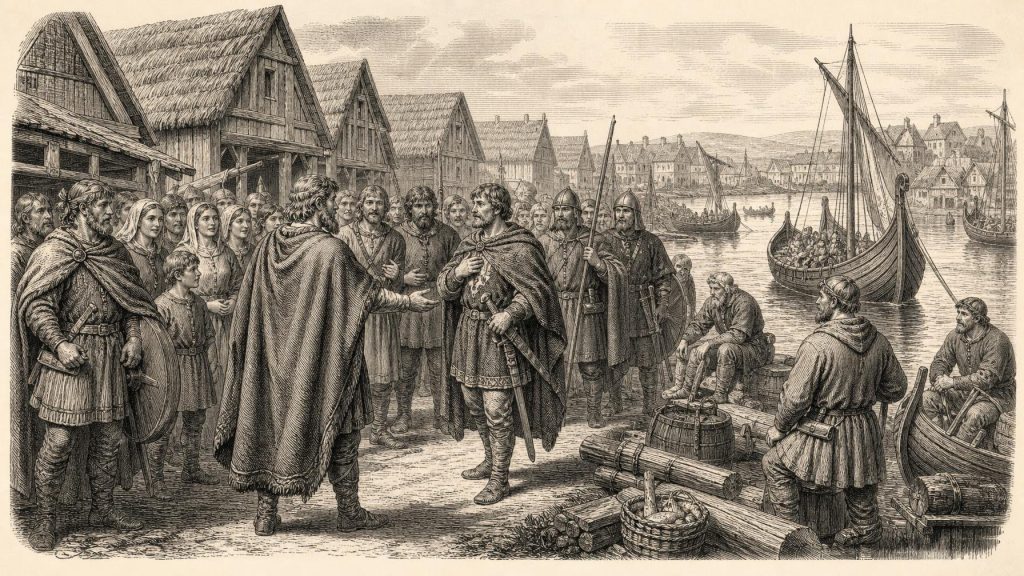
The clearest change of government occurred at Dublin. The Annals of the Four Masters state that the son of Aralt was expelled by the foreigners and that the son of Ragnall was chosen as king. Comparison with other sources identifies them as Ímar mac Arailt and Echmarcach mac Ragnaill. Echmarcach had already ruled Dublin from 1036 to 1038. His restoration in 1046 began a second reign lasting until 1052.
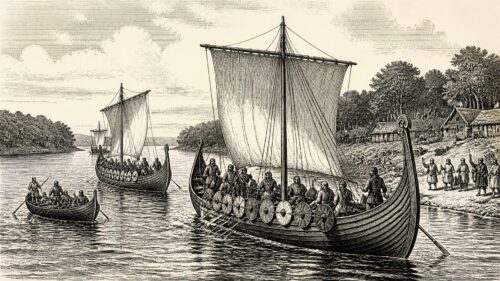
The annalists’ language is revealing. Dublin’s Hiberno-Norse inhabitants were not simply passive subjects awaiting a hereditary successor: they could expel one ruler and accept or elect another. A Dublin king required support within the town, but he also needed alliances among Irish kings and across the Irish Sea. Echmarcach was associated with the wider maritime world of Man, the Isles and western Britain, while probable family ties connected him to Donnchad mac Briain. His return therefore belonged to both Irish politics and a mobile Irish Sea political system.
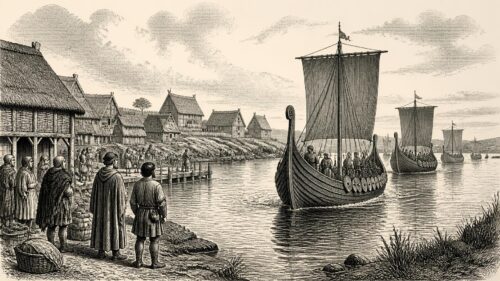
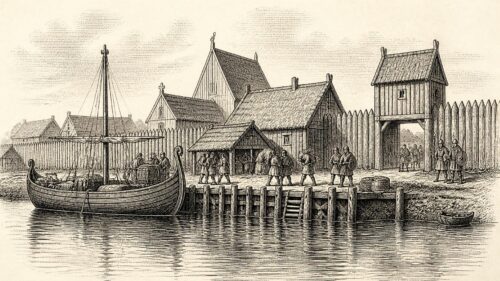
Dublin in 1046 was a densely occupied timber town of houses, workshops, lanes, property boundaries and waterfront activity. Archaeology demonstrates the presence of merchants, sailors, smiths, comb-makers, leatherworkers, woodworkers, textile producers and craftspeople working precious and non-ferrous metals. Silver, weighed bullion and coins circulated there; Ireland’s first native coinage had begun under Sitriuc Silkbeard around 997, although it cannot be shown that Echmarcach issued coins specifically in 1046. Imports and raw materials linked Dublin with Britain, continental Europe, Scandinavia and the Irish interior. Hides, textiles, livestock products and enslaved people were among the commodities feeding its economy.
Churches and Learning
At Armagh, Mael Pátraic Ua Bileóice, chief lector, died at an advanced age. The Annals of Ulster praise his piety and chastity and name Dub dá Leithe son of Mael Muire as his successor. A lector was a senior teacher and learned churchman, so the notice records not only a death but an orderly transfer within one of Ireland’s foremost centres of worship, scholarship and manuscript culture. The Four Masters also record the death of Mael Brigte, a priest of Kildare, while the Annals of Inisfallen note Ua Flainn of Cua, successor of Ailbe, on pilgrimage.
In Kerry, lightning wrecked the stone church of Ard Ferta, modern Ardfert. This is a firmly dated event in the Annals of Inisfallen and valuable evidence that a substantial masonry church stood there by 1046. Stone churches remained exceptional enough to be identified as such, and their construction demanded skilled labour and considerable patronage. The strike would have disrupted a religious settlement serving worshippers, clergy, dependants and travellers, although the record does not describe casualties or the speed of reconstruction.
Clonmacnoise remained another major religious, economic and political community. Its position beside the Shannon and an important east–west route supported a large mixed population of clergy, craftspeople, tenants, students and visitors. Art Ua Ruairc’s earlier plundering demonstrates that sacred status did not guarantee safety. Churches possessed food, livestock, metalwork, land and political influence, making them attractive targets during disputes. Annalists could in turn defend ecclesiastical interests by presenting subsequent misfortune as divine judgement.
Life Beyond the Annals
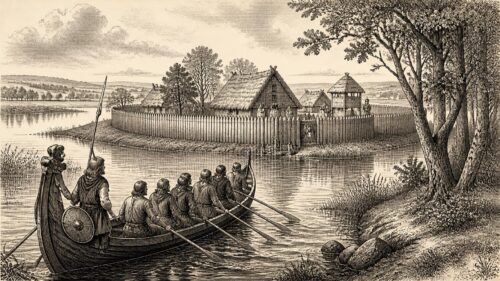
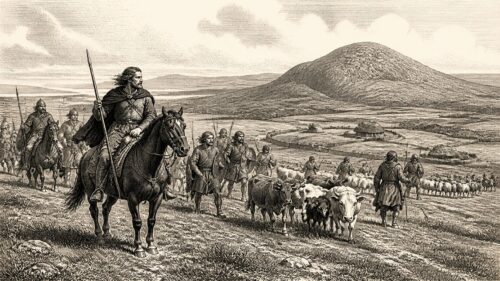
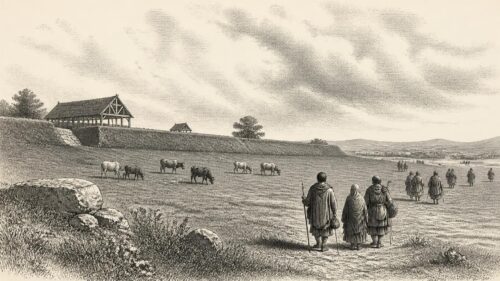
Most inhabitants of Ireland passed through 1046 without entering any written record. Rural families lived principally from mixed farming, with cattle carrying particular economic and social importance. Grain, pigs, sheep, dairying and seasonal use of pasture supported households clustered around ringforts, open farmsteads, crannogs and ecclesiastical settlements. Rents and obligations were commonly rendered in livestock, food, labour and hospitality. A hosting could therefore burden ordinary communities through requisitioned provisions, billeting and the seizure of cattle even when no major battle occurred nearby.
The Annals of Inisfallen had reported damaged crops in 1045. It is impossible to measure the effect in 1046, but the notice suggests that some communities may have entered the year with reduced reserves. Against that vulnerable background, raids and elite killings were more than court politics: they could remove livestock, destroy stores, interrupt cultivation and displace dependants. Yet daily production continued, churches maintained teaching and worship, and Dublin’s workshops and quays connected Ireland to wider markets.
Thus 1046 was not a single national crisis but a series of regional turning points. Art Ua Ruairc’s death altered Connacht’s dynastic balance; Echmarcach regained Dublin; northern and midland rulers died violently; and Armagh replaced a distinguished teacher. The annals chiefly remember kings and clerics, but behind their brief entries lay communities whose labour sustained armies, monasteries and towns. Ireland remained politically fragmented, culturally Christian, economically diverse and deeply connected to the Irish Sea world.
Primary Sources
- The Annals of Ulster: Year U1046
- The Annals of Tigernach: Annal T1046
- Annals of Inisfallen: Annal AI1046
- Annals of the Four Masters: Annal M1046
- Chronicon Scotorum
- Annals of Loch Cé, A.D. 1014–1590
- Echmarcach
- Diarmait mac Maíl na mBó
- Donnchad
- Ua Néill, Flaithbertach
- Biographies A–Z: Ua Conchobair, Áed in Gaí Bernaig
- Viking: National Museum of Ireland Collections
- 950–1450: Vikings, Normans and Medieval Mints
- First Genome Sequences of Irish Vikings Reveal Ties to Norway and Interactions with Local Populations
- Viking Videos
- Irish School of Illumination, c. 650–1100
- Clonmacnoise Visitor Guide
- St Brendan, Ardfert, Cathedral
- Early Medieval Ireland, AD 400–1100: The Evidence from Archaeological Excavations
- Medieval Ireland: Territorial, Political and Economic Divisions
- Ciarán's Church and His Lands: A Study of the History and Development of Clonmacnoise
- Dublin City Urban Archaeology Survey: Preliminary Report
- Dublin City Urban Archaeology Survey
- Viking Sites in Dublin