
Crowley’s Mandate
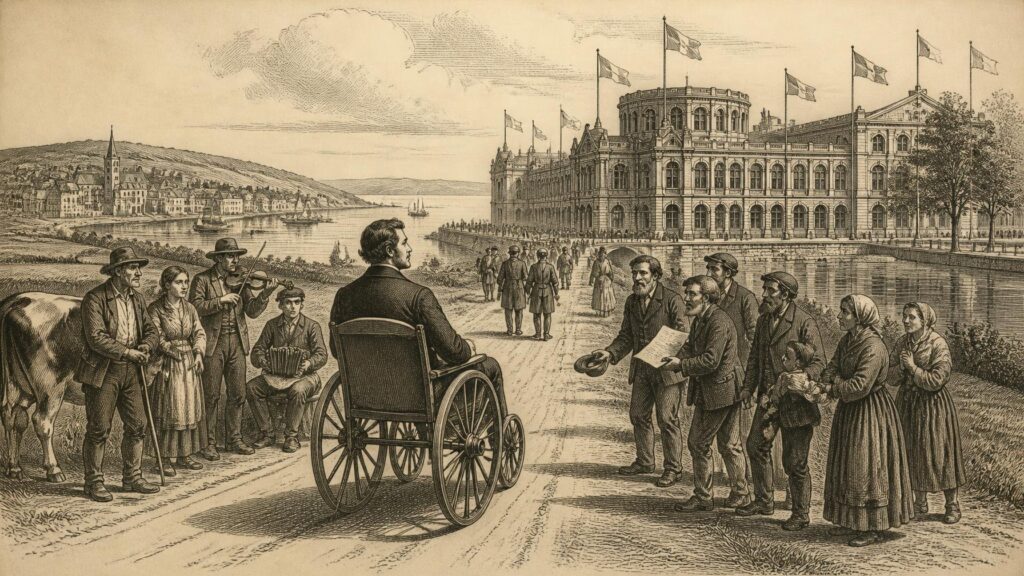
AI generated historical illustration, not a contemporary photograph.
At a Glance
For a quarter of a century Brian Crowley was among the most recognisable Irish faces in European politics: a Fianna Fáil Senator turned five-time European election poll-topper, a legislator with a conspicuous interest in social questions and copyright, and, finally, the protagonist of a dispute which exposed the uneasy relationship between Irish electoral personalism and party allegiance in Brussels. His European story was neither a simple tale of federalist enthusiasm nor one of rejection. It was the history of an Irish representative who treated Europe as an arena in which regional loyalties, constitutional argument, disability rights and individual political judgement could all be pursued at once.
Early Formation
Brian Crowley was born in Dublin on 4 March 1964 and raised in Bandon, County Cork, a town which remained central to his political identity. He belonged to a family already known in public life: his father, Flor Crowley, had served as a Fianna Fáil TD for west Cork. Such inheritance did not mechanically create a political career, but it supplied a close view of constituency work, the local meeting and the personal obligation that have long mattered in Irish electoral politics. Crowley’s later European career retained that stamp. Though he operated in Brussels and Strasbourg, he was never easily detached from the political landscape of Cork and the broader south of Ireland.
At sixteen he suffered the accident that left him paralysed and a wheelchair user. It was a defining fact of his life, but it should not be allowed to eclipse the breadth of his public work or reduce his electoral achievements to sentiment. Contemporary reporting and later tributes consistently stressed his determination to resist that interpretation. He studied law at University College Cork and became active in Fianna Fáil. In February 1993 Albert Reynolds, then Taoiseach, nominated him to Seanad Éireann. At twenty-eight, Crowley entered national representative politics unusually young, and he did so at a time when the European Parliament was becoming an increasingly important arena for Irish legislators.
Ireland had joined the European Economic Community in 1973. By the early 1990s, European questions were no longer confined to farm payments or the broad promise of development funds. The Single Market, the Maastricht settlement, social regulation, citizenship and the future enlargement of the Union made European representation politically more substantial. For an ambitious young Senator, an election to the Parliament offered both a national platform and a special kind of constituency: one geographically vast, dependent on personal organisation, but connected to lawmaking beyond the State. Crowley sought Fianna Fáil selection for the 1994 European election in the Munster constituency and found that this unusual platform suited his political gifts.
Munster Mandate
The election of June 1994 established the central fact of Crowley’s public career. He topped the poll in Munster with 84,463 first-preference votes, an exceptional result for a thirty-year-old in his first popular electoral contest. He had resigned from the Seanad after his election to the European Parliament. The result was notable not merely because he won a seat, but because it showed a level of direct support which could not plausibly be explained by party label alone. Fianna Fáil’s organisational base and the Crowley family name mattered; yet his ability to campaign extensively and forge a rapport with voters plainly mattered too.
Irish European elections employ proportional representation by the single transferable vote. That system encourages candidates to cultivate a personal vote alongside party identification, particularly in very large constituencies where voters often encounter candidates through local visits, clinics, voluntary groups and regional media rather than through a sustained discussion of European legislative detail. Crowley became a particularly vivid example of the form. He was associated with Fianna Fáil throughout his parliamentary career, but he built a following strong enough to survive changes in constituency boundaries, changes in the European political groups with which Fianna Fáil aligned itself, and large changes in Irish political mood.
In the Parliament’s fourth term, from 1994 to 1999, he served on committees concerned with social affairs, employment, procedure, credentials and immunities, while also acting as a substitute on legal affairs and citizens’ rights. His delegations included relations with Hungary and Lithuania. These assignments locate his early career in the Europe of the 1990s: a Union preparing for enlargement eastwards, refining its internal rules and debating the social consequences of integration. They also reveal a more practical parliamentary apprenticeship than later public recollections sometimes suggest. He was not simply a travelling constituency representative; he entered committee structures where detailed work, rapporteurships and cross-party negotiation shaped influence.
His political group affiliation reflected the distinctive route taken by Fianna Fáil in the European Parliament. In the fourth term he belonged first to the European Democratic Alliance and then to the Union for Europe group. These were not the large continental blocs which tend to dominate accounts of European politics. Their existence illustrates the complicated fit between Irish party traditions and transnational parliamentary families. Fianna Fáil had republican origins and an electorate difficult to place neatly on the conventional continental left-right spectrum. Its MEPs therefore occupied groupings that combined national parties with different histories and differing degrees of enthusiasm for centralisation.
Personal Politics
Crowley’s electoral strength was repeatedly renewed. He topped the poll at every European election he contested: 1994, 1999, 2004, 2009 and 2014. The scale of the achievement became especially plain in 2014, when he received 180,329 first preferences in Ireland South, a constituency that had replaced the former Munster constituency after boundary revision. The territory was enormous, extending from Cork and Kerry through much of the south and south-east. A vote of that kind depended on formidable organisation, name recognition and a capacity to communicate across counties with different local concerns.
It is tempting to turn these results into folklore: the indefatigable wheelchair user, supposedly irresistible wherever he went, whose victory was ordained by personality. Such stories contain an element of truth but not enough explanation. Documented evidence shows an elected representative who worked a dense circuit of constituency engagements and who understood the political value of accessibility. It also shows the benefits of an inherited local network and a party machine. Interpretation must hold both facts together. Crowley’s support was personal, but personal support in Ireland is usually constructed through organisational labour, family ties, party association and a sense that a candidate will answer the telephone after polling day.
His disability was relevant to his politics in a second, more substantive sense. It made the built environment, transport, independent living and public access immediately political questions. Oireachtas tributes after his death recalled that his presence in Leinster House helped make the building wheelchair accessible. That observation should not be inflated into a claim that one person alone transformed institutional access; such changes arise from campaigns, officials, advocates and law. Nevertheless, Crowley brought embodied experience to a political system which had too often treated disabled citizens as objects of care rather than as legislators, voters and decision-makers.
His public manner also helped define his reputation. Accounts from contemporaries describe humour, music, sociability and a dislike of pity. Before and alongside politics he had performed music, worked in local radio and held employment in business. The importance of such experience is not that it made him an exotic politician, but that it helped him speak in a register different from the formal language usually associated with European institutions. He could present Brussels not as a distant constitutional abstraction but as a place in which Irish people’s work, rights and local problems were at stake.
European Groups
From 1999 to 2004 Crowley remained in the Union for Europe of the Nations group. His committee work moved from employment and social affairs to legal affairs and the internal market, and he served on delegations linked to Hungary, Lithuania and the United States. The combination is revealing. Employment policy connected directly with concerns about social protection and opportunity; legal and internal-market work led towards the technical rules that shape trade, consumer arrangements and professional life; relations with accession states and the United States placed Irish representation within the Union’s wider international network.
His most elevated group position came in the sixth parliamentary term, 2004 to 2009, when he was co-chair of the Union for Europe of the Nations. The official parliamentary record also places him on the Conference of Presidents and the Committee on Constitutional Affairs, as well as on delegations for relations with the United States and, as a substitute, with the Maghreb countries and the Arab Maghreb Union. This was a significant office. The Conference of Presidents brings together the Parliament’s political leadership and plays an important part in organising its business. Co-chairmanship gave Crowley a position well beyond that of an ordinary backbencher.
The period coincided with a phase of ambitious European constitutional debate. The proposed Constitutional Treaty, rejected in referendums in France and the Netherlands in 2005, and the subsequent Lisbon Treaty raised arguments in Ireland about sovereignty, democratic legitimacy and the division of competence between the Union and Member States. Crowley’s committee assignment did not mean that he alone determined Fianna Fáil policy, nor should it be assumed that all constitutional questions aligned exactly with his later position. It does, however, show that he was professionally engaged with the institutional issues that later made the choice of European group so politically charged.
In 2009 Fianna Fáil moved into the Alliance of Liberals and Democrats for Europe group, and Crowley followed for the Parliament’s seventh term. He served on the Committee on Industry, Research and Energy, while continuing in the delegation for relations with the United States and acting as a substitute on legal affairs. The change demonstrated that European group membership is not a merely decorative label. It locates an MEP in a network of committee influence, policy priorities, staff resources and shared voting strategy. For Irish parties, it also announces how they wish to be understood by continental partners.
The transfer to ALDE was therefore an important public repositioning for Fianna Fáil after the collapse of the UEN group. It associated the party’s delegation with liberal and centrist forces strongly committed to European integration. Crowley’s presence within ALDE should not be portrayed as evidence that every ideological reservation had disappeared. His long parliamentary record suggests a politician comfortable with Europe as a practical framework while retaining a pronounced concern for national discretion. The tension became unmistakable after the 2014 election.
Legislative Labour
Crowley’s most tangible legislative distinction was his role as rapporteur for the 2009 report on amending the European directive concerning the term of protection of copyright and related rights. The European Parliament’s official record identifies him as rapporteur for the Committee on Legal Affairs. The measure concerned the protection of performers and phonogram producers. His report argued for changes designed to ensure that performers, including session musicians, could share meaningfully in benefits from an extended period of protection rather than see the extension accrue wholly to record companies.
This subject has a particular resonance in Crowley’s biography because of his abiding love of music. But the historical importance lies in the work rather than in an appealing anecdote. A rapporteur gathers evidence, steers a committee report, negotiates amendments and helps carry an institutional position through Parliament. Crowley’s report addressed the precarious position of performers whose work might be commercially valuable long after the original contracts had offered limited protection. It considered supplementary remuneration, collecting societies, the treatment of contractual deductions and provisions sometimes described as allowing performers to recover rights where recordings were no longer made available.
Care is needed in assigning credit. The resulting European rules were the work of the Commission, Council, Parliament, national governments, cultural organisations, industry interests and many MEPs. It would be inaccurate to call the copyright extension simply ‘Crowley’s law’. It is accurate to say that, as rapporteur, he had a documented and consequential role in shaping Parliament’s approach. His work is a useful corrective to the idea that his European record consisted chiefly of electoral popularity or institutional manoeuvre. In a specialised field of law, he performed a task which left a trace in the public legislative archive.
His other listed parliamentary activity suggests a broad, if not always headline-grabbing, agenda. He raised questions about social-security coordination, farm retirement and family matters, electronic identification of cattle, environmental damage associated with pylons, research and innovation, and the rights of persons with disabilities. Such questions should not be mistaken for enacted law in themselves. They are evidence of issues he brought before European institutions. Taken together, they show a representative whose interests ranged from rural and agricultural concerns to social inclusion, energy, science and the regulation of markets.
The distinction matters for historians. Parliamentary databases record membership, questions, speeches and reports; they are strong evidence for formal activity but less conclusive about influence over outcomes. Newspaper narratives record controversy and reaction but may understandably concentrate on moments of conflict. A rounded assessment must use both. Crowley was a parliamentarian who did committee work and served in group leadership. He was also a regional politician whose authority rested on a conspicuous personal mandate. The two roles were interdependent rather than contradictory.
Disability Advocacy
Disability rights were the area in which Crowley’s personal experience and European work most visibly met. He was associated with the European Parliament’s Disability Intergroup and publicly supported the principle that disabled people should be able to live independently with appropriate assistance. His interventions should be placed in the longer movement for disability equality in Ireland and Europe, led above all by disabled people and advocacy organisations. It would be misleading to assign that movement to an individual politician. Yet it would be equally misleading to overlook the importance of a wheelchair-using MEP insisting within European forums that accessibility and independent living were matters of rights, not charitable concession.
During the seventh term, the Parliament’s record lists Crowley among those who submitted a question on the rights of persons with disabilities. This fits a broader political pattern. He could speak as a legislator familiar with law and institutions, but also as a person who knew that travel, public buildings and the organisation of personal support determined whether formal rights could be exercised. That connection gave his advocacy a credibility which did not depend on rhetorical display. It also helps explain why many later tributes described him as a figure of encouragement to people facing exclusion.
There is a danger, however, in presenting disabled political figures solely as symbols of resilience. That approach can flatten their disagreements, their technical work and their political agency. Crowley’s career included sharp controversy and conscious ideological choices. His disability advocacy was important precisely because he was not a ceremonial emblem of inclusion: he was a powerful electoral operator, group leader, committee member and lawmaker. The historical interest is in that whole combination. He expanded the visible range of who could hold political authority while participating in the compromises and conflicts of ordinary party politics.
Southern Ascendancy
By 2014 Crowley’s relation with voters appeared stronger than ever. He topped the poll in the new Ireland South constituency with 180,329 first preferences. The result came after a punishing period for Fianna Fáil, which had suffered a historic general-election collapse in 2011 following the financial crisis. In that setting, Crowley’s return as the party’s sole MEP was politically striking. It demonstrated the durability of a local and personal appeal that could not be read straightforwardly from national polling or party fortunes.
Yet his final term quickly exposed the limits of even an immense personal mandate. After the election he chose to sit with the European Conservatives and Reformists group rather than with ALDE, the group to which Fianna Fáil belonged. He explained the ECR as a non-federalist but pro-European grouping, arguing that it would enable him to work more effectively for Ireland South and stating that concerns about staff employment had contributed to his decision. Fianna Fáil’s leadership took an entirely different view. It regarded the move as incompatible with the party’s European alignment and its core political principles.
On 24 June 2014 Fianna Fáil removed Crowley from its parliamentary party. Contemporary reporting made clear that this was not a simple expulsion from party membership: the dispute centred on the parliamentary whip and his unilateral choice of European group. The distinction is historically important. European Parliament groups are transnational and do not map perfectly onto domestic parties, but they carry ideological, strategic and practical significance. Crowley had been elected as a Fianna Fáil candidate in a contest where the party was aligned with ALDE. His switch therefore raised a question about whether an MEP’s direct electoral mandate could override the collective affiliation on which the party had stood.
The row also reveals a broader feature of Irish political history. In a candidate-centred electoral culture, a politician with an exceptional personal vote may claim a special responsibility to individual constituents and a personal right of judgement. Party leaders, by contrast, must protect a programme, international alliances and a collective identity. Neither claim is inherently fictitious. Crowley’s 2014 vote was real and extraordinary; so was Fianna Fáil’s right to determine the organisation of its own parliamentary party. The conflict was thus not merely a personality clash. It was an unusually public confrontation between two legitimate, competing conceptions of representation.
Final Absence
Crowley’s final parliamentary term was overshadowed by severe illness arising from complications associated with his condition. Although the European Parliament record lists committee and delegation assignments in the ECR, he did not attend plenary votes during the 2014–2019 term. Reports from the period and his own later statements described repeated operations, lengthy hospital treatment and an inability to travel. In 2019 he announced that he would not seek re-election, saying that ill health had compelled the decision. It was the end of a career which had begun with a spectacular electoral breakthrough twenty-five years earlier.
The absence provoked justified public concern. Ireland South had elected an MEP with the State’s largest personal vote, and constituents had a reasonable expectation of representation at a time when European matters, including Brexit, were of keen importance. Crowley maintained that he had continued working remotely through his office and staff. That claim should be recorded, but it cannot remove the practical difference between casework and direct participation in committees, debates and votes. The historical judgement is therefore necessarily double: illness explains the absence and demands humanity; the democratic deficit created by prolonged non-attendance was nonetheless real.
His death on 23 January 2026 prompted tributes across the political spectrum. The Taoiseach described him as a major vote-getter and an impactful legislator; Seanad speakers recalled both his European victories and his advocacy for those on the margins. Tributes naturally emphasise generosity, courage and friendship. They are valuable evidence for how a public figure was remembered, though they are not a substitute for critical history. Crowley’s legacy includes sustained legislative service, the normalising effect of his presence in high office, and an exceptional record of electoral connection. It also includes the unresolved questions raised by his final term and the 2014 rupture.
Historical Measure
Brian Crowley’s European career resists a neat political label. He served successively in the European Democratic Alliance, Union for Europe, Union for Europe of the Nations, ALDE and ECR groupings. These changes should not be treated as proof that his beliefs had no coherence, but neither should they be dismissed as technical rearrangements. They reflect the shifting homes available to Irish parties in the European Parliament and Crowley’s own preference for a Europe that left strong scope for national governments. His 2014 choice brought that preference into open conflict with the party that had made him a candidate.
His career also demonstrates that European politics has always been part of Irish local history. The image of Brussels as remote is incomplete. Crowley’s victories were made in parish halls, town streets, campaign offices, family networks and local media across Munster and Ireland South. His parliamentary work concerned copyright, farms, employment, disability, energy and the internal market: issues that crossed the supposed boundary between the European and the everyday. Europe was not a separate chapter from Irish political life in his case. It was the scale on which a deeply Irish, regional form of politics operated.
The documented record supports a substantial assessment. Crowley was elected five times, led a European parliamentary group as co-chair, served in consequential committees, acted as rapporteur on copyright legislation and advocated for disabled people’s rights and independent living. Interpretation adds that his greatest political achievement was to unite these institutional roles with a uniquely durable personal connection to voters. Folklore may celebrate the charm and resilience of the man; history should preserve those qualities without allowing them to obscure the work, the structures and the controversies. His was a European career made in Ireland, and an Irish career that cannot be understood without Europe.
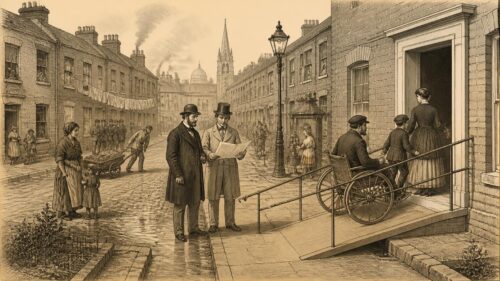
Brian Crowley’s career highlights a tension between personal electoral authority and party allegiance in European politics. His repeated poll-topping victories in Munster and Ireland South suggest that regional connection, accessibility and individual judgement could command support beyond a party label. Yet his 2014 move from ALDE to the ECR showed that parliamentary group membership carried serious political consequences. The article also complicates any narrow reading of his popularity through his legislative and disability-rights work. How should we assess the balance between a representative’s personal mandate, party commitments, and responsibilities within transnational parliamentary groups across different national political traditions in Europe?