
Wet Winters
At a Glance
Weather Records
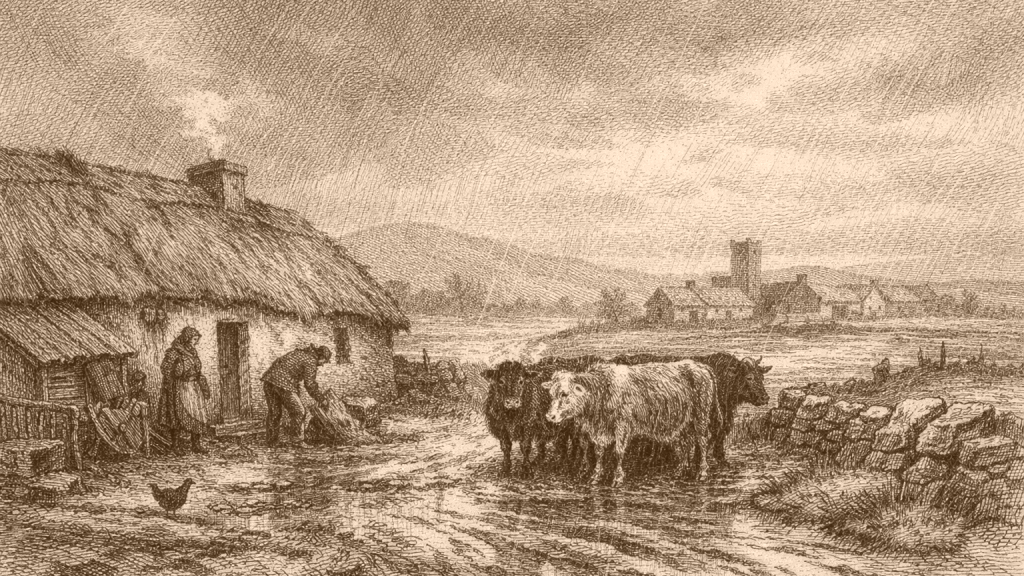
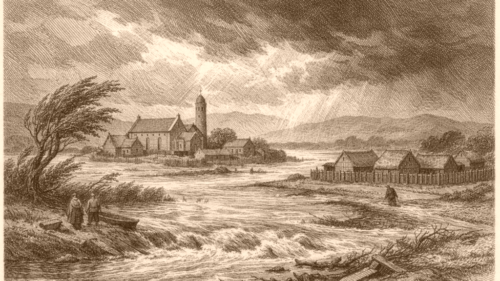
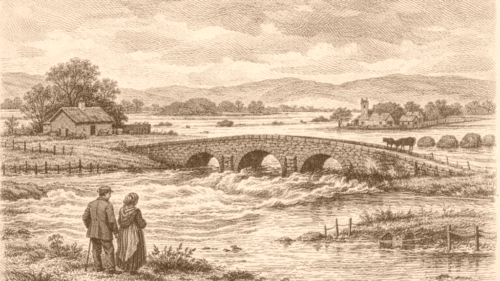
The excerpts record severe weather in a spare, annalistic form. One notice says that in a named year there was much wet and bad weather, and that it ruined the corn. Another says that the whole winter came in summer, glossed as heavy rain and windstorm. A third says that snow fell for a day and a night on a specific March day and caused slaughter among beasts in Ireland. These are short entries, but each links weather with loss. [2] [3]
The same passages also show that weather notices sit alongside many other kinds of entries rather than forming a separate narrative. In the winter-rain notice, the weather line is followed immediately by ecclesiastical appointments. In the summer-winter notice, the weather statement stands amid killings, a battle-skirmish, a hosting, and disease. The snow notice likewise appears in a year that also records burning, slaughter, and a peace agreement. The layout makes comparison possible, but it does not itself explain causes. [2] [3] [4]
Corn Loss
Only one of the weather notices directly names a crop. The year with much wet and bad weather is said to have ruined the corn. No figures are given, and no further explanation is attached. The entry is therefore notable for its narrowness: it identifies the weather, names the damage, and moves on. Within these excerpts, the loss is agricultural rather than military, and it is presented as a consequence stated outright by the annalist. [2]
The other weather notices are less specific about farming but still point to material disruption. Heavy rain and windstorm are described as making the whole winter occur in summer, while the snow notice says that beasts suffered slaughter. Taken together, the passages show different kinds of harm: one to corn and another to livestock. The records do not provide prices, shortages, or local detail, so the comparison must remain limited to the direct wording of the entries. [3] [2]
Animal Harm
Animal loss appears most clearly in the snow entry. After describing a day and night of snowfall, the annal says that beasts were slaughtered across Ireland. The statement is general rather than local, and it does not identify species or numbers. Even so, the wording makes weather itself the immediate frame for the damage. In these excerpts, livestock loss is one of the few effects of bad weather described beyond crops, and it is stated in direct, economical language. [2]
A separate Four Masters passage records an unknown plague among cattle after a plundering of Cluain-mic-Nois, but that notice is not a weather record. It is useful only as a contrast: the excerpt distinguishes animal loss caused by weather from animal loss associated with later retaliation and affliction. The weather passages themselves remain simpler. They do not describe herds in motion, rescue efforts, or public response, only destruction or slaughter under adverse conditions. [4]
Public Order
The weather notices appear within years that also contain violence, killings, and formal settlements. In the summer-winter year, the text includes a killing, a battle-skirmish, a hosting, disturbance of an assembly, warfare, a slaughter, a death, disease, and a great murrain of cows. In the wet-weather year, the weather notice is followed by ecclesiastical appointments and then a peace agreement. These juxtapositions do not prove a single public meaning, but they show that weather and order were recorded in the same compact framework. [3] [2]
The annal entries do not explicitly connect the bad weather to battles, peace, or assembly disturbance. That omission matters. The texts place different kinds of record side by side, but they do not state that rain produced violence or that snow threatened safety in a social sense. What can be said directly is narrower: severe weather, crop failure, livestock death, combat, and clerical business all appear together in the same year entries, without explanation between them. [3] [2]
Brief Form
These excerpts are striking for brevity. The weather notices occupy only a sentence each, and each sentence carries a distinct effect: ruined corn, heavy rain and windstorm, or slaughter of beasts. The surrounding entries are equally brief, whether they record killings, a defeat, or appointments to church office. The form is therefore comparative as well as factual. It allows weather, warfare, and officeholding to be set beside one another in the same compressed annual register. [2] [3] [4]
A wider manuscript note on the Annals of Ulster confirms that the digital text is based on multiple manuscript witnesses and later editorial handling, but that background does not alter the wording of the weather entries themselves. For the present comparison, the important point is simpler: the passages available here preserve short, direct notices of weather damage in a year-by-year sequence. No broader narrative of winter hardship is offered in the excerpts. [1]
Limited Scope
Because the evidence consists of isolated annal entries, any larger conclusion must stay modest. The records show wet weather, rain, windstorm, snow, ruined corn, and slaughtered beasts. They also show that these notices sit beside entries about killings, battles, disease, ecclesiastical appointments, and peace. What they do not show is an explicit theory of public safety, a causal explanation, or a sustained account of winter weather across many years. [2] [3] [1]
Seen strictly within these passages, the relation between wet winters and public safety is one of proximity rather than stated interpretation. Weather damage is recorded as damage. Public disorder is recorded as disorder. The annals do not join them with argument, and the excerpts do not justify reading one as the cause of the other. The strongest conclusion is therefore descriptive: severe weather was important enough to be noted alongside other year events in concise public records. [2] [3]
Source References
Hover over a number to see the source. Select it to open the source.


How do the annal entries describe wet winters and related losses, and what nearby records place those notices in relation to other kinds of events?