
Year by Year
Explore Year by Year articles from the most modern historical year back to the oldest.
3,305 Articles Archived
Banbán's Obituary
Archived: 2 November 2026
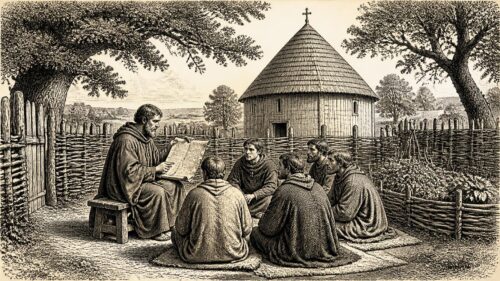
In 685, Irish annals record the deaths of Banbán, learned lector of Kildare, and Forcrann, abbot of Clonmacnoise, though differing chronologies prevent precise dating. Their notices demonstrate the importance of major churches as centres of learning, landholding, authority and record-keeping. Ireland remained politically fragmented under competing dynasties, with Fínnechta Fledach holding the overkingship of Tara rather than ruling a unified state. Irish writers also carefully recorded Ecgfrith of Northumbria’s defeat and death at Dún Nechtain on 20 May, reflecting ecclesiastical and political links across the Irish Sea.
Brega Raid
Archived: 2 November 2026
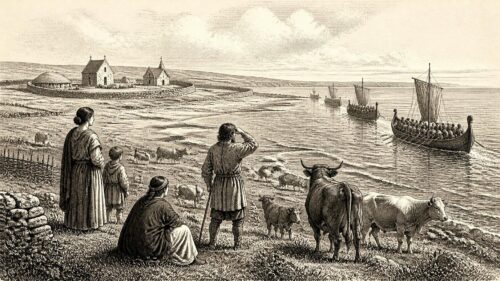
In June 684, King Ecgfrith of Northumbria sent an army under Berht to devastate Mag Breg, or Brega, a wealthy and politically important Irish kingdom. Irish annals and Bede record the destruction of churches; later tradition also reports plunder and captives. The raid struck settlements, ecclesiastical communities and agricultural resources, exposing the Irish Sea as a route for coercion as well as travel and exchange. Its precise motives, landing place, scale and course remain unknown. Contemporary records also note a mortality among children, while later accounts of famine, frost and captive returns cannot securely be assigned to 684.
Child Mortality
Archived: 2 November 2026
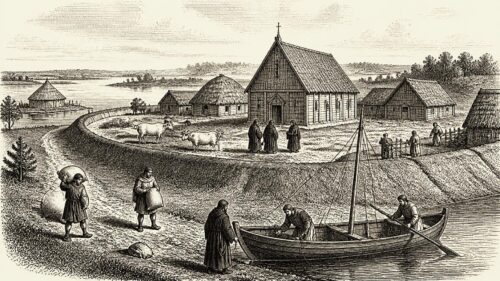
In 683, Irish annals record the killing of Dúnchad Muirisce, king of Connacht, and the deaths of Colgu son of Blathmac and Fergus of Cenél Cairpri at Corann. Two unnamed strongholds were also besieged, though the sources give no participants or outcomes. In October, a ‘mortality of children’ began, reportedly lasting three years, but cannot be identified with a specific disease. The year also saw the deaths of ecclesiastical figures including abbots linked to Cráeb Laisre and Clonmacnoise. Despite chronological variations between annals, the evidence presents 683 as a troubled year of contested kingship, warfare and widespread disease.
Royal Killing
Archived: 2 November 2026
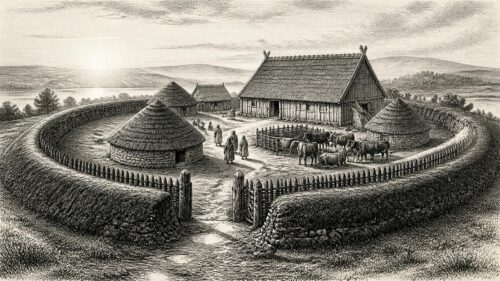
In 682, Cenn Fáelad son of Colgú, king of Connacht, was killed when Ulcha Derg of the Conmaicne Cúile and his followers stormed his residence. The annals confirm the death but give no motive, location or account of its consequences. It illustrates the fragile, negotiated character of provincial kingship among competing kindreds. Another Connacht king was slain the following year, though no direct connection is recorded. Elsewhere, a battle at Ráith Mór in Mag Line involved Britons and northern Irish rulers, while Pictish forces devastated Orkney. Rural communities, dependent on farming, livestock and churches, sustained the political and literate world that preserved these events.
Ráith Mór
Archived: 2 November 2026
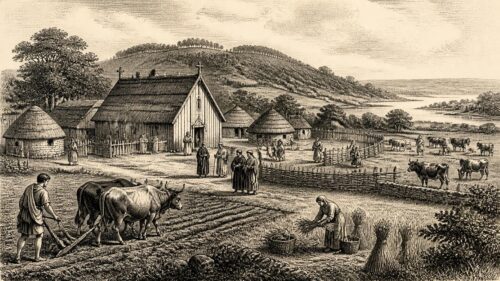
In 681, Irish annals record the killing of Cenn Fáelad, king of Connacht; a battle at Ráith Mór in Mag Line against Britons, where Cathasach, king of the Cruithin, died; and the death of Suibne, superior of Corcach. These brief, variant records demonstrate fragile regional kingship, conflict involving cross-channel contacts, and the public importance of ecclesiastical leaders. They do not establish a single coordinated campaign or detailed causes. Ireland remained divided among interconnected rural kingdoms and church communities, sustained by farming, livestock, patronage and kinship amid recurring local insecurity.
Bolgach Epidemic
Archived: 2 November 2026
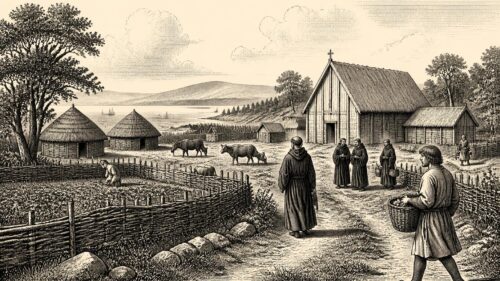
In 680, Irish annals record dynastic violence, ecclesiastical deaths, local conflict and a severe epidemic called bolgach. Fíanamail mac Máel Tuile, king of Leinster, was killed by Foidsechán of his household, apparently in connection with Fínnechta Fledach of Brega. Colmán, abbot of Bennchor (Bangor), and Máel Fothartaig, bishop of Ard Sratha, also died. Notices mention the siege of Dún Baite, a battle at Bodbgna and other killings. Bolgach may have been a blistering or smallpox-like disease, though its precise nature is uncertain. Irish annalists also noted Ælfwine’s death in northern Britain, reflecting cross-channel connections.
Adomnán's Succession
Archived: 2 November 2026
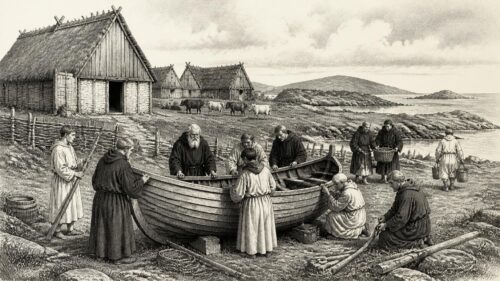
In 679, the death of Fáilbe, abbot of Iona, brought Adomnán to leadership of the Columban network linking Ireland and western Britain. The annals also note the death of Cenn Fáelad, remembered as a learned man, though later stories of his scholarship cannot be accepted uncritically. Fínnechta Fledach, king of Tara, defeated Bécc Bairrche of Dál Fiatach at Tailtiu, demonstrating the reach but not the supremacy of Uí Néill power. Leinster’s kingship remained contested. These notices reveal a rural, cattle-centred society shaped by rival dynasties, churches and learned culture.
Osraige Defeat
Archived: 2 November 2026
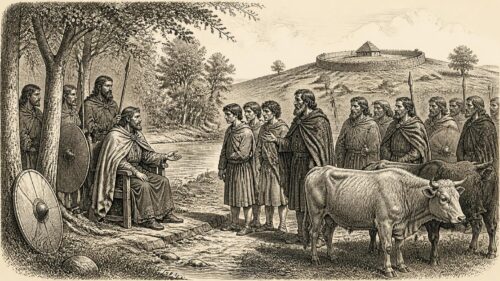
In 678, Fáelán Senchustul of Uí Cheinnselaig defeated Osraige, killing its king, Tuaim Snáma, and reportedly securing hostages that affirmed Osraige’s submission. The victory formed part of continuing pressure by Leinster’s southern dynasty on its neighbour. Colgú, king of Munster, also died, prompting a poorly documented royal transition. Annals record the deaths of bishops at Glendalough and Ferns, underlining the political and economic importance of church centres. Notices from western Scotland reflect continuing Irish Sea connections, though some are chronologically uncertain. No evidence records famine, plague or a nationwide crisis in Ireland that year.
Loch Gabair
Archived: 2 November 2026
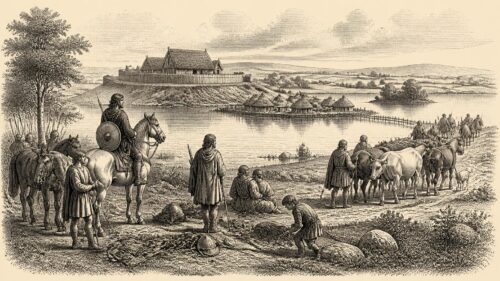
In 677, Fínshnechtae Fledach, king of Tara, defeated the Laigin near Loch Gabair in southern Brega, close to the royal landscape of Tara. The battle, apparently costly to both sides, defended his heartland but did not lead to the conquest of Leinster. The Leinster force was probably led by Fiannamail mac Máele Tuile, whose position survived the defeat. Other annalistic notices record the killing of Dúnchad of Airgíalla and an obscure violent encounter at Cúil Maine, reflecting widespread political instability. The death of Becán of Rùm also points to Ireland’s ecclesiastical links across the Irish Sea. Chronological uncertainty affects several notices.
Ailech Frigrenn
Archived: 2 November 2026
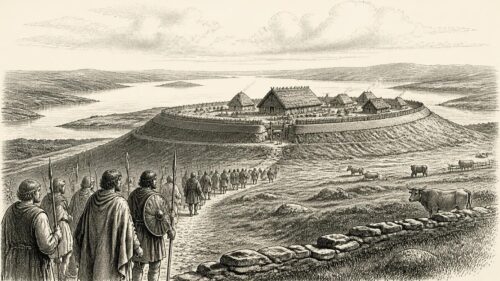
In 676, Fínsnechtae Fledach, southern Uí Néill king of Tara, destroyed Ailech Frigrenn, a royal centre of the northern Cenél nÉogain. The attack demonstrated his recently secured authority but did not end northern autonomy. Annalistic dating is imperfect, though several sources associate the event with this year. The records also note killings among elite kindreds, whose circumstances remain unknown. Deaths of Colmán, bishop of Inis Bó Finne, and Fínán son of Airennán, together with Failbe’s return from Ireland, reveal active ecclesiastical and Irish Sea connections. The year illustrates the links between dynastic warfare, rural resources and religious institutions.
Some records do not yet have a verified historical year and are awaiting chronological placement.