
Year by Year
Explore Year by Year articles from the most modern historical year back to the oldest.
3,305 Articles Archived
Fínnechta's Accession
Archived: 2 November 2026
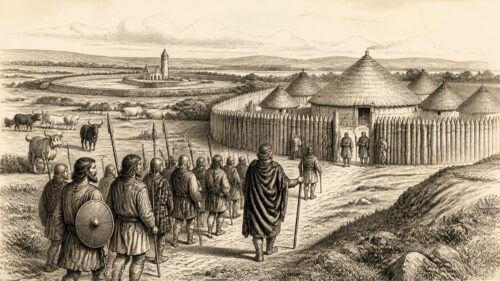
In 675, Fínnechta Fledach mac Dúnchada defeated and killed his cousin Cenn Fáelad mac Blathmaic, succeeding to the kingship of Tara. The battle, later called Aircheltair and possibly fought at Tech Uí Máine in Dál Céltra, cannot be securely located. It marked a dynastic change within Síl nÁedo Sláine, the southern Uí Néill kindred based in Brega, rather than national unification. Control of Tara depended on descent, military strength, alliances and recognition. The conflict affected communities supplying royal retinues, although the annals record few details. Fínnechta’s reign lasted until 695, while later traditions and events should not be assigned to his accession year.
Brega Succession
Archived: 2 November 2026
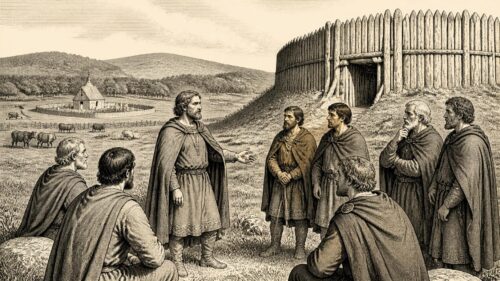
In 674, Cenn Fáelad of Síl nÁedo Sláine was killed in battle by his kinsman Fínnechta Fledach, who succeeded to the contested kingship of Tara. Annalistic dates vary slightly, but the succession crisis belongs closely to this year. The conflict reflected rival dynastic claims within Brega rather than a unified national war. The killing of Congal Cennfhota in Ulaid also affected political and marriage alliances linking north-east Ireland and the midlands. Beneath elite struggles lay an agrarian society sustained by cattle, grain and rural settlements, while churches preserved the brief records on which this history depends.
Mag Luinge
Archived: 2 November 2026
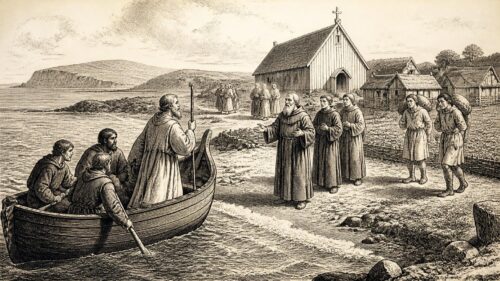
In 673, sparse Irish annals record the killing of Domangart, king of Dál Riata, the burning of Mag Luinge, the capture of named men, Cormac son of Máel Fothartaig’s death, and Abbot Fáilbe’s journey from Iona to Ireland. The evidence does not explain motives, locations or consequences in detail. Mag Luinge was probably a Columban monastery on Tiree, though this remains uncertain. Fáilbe’s visit demonstrates Iona’s active connections with Irish churches. Together, the notices reveal contested authority, vulnerable ecclesiastical communities and the importance of sea routes linking Ireland, Dál Riata and the Hebrides.
Tulach Árd
Archived: 2 November 2026
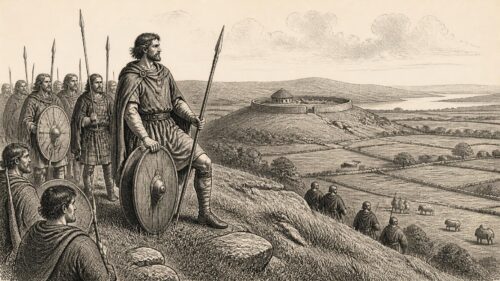
In annalistic year 672, Dúngal of Cenél Bógaine was defeated and killed by Loingsech at Tulach Árd, while Cenn Fáelad of Síl nÁedo Sláine succeeded his murdered brother as king of Tara. Armagh suffered a poorly explained fire, illustrating the vulnerability of an important ecclesiastical and political centre. An abundant mast crop suggested productive woodland resources, particularly for pig feeding, although it cannot indicate general prosperity. The annals also recorded upheaval in the Hebrides, the expulsion of Drost and the burning of Bangor of the Britons, reflecting Ireland’s connections across the Irish Sea.
Sechnassach’s Killing
Archived: 2 November 2026
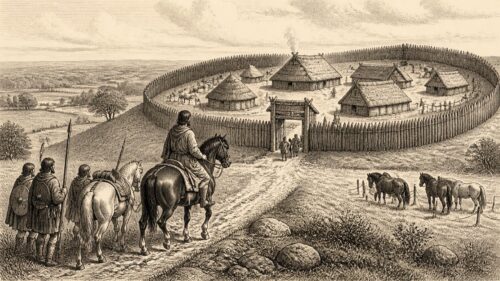
In 671, Sechnassach mac Blathmaic, king of Tara and member of Brega’s Síl nÁedo Sláine, was killed by Dub Dúin of Cenél Cairpri. An elegiac verse recalls his household’s horses, equipment and abundance, reflecting aristocratic status. His brother Cenn Fáelad succeeded later. Annals also note the uncertain death of Déisi ruler Bran Finn, Fergus son of Crunnmael, and the unexplained Battle of Druim Cepais. Máel Ruba voyaged to Britain, preceding his foundation at Applecross in 673. These fragmentary records reveal competitive kingdoms, maritime church links and a rural economy underpinning political power.
Snowfall Famine
Archived: 2 November 2026
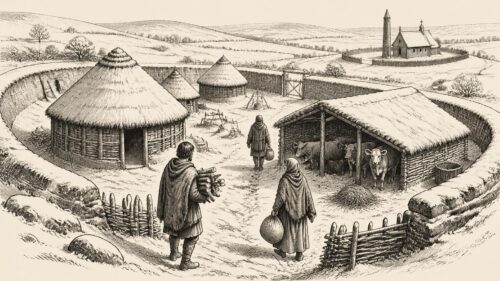
In 670, the Annals of Tigernach recorded great snowfall and famine in Ireland, indicating severe environmental and subsistence pressure without revealing its precise extent or causes. In a rural economy dependent on crops, cattle and stored food, scarcity tested households, rulers, kin networks and churches. The year also saw several killings and deaths, reflecting persistent local political conflict. The assassination of Sechnassach, king of Tara, is dated to 670 by the Annals of Ulster but to 671 by Tigernach, illustrating chronological uncertainty. Ireland remained connected to Britain through ecclesiastical and maritime networks, despite hardship and political instability.
Rural Hardship
Archived: 2 November 2026
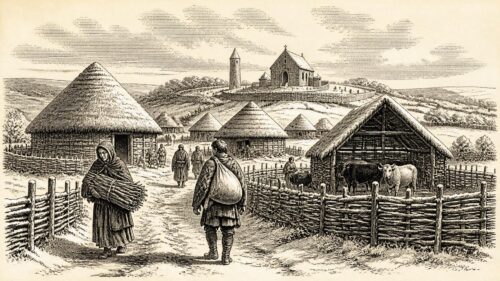
In 669, Irish annals record a great snowfall and famine, indicating severe pressure on rural food supplies. The year also saw the deaths of Cumméne Find, abbot of Iona, and Crítán, abbot of Bangor, marking changes at influential monastic centres linked across Ireland and northern Britain. Máel Fothartaig, king of Uí Thuirtri, died and was commemorated in verse, reflecting the importance of regional kingship and praise poetry. Máel Dúin son of Máenach was killed, while deaths in Pictland underline Ireland’s wider connections. These fragmentary notices reveal hardship, institutional continuity, local political loss and an interconnected Irish Sea world.
Fertas Battle
Archived: 2 November 2026
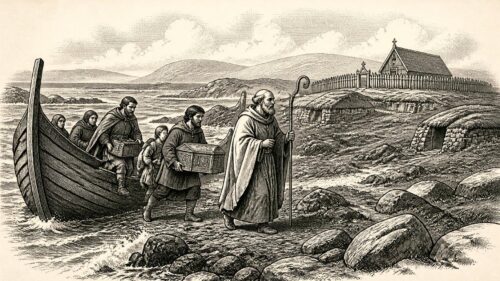
In 668, annalistic sources record the battle of Fertas, where the Dál Fiatach Ulaid defeated their Dál nAraide rivals and Cathassach son of Luirgéne was killed, probably near the lower River Lagan. Bishop Colmán, commonly identified with the former bishop of Lindisfarne, founded a church on Inishbofin after travelling from the Irish Sea world of Iona and Northumbria. The arrival of Gartnaid’s sons from Skye further indicates maritime connections. Notices of plague and elite deaths reflect continuing epidemic uncertainty. Though chronologically imperfect, the sources portray a politically divided, rural Ireland linked by warfare, monastic networks and sea travel.
Bangor Abbots
Archived: 2 November 2026
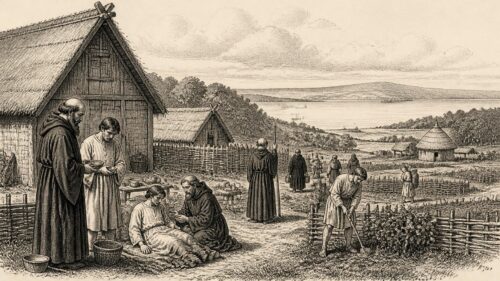
In 667, Ireland remained affected by the great mortality first recorded in 664. Annals associate the year with the deaths of four Bangor abbots, showing the epidemic’s impact on major religious institutions, though its nature and scale remain uncertain. Regional conflict continued: Eógan son of Crunnmael died at Áine, Bran Finn of the Déisi was slain, and the contested battle of Fertas belonged to the same period. Bishop Colmán, leaving Northumbria after Whitby, founded a church on Inishbofin with relics and monks. These events reflect a politically fragmented Ireland linked by active ecclesiastical and maritime networks.
Buide Chonaill
Archived: 2 November 2026
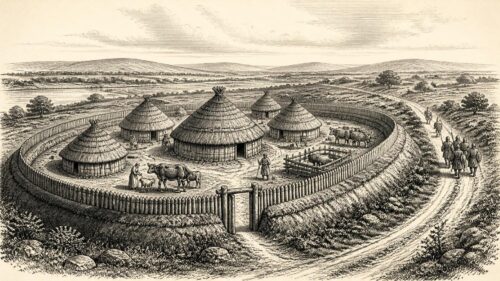
In 666, the buide Chonaill epidemic continued in Ireland, prolonging a mortality crisis that had begun in 663 and affected both elites and wider rural society. Despite disease, regional conflict persisted: the Arada and Uí Fhidgeinti fought at Áine, where Eógan son of Crunnmáel was killed. The death of Cernach Sotal, son of the Uí Néill ruler Diarmait mac Áedo Sláine, reflected dynastic vulnerability after earlier plague deaths. Annalistic chronology varies between sources, limiting certainty about dates and related events. The surviving records show communities, churches and political rivalries enduring under the shadow of prolonged illness.
Some records do not yet have a verified historical year and are awaiting chronological placement.