
Year by Year
Explore Year by Year articles from the most modern historical year back to the oldest.
3,305 Articles Archived
Waterford Grazers
Archived: 28 September 2026
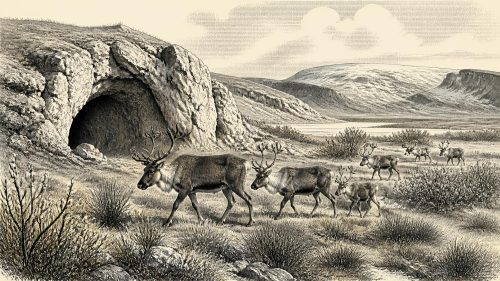
Around 30,544 BCE, Ireland lay in an unstable later Pleistocene environment, before maximum glaciation, with changing climates, exposed continental shelves and expanding ice. Waterford red-deer bones show large grazers occupied parts of the island during this broad period. Cave collections, especially Castlepook in Cork, preserve mammoth, reindeer, giant deer, bears, wolves, Arctic foxes, lemmings and hyenas, indicating varied open and wet tundra habitats. A marked reindeer femur may record Upper Palaeolithic butchery, but its old excavation context prevents firm conclusions about human presence. No settlements, political systems, trade or ritual are known. Subsequent glaciation destroyed or buried much fragile evidence.
Tundra Variability
Archived: 28 September 2026
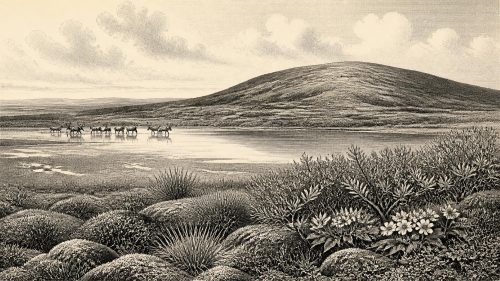
Around 30,545 BCE, Ireland experienced unstable Middle Midlandian glacial conditions, not a documented historical year. At Derryvree, County Fermanagh, freshwater silts sealed between tills preserve evidence of an ice-free interval with treeless tundra, wetlands, aquatic plants, mosses and invertebrates. Cave faunas, especially Castlepook in Cork, indicate intermittent presence of reindeer, mammoth, giant deer and predators, reflecting ecological connections with Europe when sea levels were lower. These assemblages span episodes rather than one moment. No secure human settlement is known; a possibly cut-marked reindeer bone suggests tentative Upper Palaeolithic contact. Derryvree chiefly reveals a cold, changing landscape preceding regional maximum glaciation.

Silty Wetland
Archived: 28 September 2026
30,546 BCE is a modern label within a broad Late Pleistocene range, not a recoverable Irish date. Derryvree, County Fermanagh, preserves freshwater silts and organic remains between glacial tills, demonstrating a local ice-free interval before renewed ice cover. Radiocarbon calibration places its deposits roughly between 34,950 and 29,750 BCE. Plants and insects indicate cold, treeless, periglacial wetland with mosses, sedges and open ground. Cave fauna elsewhere records mammoth, reindeer, giant deer and predators. A possibly cut-marked reindeer bone from Castlepook may indicate human activity, but cannot establish settlement. The evidence documents fluctuating ice, freshwater habitats and intermittent Ice-Age ecological possibilities.
Unresolved Incision
Archived: 28 September 2026
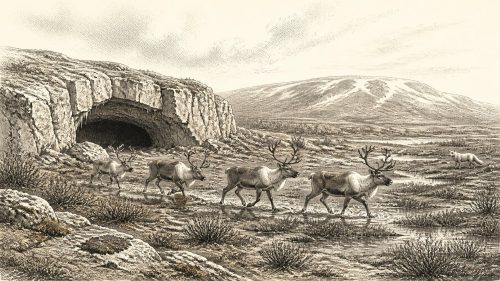
30,547 BCE is not a datable Irish event but an editorial point within unstable Marine Isotope Stage 3. Derryvree, County Fermanagh, preserves freshwater sediments between glacial tills, demonstrating an ice-free tundra wetland during a broad cold interval. Castlepook Cave, County Cork, contains diverse cold-adapted fauna accumulated over millennia. A marked reindeer femur may record stone-tool butchery and thus an early human visit, but lacks supporting tools, hearths or secure contexts. Ireland was environmentally varied, with ice, open ground, wetlands and large mammals, rather than uniformly frozen. Evidence permits possible intermittent human presence, not settlement, society or year-specific history in Ireland.
Treeless Basin
Archived: 28 September 2026
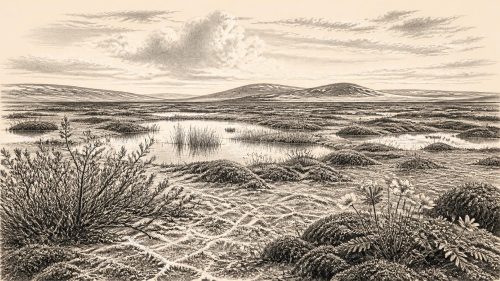
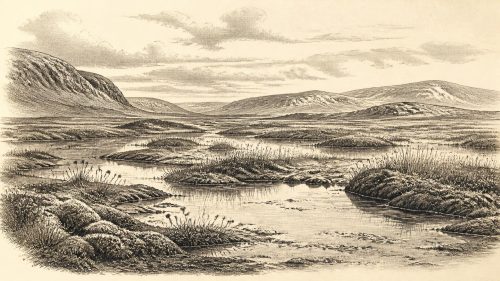
Around 30,548 BCE, Ireland’s history is reconstructed from environmental evidence rather than recorded events. At Derryvree, County Fermanagh, organic sediments between glacial tills preserve a cold, treeless wetland of sedges, mosses, dwarf willow and aquatic plants, demonstrating an ice-free interval locally, not across Ireland. Climatic conditions changed rapidly as ice expanded regionally and sea levels remained low. Castlepook Cave, County Cork, records a diverse, chronologically mixed Ice-Age fauna including mammoth, reindeer and hyaena. No secure evidence establishes human settlement. A possibly butchered reindeer bone may suggest brief human contact, but cannot demonstrate occupation. These archives reveal Ireland’s changing Ice-Age environments.
Middle Midlandian
Archived: 28 September 2026
Around 30,549 BCE, Ireland has no documented human or political history, but Derryvree near Maguiresbridge, County Fermanagh, preserves a rare Middle Midlandian environmental record. Organic freshwater silts between glacial tills, radiocarbon dated broadly to this period, show a locally ice-free cold wetland amid fluctuating glaciation. Sedges, grasses, mosses, herbs, aquatic plants and Arctic-alpine species occupied treeless, waterlogged ground with harsh winters and short summers. Later ice sealed the deposits. Cave remains indicate that cold-adapted mammals, including mammoth, reindeer and hyaena, occurred in Ireland during the wider period, but cannot prove human settlement, activity or reliable routes to the island there.
Bogbean Refugium
Archived: 28 September 2026
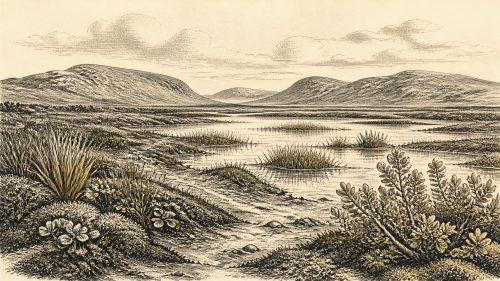
About 30,550 BCE, Ireland was experiencing unstable Late Pleistocene conditions, not a datable historical event. At Derryvree, County Fermanagh, freshwater sediments between glacial tills preserve evidence of a locally persistent wetland amid open tundra: bogbean, dwarf willow, mountain avens, mosses and insects. The sequence proves that ice cover was intermittent, though severe periglacial climates prevailed. Castlepook Cave, County Cork, contains pre-Last Glacial Maximum remains of mammoth, giant deer, reindeer, bear and hyaena, indicating varied cold-stage ecosystems. Human presence remains unproven: a possibly cut-marked reindeer bone is inconclusive. Together, these archives reveal an ecologically diverse, repeatedly glaciated Ireland during this interval.
Disturbed Contexts
Archived: 28 September 2026
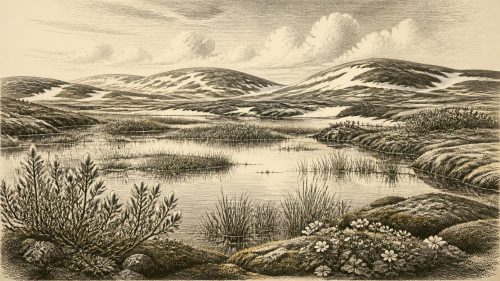
Around 30,551 BCE, Ireland lay within the climatically unstable late Marine Isotope Stage 3, not a recoverable historical year. Derryvree, County Fermanagh, preserves freshwater organic sediments between glacial tills, showing that an ice-free wetland interval supported tundra vegetation, aquatic plants and invertebrates before ice returned. Castlepook Cave, County Cork, contains mixed remains of mammoth, giant deer, reindeer, predators and other cold-stage fauna, demonstrating a changing ecosystem. A cut-marked reindeer femur may indicate brief Upper Palaeolithic human butchery, but cannot prove settlement. Radiocarbon ranges, disturbed contexts and subsequent glaciation limit certainty; evidence chiefly documents shifting ice, habitats and animal populations locally.
Local Interlude
Archived: 28 September 2026
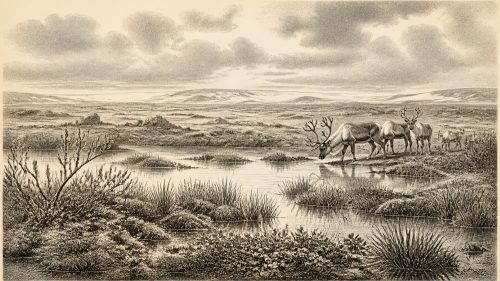
About 30,552 BCE cannot be treated as a recoverable Irish year, but falls within the broad calibrated range of the Derryvree freshwater deposit near Maguiresbridge, County Fermanagh. There, organic wetland sediments between two glacial tills demonstrate a local ice-free interval, supporting tundra-like vegetation, shallow water and severe seasonality. Ireland remained climatically unstable before the Last Glacial Maximum, as ice later expanded and destroyed many earlier landscapes. Cave fauna indicate open habitats supporting mammals including reindeer, mammoth and hyaena. A marked reindeer bone may suggest brief human activity, yet provides no proof of settlement, society or routes of arrival at all.

Glacial Stratigraphy
Archived: 28 September 2026
At 30,553 BCE, Ireland lay within an unstable Ice Age landscape, not a recoverable year. At Derryvree, County Fermanagh, freshwater sediments between glacial tills yielded radiocarbon date BIRM-166, broadly calibrated to 34,950–29,750 BCE. They record a local ice-free wetland interval amid advancing and retreating ice, probably an open, cold, tundra-like environment. Castlepook Cave preserves bones of mammals, including mammoth, giant deer, reindeer and hyaena, but accumulated over long periods. No secure evidence demonstrates human settlement at this date; later evidence cannot establish continuity. Ireland’s deep past is therefore reconstructed from fragmentary environmental and faunal records, rather than events or societies.
Some records do not yet have a verified historical year and are awaiting chronological placement.