
Year by Year
Explore Year by Year articles from the most modern historical year back to the oldest.
3,294 Articles Archived

Catholic Disarmament
Archived: 14 October 2026
In 1695 Lord Capell’s Dublin parliament, under Poynings’ Law, consolidated Williamite rule after the Treaty of Limerick, reconciling Crown revenue needs with Protestant demands for fiscal influence. Amid fears of France, Jacobite exile and Catholic rebellion, it initiated religious exclusion. The Disarming Act required Catholics to surrender weapons and restricted ownership of horses, extending officials’ powers of search and control. The Foreign Education Act curbed Catholic teaching, overseas study and support, attaching severe civil and property penalties. Parliament also regulated property, trade, coinage and worship. Its legislation strengthened administration while making Catholic disability a durable foundation of the post-war settlement.

Huguenot Portarlington
Archived: 14 October 2026
In 1694, Ireland’s post-Williamite settlement advanced through administration rather than warfare. Commissioners began hearing claims under the Articles of Limerick, determining Jacobites’ rights to property, livelihoods and legal protection. Dublin’s Lords Justices managed revenue, including hearth-money exemptions, while debating a parliament whose supply might secure Protestant interests; no parliament met. Government fasts, Trinity College’s centenary celebration and Jonathan Swift’s diaconal ordination reflected Protestant public culture. Portarlington’s French Reformed register documented an emerging Huguenot community. Rewards for robbers and alleged rebels showed continuing insecurity. Queen Mary II’s death made William III sole monarch, leaving Ireland’s constitutional, religious and property settlement unfinished.

Sarsfield Landen
Archived: 14 October 2026
In 1693, Ireland, though no longer a battlefield after the Treaty of Limerick, remained unsettled under Williamite rule. Lord Lieutenant Henry Sydney was recalled, parliament dissolved, and lords justices governed amid English pressure. Protestant military recruitment reinforced the new settlement, while treaty claims and forfeiture investigations determined former Jacobites’ property rights. Authorities pursued suspected tories, rapparees, priests and their families. Ireland remained involved in the Nine Years’ War: Patrick Sarsfield and John Barrett died after Landen, and trade with France was banned. Dublin gained a Huguenot congregation, while Vertue Rewarded transformed war into fiction. Official thanksgiving proclaimed restoration, despite division.
Williamite Parliament
Archived: 14 October 2026
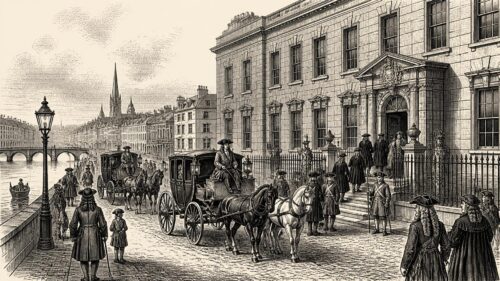
In 1692, post-war Ireland remained unsettled despite Williamite victory. Authorities ratified and administered the Treaty of Limerick, processed claims, organised Jacobite departures, restored taxation, regulated currency, disarmed Catholics and addressed billeting, crime and militia security. Lord Sydney summoned the first Williamite parliament, whose Protestant members recognised William and Mary, defined Ireland’s attachment to England, and portrayed victory as deliverance from Catholicism and French influence. Commons nevertheless contested control of money bills under Poynings’ Law. Treaty protections coexisted with tightening restrictions on Catholics. Ruvigny’s advancement foreshadowed forfeiture and Protestant settlement, while Charles O’Kelly’s Jacobite history recorded a competing memory of defeat.
Limerick Articles
Archived: 14 October 2026
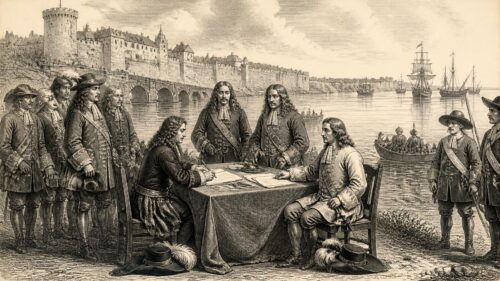
In 1691, Williamite forces broke Jacobite power in Ireland, ending the war begun after James II’s overthrow. Ginkel captured Athlone, then defeated Saint-Ruth’s army at Aughrim, where the French commander’s death precipitated rout and Galway’s surrender. Limerick, divided after Tyrconnell’s death and deprived of resources, endured siege, bombardment and a Williamite crossing of the Shannon. Articles signed on 3 October ended organised resistance, offering protections for Catholic property, trade and worship, though their wording and enforcement remained disputed. Military terms enabled departure, Williamite service or homecoming. Thousands entered French service, while William and Mary secured sovereignty amid unsettled political consequences.
Ballyneety Raid
Archived: 14 October 2026
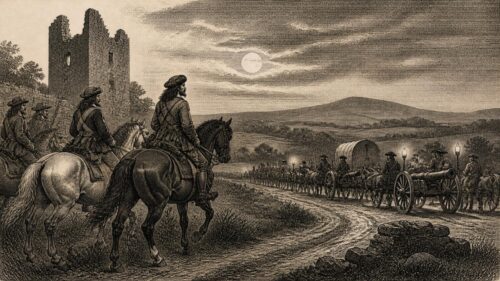
In 1690 Ireland became central to the war between James II and William III, linked to the wider European struggle against France. William’s multinational army defeated the Jacobites at the Boyne, prompting James’s flight to France and William’s occupation of Dublin. Administrative measures followed, affecting coinage, property and allegiance. However, Jacobite forces withdrew towards the Shannon, where Limerick resisted William’s siege. Patrick Sarsfield’s Ballyneety raid disrupted the Williamite artillery train, while a later assault failed amid worsening conditions. William lifted the siege. Williamite victories at Cork and Kinsale secured southern ports, but Limerick’s survival ensured the conflict continued into 1691.

Dundalk Camp
Archived: 14 October 2026
In 1689, deposed James II made Ireland the central theatre of his struggle against William of Orange, supported by Tyrconnell, Catholics and French aid. While Jacobite forces advanced, Protestant resistance at Derry and Enniskillen endured. James’s Dublin parliament funded war, asserted Irish legislative independence, repealed land settlements and passed an extensive Act of Attainder, alongside liberty of conscience. Naval relief ended Derry’s 105-day siege, while Enniskillen’s victory at Newtownbutler weakened Jacobite control in Ulster. Schomberg’s multinational Williamite army landed in August, but its autumn camp at Dundalk suffered devastating disease, exposure and supply failures, leaving the war unresolved that winter.

Ferryquay Gate
Archived: 14 October 2026
In 1688, James II’s Irish government under Tyrconnell expanded Catholic influence in administration and the army, intensifying Protestant fears over religion, land and political security. William of Orange’s invasion of England destabilised royal authority, while troop movements heightened anxiety in Ireland. On 7 December, Derry’s apprentice boys shut Ferryquay Gate against Antrim’s Catholic regiment, defying James’s government without yet declaring for William. Negotiations temporarily admitted Protestant troops and excluded Antrim’s men. Enniskillen also resisted a Jacobite garrison. These Ulster actions exposed weakening government control, encouraged Protestant defence, and established strategic, sectarian and political divisions that developed into the Williamite–Jacobite war.

Tyrconnell Charters
Archived: 14 October 2026
In 1687 Richard Talbot, earl of Tyrconnell, became Ireland’s lord deputy and reshaped government under James II. Although instructed not to remove Protestants solely for religion or overturn land settlements, he promoted Catholics to judicial, administrative, military and local offices. New sheriffs and judges challenged Protestant dominance and intensified fears over legal security. Through charter surrenders and renewals, municipal corporations were reorganised to expand Catholic influence and prepare a favourable parliament. James’s Declaration of Liberty of Conscience widened religious freedoms, though Anglican suspicion persisted. Trade continued, while army recruitment increased. By year’s end, Catholic hopes and Protestant anxieties transformed politics.

Coventry Letter
Archived: 14 October 2026
In 1686, James II’s government rapidly reshaped Ireland’s confessional political order. Lord Lieutenant Clarendon’s administration was increasingly challenged by Richard Talbot, earl of Tyrconnell, whose influence advanced Catholic participation in government and the army. Royal payments to Catholic bishops, appointments of Catholic judges and officials, and military recruitment signalled a reversal of longstanding exclusion. These changes alarmed Protestant proprietors, whose security depended on Restoration land settlements. Richard Nagle’s Coventry Letter linked Catholic political advancement to restitution of confiscated estates, intensifying fears of property redistribution. Despite revenue and commerce, uncertainty affected confidence. Swift’s Trinity degree marked the year’s life amid tensions.
Some records do not yet have a verified historical year and are awaiting chronological placement.