
Year by Year
Explore Year by Year articles from the most modern historical year back to the oldest.
3,294 Articles Archived

Rinuccini's Arrival
Archived: 15 October 2026
In 1645, the Catholic Confederation strengthened its position by capturing Duncannon Fort after Thomas Preston’s siege, gaining control over an important Waterford Harbour defence but not coastal supremacy. Secret negotiations between Edward Somerset, earl of Glamorgan, and Confederate representatives promised religious concessions and troops for Charles I, but their disclosure damaged royalist prospects. Archbishop Malachy Ó Caollaidhe died amid Connacht fighting. Papal nuncio Giovanni Battista Rinuccini arrived with money, arms and authority, intensifying demands for enforceable Catholic guarantees. War imposed severe local burdens, while Jesuits founded a Galway school and John Colgan published a major saints’ collection at Leuven abroad.

Inchiquin's Defection
Archived: 15 October 2026
In 1644, Confederate Ireland governed extensive territory from Kilkenny while negotiating with Charles I’s administration for Catholic worship, property, officeholding and parliamentary freedoms. Ormond pursued peace, but no settlement emerged. A major Confederate expedition under Castlehaven and Owen Roe O’Neill failed to dislodge Robert Monro’s Covenanter forces in Ulster, exposing divisions and supply weaknesses. Meanwhile, Alasdair MacColla’s troops crossed to Scotland to support royalists, prompting Westminster’s no-quarter ordinance. In Munster, Lord Inchiquin repudiated the cessation, joined Parliament, and expelled Catholics from Cork, Youghal and Kinsale. Trade continued amid war, but requisitioning, displacement and insecurity afflicted civilians deeply throughout the island.

Sigginstown Cessation
Archived: 15 October 2026
In 1643, Ireland’s conflict within the Wars of the Three Kingdoms continued despite shifting military and political circumstances. Confederate forces captured Birr but suffered defeat at New Ross, while achieving a Munster success at Cloughleagh. Supply shortages, taxation, agricultural regulation, trade controls and anti-Catholic measures revealed wartime pressures around Dublin. On 15 September, Ormond and Confederate commissioners agreed the Sigginstown Cessation, a year-long armistice involving territorial arrangements, diplomacy and payments. It excluded Scottish Covenanting forces in Ulster and resolved neither religion nor landownership. The truce intensified Confederate debates, enabled northern planning, and coincided with Mícheál Ó Cléirigh’s work at Louvain.

Confederate Government
Archived: 15 October 2026
In 1642, Ireland’s uprising became organised war amid the Wars of the Three Kingdoms. Catholic leaders united Gaelic and Old English interests around defence of worship, property and liberties, while professing loyalty to Charles I. Synods at Kells and Kilkenny promoted an oath of association. In October, the Kilkenny General Assembly established a Supreme Council, subordinate councils, military administration and taxation, creating a fragile Catholic government. Royalist, Protestant and Scottish forces retained key territories; defeats at Kilrush and Liscarroll checked Catholic arms. Owen Roe O’Neill’s return aided Ulster’s future resistance. War brought displacement, requisitioning and violence to all communities nationwide.

Ulster Rebellion
Archived: 15 October 2026
In October 1641, Catholic grievances over plantation, exclusion and religious constraints combined with Stuart political instability to trigger rebellion in Ireland. A planned seizure of Dublin Castle failed, but Sir Phelim O’Neill’s Ulster rising captured Dungannon and Charlemont. His proclamation professed loyalty to Charles I and protection for Protestants, while a later forged royal commission fuelled confusion. The conflict brought flight, plunder, killings, dispossession and winter hardship, alongside retaliatory violence. Testimony in the 1641 Depositions records crisis but requires critical reading. Fighting spread towards Dublin, Leinster and Munster, intensified English and Scottish political conflict, and left Ireland fractured without settlement.

Parliamentary Remonstrance
Archived: 15 October 2026
In 1640, Ireland remained formally peaceful, but Charles I’s war against Scotland exposed mounting political divisions. Parliament granted four subsidies and discussed an enlarged army, then challenged the government’s methods of taxation and collection. Christopher Wandesford, succeeding Strafford as lord deputy, lacked his authority and repeatedly prorogued parliament. The Commons’ November remonstrance denounced Strafford’s arbitrary administration, monopolies, financial exactions and land policies, linking Irish grievances to his Westminster impeachment. Wandesford’s removal of parliamentary journal entries worsened distrust. His death in December, followed by Bishop John Atherton’s execution, weakened government further. Theatre and Gaelic scholarship continued amid crisis, foreshadowing 1641’s upheaval.

Black Oath
Archived: 16 October 2026
In 1639, Thomas Wentworth’s Dublin administration treated Ulster’s Scottish settlers as a security threat amid the Covenanters’ revolt. Commissioners imposed a compulsory loyalty oath, later called the Black Oath, requiring Scots to reject unauthorised covenants; 1,500 troops enforced compliance. Although no uprising occurred, departures, religious division and distrust deepened. Ireland also figured in Charles I’s abortive war plans against Scotland, including Randal MacDonnell’s ambitions, but no expedition sailed. Wentworth’s land policies faced resistance in Connacht, while Catholic grievances remained unresolved. Despite political strain, Dublin produced scholarly works by James Ussher and James Ware, revealing a brittle yet culturally active kingdom.

Wentworth's Rule
Archived: 16 October 2026
In 1638, Wentworth’s administration strengthened revenue, episcopal authority and executive power through monopolies, revenue farms, land investigations and prerogative courts. His suspension and imprisonment of Lord Chancellor Adam Loftus demonstrated the vulnerability of even senior opponents, while proposed Connacht plantations heightened landowners’ fears. Scottish resistance to Charles I’s religious policies brought anxiety to Ulster, where Scottish settlers maintained links with Covenanting communities. Troops moved north as a precaution. Bishop Henry Leslie’s Lisnagarvey sermon and Antrim communion records revealed pressure for conformity. Meanwhile, church revenues expanded and Dublin’s theatre flourished. Ireland remained peaceful, but coercive government and religious division presaged crisis.
Defective Titles
Archived: 16 October 2026
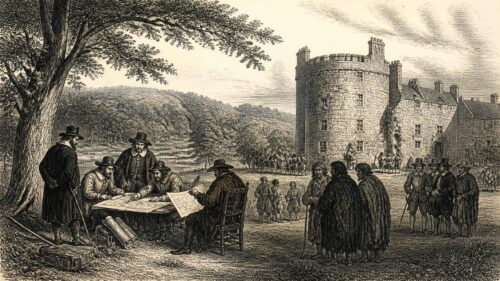
In 1637 Thomas Wentworth’s administration strengthened royal control in Ireland through ceremony, land investigations, economic regulation and institutional reform. His provincial progress projected authority, while the Commission for Defective Titles unsettled proprietors and enabled Christopher Wandesford’s crown-backed acquisition of Castlecomer, displacing the Brennan community. Proclamations regulated cloth, currency, land titles and licensed trade, supporting revenue and English commercial standards. Dublin gained building projects and a chartered Goldsmiths’ Company; Trinity received Laudian statutes. Church discipline pressured Presbyterians, despite William Bedell’s Irish-language work. Meanwhile, Mícheál Ó Cléirigh and Franciscan patrons sustained Gaelic Catholic scholarship through Leuven. Apparent order masked grievances and insecurity.
Galway Jury
Archived: 16 October 2026
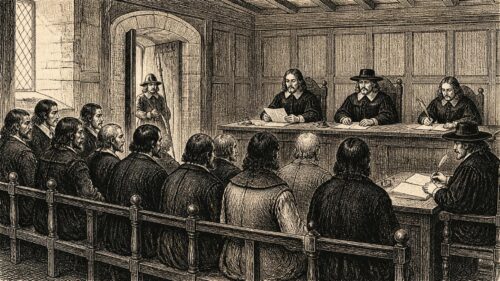
In 1636, Thomas Wentworth’s administration intensified royal control in Ireland through land, religion, economic regulation and culture. Galway jurors who rejected the Crown’s Connacht title were fined and imprisoned, demonstrating the coercive defence of plantation policy. Although Wentworth departed for England in July, trusted officials maintained his programme with royal support. Linen regulations sought to standardise rural spinning and promote exports. In Ulster, Bishop Henry Leslie silenced five ministers refusing Anglican canons, narrowing religious latitude. Meanwhile, the Four Masters completed their Irish annals, and Dublin’s Werburgh Street theatre flourished. These developments revealed an apparently peaceful kingdom under mounting centralised pressure.
Some records do not yet have a verified historical year and are awaiting chronological placement.