
Year by Year
Explore Year by Year articles from the most modern historical year back to the oldest.
3,295 Articles Archived
Furnival Plunder
Archived: 21 October 2026
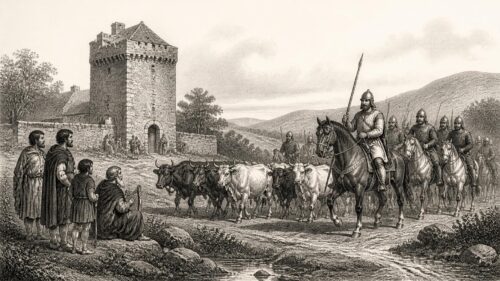
In 1415 Irish annals recorded fragmented connected conflicts across lordship Ireland. John Talbot, Lord Furnival, the king’s lieutenant, campaigned through Leix, Oriel and other districts, seizing a castle, killing or taking livestock, and executing Gerald of Geraldine descent. Chroniclers condemned his plundering of poets and alleged disregard for churches and sanctuaries. In Umhall, rivalry within the O’Malley kindred culminated in Aed O’Malley’s defeat and death, enabling Diarmait to assume the lordship. A January night attack at Cloonshee killed Tomaltach O’Birn and devastated a household. Annals noted clerical deaths, burial, capture, ransom, and cultural commemoration, depicting authority as mobile and coercive.
Cill Echi
Archived: 21 October 2026
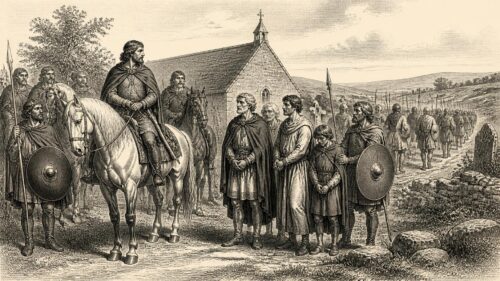
In 1414 Ireland experienced overlapping warfare, political manoeuvre, disaster and disease. Murchad Ó Conchobair and Fergal Ruad Mac Eochagáin defeated English forces from Meath at Cill Echi, killing prominent clergy and nobles and securing ransoms. In Tír Eógain, hostage exchanges restored Domhnall Ó Néill, while Mac Diarmata lordship changed hands. Fighting between Mac Murchadha rulers and Wexford forces brought capture, burning, plunder and further hostages. Sir John Stanley died, John Talbot became lieutenant and arrived late in the year. A candle fire destroyed Sligo’s Dominican monastery; a dean died; plague was reported in Meath and Leinster. Annalistic discrepancies require caution.
Limerick Fire
Archived: 21 October 2026
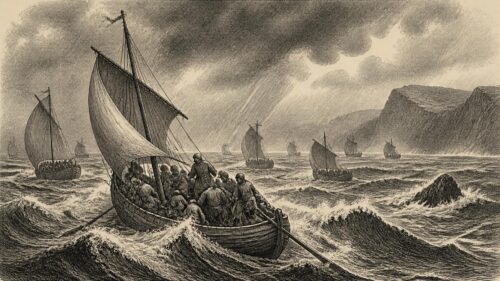
In 1413, Ireland remained politically fragmented, with Gaelic lords, Anglo-Irish interests, towns and churches exercising local power. Limerick suffered a destructive fire attributed by annals to an unnamed woman. Roscommon Castle became the focus of rival military operations, while raids and victories in Meath and Leinster demonstrated continuing frontier warfare. Tuathal Ó Máille’s returning fleet was wrecked near Scotland, causing extensive loss of life. At Lough Conn, violation of church sanctuary led to restitution of land. Annals also recorded lordly deaths, legal learning and Henry V’s accession, portraying a connected yet dangerous society shaped by warfare, religion, trade and reputation.
Trim Miracles
Archived: 21 October 2026
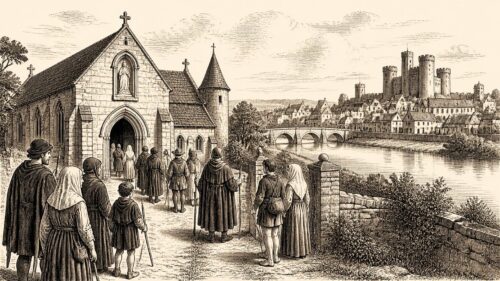
The surviving evidence for 1412 presents Ireland not as a single political unit but as a country of intensely local powers, connected by warfare, kinship, devotion and movement. Annalists recorded raids and counter-raids from the Moy to Fermanagh, the escape of a high-status captive from Dublin, a campaign across Connacht involving Gaelic and Anglo-Irish forces, and reports of miracles at a Marian shrine in Trim. These were not episodes on a national stage directed from one centre. They reveal overlapping lordships, towns and ecclesiastical institutions, each vulnerable to events beyond its own boundaries. The sharpest account of violence comes from the eastern edge of Bréifne.
Raphoe Crucifix
Archived: 21 October 2026
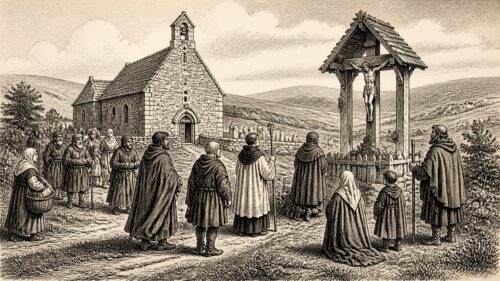
Annals for 1411 portray Ireland as a patchwork of competing lordships, where succession disputes, captivity and violence shaped political life. In Munster, heirs and rivals among the Ó Briains, FitzGeralds, Mac Cárthaighs and Ó Súilleabháins were killed, expelled, blinded or displaced. Ó Conchobhair Fáilghe captured Meath’s sheriff for ransom, illustrating frontier insecurity, while Ó Domhnaill imprisoned Mulmhaire Mac Suibhne amid internal complaints. Annaghdown monastery burned, and church land officers, an historian and Thomond’s master poet died. The annals also report that Raphoe’s crucifix bled and healed illnesses, a medieval miracle claim reflecting devotion, pilgrimage and hopes for relief amid instability.
Tír Eógain
Archived: 21 October 2026
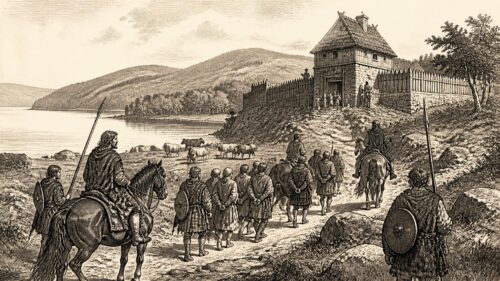
In 1410, Ireland’s political map was not a single kingdom directed from one capital but a field of overlapping lordships, kin-groups, towns and ecclesiastical territories. The year’s most striking recorded episode was the seizure of Domnall Ó Néill, lord of Tír Eógain, by Brian Mac Mathghamhna. Yet the annals also preserve a wider pattern: rulers and heirs dying, castles changing hands, cattle being driven away, a captive rival dying in Munster, and succession being managed amid danger. Taken together, these entries show how authority depended on personal alliances, control of strongpoints, inherited claims and the ability to reward followers.
Roscommon Convoy
Archived: 21 October 2026
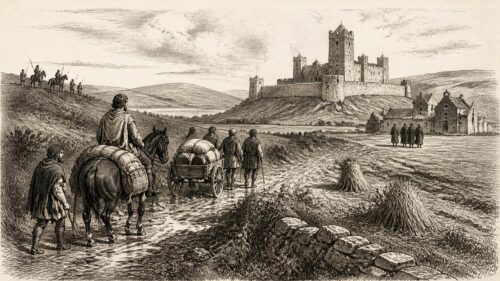
The most sharply dated Irish event of 1409 came in Connacht on the Monday after Michaelmas, the feast of St Michael on 29 September. A relieving force fought its way to the besieged castle of Roscommon with food and stores. The annalists regarded the operation as exceptionally daring. It was not a campaign of a unitary Irish kingdom, nor a clash simply between ‘Irish’ and ‘English’. It was a regional struggle among Gaelic dynasties and their allies, conducted around a formidable castle whose survival depended upon grain, supplies, mounted men and dependable political partnerships. Elsewhere, the year exposed the limited reach of the English lordship.
Lancaster Arrival
Archived: 21 October 2026
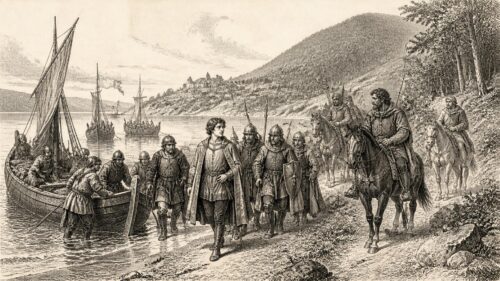
In 1408 Ireland’s political geography remained sharply divided. The English lordship was strongest in and around Dublin, yet its government depended on cooperation from magnates, towns and religious houses, and on money which was chronically scarce. Beyond and across its frontier, Gaelic and Gaelicised lordships pursued their own rivalries, raiding routes and alliances. The year is unusually well illuminated by several annalistic traditions, although they do not all record the same matters. Their entries show an island in which a royal prince could arrive with military purpose, while deaths, cattle-raids, local feuds and new castles continued to shape life far from Dublin.

Callan Patron
Archived: 21 October 2026
In 1407, conflict, succession, learning and subsistence shaped Ireland’s localised political world. Tadhg Ó Cearbhaill of Éile was killed at Callan by Stephen le Scrope’s forces during wider Leinster–Munster struggles; annalists praised him as a leading military protector and patron of poets. In Connacht, rivals contested the kingship, and Cathal Ó Conchobair’s defeat at Cell Achaid brought captures and losses. Archbishop Muirchertach Ó Ceallaigh died at Tuam, remembered for wisdom, charity and learning. Northern captures, raids and internal violence exposed fragile alliances. Very bad weather and cattle losses damaged regional livelihoods, while warfare, church authority and cultural patronage remained intertwined.
Cluain Immorrais
Archived: 21 October 2026
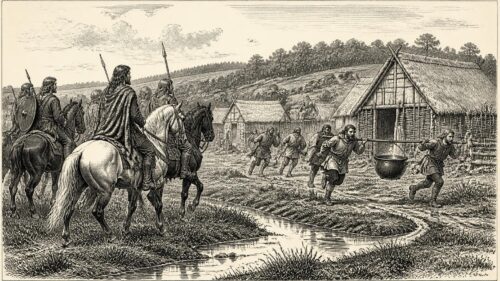
In 1406, Ireland’s fragmented political order was shaped by disease, warfare, ritual and succession. Plague killed several Leinster men eligible for lordship, potentially affecting dynastic calculations. In Offaly, Murchadh Ó Conchobhair Fáilghe defeated a mixed Meath, Connacht and mercenary force at Cluain Immorrais, inflicting heavy losses and capturing the prestigious Buacach Phádraig relic. In Connacht, Toirdhealbhach Óg Ó Conchobhair Donn, joint king for twenty-two years, was killed by rivals and Burke allies, prompting Cathal Ó Conchobhair Donn’s inauguration at Carnfree around year’s end. Dublin retained limited military and civic capacity, while elite deaths and monastic burials underscored lordship’s religious networks.
Some records do not yet have a verified historical year and are awaiting chronological placement.