Domnall Ó Néill’s Captivity1410 CE
Dateline
In 1410, Ireland’s political map was not a single kingdom directed from one capital but a field of overlapping lordships, kin-groups, towns and ecclesiastical territories. The year’s most striking recorded episode was the seizure of Domnall Ó Néill, lord of Tír Eógain, by Brian Mac Mathghamhna. Yet the annals also preserve a wider pattern: rulers and heirs dying, castles changing hands, cattle being driven away, a captive rival dying in Munster, and succession being managed amid danger. Taken together, these entries show how authority depended on personal alliances, control of strongpoints, inherited claims and the ability to reward followers.
The surviving evidence must be handled carefully. The principal accounts are annals compiled or copied later from earlier records, and they do not offer a full diary of the year. Their notices are especially rich for the northern and western Gaelic lordships, while Dublin and many ordinary communities appear only indirectly. Several entries are firmly assigned to 1410; some give a season, feast-day or interval, while others give no date beyond the year. The language is also evaluative. Chroniclers praised generosity, hospitality, penance and learning, and condemned captures or killings regarded as treacherous. Those judgements are evidence for the ideals of lordship as well as for the events themselves.
A Lord of Tír Eógain Taken
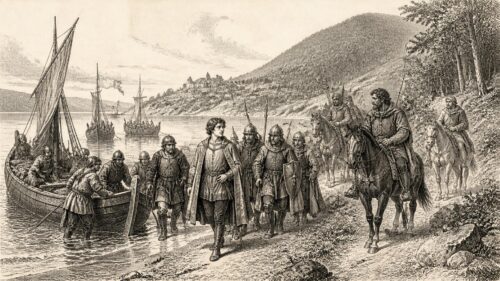
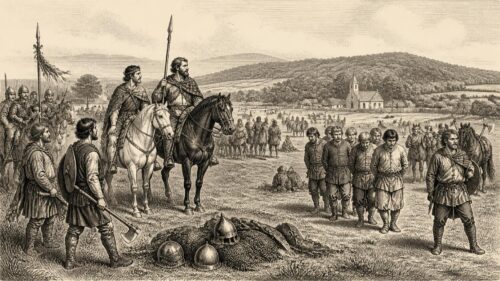
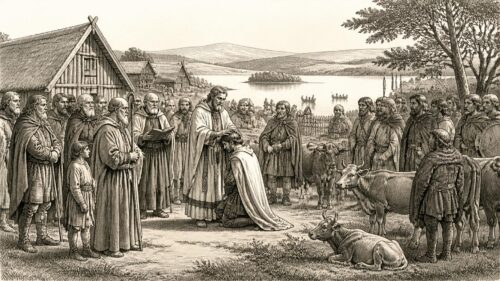
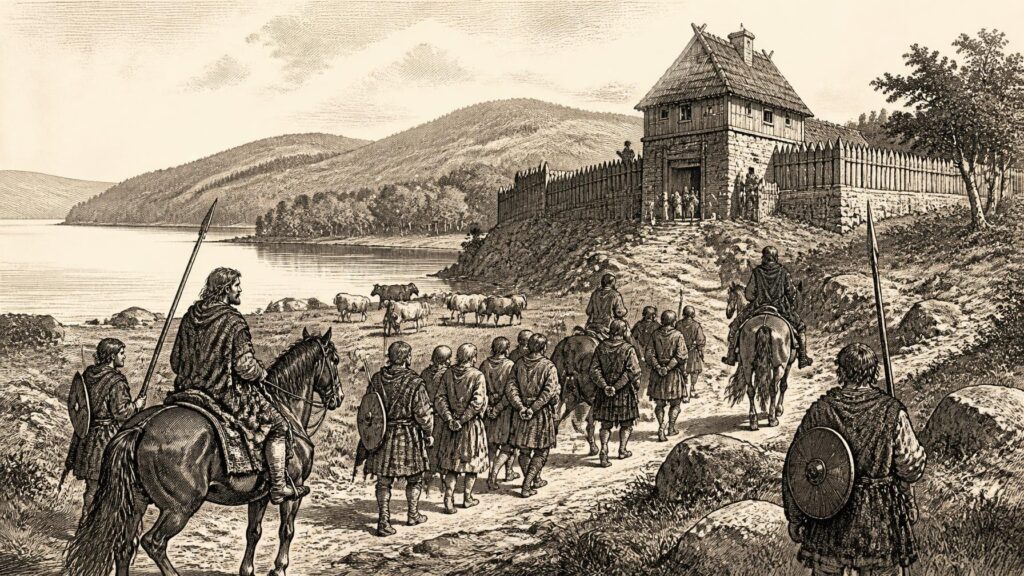
The best-attested political shock concerned Domnall Ó Néill. The Annals of Connacht call him king of Ulster, while the Annals of the Four Masters describe him as lord of Tyrone who bore the title of king among his people. Both agree that Brian Mac Mathghamhna captured him in circumstances considered improper. The fuller Four Masters account adds a chain of custody: Brian delivered Domnall, apparently for payment, to Eóghan Ó Néill; Eóghan in turn sent him to Mag Uidhir, or Maguire, to be kept in confinement.
This was not an external conquest of Ulster. It was an intervention in the rivalries of the Ó Néill kindred and their neighbours. Brian Mac Mathghamhna’s participation demonstrates the political weight of the Mac Mathghamhnas of Airgialla, south of Tír Eógain, while the transfer to Maguire reveals how detention could bind several lordships into one dispute. A prisoner of this standing was a political asset: his captivity could weaken his adherents, create leverage in negotiation and oblige allies to declare themselves. The annals do not state the place of his imprisonment, the length of confinement or the terms of any eventual settlement. Those details should not be invented. What can safely be said is that the capture exposed a serious fracture within northern Gaelic politics rather than resolving it.
The wording matters. To call the seizure “not becoming” or “outrageous” was not merely rhetorical decoration. It invoked an expectation that a ruler’s person possessed a degree of protection, even in endemic conflict. At the same time, the very need to record the moral breach shows that political practice could be harsher than the ideal. In 1410, kinship supplied claims to power, but it did not guarantee peace within a dynasty.
Deaths and Successions in Connacht
Connacht’s annals make 1410 appear as a year of unusually visible transition. Ragnall Mag Ragnaill, chief of Muintir Eolais in the region around modern south Leitrim and north Roscommon, died after receiving unction and doing penance. Cumscrach Mag Ragnaill was proclaimed in his place, but died within a fortnight. The Annals of Connacht memorably called this “a fall in the doorway of the assembly”: a succession collapsing almost as soon as it began. The entry does not identify a final successor, but it vividly conveys the insecurity created when the office-holder and his replacement vanished in rapid succession.
Other deaths affected leading Connacht families. Fedlim Cléirech Ó Conchobair died a fortnight before St Brigid’s feast, 1 February; two further members of the Ó Conchobair family were also recorded as dead during the year. Such notices do not automatically signify a general mortality crisis: the annals do not report plague, famine or a climatic disaster for 1410. Rather, they show the chroniclers’ interest in those with dynastic standing, whose deaths could alter local balances of power.
In west Connacht, Domnall Ó Flaithbheartaigh was killed by kinsmen. One account attributes the act specifically to Gilla Dub Ó Flaithbheartaigh, while another says that the sons of Brian Ó Flaithbheartaigh were responsible at an assembly of their own people. These versions agree on the essential point: a lord was killed within his own political community. The Annals of Loch Cé then record Murchadh Ó Flaithbheartaigh as taking the kingship after Domnall. The contrast between a named succession and a disputed account of the killing is a reminder that annalistic evidence can be firm about an outcome without preserving every circumstance consistently.
The death of Tadc Ó Cellaig, king of Uí Maine, late in the year was treated as a much greater loss. The annals date it to a fortnight after Michaelmas, 29 September, and praise him as the most generous giver among the Gaels of Ireland and Scotland in his time. Donnchad Ó Cellaig succeeded him. This is not neutral administrative language: generosity was a political virtue. A lord’s reputation rested partly on his capacity to sustain guests, followers, poets, clerics and allies. The chronicler’s praise therefore suggests not private charity alone but a public system of lordly patronage.
Raids, Castles and Negotiated Peace
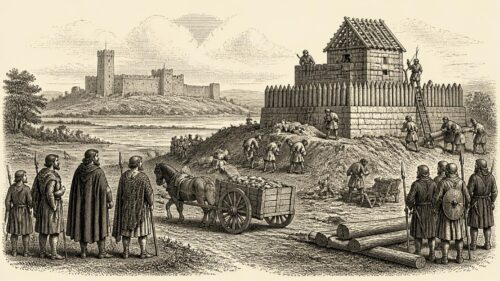
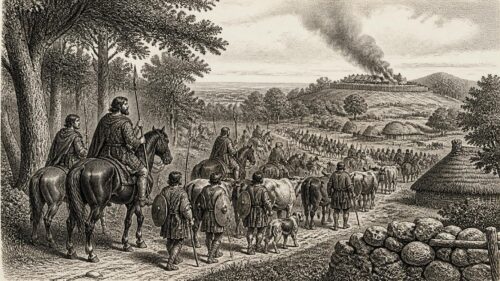
Military action in 1410 was local but consequential. Maelsechlainn Ó Ruairc was killed by Cenél Conaill, after which the men of Cairbre and Bréifne broke Dún Crimhthannáin, described as a castle. The annals do not provide a siege narrative, and “broken” need not imply complete demolition; it does indicate the defeat or disabling of a fortified position. Another account reports that Turlough Ó Domhnaill led an army into Bréifne Ó Ruairc, plundering and burning the country. The pursuing men of Bréifne were defeated, and John, son of Eóghan Ó Ruairc, was among those killed. Raiding was thus not peripheral disorder: burning, livestock seizure and the destruction of defences were recognised instruments of lordship.
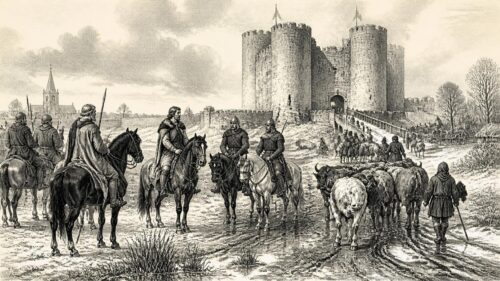
Further south and east, the English of Meath and the justiciar captured the castle of Magh Breacraighe from Ó Fearghail. This brief notice is important because it shows the Dublin administration acting beyond the core of its direct urban and landed base. It does not prove uninterrupted English control over the surrounding countryside, nor does it identify the justiciar by name. It does demonstrate that royal officials and Meath settlers could still combine in a campaign to seize a strategic site from a Gaelic lord.
Not every dispute ended in escalation. In Thomond, Conchobhar Ó Briain returned after making peace with the sons of Brian Ó Briain. The previous year had seen open conflict within the dynasty; the 1410 entry records a reconciliation, not a permanent constitutional settlement. Later developments show that the sons of Brian, especially Tadc, remained powerful. For this year, however, the evidence supports a truce and return rather than a decisive victory by either side.
In Desmond, Cormac Óg Mac Carthaigh died while held in fetters by Mac Carthaigh Mór, his kinsman and rival. Captivity again appears as an active political method. The notice is stark, supplying neither the length of Cormac’s imprisonment nor the immediate cause of death. It nevertheless illustrates the lethal pressure of competition within great dynasties, even where no battle is recorded.
Learning, Religion and Material Life
The year’s obituaries also preserve the institutions that made lordship intelligible. Tomás Mac Raith, ollamh of Thomond in poetry, died in 1410. An ollamh was not simply a poet in the modern sense but a senior learned professional, attached to a world of hereditary scholarship, formal composition and patronage. His death is a small but significant glimpse of bardic learning at work across late medieval Ireland. Donnchad Ó Duirnín also died, while Uilliam Ó Tomaltaigh, prior of the Athlone religious house, was recorded among the year’s dead.
Religious language runs through the notices of elite death. Ragnall Mag Ragnaill, Tadc Ó Cellaig and others were said to have received unction and performed penance; Tadc Mac Branáin was buried at the friary of Roscommon in the resting-place of his father and grandfather. These phrases describe a Christian framework in which an orderly death, sacramental preparation and burial among kin mattered deeply. They should not be read as proof that every death proceeded peacefully, but they show how chroniclers connected political rank, repentance and commemoration.
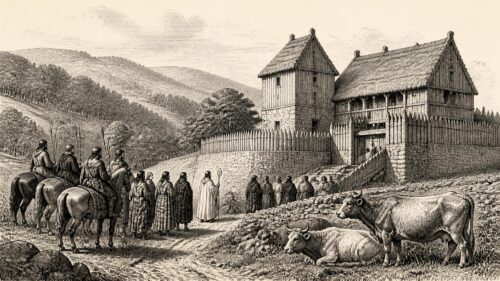
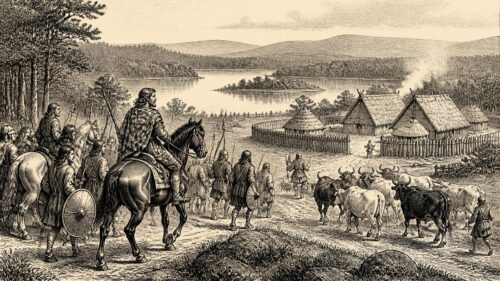
Everyday economic life surfaces most plainly in livestock. Around Allhallowtide, the sons of Ó Conchobair Don took five hundred cows from the people of Ó Conchobair Ruad at Rath Brennan. The precise total may carry the conventional force of a large round number, but the entry leaves no doubt that cattle were central movable wealth. They fed households, underpinned hospitality, supplied tribute and compensation, and provided an immediately transferable reward for a successful raid. A seizure on this scale would have affected herders, dependants and neighbouring settlements as well as the rival ruling families.
A Year of Vulnerable Authority
1410 offers no single island-wide turning point. Instead, its securely recorded events reveal a political order in motion: an Ó Néill lord passed between captors; a Connacht chieftainship faltered at succession; a west Connacht ruler was killed by his own kin; forts were taken or broken; and settlements were made where continued conflict was too costly. The year also records poets, priors, burials, cattle and the ideal of generous lordship. Ireland’s history in 1410 was made not only in battles, but in custody, assembly, household, monastery and cattle-ground.
Primary Sources
- Annála Connacht: Annal 1410
- Annála Connacht: Background Details and Bibliographic Information
- Annals of the Four Masters: Annals M1403–M1412
- Annals of the Four Masters: CELT Document Information
- Annals of Loch Cé A.D. 1014–1590
- Annals of Ulster Otherwise Annala Senait, Annals of Senat
- The Annals of Ulster
- O'Neill (Ó Néill), Eóghan
- MacCarthy Mór (Mac Carthaigh Mór), Tadhg na Mainistreach
- MacMahon (Mac Mathghamhna), Brian Mór
- O'Brien (Ó Briain), Tadhg
- O'Brien (Ó Briain), Mathghamhain Dall
- O'Brien (Ó Briain), Brian Sreamach
- Annales Dominicani de Roscoman
- Translated Texts at CELT
- Exploring the Irish Annals
- Bardic Poetry
- Mendicant Orders and Vernacular Irish Learning in the Late Medieval Period
- Food and Power in Sixteenth-Century Ireland: Studying Household Accounts from Dublin Castle
- Medieval Irish Chronicles Reveal Persistent Volcanic Forcing of Severe Winter Cold Events, 431–1649 CE
- Irish Texts at CELT